
The artistic value generated by the comprehensive use of materials
The comprehensive use of materials transforms art from a mere representation of images and forms into a creative process where concepts, culture, technology, time, and bodily experiences are all involved. Different materials possess different textures, historical backgrounds, cultural significance, and technical properties; when they are combined, contrasted, and transformed within the same work, they can expand the scope of the work, connect traditional craftsmanship with contemporary technology, and enhance the artist’s personal expression. At the same time, the temporal changes of materials, tactile experiences, and industrial characteristics also enable the work to offer a richer level of perception and social significance. Therefore, materials are no longer merely tools for completing the work; they gradually become an important component of the artistic language, conceptual structure, and cultural expression.
1. Diversity of themes
Different materials can convey different visual experiences, social information, and cultural meanings. By combining various materials such as wood, metal, fabric, old objects, and images, artists can explore themes from different perspectives such as memory, identity, environment, technology, and society, allowing their works to achieve a richer and more open level of expression.
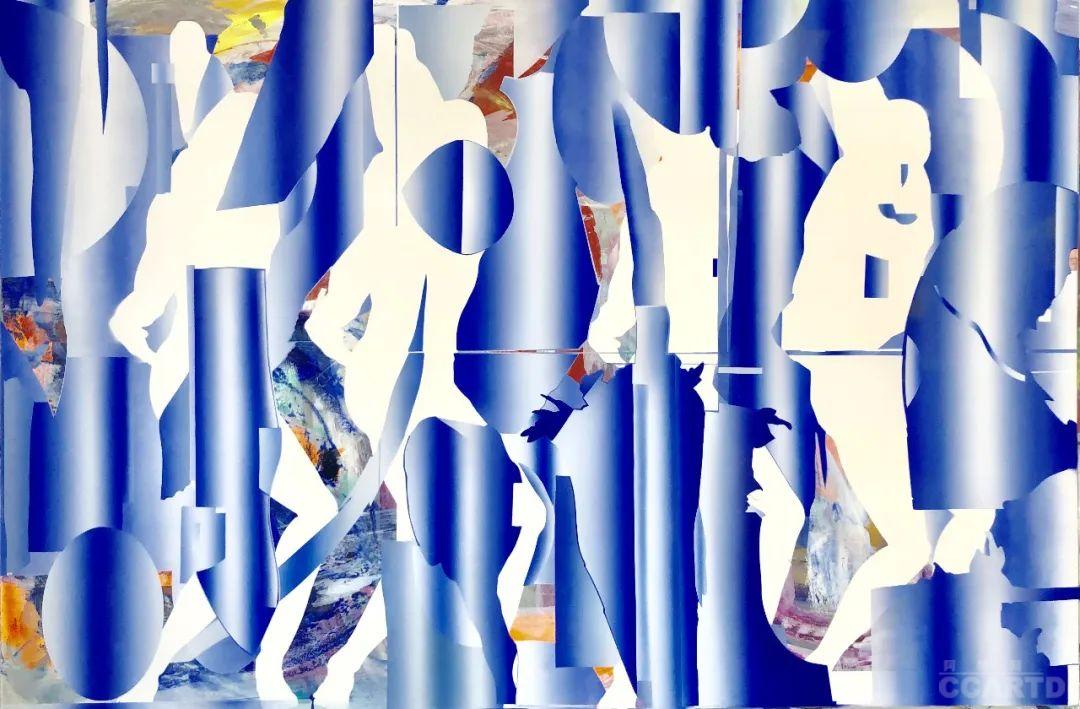
The artistic value brought forth primarily by the comprehensive use of materials is the diversity of thematic expression. A single material usually possesses a stable visual and cultural orientation; when different materials are juxtaposed, superimposed, or in conflict within the same work, the artist is able to address multiple layers of content simultaneously. For example, wood can refer to nature and growth; metal can connect to industry, structure, and coldness; old photographs can carry memories; textiles easily connect with the body, home, and everyday life; digital images can introduce time, information, and virtual experiences. Once different materials enter the same work, the theme no longer relies solely on image narration but can unfold through the properties of the materials themselves.The diversity of themes is not simply an increase in the “number of content” in the work; it is about giving a theme more perspectives of observation. Similarly, when discussing “the city,” artists can use maps, architectural remnants, and metal structures, as well as advertising prints, sound, and digital images; when discussing “family memories,” they can use old clothes, photographs, handwritten text, and furniture fragments. Each material contributes a different experience, transforming the work from a single-line narrative into a multi-layered narrative. The audience does not just look at one image; they constantly build connections between the materials.Composite materials can also provide concrete material support for abstract themes. Concepts such as time, identity, migration, consumption, environment, and technological anxiety are inherently abstract, but when artists choose materials that have real-life experiences, these concepts can be transformed into visible and tangible forms. Rust-colored metal can make “time” concrete, worn-out textiles can bring “traces of use” into the work, and plastic packaging can directly bring consumer society into the visual field. Materials thus become part of the subject rather than an external decoration.The contradictions between different materials can also expand the theme. Soft fabrics and sharp metals when combined create a contrast between the body and machinery; traditional handmade paper and electronic screens when juxtaposed create a relationship between history and technology, handcraft and algorithms; the combination of natural wood and industrial plastic can lead the audience to reflect on the relationship between nature and artificial environments. The artist does not need to write all the meanings down; the relationship between the materials themselves can establish the tension of the theme.The integrated use of materials also enables artists to connect personal experiences with social issues within the same work. Personal photographs can be juxtaposed with news images, family heirlooms can be combined with industrial waste, and local traditional textiles can be related to globalized packaging. In this way, private memories, local culture, and public issues can converge within the same work, making the work both personal and open to broader social interpretation.The diversity of themes is also reflected in the interpretations of the viewers. A single image often provides a relatively clear visual center, whereas composite material works contain more clues. Different audiences may enter the work through different lines of evidence: materials, memories, cultural backgrounds, or technical experiences. The artist provides a multi-entry structure, rather than a single answer. This openness enhances the lasting value of the work and enables viewers to gain different understandings at different times, places, and with different knowledge backgrounds.Therefore, the first important artistic value generated by the comprehensive use of materials is to shift the focus from a single subject to a complex one, from image narrative to material narrative. The artist no longer relies solely on “painting what” to express the subject; they can also establish meaning by “using what materials,” “combining materials in what ways,” and “why certain relationships occur between the materials.” The more targeted the materials are, the more layers the subject can form, and the more likely the work will become an open system capable of accommodating personal, social, historical, and contemporary experiences.
2. Integration of traditional and contemporary technologies
Integrated material arts can combine traditional techniques such as painting, writing, weaving, and woodworking with contemporary technologies such as digital printing, projection, LED, sensors, and artificial intelligence. Traditional craftsmanship provides a real sense of material and cultural memory, while new technologies bring dynamism, information, and new ways of creation, together to form a new artistic language.
One of the important artistic values of integrating materials is to truly combine traditional production methods with contemporary techniques in the same work. Traditional art has accumulated a wealth of mature manual techniques, such as painting, writing, printmaking, embroidery, weaving, woodworking, metalworking, pottery, and handmade paper making. These methods emphasize physical experience, material control, and long-term training. With the introduction of contemporary technologies such as digital printing, photography, projection, LEDs, sensors, program control, and artificial intelligence into artistic creation, artists have gained new capabilities for image generation, time variation, and interaction. Integrated material art can connect these two systems rather than simply replacing traditional techniques with new technologies.Traditional techniques possess irreplaceable “handcrafted traces.” The brushstrokes, knife marks, seams, fibers, edges of paper, and metal welds all document the artist’s physical involvement. When these traces are combined with digital images, mechanical motion, or algorithmically generated content, the work forms a distinct temporal layer. The manual component displays the slow, repetitive, and tactile aspects, while the digital component may present rapid, replicative, real-time updates, and immaterial changes. When combined, these elements allow the work to discuss not only form but also the relationship between people and technology.This fusion can also re-activate traditional processes. Traditional patterns, weaving methods, print structures, or calligraphy lines do not necessarily have to exist in a historical form. Artists can scan traditional graphics and re-encode them, then return them to the real material surface through laser cutting, digital printing, or projection; they can also combine hand-woven patterns with LED light sources to create new spatial effects from traditional structures. Traditional art is therefore not replicated; rather, it continues to develop in new media environments.In turn, contemporary technology also acquires new textures when combined with real materials. Digital images, which often have a smooth, homogeneous appearance and can be reproduced infinitely, often have a glossy, uniform appearance when they are projected onto wood, fabric, old walls, metal, or transparent materials. As a result, digital images no longer function as independent information layers but collide with the material world, creating a more complex visual experience.The fusion of traditional and contemporary techniques can also change the production process of a work of art. The artist may first generate the original graphic using hand-drawn techniques, then analyze the structure using computers; or first generate multiple solutions using AI, then cut, draw, and reassemble them in real materials. Technology here does not replace the artist in the creative process; rather, it becomes a tool for research, comparison, and expansion of possibilities. Ultimately, the work still requires the artist to make choices based on materials, scales, space, and concepts.This fusion can also break the simple opposition between “traditional equals the past, technology equals the future.” Traditional materials can express very contemporary issues, and contemporary technology can also be used to re-examine history and culture. When a work simultaneously incorporates ancient artisanal methods and the latest digital technologies, it presents not a fusion of two eras, but the process of how artistic language continuously evolves.The ultimate value of art comes from whether the necessary relationships are established between the two systems. If digital technology is merely used to enhance visual effects, and traditional craftsmanship is merely used as decorative symbols, then fusion remains superficial. Truly mature works allow technical choices to support the subject matter, materials, and viewing experience. Traditional techniques provide material depth and bodily experience, while contemporary technology provides dynamism, information, and new ways of creation; the two complement each other, enabling integrated material art to transcend historical, technological, and cultural boundaries.

3. The subjective needs of artists
The choice of materials reflects the artist’s personal experience, aesthetic judgment, and expressive needs. Different artists approach the same subject matter using different materials based on their cultural background, life experiences, and creative concepts. Therefore, materials are not only tools for creating works but also serve as an important language for artists to express their emotions, ideas, and personal style.
The third type of artistic value generated by the comprehensive use of materials comes from the subjective needs of the artist. Artistic creation is not the result of materials being combined by themselves; rather, it is the process of the artist choosing materials proactively based on personal experience, aesthetic judgment, emotional state, cultural background, and ideological concerns. Faced with the same subject matter, different artists may choose completely different materials, because the choice of materials itself reflects how the creator understands the world. Comprehensive material art gives artists greater freedom, allowing them to create without being constrained by the rules of a particular medium.The subjective needs of artists are first reflected in the way they express themselves. Some artists value color and composition, so they may add a small amount of collage to their paintings; others focus more on the material surface, using wood, metal, fiber, or resin in large quantities; and still others want their work to have a sense of memory, choosing old photographs, clothing, and household items. Some artists also want their work to change over time, and may use lighting, machinery, and digital systems. The choice of materials is determined by the artist’s expressive goals, not by a fixed “integrated material formula.”Personal experiences can also influence material judgments. An artist who has lived in an industrial city for a long time may be more sensitive to steel, mechanical parts, and building materials; an artist with a textile background may naturally use fabrics, sewing techniques, and weaving methods; people who have experienced migration may preserve documents, maps, luggage, and family photos and bring these items into their work. Materials are therefore not only visual resources but also extensions of the artist’s own life experiences.Subjective needs are also reflected in the emotional attitude of artists towards materials. Some materials evoke a sense of closeness, while others evoke repulsion, fear, or a sense of unfamiliarity. Artists may use wood for long periods because they enjoy its warmth; they may also deliberately choose cold metal to create psychological distance; they may cherish old objects, or they may actively destroy materials to express conflict. The relationship between the materials in a work often hides the artist’s emotional judgment of the world.The freedom of comprehensive materials simultaneously requires artists to assume more responsibility for their choices. The more open the medium, the less able it is to rely on fixed rules to complete their work. Artists must constantly judge whether this material is necessary; what is its relationship to the subject matter? Why is it necessary to use transparent materials? Why is it necessary to use real old objects rather than reproducing them? Why use digital screens instead of printed images? These questions elevate subjective choices from personal preferences to conscious artistic decisions.The subjective needs of artists also include the degree of control over the creative process. Some artists seek precision, using industrial processes such as machining, laser cutting, and modular structures; others emphasize randomness, allowing paint to flow, metals to oxidize, or paper to naturally tear. Some want all details to be under control, while others proactively leave room for variation in the materials themselves. Both approaches reflect different creative attitudes.With artificial intelligence and digital tools increasingly permeating the creative process, subjective needs become even more important. Machines can generate large numbers of images and combinations of options, but artistic value still comes from the artist’s choice of which one to use, how to transform it into a physical work, and how to make the technology serve their own ideas. The choice, deletion, modification, reorganization, and final decision still reflect the artist’s subjectivity.Therefore, the comprehensive use of materials does not weaken the artist’s personal language; on the contrary, it enhances subjective choice. Each material, connection method, and technique can be an extension of the artist’s personality and thought. A mature, comprehensive material work is not one that is better with more complex materials; rather, it allows the viewer to feel: why can these materials only be organized in this way by this artist. The artist’s subjective needs ultimately transform these materials from public resources into a unique personal artistic language.

4. The cultural significance of the material itself
Materials often carry specific historical, geographical, and cultural backgrounds. Materials such as felt, fabric, old photographs, household items, and industrial materials can connect to traditions, identity, family memories, or social experiences. By reassembling these materials, artists can give their works a deeper cultural layer and historical significance.
The cultural significance of materials themselves is a very important artistic value in material art. No material is completely neutral. In addition to its physical properties such as color, weight, texture, and transparency, it may also carry historical, geographical, religious, labor, social class, lifestyle, and collective memories. When artists choose materials, if they are able to realize these cultural backgrounds, the materials not only become the material that constitutes the work but also become an important source of the work’s meaning.Traditional materials are most easily imbued with cultural significance. Materials such as paper, silk, bamboo, ceramics, lacquer, wood carving, embroidery, and textiles have long histories in different regions. When they are incorporated into contemporary works, viewers see more than just the material; they may also associate them with traditional writing, clothing culture, handicrafts, domestic life, or local experiences. Artists can respect the original traditions while also recombining and altering these materials to give them different meanings in a new context.Everyday materials also possess cultural attributes. Newspapers record public information, old photographs connect families and social histories, clothing relates to body, identity, and lifestyle, and home embodies the culture of the specific place where it resides. Packaging reflects the consumer and commercial systems. Artists take these objects out of their everyday function and place them in their works, equivalent to reinterpreting them. An ordinary everyday item may become evidence of a particular era in an art space.Industrial materials also have specific cultural connotations. Steel, concrete, glass, plastic, aluminum panels, mechanical parts, and electronic components are closely related to modern cities, industrial production, technological progress, and global supply chains. They embody efficiency, standardization, and mechanical strength, and may also evoke issues of pollution, consumption, resource development, and labor. The materials themselves embody the structures of modern society, so artists do not have to rely entirely on images to express these issues.The cultural significance of materials can also change due to cross-cultural use. Materials that have traditional uses in one region may be interpreted in a new way when brought into another cultural context. Migrant artists and transcultural artists often express multiple identities through the combination of fabrics, texts, traditional patterns, household heirlooms, and modern industrial materials. The juxtaposition of materials becomes a process of encounter, conflict, and reinterpretation between cultures.It is important to note that cultural materials should not be simply considered decorative symbols. If an artist uses a traditional pattern or local material without understanding its origin and context, the work may remain superficial. True value comes from understanding the material’s history, production methods, and social context, and from considering why it is relevant to the current subject matter. The more specific the cultural significance of the material, the more capable the work is of avoiding superficial “cultural labels.”Materials can also preserve overlooked cultural memories. Old hand tools, discarded building materials, household textiles, and local artifacts may not be officially recorded in historical records, but they preserve the lived experiences of ordinary people. By collecting, rearranging, and displaying these materials, artists can bring individual memories and social history back into view. Materials here have a similar archival function.Therefore, one of the important values of material art is that culture is not only communicated through images or words, but is also perceived through real materials. These materials have undergone production, use, circulation, and time, and they carry their own history into the work. When artists are able to accurately understand and reorganize this cultural information, the work forms deeper social and historical layers. Materials are no longer just “what they are,” but at the same time answer the questions “from where did they come?”, “what have they experienced?”, and “why have they appeared here?”.

5. The temporal dimension of materials
Materials change over time; paper yellows, metals oxidize, wood cracks, and textiles wear out. Artists can take advantage of these natural changes to let time itself enter into the work. The materials thus not only represent a moment, but also document the past, present, and continue to change into the future.
The temporal dimension of materials is a very unique artistic value in the application of materials. Traditional art often strives to maintain a stable work of art; it hopes that color, shape, and structure remain unchanged for as long as possible. But real materials are all subject to time. Paper yellows, metal oxidizes, wood cracks, fabric wears out, plastic ages, plants wither, and digital devices lose their original functionality due to technological advancements. When artists actively confront these changes, time no longer remains merely a backdrop to the work; it becomes part of the work itself.The materials are first recorded in terms of the time of production. The brushstrokes, cuts, welds, seams, wear marks, and layers of covering all preserve the traces left by the creative process. When viewers see these traces, they can feel that the work did not appear instantly but was the result of continuous labor. In some integrated material works, parts of modification, overlay, and failure are intentionally preserved, allowing different stages to coexist simultaneously on the surface. The work thus possesses a time structure similar to layers.Old materials carry the time before the creation. An old photograph, a worn-out garment, a piece of architectural debris or a discarded piece of furniture already have their own experiences before they become part of an artistic work. Their fading, scratches, damage and stains are not the result of the artist’s imagination; they are the result of the real effects of time. The artist’s choice of these materials is tantamount to bringing the past into the present, making the work contain multiple layers of time simultaneously.Some materials continue to change after the work is completed. Iron will continue to rust, copper will form an oxide layer, wood will be affected by humidity, and paper and fabric will gradually change due to light. If the artist accepts these changes, the work is not a completely fixed endpoint, but a continuous process. The works seen by viewers in different years may not be exactly the same; time becomes a co-creator.The temporal nature of materials can also be artificially controlled. Artists can accelerate material changes by burning, corroding, soaking, weathering, covering, and repeatedly sanding; they can also pause certain changes through methods such as resin encapsulation, transparent boxes, and protective layers. The contrast between acceleration and preservation allows the works to discuss themes such as disappearance, preservation, memory, and forgetting.Digital media also have a temporal dimension. Video itself relies on playback time; programs and interactive systems change in real time; data works may be constantly updated based on the information of the day. At the same time, electronic devices also face the problem of technological obsolescence: old displays, videotapes, early computers, and digital formats may quickly become a thing of the past. Digital technology may seem “invisible,” but it also ages. Integrated material art brings digital media and physical materials together to allow time of different speeds to be compared.Temporality also changes the audience’s understanding of the value of a work. Traditional collecting habits often view “perfect preservation” as value, while some integrated material works see the change itself as part of the meaning. This raises new questions about conservation and restoration: should the work be restored to its original state, or should it be allowed to continue changing according to the artist’s vision? This question itself indicates that material temporality has entered the conceptual structure of the work.Therefore, the integrated use of materials enables art to expand from static objects to time processes. Materials not only display their present appearance but also retain traces of the past and may continue to change into the future. By selecting materials that age, corrode, wear out, or renew themselves, artists transform time into a visible artistic language. The work thus not only occupies space but also has its own life cycle.
6. The tactile value of materials
Different materials have different tactile and physical experiences. The warmth of wood, the coldness of metal, the softness of fabric, and the smoothness of glass can all evoke tactile and visual imagination through the senses. The roughness, weight, softness, firmness, and temperature of materials allow the works to transcend the simple visual experience and enhance the audience’s physical perception.
The tactile value of materials is an important aspect that distinguishes material art from pure image art. When people view wood, stone, metal, fabric, glass, paper, and plastic, they generate tactile imaginings based on their life experiences even without actually touching them with their hands. Feelings such as roughness, smoothness, softness, hardness, warmth, coldness, dryness, and moisture are evoked through the visual senses. Material art comprehensively utilizes this bodily experience to ensure that the work is not only seen by the eyes but also “felt” by the body.Different materials have different tactile languages. The texture of wood surfaces evokes feelings of temperature and natural growth; the surface of metal can produce coldness and hardness, and the weight of the material can be easily associated with the skin, clothing, and the body. Glass has both a smooth, transparent, and fragile nature; paper can be soft, fragile, or rough. When these materials are combined, the differences in touch can themselves create visual tension.Artists can enhance tactile sensations through processing methods. Polishing can make surfaces smooth, cutting can produce sharp edges, tearing can leave irregular fibers, and thick coatings can form bumps. Seams can create repetitive patterns of bumps and curves, and resin can form surfaces that resemble solidified liquids. Although viewers may not necessarily be able to touch these surfaces, they can imagine the tactile sensations through visual perception. The tactile sensation can therefore be “viewed.”The tactile value is also related to the body’s scale. A small piece of rough material versus a large, rough wall creates completely different psychological sensations. Large, soft fabrics can create a sense of enclosure, while heavy metal structures can make us aware of our bodies’ fragility. Transparent thin films can evoke a sense of lightness and uncertainty through their combination of scale, distance, and position. Through the combination of materials, the scale, distance, and position of the work make the viewer’s body a crucial reference point for judging the material.Some works allow the audience to actually touch, tread on, walk through, or move the material. At this point, touch transforms from imagination into direct experience. The temperature, resistance, softness, and sound of the surface all participate in the work. But even when the work prohibits touching, the artist can still activate tactile memory based on the visual characteristics of the material. Touch does not necessarily require physical contact with the material; it can be formed through observation, hearing, and the physical space.The tactile qualities of materials can also convey emotion. Soft felt, fabric, and fibers can convey a sense of safety, intimacy, or vulnerability; sharp metal, broken glass, and rough cement can evoke a sense of danger, oppression, or distance. By combining materials, artists can modulate the audience’s psychological state, allowing form and emotion to be directly connected. This emotion does not come solely from the content of the image but from the material itself.The development of digital art has further highlighted the importance of touch. Screen images often have a smooth, uniform surface, while real materials have weight, thickness, and non-replicable textures. When digital images are combined with wood, fabric, metal, or transparent materials, a clear contrast emerges between the virtual image and the real touch. The physical material gives digital works a physical scale.Therefore, the tactile value of integrated material art is to reconnect visual art with bodily experience. Works not only “look like what they are,” but also allow the viewer to imagine “what it feels like to touch.” By using materials, processing techniques, scales, and spatial relationships, artists make tactile elements part of ideas and emotions. The more realistic material differences a material has, the more it can break through the limitations of flat images and form a more direct and concrete sense of perception.
7. Industrial properties of materials
Industrial materials such as steel, aluminum, plastic, acrylic, mechanical parts, and electronic components bring new structures, scales, and technological possibilities to art. At the same time, they are closely related to industrial production, urban life, consumption, and technological development, enabling works to further discuss modern society and technological civilization.
The industrial properties of materials are one aspect of the special significance of material art in modern society. As industrialization and urbanization develop, steel, aluminum, concrete, glass, plastic, acrylic, resin, mechanical parts, wire, electronic components, and standardized components are increasingly incorporated into everyday life. Artists use these materials not only because they are sturdy, transparent, or easy to process, but also because they themselves represent modern production methods, technological systems, and urban environments. Industrial materials therefore simultaneously possess both formal value and social significance.Industrial materials first changed the structural capabilities of works of art. Steel can support heavier weights, aluminum is lightweight and strong, acrylic can form transparent layers, and resin can create complex forms. Standardized components can be quickly assembled. Artists no longer rely solely on traditional sculptural materials; they can consider modules, connections, load-bearing capacity, and scale just as architects and engineers do. This has enabled composite material art to evolve from small objects to large spatial structures.Industrial properties also bring about a distinctive visual language. The reflections on metal surfaces, the precision of mechanical parts, the artificial colors of plastic, the roughness of concrete, and the transparency of glass all create distinct differences from handmade materials. Industrial materials often convey a sense of calmness, rationality, repetition, and standardization. When combined with handmade painting, textiles, wood, or paper, the contrast between machine and body, standard and individual, naturally emerges.Standardized production is an important characteristic of industrial materials. Screws, steel pipes, grids, panels, and electronic components are often produced in uniform sizes. Artists can use this repetition to form order, or they can deliberately destroy and modify standard parts, transforming industrial rules into a personal language. A previously clearly functional mechanical part loses its original purpose upon entering an artwork, while simultaneously acquiring new visual and conceptual identities.Industrial materials are also closely related to labor and production relations. Welding, cutting, casting, machining, and assembly all involve specific skills, and sometimes require collaboration between artists and technicians or factories. The work may therefore no longer be completed solely by the artist, but rather as the result of multiple professional collaborations. This also brings issues such as “who creates the work” and “whether the artist’s craftsmanship is necessary” into the contemporary art discussion.Industrial materials also have environmental and social dimensions. Plastics, electronic waste, building materials, and mechanical components are all related to the systems of resource development, consumption, and waste. When artists use recycled industrial materials, their works can directly discuss overproduction, pollution, urban renewal, and resource recycling. The source of the materials themselves become part of the work.As the digital industrial era progresses, the industrial characteristics extend to LED modules, sensors, circuits, robotics, 3D printing, and computing devices. Art works can possess motion, light, automatic control, and data responsiveness. At this point, industrial materials and digital systems combine to create works that may operate like machines or reflect on the society of machines through technology.However, industrial materials are not synonymous with a “high-tech” aesthetic. Their true artistic value lies in how artists understand their production logic, structural characteristics, and social context. If metal and light are merely used as visual decoration, the work may remain on the surface; if the industrial properties of the material are linked to the subject matter, it can become an important language for discussing modern life, technological power, consumer systems, and human-machine relations.Therefore, the industrial nature of material integration brings about a direct connection between art and the modern production system. Industrial materials bring new scales, structures, and technological possibilities, as well as cultural information about cities, labor, consumption, and technology. When artists recombine them with traditional materials, artisanal methods, and personal experiences, industrial material transforms from functional products into an artistic language with critical, symbolic, and aesthetic value.