I. Basic Definitions—What is Integrated Material Art?
Mixed media art refers to an artist’s creation of a work of art or an artistic project using two or more different materials, media, and production methods simultaneously, and by combining, overlapping, connecting, conflicting, and transforming these different elements, creating a new visual language and artistic expression.
The main difference between it and traditional one-medium-only creation is that the artist is no longer limited to one material in oil painting, drawing, sculpture, or photography, but instead freely chooses different mediums according to the needs of the work.
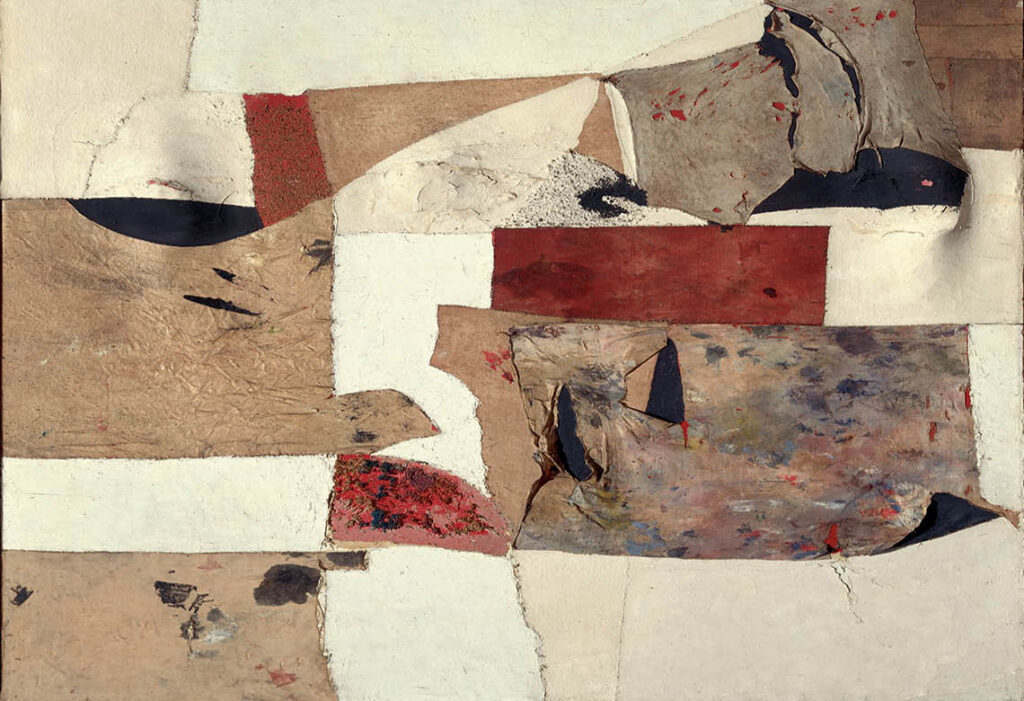
Mixed media art is an art practice that breaks the boundaries of a single medium. It usually refers to the conscious use of two or more different materials, media, and production methods in an artwork, series, or complete project by the artist, and the combination, superposition, connection, overlap, cutting, insertion, hanging, transformation, or contrast of these elements to form a unified visual structure and artistic expression. Here, “integrated” does not simply mean placing many materials together; it means creating relationships between different materials, allowing them to interact with each other in form, space, touch, time, and perception.Traditional painting often uses canvas, paper, and paint as the main media, and traditional sculpture often revolves around stone, wood, metal, or plaster. Integrative material art does not require artists to first limit their work to “painting,” “sculpture,” or “photography.” Artists can start by thinking about the questions they want to express in their work and then decide what materials and techniques they need. For example, a work can be based on a wooden board, with acrylic paint and paper pasted onto the surface, then incorporating metal wire, fabric, photographs, transparent acrylic panels, and lighting. The final work may simultaneously possess the color relationships of painting, the volume of sculpture, the image information of photography, and the spatial sense of an installation.Therefore, the key to integrated material art lies not in the quantity of materials, but in whether the necessary and effective relationships between the materials are formed. Two materials that can produce clear structures, conflicts, or meanings can already constitute powerful integrated material works; conversely, even if using ten or more materials, if they lack connections among themselves, they may just be a collection of materials. Artists must think about why each material enters the work, what role it plays, and what visual, physical, and conceptual relationships it forms with the other materials.Comprehensive material art also changes the meaning of “medium.” Paper, wood, metal, glass, fabric, plastic, clay, sand and stone, old objects, industrial parts and recycled materials can all become part of a work; photography, video, sound, projection, LED, sensors, digital screens and computer programs can also be combined with material elements. As technology advances, data, algorithms and artificial intelligence generated content can also become a medium in the creative process. However, whether it falls under comprehensive material art still depends on whether these media truly enter the work’s structure, rather than simply because the work uses some new technology.In comprehensive material art, materials are both material and language. Wood has texture and thermal sensitivity, metal has hardness, weight, and reflectivity, glass and acrylic have transparency, refraction, and layering characteristics, fabric has softness, folds, and body associations, and old objects may also bear traces of time, use, and memory. Artists can directly utilize these characteristics to express them, without having to hide the materials behind the image. Materials are transformed from “tools for creating works” into “part of the work’s content.”From a creative logic perspective, art incorporating multiple materials often follows a continuous process: proposing a theme or question, selecting materials, studying their properties, designing connecting methods, conducting experiments, adjusting structures, and finally forming a cohesive expression. Occasional changes that occur during the creative process can also become part of the work, such as the flow of paint, the oxidation of metals, the tearing of paper, the reflection produced by transparent materials, or the change in light that alters the visual hierarchy. The artist does not completely control the materials; instead, they collaborate with the materials themselves.Therefore, comprehensive material art can be summarized as: a holistic synthesis of multiple materials, media, and techniques around a clear artistic goal. It can emphasize visual forms as well as material experiences, spatial relationships, cultural memories, or social concepts. What it truly expands upon is not the list of materials, but the artist’s method of thinking about the work—moving from “what traditional media do I use” to “what materials, techniques, and structures are most appropriate to express this question.” This is precisely the most fundamental and important definition of comprehensive material art.
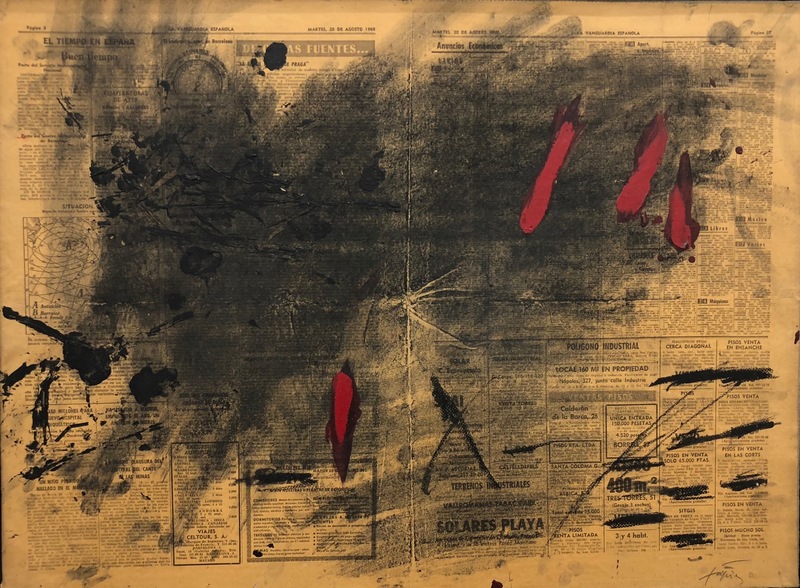
Two: Diversity of Materials—Artistic Materials No Longer Bound by Traditional Constraints
Synthetic materials have broken through the limitations of traditional painting and sculpture regarding materials. Artists can freely use paper, wood, metal, fabric, glass, plastic, old materials, industrial materials, natural materials, and digital media to create works. The source of materials has therefore expanded from specialized fine art materials to everyday life, industrial production, and the fields of science and technology, allowing art to achieve more rich visual effects, texture layers, and expressive possibilities.
Third, the integration of media and techniques—not only is the material rich, but the production methods are also diverse.
Comprehensive material art is not only reflected in the richness of material types, but also in the diversity of production techniques. Artists can combine methods such as painting, collage, cutting, carving, welding, sewing, photography, printing, projection, lighting, and digital technology to form more rich visual layers, spatial relationships, and unique artistic languages through the superposition, connection, transformation, and recombination between different media.
Comprehensive material art not only means a rich variety of materials, but also that different media and production techniques can work together in the same work. Traditional art categories often have their own relatively independent technical systems: painting emphasizes brushstrokes, color layers, and surface treatment; sculpture emphasizes shaping, carving, casting, and structure; photography relies on composition, exposure, and printing; fiber art involves sewing, weaving, and dyeing. Comprehensive material art re-combines these methods originally belonging to different fields, making the “how to make” itself an important part of the work’s language.Artists can use painting, collage, gluing, cutting, sanding, carving, welding, riveting, sewing, weaving, folding, casting, printing, photography, digital printing, projection, and lighting simultaneously in the same piece of work. For example, the work can first be built up on a wooden board, then pasted with paper and fabric, cut to form holes, and added metal structures to support the transparent acrylic panel. Finally, using projection or LED, the image is moved between different levels. The resulting work cannot be explained solely by “painting” or “sculpting”; its meaning comes from the overall structure produced when multiple techniques work together.The most crucial issue in integrated techniques is “connection.” There are physical differences between different materials: wood stretches, metal has weight, glass is fragile, fabric is soft, paper is susceptible to moisture, and plastic and resin have different thermal expansion and contraction. Artists must decide whether to use adhesives, screws, rivets, welding, stitching, clips, hanging, or embedding. The method of connection not only affects whether the work is sturdy but also directly affects the visual effect. Massive bolts can be deliberately exposed to create an industrial language; fine lines can create a sense of lightness; stitching marks can evoke associations with bodily wounds in hard materials. The technique is therefore no longer just a means of construction hidden behind the work.Layering and hierarchy are also important methods in the creation of integrated materials. Paper covering photos, transparent panels covering paintings, metal grids blocking images, and light passing through multiple layers of translucent materials can all allow the audience to continuously discover new spaces during their viewing process. The harmony between materials can also create conflict. The differences between soft fabrics and sharp metals, rough wood and smooth acrylic, handmade traces and digital prints can all serve as sources of tension in the work.Experimental work thus permeates the entire production process. Artists often need to first create prototypes to test the bonding strength, transparency, color changes, light effects, and structural stability before deciding on the final solution. Sometimes materials exhibit unpredictable effects during experiments, such as pigment infiltration, paper curling, metal oxidation, resin bubble formation, or multiple reflections of light. These accidental results can be corrected or retained and developed into new forms. This combination of material creation thus becomes a cycle of “design—experiment—observation—adjustment—re-experiment.”Digital technology has taken media integration to a new level. Photography and video can be projected onto physical surfaces, sensors allow viewers to change the lighting or sound, and programs can control the movement of LED graphics. Artificial intelligence can help generate image schemes or material combinations. Importantly, new technologies do not automatically replace traditional manual methods; they can coexist with painting, woodworking, metalworking, fiber, and installation structures. The combination of traditional and digital forms constitutes a new experimental space for contemporary integrated material art.Therefore, the integration of medium and technique is not “the more technology, the better”; it is rather a matter of finding the most suitable production relationship to express the work. Each technique should answer the needs of the work: why cut, why transparently overlay, why expose connections, why use projection instead of direct painting. Only when materials, techniques, and concepts support each other will multiple methods transform complex processes into a clear artistic language. The true freedom of material art lies in the proactive judgment of technical choices.
Fourth, the material nature of materials—the materials themselves are the artistic language.
Integrated Material Art emphasizes the texture, weight, transparency, roughness, gloss, and changing processes of materials themselves. Different materials such as wood, metal, glass, fabric, and paper not only fulfill their functional role in shaping the artwork, but also directly participate in its expression. The natural characteristics of materials, traces of use, and changes over time can all become visual language, giving the artwork a stronger sense of touch, space, and spiritual connotation.
The materiality of materials is an important entry point for understanding integrated material art. Materiality refers to the weight, hardness, softness, transparency, roughness, gloss, color, texture, temperature perception, smell, reflectivity, and the ability to change over time that materials possess as real matter. In traditional image-making, materials are often used as a means of representing an object; in integrated material art, the very presence of materials can become the content of the work itself. Artists not only “make things with materials”; they also directly allow materials to speak to the audience.Wood is a typical example. Different types of wood have different textures, densities, colors, and grain patterns, and can be cut to reveal their internal structure after being processed. Artists can preserve the natural edges or refine, burn, stain, or join them to create a combination of natural and artificial qualities. Metals have a completely different language: they can be cold-hardy, heavy, or shiny, but they can also bend, weld, corrode, and rust. Rust is not simply a defect; it records oxidation and time; the changes on copper surfaces can also allow the work to continue to grow with the environment.The material nature of glass and transparent acrylic is more evident in perspective, refraction, reflection, and layering. The viewer can simultaneously see the material surface and its resulting image; the viewing position changes slightly, and the visual relationships change as well. When different graphics are present on multiple layers of transparent plates, the front and back layers will overlap, shift, and create new spatial structures due to the perspective. At this point, transparency itself is no longer solely a material property but becomes part of the composition and viewing experience of the work.Fabrics, paper, and fiber materials have the characteristics of being soft, foldable, tearable, and sewable. They are easy to leave marks on the hands and are also prone to absorbing paint, moisture, and time. Yellowing of paper, wear at the edges, wrinkling of fabric, or loose fibers can all become visual elements in a work of art. When placed alongside hard materials such as steel and glass, a clear contrast forms between softness and hardness, lightness and heaviness, stability and fragility.The material nature of materials also includes tactile sensations and physical dimensions. When viewers face a large, rough steel plate, they experience a different physical sensation than when they face a thin, transparent sheet of paper. Even without direct contact, people still imagine the material’s texture, weight, and temperature through visual experience. Composite material art is precisely about using this experience to make viewing not just a recognition of images but a perception of real matter.Time is also a part of matter. Some materials will fade, crack, oxidize, corrode, or deform; others are relatively stable. Artists can choose to resist these changes or consciously allow them to occur. The result may therefore not be a fixed outcome but a continuous material process of change. Preservation, restoration, and aging also become issues that need to be addressed in the creative process.In material selection, the material itself also influences the production method. Heavy materials require reliable support, transparent materials need to consider light sources and backgrounds, flexible materials need to consider suspension and tension, and electronic materials need to consider heat dissipation and maintenance. Structural issues and aesthetic concerns cannot be completely separated. How materials are fixed, how they support weight, and how they interact with space can all become forms of artwork in themselves.Therefore, “the material itself is an artistic language” is not a rhetorical statement, but a specific method of creation. Artists need to observe the material, touch the material, test the material, and understand its changes in processing, light, time, and space. The texture, weight, damage, transparency, and aging of the material can all become expressions. The unique power of material art lies in the material experience that real materials cannot be completely replaced: it makes the work not only “seen,” but also “felt.”
V. Moving from “material combination” to “material and concept”
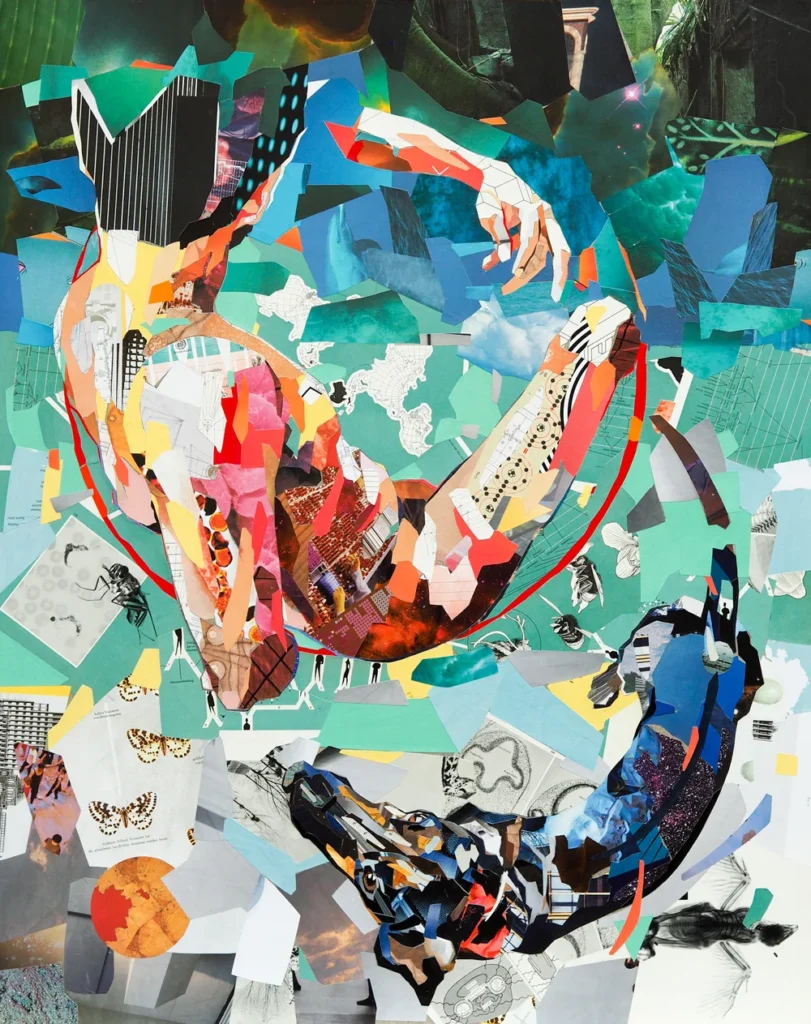
In the development of comprehensive material art, the emphasis is no longer solely on juxtaposing and combining various materials; rather, it focuses more on the cultural, historical, social, and personal meanings behind the materials. By selecting different materials such as old objects, textiles, metals, photographs, and discarded materials, artists make the materials not only have visual and material properties but also carry memories, identities, environmental and social concepts, thereby allowing the materials themselves to participate in the expression of the work’s ideas.
Comprehensive material art, if it remains confined to “combining different materials,” still remains a purely technical understanding. As modern and contemporary art develop, materials are increasingly seen by artists as vehicles for ideas. A mature comprehensive material work not only answers “what was used,” but also “why it had to be used.” The same wood, metal, old clothes, photographs, or plastic can have completely different meanings in different cultural and artistic contexts. The choice of materials thus moves from a formal question to a philosophical one.Materials first carry their own origins and experiences. Old clothes have been in contact with the body, possibly leaving traces of personal life; family photographs record specific people, time, and relationships; old books, bills, letters, and newspapers carry historical information; architectural remnants may point to a space that has been demolished; discarded machine parts may evoke industrial production, labor, and technological renewal. When artists incorporate these materials into their works, they do not turn them into “neutral substances” devoid of pastness; rather, they reorganize the existing memories.Materials can also carry social and cultural significance. Traditional textiles, hand-woven handicrafts, local woodcrafts, ceramic crafts, or specific decorative patterns may connect to regional cultures and identity experiences. Industrial plastics, advertising packaging, and electronic waste can lead viewers to associate with consumerism, fast production, and environmental pressures. Artists choose these materials to connect their works to broader social contexts without relying on lengthy textual descriptions.Therefore, the “material properties” and “conceptual properties” of materials often coexist. A rusty iron plate has color, texture, weight, and a rough surface; these are its material properties; at the same time, rust can also evoke thoughts of time, decay, industrial remnants, or forgotten spaces. A transparent acrylic sheet can both transmit light and refract light, and can also be used to discuss the relationship between visible and invisible, barrier and penetration, and reality and virtuality. It is within these two dimensions that the artist builds connections.Conceptualism does not mean that materials must be given a fixed answer. Good works often do not turn a certain material into a simple symbol, but retain multiple possible readings. Old objects can be both personal memories and social history; discarded materials can both reflect deterioration and possess new forms of aesthetic beauty. Through arrangement, scale, position, combination, and spatial relationships, artists determine how the audience approaches these meanings, but they do not have to completely explain them to the audience.From the creative process perspective, “material and concept” requires artists to ask questions before choosing materials. For example, the work discusses memory: what materials truly leave traces of time? It also discusses the environment: whether using new plastic is inconsistent with the theme, or whether this contradiction itself is part of the work? It also discusses the technological society: whether real electronic components are necessary, or whether simulating digital visuals with traditional materials is more effective? These questions transform the material selection from a decorative decision into a research decision.Digital media and artificial intelligence can also follow this logic. Data can represent behavioral records, algorithms can embody rules and repetition, and images can discuss the relationship between authors, machines, and choices. But technology only has conceptual value when it is properly connected to the subject matter of the work. If it is merely added to appear “advanced,” it may still be only a superficial effect.Therefore, the transition from “material combination” to “material and concept” means that comprehensive material art moves from being rich in technology to further deepening expression. Artists no longer limit themselves to whether the materials are beautiful, complex, or novel; instead, they ask why the materials appeared, where they came from, what they have experienced, and how the audience will understand them. Material transforms from matter into information, from a craft object into an entry point for the mind. Comprehensive material art is also gaining stronger cultural, historical, and contemporary significance in this transition.
Six: Integrated Material Art and Contemporary Art、The two are not the same concept.
- Integrated material art is an art form characterized by the participation of multiple materials, media, and techniques in the creation process; contemporary art is a broader concept of art culture.
- Integrated material art can be an important component of contemporary art, but not all contemporary art belongs to integrated material art. The difference between the two is that one emphasizes the materials and methods of creation, while the other emphasizes the era, concepts, and cultural context in which it is produced.
Integrated Material Art and Contemporary Art are often discussed together, so it is easy to mistake them for the same concept. In reality, the two fall under different categories. Integrated Material Art primarily describes a method of creation and the organization of media, emphasizing the integration of different materials, media, and production techniques within the work; contemporary art, on the other hand, is a broader category encompassing a range of artistic activities that occur within contemporary social contexts. Simply put, one emphasizes “how the work is made,” while the other more often concerns “in what era and cultural context the work exists.”Comprehensive material art can be considered contemporary art, but contemporary art does not necessarily use comprehensive materials. A contemporary painter can entirely use oil paint and canvas; a photographer can also stick to a single medium; they can still be considered part of contemporary art practice. Conversely, a work that uses paper, fabric, wood, and paint to create a unified whole can clearly exhibit comprehensive material characteristics. Determining whether it belongs to a certain contemporary art context also requires consideration of the time of creation, problem awareness, exhibition environment, and artistic discussion, rather than relying solely on the number of materials.Similarly, the integrated material approach did not emerge in the 21st century. The collage of the early 20th century brought newspapers, printed paper, and other real materials into painting; subsequently, ready-made works, assemblage art, installation art, and various forms of material experimentation continuously expanded the boundaries of the medium. Therefore, “integrated material” has its own historical development trajectory; it can appear in the modern art phase or continue into the present day. To completely equate integrated material art with contemporary art would ignore the continuous development of this method over the past more than a century.There is also a very close relationship between the two. Contemporary art emphasizes open media choices, interdisciplinary practices, and responses to real-world issues, while integrated material art precisely provides highly flexible creative methods. Artists can freely choose the most suitable materials and media when discussing memory, identity, environment, consumption, cities, technology, or digital life, without being restricted by any one traditional technique. Therefore, integrated material has become one of the most common methods in contemporary art.Installation art is often overlapping with integrated material art, but the two cannot be completely equated. Installation art emphasizes the relationship between the work and the specific space, viewing path, and on-site experience. A single installation can use many materials, or it can only use one material. Integrated material works emphasize the combination of multiple materials or media; it can be an installation or it can still remain in the form of wall works, sculptures, or book art. Similarly, digital art, image art, and artificial intelligence art may also intersect with integrated material art, but they cannot be automatically called integrated material art simply because they use computers or AI.This distinction is very important in art studies and the analysis of works. When facing a work of art, one can pose different questions separately: what materials and techniques are used? How are these media connected? This is an analysis at the material level; what are the issues addressed by the work? What relationship does it have to contemporary social, cultural, and artistic systems? This is an analysis at the context level of contemporary art. The two levels can support each other, but should not be confused.In the context of artistic creation, this distinction can also avoid the misconception that the newer the material, the more contemporary it is. Using LEDs, sensors, or artificial intelligence does not automatically make a work more contemporary; using wood, paper, or traditional craftsmanship does not mean that the work lacks contemporary significance. The key is how the artist organizes materials, concepts, techniques, and historical experiences.Therefore, a more accurate statement would be that material-based art is an open creative method and artistic language; contemporary art is a larger historical and cultural framework. Material-based art can play an important role within this framework, and it can intersect with painting, sculpture, photography, installations, and digital art. Understanding the differences and connections between these two terms helps us analyze works more clearly and allows artists to consider “media selection” and “contemporary issues” as two related but independent dimensions when creating.
Characteristics of integrated material art
One, the diversity of materials—any material can become an artistic language.
By breaking through the material limitations of traditional painting and sculpture, artists can freely use wood, metal, fabric, paper, glass, plastic, old objects, natural materials, and digital media. The colors, textures, weights, and tactile sensations of different materials can be translated into artistic language, expanding the scope and visual layers of the work.
The most obvious characteristic of integrated material art is that it completely opens up the question of what can be used as material for art. Traditional painting often uses canvas, paper, oil paint, watercolor, and ink as basic materials; traditional sculpture relies more on wood, stone, metal, or plaster. Integrated material art does not negate these materials; rather, it continues to expand the range of choices beyond them. Artists can freely seek suitable materials from nature, industry, everyday life, and digital technology, according to the subject, form, space, and concept of the work, making the material selection itself part of the creative process.The natural world provides an extremely rich source of materials. Wood, branches, stones, mud, sand, plant fibers, seeds, water, tree leaves, and even naturally weathered objects all possess textures, colors, and traces of time that cannot be fully replicated. When incorporated into a work, they not only provide a surface effect; they can also bring natural growth, environmental change, land memories, and life processes into the work. Artists can preserve the original state of the materials or cut, burn, dye, assemble, or rearrange them to create new relationships between natural attributes and artificial processes.Industrial production also provides another type of material with strong historical characteristics. Steel, aluminum, copper wire, plastics, glass, acrylic, resins, rubber, mechanical parts, circuit boards, and building components all bear the structural and technical characteristics of industrial civilization. They can exhibit hardness, precision, coldness, transparency, reflection, or repetition, and can also be formed into new spatial structures through welding, bending, polishing, and assembly. As industrial materials have entered the realm of art, they have enabled works to directly confront cities, machinery, production methods, and the experience of modern life.Items in everyday life can also serve as materials. Old clothes, newspapers, photographs, books, packaging boxes, furniture parts, bills, toys, tableware, and discarded items once had their own functions and experiences. When they leave their original use and enter the art work, their meaning changes. Marks such as wear, stains, creases, fading, and so on record time, and may also evoke personal memories, family experiences, or social history. Materials therefore not only have form but also a “once-used” life trajectory.Recycled materials and waste further expand the boundaries of materials. Discarded wood boards, metal scraps, plastic packaging, old electrical appliances, or construction debris can be given new value through selective selection, classification, stitching, and combination. Artists can use the damage, imperfections, and irregularities of these materials to form a visual language, or they can use them to discuss consumption, resources, the environment, and recycling. Materials are transformed from waste into works, which not only involve a change in form but also a reconsideration of value judgments.As the digital age progresses, the “repository” of integrated material art continues to expand. Images, sound, LEDs, projection, sensors, displays, motors, computer programs, real-time data, and AI-generated content can all be incorporated into works. Some are physical installations, others are information and operating processes, but they all change the visual, auditory, and interactive aspects of the work. The combination of traditional materials and digital media enables a work to exist simultaneously in both physical and digital spaces.The diversity of materials does not mean that the more materials you have, the better. Truly mature comprehensive material creation still requires choice and judgment. Artists must consider whether the materials are compatible, whether the structure is safe, whether the transparency, weight, scale, and color are coordinated, and also consider why certain materials are suitable for expressing this theme. Multiple materials can only form a true artistic language when they are in necessary connection with each other, rather than simply being stacked together.Therefore, “any material can become an artistic language” does not mean that the material has lost its standard; rather, the artist’s range of choices has expanded to encompass the entire real world. Materials range from professional art supplies to nature, industry, life, waste, and digital technology. Each material possesses its own physical characteristics, cultural background, and traces of time. The creativity of material art is derived from the artist’s observation, selection, experimentation, and reorganization of these differences.
2. The comprehensive nature of media—different art genres can be interconnected
Comprehensive material art can transcend the boundaries between painting, sculpture, photography, installation, video, and digital art. Artists can combine different media into a single work, allowing the connections between the elements of the surface, three-dimensional form, light and shadow, sound, and image to create more complex visual structures, thereby providing a richer viewing experience and expressive space for the work.
The second important characteristic of integrated material art is the high degree of integration between the media. Traditional art education often teaches painting, sculpture, photography, printmaking, fiber arts, installations, and digital art as separate disciplines with their own materials, techniques, and viewing methods. Integrated material art actively transcends these boundaries, allowing previously independent media to connect within a single work. The work need not be defined solely as “painting” or “sculpture”; it can establish new structures between multiple art disciplines.For example, a work of art can be based on painting, incorporating photographic images into the image, then fixing metal, wood, and fabric onto the surface to create a realistic depth to the flat surface. The artist can also add transparent acrylic panels to allow different layers to overlap and offset, and finally change the viewing experience through lighting or projection. At this point, the work simultaneously combines the chromatic relationships of painting, the informational nature of photography, the material structure of sculpture, the spatial sense of an installation, and the dynamic characteristics of digital media, making it difficult to accurately summarize using a single category.Synthetic media do not mechanically combine different art forms; instead, they allow them to change with one another. After photography entered painting, it no longer consisted solely of individual photographs; rather, it could be overlaid, cut, reprinted, or combined with paint. When sculpture’s structure entered the flat work, the distance between the viewer and the artwork changed; when sound was added to the installation, the work would alter the distance between the audience and the image; and when projections were overlaid on surfaces of wood, metal, or fabric, digital images were also influenced by the texture of real materials. In combination, the different media lost their original absolute boundaries and formed new expressive methods.This comprehensive approach also changes the way artists think. Artists no longer have to first decide whether they want to paint a picture or make a sculpture; they can instead propose a theme and then find the medium that best expresses it. If a subject requires static images, they can use painting or photography; if it requires real-world dimensions, they can add three-dimensional elements; if time changes is required, they can use images, light, or mechanical devices; and if the audience is involved, they can add sensors or interactive systems. The choice of medium is determined by the needs of the work, not by traditional classifications.The combination of painting and sculpture is one of the most common cross-disciplinary forms in integrated material art. The canvas can be cut, folded, perforated, or installed with objects; the painting surface can extend into real space; sculpture can also use color, images, printmaking, and photography to create visual layers similar to those of painting. When the two-dimensional and three-dimensional elements come together, the work is no longer just an “image” or an “object,” but becomes a comprehensive space that the viewer needs to view from different positions.The inclusion of photography, images, and digital media further expands this relationship. Photographs can provide real-life records, historical evidence, or personal memories; images can introduce motion and time; digital screens can continuously change; programs can allow works to respond to data or audience behavior. When combined with physical materials such as wood, metal, glass, and fabric, they generate a dialogue between virtual and real, fixed and changing, manual and technical.The integration of media also changes the way artworks are presented. A work may be displayed both on a wall and extending towards the ground; it requires both a frontal view and a detour; it contains both physical materials and sound or projections. The viewer is confronted with not a single medium but a whole set of visual, auditory, and spatial experiences. The boundaries of the work therefore extend from a single object to a relational system.Therefore, the comprehensive nature of media in integrated material art is not simply a “multi-category platter”; it is a method of reorganizing the artistic language. Painting, sculpture, photography, installation, video, and digital technology can be interconnected and transformed, and serve the same theme together. What truly matters is not how many media a work contains, but whether clear, necessary, and creatively-rich relationships are established between these media.
Three, the experimental nature of the technique—the process of making itself is exploration.
Comprehensive material art emphasizes continuous experimentation and trial and error; artists can employ a variety of methods such as pasting, cutting, welding, sewing, weaving, grinding, casting, folding, and hanging. The processing and connection of different materials produces new changes and coincidental effects, so the creative process itself is also a process of discovering the properties of materials and exploring the possibilities of art.
Comprehensive material art has a strong experimental element, because the artist is often faced not with a set of already fully established material and technical rules, but with a production process that requires constant testing, observation, and adjustment. In traditional painting, the canvas, pigments, and brushes have already formed a relatively mature technical system; comprehensive material art often requires connecting materials of completely different natures, so the creative process itself is like a laboratory. The artist is both a creator and a material tester and structural researcher.The most basic experiments come down to the ability of materials to connect together. How wood and metal are fixed, whether paper and resin will discolor, how fabric combines with transparent acrylic, and how glass and steel structures ensure safety are all questions that must be answered through practical testing. Different methods such as adhesives, screws, rivets, welding, stitching, embedding, and slotting and hanging all form different structures and visual effects. The way of connection is not an engineering problem that is considered only after the work is completed; it can already determine the form of the work from the very beginning.Artists also continuously test the changes in the surface of materials. Cutting can create edges, grinding can alter the luster, burning can leave behind color and marks, corrosion can create oxide layers, casting can form new volumes, folding and compression can alter the original form of the material. Some processing methods can be precisely controlled, while others are more haphazard. Composite material art often seeks new visual results between control and chaos.Experimental means that the final work is not necessarily completely predicted at the beginning. The artist may first make a small sample, observing the material's reaction to gravity, temperature, humidity, and light, before deciding whether to scale up. Pigments may leak through, paper may curl, metals may oxidize, resins may form bubbles, and transparent materials may exhibit unexpected reflections. These phenomena sometimes need to be corrected, but they can also lead to new discoveries that prompt the artist to change their original plan.Light is also an important experimental variable. The same material exhibits completely different states under natural light, floodlights, backlighting, and side lighting. The reflection of metals, the refraction of glass, the transparency of acrylics, and the shadows of fabrics can all change depending on the position of the light source. If the work contains multiple layers of transparent structures, the artist must also test the overlapping relationships produced at different distances and angles. Light is no longer just illumination; it becomes a creative factor that works in concert with the material.Entering the digital and electronic media makes the experimental process more complex. LED brightness, program speed, sensor sensitivity, image projection position, sound latency, and the stability of mechanical motion all require repeated debugging. Artists may simultaneously handle material structure and software logic, ensuring that the work functions properly on both the material and digital levels. Failure, correction, and retesting thus become very natural parts of the creative process.This experimental approach also changes the meaning of “error.” In traditional production, error often means starting over; in integrated material art, certain cracks, dislocations, flows, wear, and accidental connections can lead to new forms. Artists need to judge which unexpected elements are worth preserving and which will disrupt the work. What really matters is maintaining a sensitive observational ability rather than mechanically executing pre-determined schemes.Therefore, the creative process of integrated material art can be summarized as “posing a question—choosing materials—conducting experiments—observing the results—adjusting methods—reconfiguring.” The work is not simply a simple transformation of design drawings into physical objects; rather, it gradually forms through continuous practice. The experimental nature of the techniques allows artists to continuously discover the potential of materials that have not yet been utilized, and also makes the production process itself a significant source of knowledge, experience, and artistic language.
Fourth, the material nature of the material—the material itself is part of the work.
Integrated material art emphasizes the physical characteristics of materials themselves, such as the texture of wood, the hardness of metal, the transparency of glass, the softness of fabric, and the time traces left by old objects. Materials are not just tools for shaping images; their own weight, texture, surface, and changes can directly participate in the expression of the work, becoming an important component of the artistic language.
Integrated material art places great emphasis on the material itself, that is, the texture, weight, hardness, softness, transparency, roughness, reflectivity, color, temperature sensitivity, and the ability to change over time of real materials. In many traditional image-making processes, materials are primarily used to represent an object; for example, using paint to depict wood grain, metal, or skin. In integrated material art, artists can directly incorporate real materials into their works, allowing the very presence of the material itself to become a visual language.Wood has natural textures, knots, and growth directions; the density, color, and feel of different types of wood also vary. Artists can preserve the raw edges of the wood to let the natural form directly enter the work; they can also cut, polish, stain, burn, or join the wood to create a dialogue between the natural texture and the artificial structure. Wood is not only a support; its own growth marks, warmth, and changes over time can all become part of the work.Metal provides a completely different material experience. Steel is hard and heavy, aluminum is relatively lightweight, and copper has special colors and oxidation variations. Metals can be polished to form a mirror finish or remain rough; they can be welded into stable structures or bent, perforated, or corroded. Rust, welds, and scratches do not necessarily need to be hidden; they can be directly presented as traces and evidence of time, allowing the audience to feel the power, industry, decay, or labor processes.The material nature of glass and transparent acrylic is primarily manifested in transparency, refraction, reflection, and layering. The viewer can see the image behind the material through it while also seeing the light reflected from the surface. When there is a distance between multiple layers of transparent panels, the graphics overlap, dislocate, or create new visual spaces due to the changing viewing angle. In this case, transparency is not a neutral property but an important component of the composition, space, and viewing method of the work.Fabrics, paper, and fibrous materials emphasize softness, folding, absorption, tearing, and stitching. Fabrics tend to droop with gravity, paper is prone to wrinkles and edges, and fibers can be woven, stretched, and suspended. When placed together with hard materials such as metal and glass, these materials create a contrast between soft and hard, light and heavy, and stable and fragile. Although the audience may not touch the works, they can imagine the tactile qualities of these materials through visual experience.Materiality is also related to scale and bodily sensations. A massive steel plate can feel heavy and oppressive, while a thin, transparent material may appear light and unstable. The thickness, distance, surface, and edges of the material all influence how close the viewer can get to the work. Therefore, material art not only deals with “what we see,” but also with how the body feels a real object and the space it occupies.Time is also inherent in the material nature of materials. Iron rusts, paper yellows, wood cracks, certain plastics age, and textiles fade. Artists can try to prevent these changes or incorporate them into their works, allowing the materials to continue to change throughout the exhibition process. Preserving, maintaining, and aging are no longer just technical issues; they can also become part of the meaning of the work.Therefore, “the material itself is part of the work” means that the artist must take the true properties of the material seriously. Texture, weight, transparency, damage, reflection, smell, aging, and processing marks all contribute to the expression. The unique power of material art lies in these material experiences that cannot be fully replaced by images: materials are not tools hidden behind the work; they stand directly in front of the viewer, becoming the artistic language that the audience can see, imagine touching, and feel.In addition, the way materials are touched also enhances the sense of materiality. When smooth and rough, transparent and opaque, soft and hard are juxtaposed, the viewer experiences a psychological response similar to tactile sensation, enriching the perception of the work.
5. Conceptual: Materials not only have form but also carry meaning.
In integrated material art, materials not only possess visual and material attributes but also carry cultural, historical, memory, and social significance. Old clothing can represent personal experiences, waste can point to consumerism and environmental issues, and traditional textiles can connect to cultural identity. Through material selection, artists take their works from mere form expression to expressions of thought and concept.
As integrated material art develops into the contemporary era, the significance of materials has expanded beyond the aspects of color, texture, and form. Artists are increasingly paying attention to the historical, cultural, social, and personal experiences that lie behind the materials. Even a piece of wood, an old garment, a photograph, or a metal object may have completely different meanings in different works. Materials are therefore not only a source of form; they can also serve as carriers of ideas. Artists often choose what materials to use, and this is just as important as the question of “why this material must be used.”Old clothes are a typical example. They are simply fabric in a physical sense, but because they have been in contact with the body, they can leave behind dimensions, wear and tear, smells, stains, and traces of use. When old clothes enter a work of art, they can point to personal experiences, family relationships, labor, identity, or loss. The artist does not need to depict all of these elements; the material itself carries part of the memory. What the viewer sees is both a piece of fabric and an object that has been used by someone before.Old photographs, letters, bills, newspapers, and archival materials also share similar characteristics. They have both paper, color, and print marks, and specific sources of information. Photographs can connect to family histories, newspapers can document social events, and bills can point to a particular trip or consumption behavior. By cutting, covering, enlarging, overlapping, or rearranging, artists bring original information into a new context, creating connections between the past and the present.Industrial materials and waste are often also conceptual. Stainless steel iron may evoke images of industrial production, ruins, and time; mechanical parts may refer to technology and labor; plastic packaging may address consumer and environmental issues; architectural debris may connect to urban renewal, demolition, war, or disaster. These materials are important not only because they have a distinctive appearance, but also because they are connected to the production methods and lived experiences of real society.Traditional materials can also connect cultural identities. Textiles, embroidery, ceramics, woodcarving, paper, traditional patterns, or local materials can all carry regional history and collective memories. When artists juxtapose these materials with modern industrial materials or digital technologies, the works can form a dialogue between tradition and modernity, local and global, handmade and machine-made. Materials become the specific medium of cultural relationships.Conceptualism does not mean that every material has only one fixed interpretation. On the contrary, materials often generate multiple layers of meaning simultaneously. A damaged wooden board can be understood both as a rough surface in form and as something that evokes associations with use, damage, migration, or time. The artist guides the audience through the material’s position, scale, composition, and presentation, but does not have to lock all meanings into a single answer. The work thus retains an open reading space.Digital technology and artificial intelligence can also have conceptual properties. Data can represent behavioral records, algorithms can embody rules, repetition, and control, and images can trigger discussions about authors, machines, originality, and choice. However, technology only has conceptual value when it truly connects with the subject matter of the work. If it is merely added to screens, programs, or AI for the sake of novelty, it may still remain superficial in effect.Therefore, the conceptual aspect of material art can be summarized as “the material not only looks like what it is, but also means what it means.” The visual properties of materials, their material attributes, and cultural backgrounds and social experiences all contribute to the work. Mature artists do not simply seek beautiful or unusual materials; they think about where they come from, what they have experienced, why they have entered the work, and how they relate to the subject matter. When materials become the gateway to thought, comprehensive material art truly moves from material combinations to a deeper artistic expression.
VI. Spatiality—The work moves from the plane to the real space
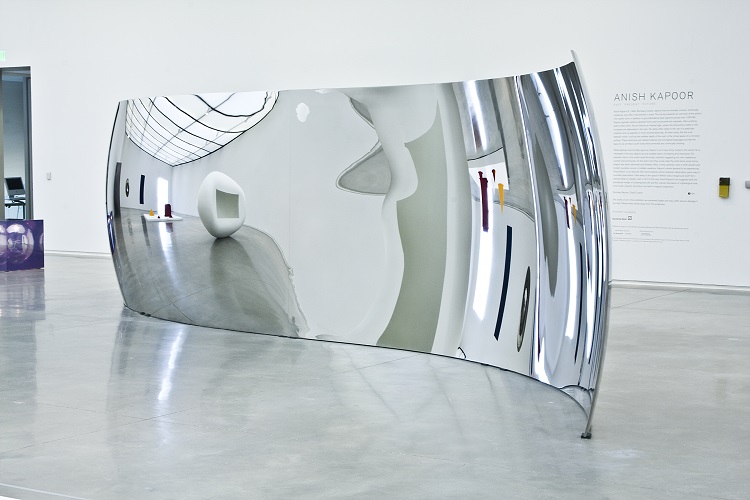
Integrated material art often breaks the limitations of two-dimensional paintings by extending them into real space through methods such as wood, metal, transparent materials, suspended structures, lighting, and installations. The works interact with walls, buildings, light, and the viewer’s viewing position, transforming the viewing from a simple flat surface into an immersive experience of a complete artistic space.
Space is an important characteristic that distinguishes integrated material art from many traditional forms of fine art. Traditional painting usually has a relatively clear boundary, with the viewer primarily looking at the image from the front. Integrated material art, by incorporating wood, metal, glass, acrylic, fabric, and various objects, often extends the work from a flat surface outward, creating real depth, distance, and layers. The work is no longer just a surface to be “seen”; it gradually becomes an object that must be experienced through body position and spatial relationships.As the material emerges from the surface of the screen, light and shadow begin to participate in the work. The protruding wooden blocks cast shadows on the wall, transparent acrylic creates reflections from different angles, and the metallic surface changes brightness as the viewer moves. The hanging fabric may undergo slight changes due to air flow. The visual effects of the work are no longer completely fixed, but are instead related to the light source, the wall, the viewing distance, and the movement of the viewer. Space thus becomes part of the structure of the work.Multilayer structures can particularly embody the spatiality of integrated material art. Artists can arrange transparent panels, mesh materials, painting layers, and physical objects at different distances, allowing viewers to simultaneously see multiple images through the front and back layers. When the viewing position is slightly changed, the graphics may overlap, separate, or create parallax. Instead of having only one optimal front view, the work presents different relationships as the angle changes. The viewer’s movement actually participates in the creation of the work.As integral material art further develops into installations, the scale of the work can extend to the entire room. Walls, floors, ceilings, doors and windows, and even the architectural structure itself can be incorporated into the creation. The artist needs to consider where the audience enters the space, what paths they take, where they stay, and how the contents seen from different directions are interconnected. Space is no longer just a container for the work to be placed in; it becomes a material that can be organized, cut, connected, and shaped.Light plays a particularly important role in spatiality. Side light can enhance surface textures, backlighting can illuminate transparent materials, projection can overlay dynamic images onto solid materials, and LEDs can create continuously changing light structures. Light also creates reflections, refraction, and shadows between materials, giving otherwise static objects a sense of time change. Artists design not only objects, but also the light environment around them.Sound can also expand space. Sound has no fixed shape but changes the audience’s perception of space through direction, distance, reverberation, and volume. If the work simultaneously contains physical materials and sound, the audience may first hear the work and then see it, or feel the changes in sound intensity during movement. Vision, hearing, and body position together form a complete experience, making integrated material art transcend mere visual objects.Spatiality also means that works need to relate to specific environments. The same work placed in a white art gallery, an old industrial building, an outdoor natural environment, or a home space can have completely different meanings. The color of the walls, the architectural scale, natural light, and the surrounding objects all change the work. Artists therefore need to consider “where the work is,” not just “what the work is.”Therefore, the integration of material art from the flat to the real space goes beyond simply adding thickness. It means that the work evolves from a fixed image into a system of relationships between material, light, sound, architecture, and the audience. The audience, from being spectators watching from a distance, becomes someone who must move, approach, circle around, or even enter the work. Space thus no longer serves as the background for the artwork, but may become one of its most important components.
Seven: Openness and Transborderness—Continuously Absorbing New Technologies and Culture
Comprehensive Material Art has a strong openness; it does not have fixed material scope or technical boundaries. It can continuously absorb new creative resources from architecture, design, photography, video, music, digital technology, and artificial intelligence. As technology and social culture continue to develop, new materials and media are constantly added, allowing Comprehensive Material Art to maintain its experimental and continuous development potential.
Openness and transborderity are important reasons why integrated material art can continue to develop. It does not have a fixed material catalog or any rules that artists must follow. As long as a material, technique, or knowledge is capable of contributing to the expression of a work, it can be incorporated into integrated material art. It is precisely this open structure that allows integrated material art to continuously respond to new social environments, technological changes, and cultural experiences without being limited by the medium forms of a particular historical period.In the early 20th century, artists brought newspapers, printed paper, and real-life objects into their works, which was a significant breakthrough in the boundaries of traditional painting. Later, industrial materials, ready-made products, photography, video, and installations were continuously added, expanding the scope of art from canvas to objects and space. With each new medium introduced, not only did it add a new tool for creation, but it also changed the way artists thought about their work. The development history of mixed-media art itself is the process of constantly absorbing external resources and reorganizing them.Technological advancements further enhance this openness. Projection, LEDs, sensors, motors, digital screens, and programs enable works to glow, move, respond, and change. Virtual reality and augmented reality allow works to exist simultaneously in real and virtual spaces. Artificial intelligence also brings new ways to generate images, sounds, text, and real-time calculations. Artists can combine these technologies with wood, metal, painting, transparent materials, or traditional craftsmanship to make the old and new media coexist within the same work.Cross-disciplinary connections also manifest in the intersection between material arts and other professional fields. Architecture provides spatial structure and scale thinking, industrial design brings together material processing and modular methods, clothing and fiber arts provide textiles, sewing, and bodily experiences, film and music introduce time, sound, and narrative. Engineering, electronics, and computer science can help artists achieve mechanical motion, interactive control, and data-driven capabilities. Artists do not need to be experts in all fields, but they can expand their creative capabilities through collaboration and learning.Cross-border cultural exchange is equally important. Traditional materials, techniques, patterns, and handcrafts from different regions can be reconnected with contemporary artistic language. Traditional paper crafts, textiles, ceramics, woodwork, or goldsmithing need not be seen as in conflict with modern technology; they can co-exist with digital printing, LEDs, programming, or AI. The resulting works not only discuss technology but may also address history, identity, migration, cultural memory, and globalization.Openness does not mean there are no criteria for judgment. On the contrary, as more selectable materials and techniques become available, artists need to make more discerning judgments about which elements are truly necessary. New technologies do not automatically generate artistic value because of their “newness”; traditional materials do not lose their contemporary relevance because they are “old.” What matters is whether there is a genuine connection between the material, the technology, and the subject of the work. If a sensor, algorithm, or traditional process is merely decorative, it will not naturally enhance the depth of the work.Cross-disciplinary creation also requires artists to face new practical issues. Electronic systems need to be maintained, software may need updating, digital files need to be stored, and complex installations need to consider safety and transportation. Cross-disciplinary collaboration requires clear division of labor. Artists thus not only expand their creative freedom but also assume more technical, ethical, and preservation responsibilities. Openness is an opportunity as well as a higher level of organizational capacity.Therefore, the openness and transdisciplinary nature of integrated material art can be understood as a capacity for continuous absorption and reconnection. It creates channels between art, technology, architecture, design, music, film, digital media, and cultural studies, allowing each new material and technology to become a new artistic resource. Integrated material art is not a closed-ended discipline; it is an ever-changing open system; its future will continue to expand with new material, technological, and cultural experiences in human society.