
AI Integrated Materials Art Materials Laboratory
Integrated Material Art
.CharacteristicsDefinition and characteristics of integrated material art
.The History, Development, and Evolution of Composite Material Art
.The artistic value generated by the comprehensive application of materials
Materials, textures, and techniques of integrated material art
Comprehensive material art begins with an understanding of the materials themselves. Different materials have different colors, weights, transparencies, textures, structures, and cultural connotations; these characteristics directly influence the visual language of the work. Through the use of common materials, artist examples, material combinations, and creative painting schemes, it is possible to gradually understand how materials form contrast, complementarity, conflict, and fusion, and truly transform materials into a part of the painting creation.
The 14 most commonly used composite materials and an analysis of the works of 10 artists
Order of material usage frequency
Click on any of the materials from 1 to 14 to expand the material description.
Material characteristics:It dries quickly and has strong adhesion; it can be applied thinly or thickly, and it is also easy to bond with substrates such as paper, wood, cloth, metal, and plastic.
Use and attention:Suitable for painting, collage coverage, texture shaping, transparent cover dyeing, and surface treatment of installations.
Material characteristics:Robust and reflective, it can be cut, bent, welded, polished, and oxidized; it has outstanding industrial properties.
Use and attention:It is often used in sculptures, installations, structural frameworks, mirrors, and public art.
Material characteristics:The natural texture is evident; it can be sawed, carved, burned, dyed, spliced, and polished.
Use and attention:He often works on painting bases, reliefs, frameworks, installations, and sculptural structures.
Material characteristics:They come in a variety of shapes, from transparent to semi-transparent and soft or hard, and have characteristics associated with consumer society and industrial production.
Use and attention:Suitable for devices, pre-made products, transparent layers, and colored structures.
Material characteristics:Transparent, reflective, refracting, and fragile, it can manipulate light, space, and the relationship between the viewer.
Use and attention:Suitable for light installations, stacking structures, reflective structures, and sculptures.
Material characteristics:Soft, foldable, sewn and suspended, it also carries associations with the body, the family, labor, and cultural traditions.
Use and attention:Suitable for soft sculptures, embroidery, hanging installations, and body-themed works.
Material characteristics:Lightweight, thin, foldable, tearable, cuttable, dyed, and burnable; it also symbolizes fragility and vulnerability.
Use and attention:Suitable for painting, collages, paper cutting, and spatial installations.
Material characteristics:It is highly malleable; drying and firing can cause irreversible physical changes.
Use and attention:Suitable for sculptures, objects, modules, and reliefs.
Material characteristics:Heavy, tough, and durable; with natural textures and a distinct geological time sense.
Use and attention:Suitable for sculptures, pedestals, and works about nature, remembrance, and time.
Material characteristics:It has good flowability, suitable for lines, shading, splash and transparent layers.
Use and attention:It is often combined with paper, acrylic, photography, and collage.
Material characteristics:Semi-transparent, fusible, and covers and seals objects, with a gentle luster.
Use and attention:Suitable for wax paintings, archival papers and photos, as well as transparent layers.
Material characteristics:Lightweight, easy to cut and shape, suitable for quickly creating large-scale models.
Use and attention:He often creates sculptures with internal cores, models, and lightweight structures.
Material characteristics:Strong blackness, visible particles, easy to smudge and blend, with a direct sense of movement.
Use and attention:Suitable for drawing, sketching, and combining with paper and acrylic.
Material characteristics:Transparent casting, embedding objects, and creating high-gloss surfaces and thicknesses are possible.
Use and attention:Suitable for sealing, pouring, transparent layers, and high-gloss surfaces.
Artist Success, Material Selection, and Analysis of the Historical and Environmental Context
Each artist provides approximately 2,000–2,400 words and includes the “Watch/Listen/Stop” function.
The core relationship between the work and the material
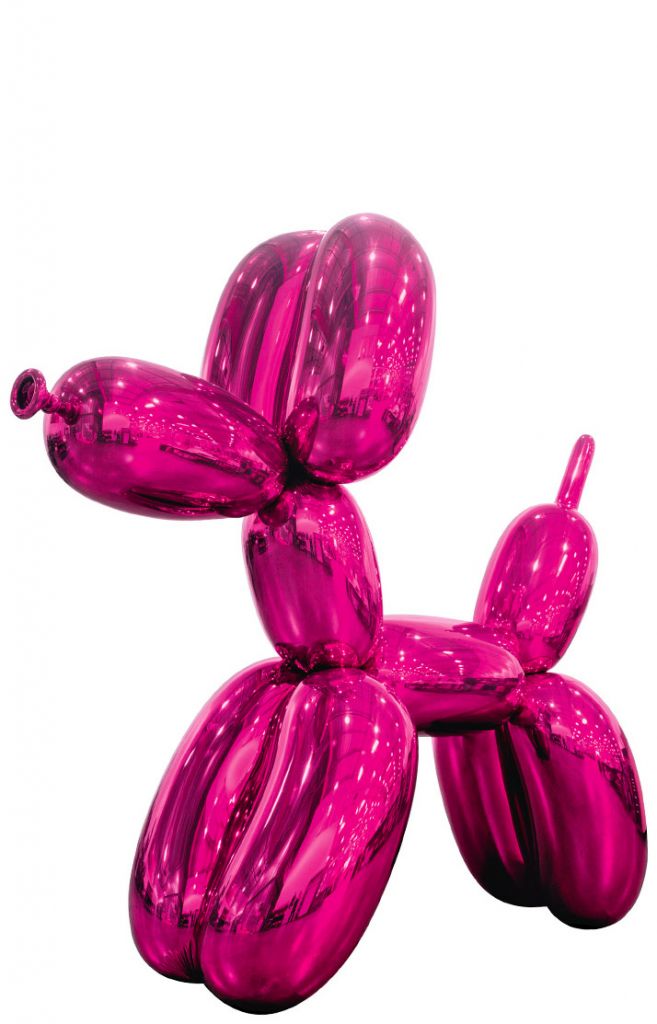
In Balloon Dog, the ephemeral, soft, and inexpensive balloons in children’s parties are transformed into massive, expensive, and almost permanent stainless-steel sculptures. The true power of the work is not just in its cute appearance; it is the extreme contradiction between the material and the image: the real balloons are light, soft, and prone to leakage; the stainless steel is heavy, hard, and durable. Through high-precision molding, welding, polishing, and mirror polishing, Kunz makes the steel look like a thin film blown up into reality; the viewer visually feels the lightness, while intellectually knowing that it is very heavy. The mirror surface constantly reflects the surrounding space, buildings, light, and the viewer, making the work no longer a closed sculpture but a visual device that continuously interacts with the scene. The transparent colored coating also gives industrial materials the allure of candy, toys, and luxury items. The material here not only serves structural functions but also directly engages in discussions about consumption, desire, childhood memories, luxury, time, and permanence.
What conditions must an artist possess to achieve success?
To achieve sustained success through the integration of materials, an artist must first develop a highly stable, clear, and recognizable personal language. Kunts did not create a shiny sculpture by chance; rather, he has been developing his work over the long term around popular culture, everyday objects, the surfaces of commodities, the desire to create and watch perfection, and the desire to transport and install them. Second, the artist must be able to translate ideas into complex production systems. Large stainless steel sculptures involve structural engineering, welding, grinding, polishing, color control, transportation, and installation; the artist himself may not be the one to complete all the processes, but he must set extremely high standards and organize a professional team. Fourth, the work must simultaneously address different levels of audiences: the general public is first attracted by vivid colors and familiar images; the professional audience can further discuss consumer culture, the art market, pop tradition, and the boundaries between high and low culture. Fourth, success also requires continuity. A truly effective material language should be able to continue developing across different works, scales, and spaces, rather than just creating novelty once.
Why can this material help the work achieve success?
The success of stainless steel lies in its physical properties and social symbolism, which are highly compatible with the subject matter of the work. As an important material in industrial society, stainless steel is often associated with architecture, machinery, automobiles, kitchens, and public facilities, possessing cold rigidity, precision, durability, and a modern production connotation. Kunts, however, treated this material with extreme smoothness, brightness, and appeal, causing a conflict between industrial and recreational aspects. The mirror-like effect of the work incorporates the viewer into the sculpture itself, and the viewer actually watches both the sculpture and their own image simultaneously. This involvement enhances the work’s communicative power. More importantly, steel fixed the image of a balloon that could only exist for a few hours into a permanent object; the material itself is discussing the meaning of time. If it were replaced with plastic, rubber, or a real balloon, the work’s meaning regarding luxury, permanence, industrial manufacturing, and high value would be significantly weakened.
The history and personal background of artists
Koons was born in 1955 in the United States and grew up in an environment of post-war consumer culture, television advertising, department stores, the automotive industry, and mass entertainment. He received formal art training while also engaging with the commercial display and financial sectors, which made him particularly sensitive to the question of “why things are given value”; “how surfaces create desire”; and “how art enters the market.” He did not view the commercial society as an enemy of art; instead, he directly brought familiar images, display methods, and manufacturing standards from the mass society into the art system. Unlike the traditional emphasis on the artist’s handiwork, he gradually developed large studios and specialized production models, bringing the role of the artist closer to the conceptual proposers, visual directors, and engineering organizers. This professional experience combined with the American social environment shaped his material language.
The international and domestic social art environment at the time
Pop art after the 1960s brought advertising, stars, commodities, and mass-produced images into the art museum; minimalism emphasized industrial materials, mechanical manufacturing, and precise surfaces. By the 1980s and 1990s, postmodernism further challenged the boundaries between fine art and popular culture, and large international exhibitions, super-galleries, and art markets rapidly expanded. The American society’s focus on brands, entertainment, and luxury goods provided a very realistic context for Kunts’s work. The international art world was also increasingly accepting large-scale industrial production, outsourced manufacturing, and team collaboration. Kunts was at the intersection of these changes: he inherited the mass symbols of Pop art, absorbed the industrial precision of Minimalism, and pushed the costs of production, market prices, and surface appeal to the extreme. Therefore, his work was highly praised and continued to be criticized for commercialization and marketization, a controversy that itself illustrates the strong connection between the work and its era.
Inspiration for comprehensive material creation
Balloon Dogs illustrates that material innovation does not mean finding previously unseen materials; it means creating an irreplaceable logic between materials and ideas. Creators should simultaneously consider the material’s physical properties, social attributes, cultural symbolism, processing methods, viewing methods, and long-term preservation issues. More importantly, they should constantly ask: Why must this material be used? If we replace it with a different material, will the work’s core meaning be lost? Kuns’s case also reminds us that precision in craftsmanship can itself become part of the artistic language. A comprehensive material art cannot rely solely on the quantity of materials and the surface complexity; it should establish a stable and developable visual and conceptual system. The more materials can simultaneously address issues of form, touch, space, time, and social symbolism, the more likely it is that the work will form an irreplaceable personal language.
Further analysis
Furthermore, Jeff Kunz’s case also illustrates that material research must simultaneously consider the ways in which a work enters into society after its creation. Whether a work can be remembered is not only due to its use of mirror-polished stainless steel and transparent colored coatings; it is also because a stable relationship forms between the material, form, subject matter, historical context, and viewing experience. Artists need to continuously test the durability, scale, surface, connection methods, and display conditions of materials, and find a balance between technological feasibility and conceptual necessity. When materials are merely visual effects, a work is easily replaced by a new material; when materials become part of a thematic structure, even as the times change, the work may still maintain its explanatory space. Therefore, the study of comprehensive material art should not stop at the material list, but should move into a comprehensive examination of the history of materials, their social significance, the logic of production, bodily experience, and display mechanisms.
The core relationship between the work and the material
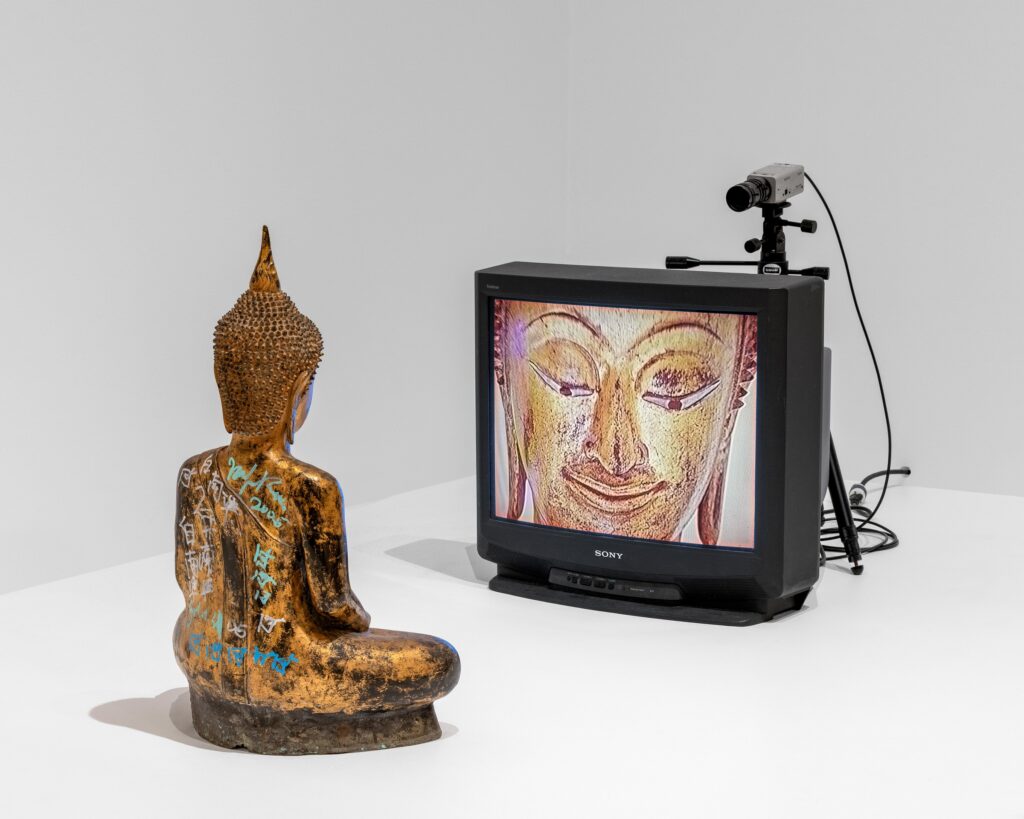
TV Buddha organizes a traditional Buddhist statue, a camera, and a television into a real-time feedback system. The camera shoots the statue, and the image is immediately transmitted to the television screen, so the statue seems to be gazing at its electronic replica. The work lacks complex mechanical movements, yet it forms a very strong philosophical structure through its material relationships. The statue symbolizes stillness, meditation, tradition, and the spiritual world; television and the camera represent modern technology, instant communication, and electronic reproduction. When the two are juxtaposed, what the viewer sees is not just a contrast between “traditional and modern,” but a cycle about self-watching, time, media, and consciousness. The original function of the material is not eliminated but reorganized, thereby generating new artistic significance.
What conditions must an artist possess to achieve success?
Artists who use new technology need to understand the cultural implications behind the technology, rather than simply pursuing the novelty of the equipment. Bai Nanzhun is able to freely switch between music, performance, electronic technology, and visual art, so he does not treat the TV as just another display device. Second, success requires translating complex ideas into very clear forms. “The Buddha of Television” can understand the basic structure at a glance, but after understanding it, new questions keep arising. Third, artists need a cross-cultural perspective to truly understand East Asian religious traditions and Western modern technology, rather than simply pasting symbols together. Fourth, artists need to continuously research technology to allow experimental materials to form a complete system. True success is not just putting the TV in an art gallery for the first time, but rather allowing the TV, video, and electronic images to gradually become independent artistic languages.
Why can this material help the work achieve success?
Television and cameras represented a viewing technology in the 1970s that was rapidly changing society. Television transformed distant events into electronic images in the home, while the camera made reality instantly reproducible. Bai Nanzhun used this technology in a completely closed circuit: the screen did not broadcast news or entertainment, but only displayed the Buddha statues in front of it. In this way, television transformed from a mass communication tool into a self-reflexive device. The static of the Buddha statues and the instantaneous change of electronic images created a stark contrast. If the camera were removed, real-time would no longer exist; if television were removed, electronic self-watching would disappear; and if the Buddha statues were removed, the references to spirituality and traditional time perspective would also disappear. The three materials are interdependent structurally and are therefore irreplaceable.
The history and personal background of artists
Byung-wan Chung was born in South Korea and later studied music and art in Japan and Germany before entering the avant-garde and techno music circles in Europe. He worked in the United States for a long time. His cross-cultural experience allowed him to break through the boundaries of single cultures and single media at an early age. He encountered composition, experimental music, performance art, electronic devices, and television technology, and realized early on that the screen would become an important cultural environment in the future society. For him, television was not a passive tool but a medium that could be reprogrammed and reorganized like canvas, sculpture, and musical instruments. His East Asian background also allowed Buddhism, meditation, cycles, and the relationship between reality and illusion to naturally enter his works. Migration and cross-cultural experiences have fundamentally made his art global in nature.
The international and domestic social art environment at the time
In the 1960s and 1970s, the international art world was undergoing a period of media expansion. Conceptual art, performance art, installation art, and video art were constantly challenging the central position of traditional painting and sculpture. With the advent of portable video equipment, artists could for the first time produce electronic images relatively independently. As American society entered a period of widespread television adoption, news, advertising, and entertainment programs profoundly changed the way the public understood reality. During the Cold War, satellite broadcasting and global media also became important components of state and cultural power. From the perspective of modernizing Korea and East Asia, the phenomenon of traditional spiritual culture juxtaposed with rapid technological development also provided the structural basis for “The TV Buddha.” It was in this environment that Baek Nam-jun separated television from the commercial broadcasting system and redefined it as an artistic medium.
Further analysis
From a longer perspective in art history, Bai Nanzhun’s significance lies in redefining the scope of “art material.” Traditional materials often center on pigments, wood, stone, or metal; he instead considers electronic signals, real-time transmissions, screen refresh rates, and time delays to be materials that can be shaped. In this way, the material nature of a work no longer resides solely in the television box but also in the invisible currents and cycles of information. For today’s digital art, this is extremely important: Software, algorithms, networks, and data, while not as weighty as traditional materials, can equally be part of a work’s structure. Artists need to understand how these systems operate and how they affect human attention, memory, and identity. Bai Nanzhun’s success therefore comes not only from using television, but from understanding earlier than many of his contemporaries how media can change people’s lifestyles.
Inspiration for comprehensive material creation
The most important revelation of TV Buddha is that truly effective integrated material works are not about putting different things together; they are about redesigning the relationships between them. The clearer the original function of the material, the stronger the meaning after the rearrangement. For artists using screens, AI, projection, sensors, and interactive technologies today, they should not only pursue technical effects; they should also make the technical mechanisms themselves the subject of their work. They should also consider whether the work will still be valid after the device becomes obsolete. The old-fashioned TV of Bai Nanzhun has a sense of history, but the questions it raises about screens, self-watching, and electronic media are actually closer to today’s selfie, video conferencing, and social media life. This shows that truly successful technological art ultimately relies on conceptual structures rather than on the newness of hardware.
Further analysis
Furthermore, the Bai Nanhuan case also illustrates that material research must take into account the ways in which a work enters society after its creation. Whether a work can be remembered is not only due to its use of Buddha statues, closed-circuit cameras, televisions, and real-time video; it is also because a stable relationship forms between the material, form, subject matter, historical context, and viewing experience. Artists need to constantly test the durability, scale, surface, connection methods, and display conditions of materials, and find a balance between technological feasibility and conceptual necessity. When materials are merely visual effects, a work is easily replaced by a new material; when materials become part of a thematic structure, even as the times change, the work may still maintain its explanatory space. Therefore, the study of comprehensive material art should not stop at the material list but should include comprehensive research into the history of materials, social significance, production logic, bodily experience, and display mechanisms.
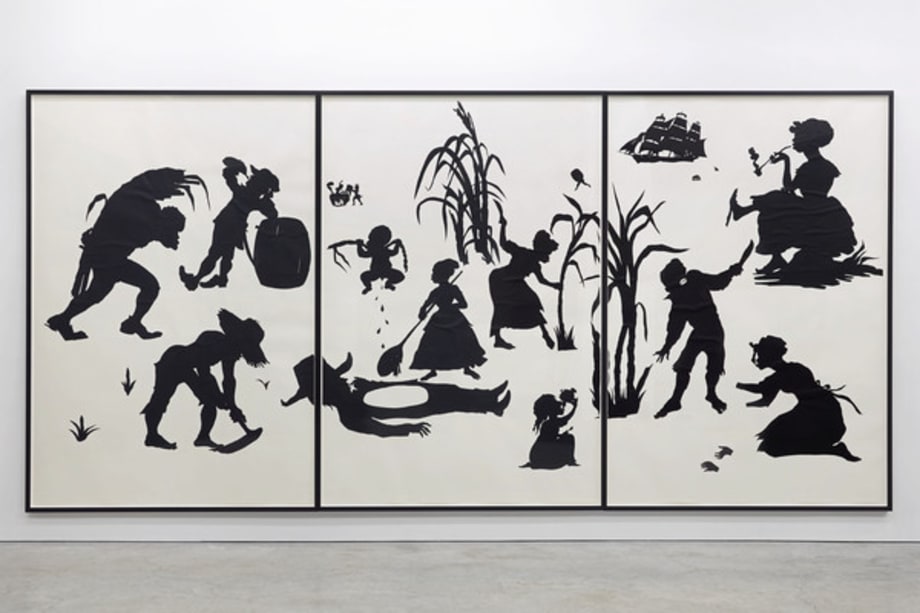
The core relationship between the work and the material
Kara Walker reused the silhouette portrait format popular in the 18th and 19th centuries, but transformed the originally elegant and commemorative visual tradition into a vast historical scene discussing slavery, racial violence, gender, and power. She often cut black paper to create figures and then directly install them on a white wall. The materials are very simple, but the absolute contrast between black and white makes the relationships between the figures extremely clear, while also inevitably triggering associations about racial classification. The silhouette lacks internal details; only the outline remains; the viewer must judge the identity of the figures through body posture and historical knowledge. This visual simplification corresponds precisely to the mechanism in history to compress complex individuals into racial types and stereotypes, thus forming a profound relationship between the material and the theme.
What conditions must an artist possess to achieve success?
Artists who deal with complex historical and social issues must first possess the ability to conduct in-depth research, rather than relying solely on emotional expression. Walker has conducted extensive research on American slavery, Southern history, visual stereotypes, and 19th-century culture. Second, they need to find a form of personal expression with extremely high recognition value. Large black silhouette drawings have become her visual signature. Third, artists must be able to withstand controversy and avoid simplifying history into a single position. Her works often contain violent, sexual, power, and uncomfortable scenes, forcing the audience to confront the complexities of history. Fourth, form must be combined with space. She has enlarged small paper crafts into installations that cover the entire wall, forcing the audience to not view a single illustration but to enter the historical theater physically. Research, form, risk, and spatial control are the important conditions for her success.
Why can this material help the work achieve success?
The effectiveness of black paper folding lies primarily in the fact that the silhouette itself possesses a clear historical context. It was once a popular method of portrait recording in European and American society, associated with family commemorations, class distinctions, and ritual culture. By borrowing this historical form, Walker amplified it to convey violence and slavery, creating a strong contrast between form and content. Second, the paper’s lightness, cheapness, and fragility are magnified to monumental proportions, a contradiction that gives the material new power. The contrast between black paper and white walls is extremely direct, and the audience is almost unable to ignore the racial metaphor embedded in it. More importantly, the silhouette strips away the details from the figures, leaving only their outlines, which makes the work directly address the question of “how society reduces a person to a certain identity label.”
The history and personal background of artists
Born in the United States in 1969, Walker has been directly exposed to the historical memory and complex social structures of the Southern United States throughout her upbringing and studies. She received formal art education and gradually developed an interest in race, gender, historical narrative, and visual power. Although slavery and racial segregation were abolished at the legal level in the United States, related images, language, memorial practices, and stereotypes persist long after. Walker has not attempted to reconstruct the past using traditional realist historical painting, but instead has studied how history is told, beautified, and consumed. This personal background of growth and her study of art history have enabled her work to be strongly focused on American history while also discussing more general mechanisms of power and memory.
The international and domestic social art environment at the time
In the 1990s, the art world in the United States became increasingly interested in identity politics, feminism, multiculturalism, postcolonial theory, and museum narrative power. Artists and scholars continued to ask who had the right to tell history, which groups had been long excluded, and how visual culture created racial and gender hierarchies. The debate in American society about public commemoration, historical education, and race relations also never ceased. The international art world also intensified its focus on colonial history and non-Western experiences. Walker’s work was at this cultural turning point, responding to both the history of American slavery and the global discussion about historical violence, colonial heritage, and identity construction. Because she refused to offer simplistic and comfortable conclusions, her work often sparked controversy, which in turn illustrated that her work truly engaged in social discourse.
Further analysis
Further, Walker’s success stems from her control over the relationship between “beauty” and “uncomfortableness.” The silhouette is concise and highly decorative, and at a distance it even has an elegant rhythm; but when the audience gets close and understands the character’s movements, they discover that the content is filled with violence and power conflicts. The form’s appeal clashes with the anxiety in the subject matter, making the work difficult to consume easily. She does not rely solely on textual descriptions, but instead allows material and bodily gestures to carry the narrative, which makes the work still directly relevant to audiences from different cultural backgrounds. For creators of integrated material, this indicates that material language can simultaneously serve both aesthetic appeal and critical function. Truly mature works are not simply separating “beautiful” or “heavy”; they allow both to coexist, allowing the audience to constantly modify their initial judgments during the viewing process.
Inspiration for comprehensive material creation
The case of Walker illustrates that one of the most important resources of material is its own cultural history. Artists should not only ask about the color, thickness, price, and techniques of the material, but also question who it was used by, what social functions it served, and what strata and cultural memories it carried. Low-cost materials can also produce highly complex works; the key is whether the form is accurate and whether the historical context is clear. She also reminds us that space and the viewer can also become part of the material. When the silhouette expands to cover the entire wall, or even projects the viewer’s own shadow into the work through projection, history no longer remains an object to be viewed, but becomes a site of bodily engagement by the viewer. Comprehensive material creation should focus on this expansion from material to space to the relationship between viewing.
Further analysis
Furthermore, the case of Cara Walker illustrates that material research must simultaneously consider the ways in which a work enters into society after its creation. Whether a work can be remembered is not only due to its use of black paper cutouts, white walls, projections, and space; it is also because a stable relationship forms between the material, form, subject matter, historical context, and viewing experience. Artists need to constantly test the durability, scale, surface, connection methods, and display conditions of materials, and find a balance between technological feasibility and conceptual necessity. When materials are merely visual effects, a work is easily replaced by a new material; when materials become part of a thematic structure, even as the times change, a work may still maintain its interpretative space. Therefore, the study of comprehensive material art should not stop at the material list but should encompass a comprehensive investigation of material history, social significance, production logic, bodily experience, and display mechanisms.
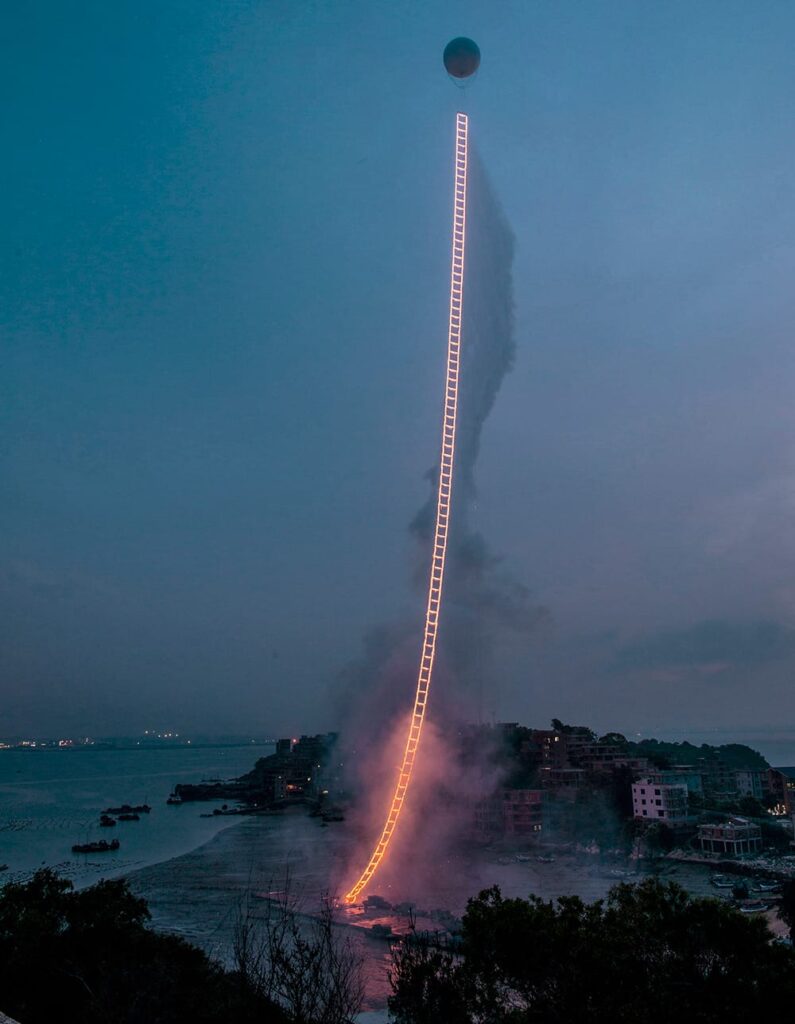
The core relationship between the work and the material
By transforming gunpowder from military, fireworks, and festive materials into a language of painting, installations, and public events, Cai Guoquan transforms it into a form of art. When gunpowder is lit, it produces fire, smoke, sound, smell, and explosions, ultimately leaving traces of ash and irregular edges on paper or canvas. The works thus have both an ultimate image and the process that took place. The artist does not treat gunpowder as a brown pigment; rather, he accepts its inherent nature of being dangerous, accidental, and uncontrollable, allowing the material to have some kind of initiative in the creative process. Traditional painting emphasizes the control of the hand over the brush, while gunpowder painting gives some of the results to the burning itself, thus forming a special relationship between control and uncontrol, creation and destruction.
What conditions must an artist possess to achieve success?
Achieving long-term success through the use of high-risk materials requires very strict technical and safety controls, including the quantity of gunpowder, the method of deployment, the order of ignition, the site, fire prevention, and teamwork. Second, it is necessary to understand the scale between randomness and control. If it is completely random, the work loses its artistic judgment; if it is completely controlled, it will weaken the unique vitality of gunpowder. Third, explosions must transcend visual wonder and relate to themes such as culture, history, nature, war, and the universe. Fourth, large-scale projects require strong organizational skills because they involve engineering, public institutions, local approval processes, and on-site management. Cai Guoquan is able to expand his individual material experiments into large international projects because he simultaneously possesses artistic judgment, technical research, and social collaboration skills.
Why can this material help the work achieve success?
Gunpowder possesses extremely rich dual properties. It is related to the history of ancient Chinese technology, fireworks, festivals, and folk rituals, as well as warfare, weapons, and destruction. It releases immense energy in an instant, yet leaves lasting traces; therefore, it inherently contains the contradictions of the transient and the eternal, creation and destruction, order and chaos. The smoke trails, scorch marks, and explosive patterns formed after gunpowder combustion are not truly replicated by ordinary pigments because these traces record the real energy events. The fundamental reason why materials succeed is that the physical processes and cultural histories overlap completely. If we merely mimic the effects of gunpowder with paint, although the visual similarity may be close, the temporal dimension, danger, sound, smell, and historical symbolism all disappear.
The history and personal background of artists
Zhai Guoquan was born in Xiamen in 1957 and grew up amidst a combination of traditional Chinese culture and experiences in folk fireworks. He also experienced the tremendous changes in Chinese society during the 20th century. His early training in stage art gave him an awareness of space, events, and audiences. Later, while living in Japan, he gained more opportunities to continuously experiment with gunpowder materials and gradually integrate Eastern philosophy, naturalism, and cosmic imagination into his works. He then moved to New York, further integrating this material into the global contemporary art system. His cross-cultural migration allowed him to understand gunpowder from within the history of China while also transforming this material into an energy language that international audiences could directly experience. His personal history thus did not serve as an external backdrop to the work but directly shaped the material choices and worldviews.
The international and domestic social art environment at the time
After the 1980s, contemporary art in China began to rapidly break through traditional easel painting, and performance, installation, conceptual, and experimental art gradually developed. At the same time, the global art world entered a period of rapid expansion with large biennales, cross-cultural curatorial projects, and public art projects. International institutions are increasingly emphasizing site-specificity, temporality, and cultural differences. The modernization, urbanization, and globalization of Chinese society have also made it an important issue how traditional culture can enter the contemporary world. Firework art has a strong sense of immediacy and dissemination, making it well suited for large international exhibitions, but Cai Guoquan did not let it remain on the level of performance; instead, he continuously connected the materials with Chinese history, natural views, war memories, and personal experiences, thereby avoiding becoming a mere spectacle of fireworks.
Further analysis
In terms of the creative process, Cai Guoquan also incorporates the “possibility of failure” into the art system. Traditional painting often seeks to control the outcome as much as possible, whereas gunpowder can burn excessively, deviate from expectations, or even disrupt the original composition. Artists need to continuously accumulate experience through experimentation, but they cannot tame the materials to the point of completely losing their randomness. This relationship is similar to contemporary scientific experiments: first setting conditions, observing the results, and turning the deviations into information for the next creation. For the integrated material laboratory, this case is particularly instructive: it is necessary to record material proportions, temperature, time, substrate, and environmental changes so that accidental results can be compared, learned from, and reused, rather than being repeated solely based on intuition.
Inspiration for comprehensive material creation
The case of Cai Guochang illustrates that the highest level of material innovation is not in finding things that others have not used before, but in discovering the physical processes and cultural histories that have not yet been fully explored within materials. By synthesizing materials, creators can transform the processes themselves into artistic language. At the same time, we must be wary of formalism: spectacularity does not equal profundity. Each material experiment should answer several questions: why is this change relevant to the subject? What did the material previously mean in society? Can the audience understand the core of the work through the material process? Only when the physical changes, cultural significance, and artistic concepts are truly unified will materials cease to be mere techniques.
Further analysis
Furthermore, Cai Guochang’s case also illustrates that material research must take into account the ways in which a work enters into circulation after its creation. Whether a work can be remembered is not only determined by its use of gunpowder, paper, canvas, smoke, fire, and explosive remnants; it is also determined by the stable relationships that form between materials, forms, themes, historical contexts, and viewing experiences. Artists need to continuously test the durability, scale, surface, connection methods, and display conditions of materials, and find a balance between technical feasibility and conceptual necessity. When materials are merely visual effects, a work is easily replaced by a new material; when materials become part of a thematic structure, even as the times change, a work may still maintain its explanatory space. Therefore, the study of comprehensive material art should not stop at the material list but should encompass a comprehensive investigation of material history, social significance, production logic, bodily experience, and display mechanisms.
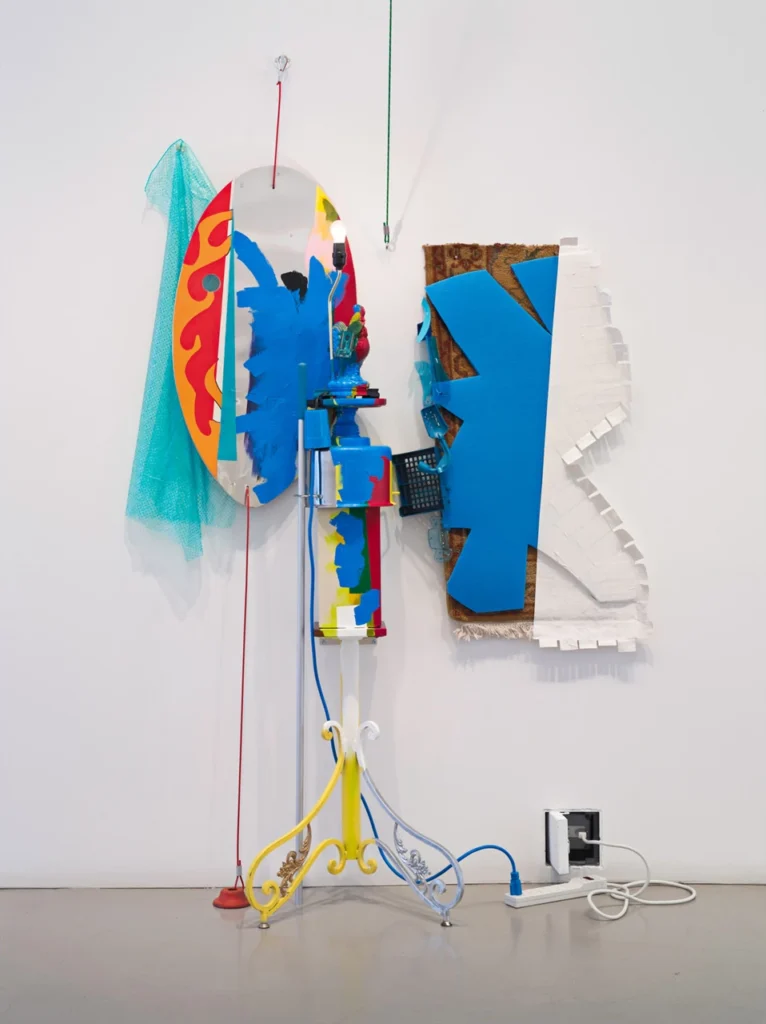
The core relationship between the work and the material
Stockholder often combines furniture, plastics, wood, textiles, building elements, finished products, and strong color combinations into installations that transcend the walls and floors. The works appear free and irregular, but actually possess a precise composition. Her important contribution is to transfer the colors, shapes, and composition in painting from the two-dimensional canvas to the real space, allowing the colors to adhere to real objects. The audience no longer stands in front of a painting to observe it; instead, they walk around the object. The weight, luster, softness, hardness, transparency, and purpose of the materials constantly change, making the works possess both painting, sculpture, and architectural properties simultaneously.
What conditions must an artist possess to achieve success?
To be successful, artists must possess strong visual judgment. Different materials conflict in size, weight, texture, color, and direction; if there is no overall structure, the work can easily become cluttered. Stockholder is able to integrate found objects into a unified composition, allowing the audience to first feel the overall rhythm and then gradually recognize its everyday origins. Second, artists need strong spatial abilities to understand the walls, floor, corners, columns, and paths the audience walks on. Third, they must accept the imperfections and temporality of materials, not rely on the permanence of traditional sculpture. Fourth, she has long persisted in transmedia practice, making the blurred state between painting, sculpture, and architecture a personal language rather than a single experiment.
Why can this material help the work achieve success?
The reason everyday plastics, furniture, wood, and textiles are effective is that they originally belonged to the home, the consumer, and the architectural environment. Upon entering the museum, their functions are eliminated, leaving only color, shape, touch, and cultural memories. Stockholder then connects different objects through paint, allowing colors to transcend the boundaries of materials: a piece of plastic, a table, and a wall may form a new visual whole because of the same color. The conflict between cheap materials and formal exhibition space also breaks the traditional hierarchy of art materials. The softness, transparency, and opacity of different materials, as well as their smoothness and roughness, are all involved in composition; therefore, materials are not decorations but the fundamental units of interaction.
The history and personal background of artists
Stockholder was born in the United States and grew up, studied, and worked in Canada, living in a long-standing cross-cultural environment in North America. She trained in painting and sculpture, but gradually realized that the two-dimensional canvas could not accommodate her interest in real space and objects. She expanded the principles of composition in painting into installations. Her career developed during a period when installation art was becoming more mature; artists could now freely use industrial products, household items, and building materials. She did not completely abandon painting; she transformed the space of the painting, so that her works could be understood both from the history of sculpture and from the traditions of color and abstract painting.
The international and domestic social art environment at the time
In the 1980s and 1990s, the international art world continued to reflect on the modernist idea of the purity of the medium. Art no longer had to strictly distinguish between painting, sculpture, architecture, and design. Contemporary ready-made, traditional, feminist art, postmodernism, and installation art encouraged artists to use everyday objects. In North American consumer society, the proliferation of plastic, furniture, and disposable goods gave these materials a distinct contemporary character. At the same time, art museum spaces shifted from showcasing individual works to accommodating large-scale installations. Stockholder’s work closely aligns with this environment: she inherited the modernist study of color and form in abstract art while accepting the legitimacy of the mixing of postmodern materials and the inclusion of everyday objects in art.
Further analysis
Her work also places particular emphasis on the scale of the viewer’s body. An ordinary plastic basket, chair, or wooden board has a fixed function in everyday environments, but when they are rearranged, lifted, cut, or painted over, the viewer becomes aware of the objects“ dimensions and weight. The work thus transforms ”habitual viewing“ into ”re-cognizing objects.” This is also an important reason for the success of everyday materials: the audience is very familiar with them, and the artist can generate a distinct sense of unfamiliarity simply by changing the relationship. Compared to expensive materials, ordinary materials are more likely to activate life memories. For creators of synthetic materials, this means that the selection of materials must not only consider visual effects but also whether the audience has used, touched, or lived in them before, and whether these experiences can be reawakened by the work.
Inspiration for comprehensive material creation
The Stockholder case highlights a common misconception: more material does not necessarily mean a richer work. What really matters is establishing the relationships between the materials. Creators can first determine core organizing principles, such as color harmony, weight contrast, transparency and opacity, soft and hard contrasts, vertical and horizontal, and then choose the materials. This way, even using ordinary recycled materials, a unified language can be created. Her practice also reminds us that space itself is also material; walls, floors, light, and the movement of the audience should all be incorporated into the design, rather than considering them after the work is completed.
Further analysis
Furthermore, the case of Jessica Stockholme illustrates that material research must take into account the ways in which a work enters into society after its creation. Whether a work can be remembered is not only determined by its use of plastics, furniture, wood, textiles, building elements, and pigments; it also depends on the stable relationships that form between materials, forms, themes, historical contexts, and viewing experiences. Artists need to constantly test the durability, scale, surface, connection methods, and display conditions of materials, and find a balance between technical feasibility and conceptual necessity. When materials are merely visual effects, a work is easily replaced by a new material; when materials become part of a thematic structure, even as the times change, a work may still maintain an explanatory space. Therefore, the study of comprehensive material art should not stop at the material list but should encompass a comprehensive investigation of material history, social significance, production logic, bodily experience, and display mechanisms.
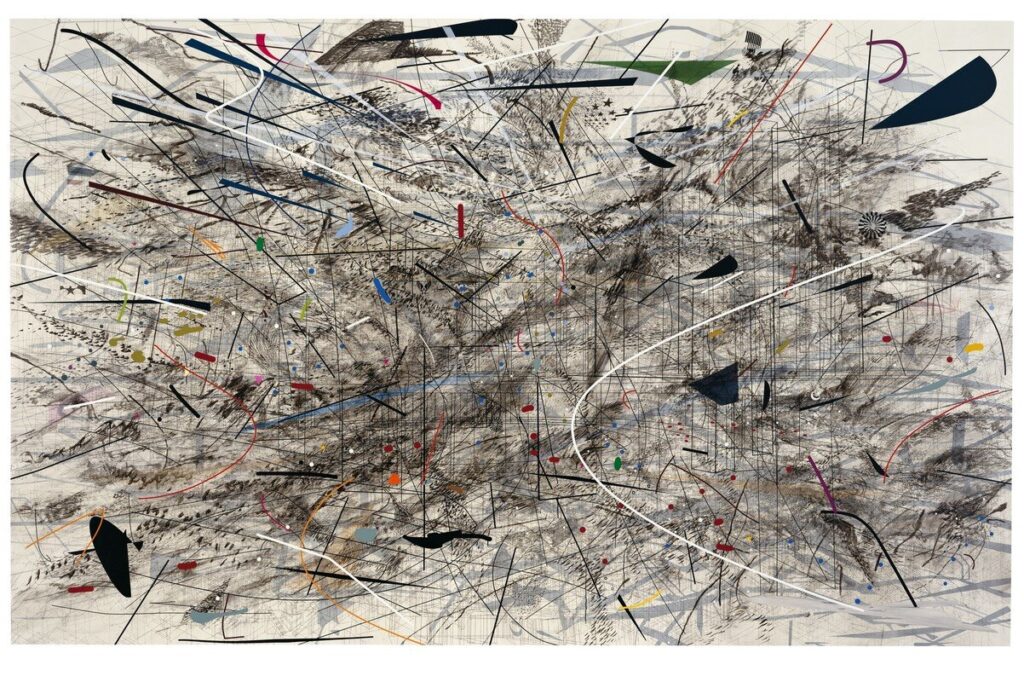
The core relationship between the work and the material
Mehreutou has established a highly recognizable language through large-scale, multilayered abstract paintings. She often incorporates architectural drawings, city maps, geographic structures, ink lines, gesture marks, and transparent acrylic layers into her works, making them resemble an ever-changing city, historical archive, and system of movement. The materials she uses are not uncommon, but through complex sequencing, transparency, and layer control, she enables ordinary painting materials to achieve the complexity of information networks and social structures. The uniqueness of her works comes from the rules between the materials, rather than from the scarcity of the materials themselves.
What conditions must an artist possess to achieve success?
This type of work requires artists to possess long-term compositional skills first. Large-scale canvases simultaneously feature macro-scale architectural structures and extremely fine lines; if the layers become out of control, the image can easily become chaotic. Second, there must be a tension between the abstract and the real. Meheretou does not directly depict war, migration, or urban conflict, but instead suggests these realities through maps, speed lines, and spatial debris. Third, the artist must establish a sustainable method: a stable workflow between the base image, transparent layers, erasing, covering, lines, and gestures. Fourth, personal experience must truly relate to global issues, rather than simply being labeled politically.
Why can this material help the work achieve success?
Acrylic has the advantages of quick drying, stacking ability, and compatibility with transparent media. The ink has a sense of speed and high contrast, making it ideal for constructing complex visual networks. The transparent layer allows the underlying architectural drawings and maps to remain visible, while the upper layers of lines appear to cover the old structure with a new event, yet cannot completely erase the past. This material property is very consistent with historical memory: cities and societies change, but old structures always leave traces. The conflict between mechanical architectural lines and freehand handwriting corresponds to the tension between institutional structures and individual actions. Materials not only create visual effects, but also simulate how history accumulates, overlays, and reinterprets itself.
The history and personal background of artists
Mehreutou was born in Addis Ababa in 1970 and moved with her family to the United States as a child. Her migration experience brought geography, national borders, and identity issues into her life early on. She received an art education in the United States and gradually developed a language that combined maps, architecture, and abstract lines in the 1990s. Her personal experiences did not directly translate into autobiographical images but were instead abstracted into movement, displacement, overlap, and complex space. This background led her to maintain a long-term interest in questions about who the city is, how history remains embedded in architecture, and how people move within political structures.
The international and domestic social art environment at the time
In the 1990s and early 21st century after the end of the Cold War, globalization, urbanization, war, trans-national migration, and digital information networks became important social contexts. Rapid urban expansion worldwide and the increasing availability of maps, satellite images, and architectural data made the international art scene gradually shift from a single Western center to a global perspective. Postcolonial, trans-national identities and urban politics became important topics. Within the United States, ongoing discussions about immigration, race, and public space. Mehtetou reconnects traditional abstract painting with these real-world issues, making abstraction no longer understood as detached from society but as a way of representing complex global systems.
Further analysis
Further analysis shows that Meherut’s layered approach is also related to the way we watch in the digital age. Modern people face maps, navigation, news images, social media, architectural data, and multi-window information every day; the visual experience itself is multi-layered and parallel. Her paintings translate this density of information into physical surfaces while retaining hand-drawn lines and bodily gestures, thus connecting the digital system with traditional painting. She does not simply replicate computer interfaces; instead, she reorganizes information overload, urban speed, and historical traces into structures for sustainable viewing. This is very important for artists who use AI and digital imagery today: once the digital information enters a work, it must undergo new selection, compression, and material transformation to truly become an individual artistic language, rather than remaining a mere technical product.
Inspiration for comprehensive material creation
Mehreut’s case reminds creators to ask not only what new materials they use, but also whether they have established new systems for their use. Ordinary acrylic and ink, if they have unique hierarchical rules, can also form original language. Comprehensive material experiments should be recorded in a sequential order: what to do first, what to do next, which layers are transparent, which layers are opaque, which traces are preserved, and which are erased. The order itself is the temporal structure of the work. For those who wish to develop AI or digital art with the help of technology, this method is particularly inspiring: digital layers and physical materials can be transformed into each other according to clear rules rather than simply being superimposed.
Further analysis
Furthermore, the case of Julie Meherut illustrates that material research must simultaneously consider the ways in which a work enters into society. Whether a work can be remembered is not only due to its use of acrylic paint, ink, transparent layers, maps, and architectural images; it is also because a stable relationship forms between the material, form, subject, historical context, and viewing experience. Artists need to constantly test the durability, scale, surface, connection methods, and display conditions of materials, and find a balance between technological feasibility and conceptual necessity. When materials are merely visual effects, a work is easily replaced by a new material; when materials become part of a thematic structure, even as the times change, a work may still maintain an explanatory space. Therefore, the study of comprehensive material art should not stop at the material list but should encompass a comprehensive examination of material history, social significance, production logic, bodily experience, and display mechanisms.
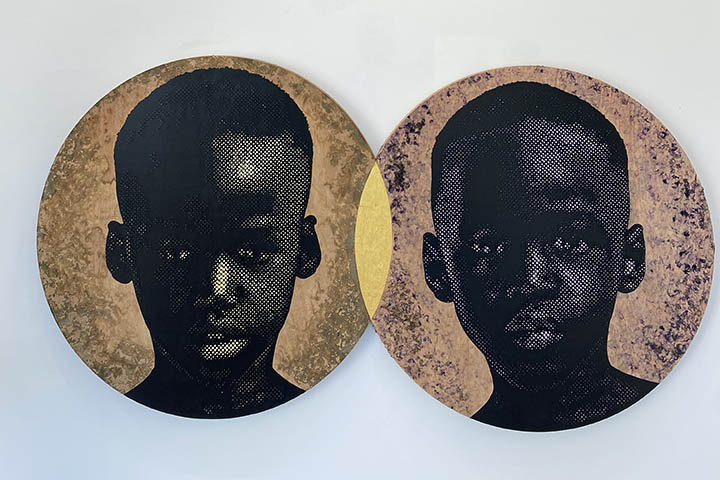
The core relationship between the work and the material
Peskine established a unique integrated material language by creating portraits of figures using a large number of nails. Nails are the most common fasteners in architecture and carpentry, but in his works they are organized into systems resembling pixels and brushstrokes according to length, density, depth, and arrangement. When viewed from a distance, the viewer first sees the complete figure; closer inspection reveals that the image is composed of thousands of metal nails. This shift in viewing transforms the work into a combination of painting, sculpture, and installation. The hardness, sharpness, and industrial nature of the metal clash with the delicate emotions of the portrait figures, becoming one of the most important tensions in the work.
What conditions must an artist possess to achieve success?
To make this method truly successful, it is first necessary to translate the technology into a stable language, rather than limiting itself to the novelty of drawing with nails. Peskine must precisely control the density and contrast of the nails so that the image can be recognized from a distance. Second, the subject must be connected to the material. His long-standing interest in the identity, history, and dignity of African people and African expatriates has given the penetration, connection, and repetitive labor of the nails cultural and psychological meaning. Third, in order to establish a dual perspective between the material texture at close range and the overall portrait at a distance, the system must be constantly changing the base, color, metal, gold leaf, and photography. This ensures the system continues to evolve rather than mechanically repeating the same techniques.
Why can this material help the work achieve success?
The nail has a very clear function: fixing, connecting, penetrating, and constructing; at the same time, it carries associations of sharpness, danger, and harm. This duality is particularly suited to discussing historical trauma and identity construction. The nail head produces different reflections under the light, creating shadows in the depth of the wood, allowing the artist to create grayscale and volume without the use of traditional paints. The tapping action also carries a strong sense of physical labor; the process of completing the work itself involves repetition, time, and strength. The key to the success of the material is the simultaneous establishment of visual mechanisms and symbolic meanings: the nail can both truly generate images and express construction, trauma, resilience, and memory.
The history and personal background of artists
Peskine comes from a multicultural family and has a background in life and culture. His work has long focused on black identity, the experiences of African expatriates, and the blending of cultures. The French society itself has complex relations with colonial history in Africa, immigration, and multiculturalism; the artist’s life and work in different regions enables him to understand identity issues from a transnational perspective. He does not view portraiture as simply a record of the individual’s appearance, but instead places it within a larger historical and social context. The industrial and physical labor of the materials used in the paintings takes them away from the soft surfaces of traditional academic oil paintings, giving them a more direct and powerful material sense.
The international and domestic social art environment at the time
The international art world in the 21st century continues to expand its focus on contemporary African art, African diaspora, colonial history, and identity politics. European and American museums and biennials are beginning to reexamine long-standing Western-centric art narratives. Meanwhile, digital images and pixelated viewing have become everyday experiences, with people accustomed to understanding photographs as composed of tiny information units. Peskine’s nails visually resemble physical pixels, precisely connecting traditional manual labor with digital age image structures. In the ongoing discussions in France and internationally around immigration, race, and cultural identity, this portrait material gains a stronger real-world connection.
Further analysis
From the production process, the repeated tapping of the nails also exhibits a distinct temporal dimension. Each nail point requires physical movement and positioning judgment; repeated thousands of times eventually forms a portrait. This labor intensity is starkly contrasted with the instantaneous generation of digital images. Although the audience cannot see the complete production process, they can infer the time and physical effort invested in it from the dense number of nail points. In this way, the work not only portrays the characters but also preserves the artist’s labor traces. For contemporary integrated material art, this “visibility of the production time” is crucial. If materials can allow the audience to feel the process of work, resistance, and the physical effort involved, the work will gain a sense of presence that cannot be replicated by a screen image.
Inspiration for comprehensive material creation
This case illustrates that ordinary hardware materials can also form highly original language. The key is to establish clear rules for material-image conversion. Composite material creators can think about whether the length, density, angle, gloss, weight, or arrangement of a material can correspond to the brightness, rhythm, or space of the image. If such a system can be established, materials will no longer be mere objects attached to a work of art; they will become true units of design. At the same time, the material’s function itself should ideally be related to the theme. A nail is both fixative and penetrating; because of this dual meaning, it is more powerful than random metal pieces chosen at random.
Further analysis
Furthermore, the case of Alexis Peskin illustrates that material research must simultaneously consider the ways in which a work enters into society after its creation. Whether a work can be remembered is not only determined by its use of nails, wood, metal, paint, gold foil, and photography; it is also determined by the stable relationships that form between material, form, subject, historical context, and viewing experience. Artists need to constantly test the durability, scale, surface, connection methods, and display conditions of materials, and find a balance between technical feasibility and conceptual necessity. When materials are merely visual effects, a work is easily replaced by a new material; when materials become part of a thematic structure, even as the times change, a work can still maintain its explanatory space. Therefore, the study of comprehensive material art should not stop at the material list but should include comprehensive research into the history of materials, their social significance, the logic of production, bodily experience, and display mechanisms.
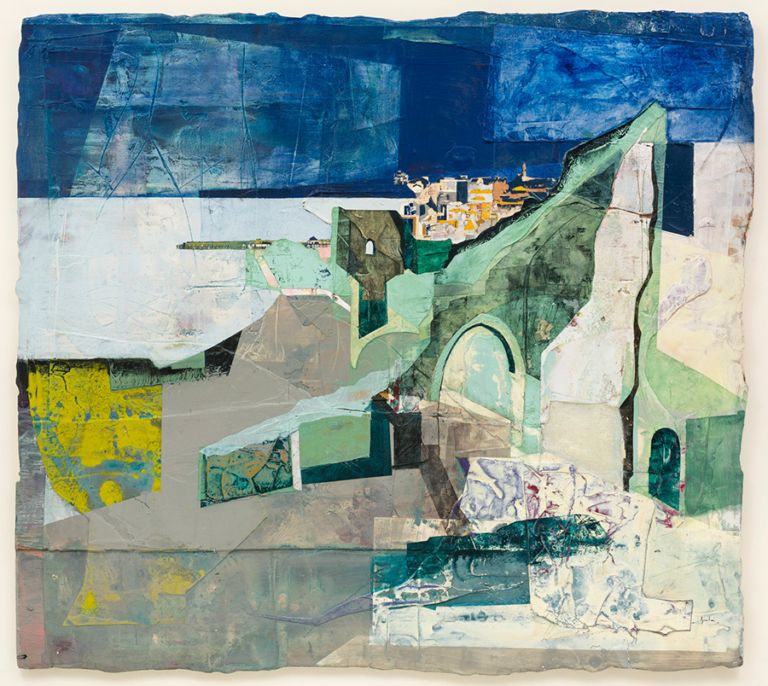
The core relationship between the work and the material
Gardiner’s landscape paintings transform the British coast, lighthouses, rocks, and geological structures into integrated surfaces with real depth. He is not content with painting rocks with paint; he uses wood panels, cardboard, plaster, and thick-coated materials to make the work itself seem to have undergone sedimentation, erosion, and fracture. The audience sees both the landscape image and a surface of material with geological characteristics. The success of the work comes from the consistency of the subject and the material process: the coast is an environment that has been shaped by wind, water, and time over long periods of time, and the image gradually forms through superposition, scraping, cutting, and covering.
What conditions must an artist possess to achieve success?
This type of work requires artists to possess the ability to observe and research in depth over a long period of time. Pursuing only rough surfaces easily results in decorative textures. Gardiner usually combines field observations, photography, geographical and local history research to relate each structure to a specific location. Second, artists must control the balance between abstraction and realism, allowing recognizable elements such as lighthouses and coastlines to serve as portals while allowing the material layers to develop into independent abstract forms. Third, the work must have a stable technical structure, as the thick plaster and the splicing base require consideration of cracking, weight, and long-term preservation. Fourth, continuous research in the same region enables the material language to deepen over time rather than simply imitating nature in a one-time manner.
Why can this material help the work achieve success?
Wood panels are harder than canvas and can withstand cutting, splicing, and thicker materials; cardboard can quickly create layers and cross-sections; plaster has the texture of sediment, peeling, and rock. Thick layers of acrylic and paint can cover and preserve the underlying irregularities, making the image accumulate like geological layers. The roughness, fractures, and edge variations of the material itself are highly consistent with the coastal environment. More importantly, the material leaves real time traces of its own making; the layers formed by superposition and sanding are not visual illusions but real things. The viewer can almost touch the surface with their eyes, so the material enhances the physical sense of the landscape.
The history and personal background of artists
Gardiner has long focused on the landscape of southern England and the coast. British landscape art has a long tradition, from Romanticism to Modernism, with weather, coastlines, and locality being important themes. In the contemporary era, photography has been able to accurately document landscapes, so painting, if it seeks only to reproduce, finds it difficult to generate the necessary newness. Gardiner chose to bring geological time back to painting through the integration of materials, making the work not just a view of a place but a material study of how places are formed. His practice both continues British landscape traditions and redefines them through materials and abstract structures.
The international and domestic social art environment at the time
Since the second half of the 20th century, land art, environmental art, local memory, and ecological awareness have continuously developed in British art. The international art world has also become increasingly concerned with the natural environment, geological time, and the human changes to landscapes. At the same time, digital photography and online imagery have made landscape photography extremely abundant, requiring painting to provide an experience that cannot be replicated by photographs. In the UK, coastal erosion, historical lighthouses, and the preservation of local landscapes also have cultural significance, connecting the work to the specific social context.
Further analysis
Furthermore, Gardiner’s practice illustrates how materials can help artists build long-term studies of a place rather than producing single landscape impressions. The coastline changes constantly due to tides, weathering, and erosion, and artists can document these changes through observations, photography, and layers of material from different years. This way, the work expands from a single landscape to a continuous archive of a place. The physical aging of wood, plaster, and paint can even be compared to the aging of the natural environment. For integrated material creators, material research can be combined with field surveys: recording the location, time, climate, sounds, geology, and human activities, then deciding which materials are best suited to preserve or simulate this information.
Inspiration for comprehensive material creation
Gardiner’s case provides a very practical approach: from the mechanism of topic formation, we can infer materials. If the topic is erosion, we can study wear, scratching, corrosion, and peeling; if the topic is deposition, we can study cover, casting, and layering; if the topic is growth, we can study diffusion, crystallization, or fiber. This selection of materials will be more logical than simply looking for specific materials. Composite material artists should make the production process congruent with the topic, so that the work not only talks about the object in the image but also re-experiences the object in the physical formation process.
Further analysis
Furthermore, Jeremy Gardiner’s case also illustrates that material research must simultaneously consider the ways in which a work enters into society after its creation. Whether a work can be remembered is not only due to its use of wood, cardboard, plaster, acrylic, and textured surfaces; it is also because a stable relationship forms between the material, form, subject matter, historical context, and viewing experience. Artists need to constantly test the durability, scale, surface, connection methods, and display conditions of materials, and find a balance between technical feasibility and conceptual necessity. When materials are merely visual effects, a work is easily replaced by a new material; when materials become part of a thematic structure, even as the times change, a work can still maintain its interpretative space. Therefore, the study of integrated material art should not stop at the material list but should include a comprehensive investigation of the history of materials, their social significance, the logic of production, bodily experience, and display mechanisms.

The core relationship between the work and the material
Jaz Harold’s work often uses silicone life-like molds, soft materials, plush fabrics, and paintings to create a visual world that lies between the body, dreams, intimacy, and unease. Silicone is particularly crucial because it can replicate skin details while also being clearly an artificial material. When viewers see it, they experience a contradiction between the real and the unreal. The work thus relies not only on the visual but also on the audience’s imagination of touch, temperature, and bodily experience. Her practice demonstrates that material-based art can utilize the bodily memories and psychological responses brought by materials, rather than merely discussing form or structure.
What conditions must an artist possess to achieve success?
Success in using body-related materials requires the artist to strike the precise balance between appeal and discomfort. Overemphasis on the aesthetic can lead to visual stimulation; overindulgence in softness can lose psychological tension. Through color, plush, floral forms, and humorous elements, Harold creates works that are both lovely and unsettling. Second, the artist must master the process of mold-making and casting; only when the details are sufficiently convincing do the materials trigger strong bodily associations. Third, the subject matter must come from sustained personal research rather than relying solely on the material’s effects. She develops works around themes such as the body, emotion, sex, shame, love, and psychological escape, making the material a part of a long-term theme.
Why can this material help the work achieve success?
Silicone is widely used in medical applications, special effects makeup, industrial molds, and body-related products, thus carrying the cultural connotation of a body with artificial elements. It is soft, elastic, and translucent, capable of mimicking the texture of skin while being more stable and controllable than real bodies. Plush fabrics bring warmth and intimacy, contrasting with the silicone artificial skin sensation. Even when the viewer cannot touch the material, they can imagine its softness, stickiness, coolness, or elasticity through visual perception. This anticipated tactile experience becomes an important element of the work. The material is not a neutral medium; it actively influences the viewer’s physical response.
The history and personal background of artists
Harold developed her practice in the contemporary art environment in Brooklyn, New York, crossing between sculpture, painting, and integrated media. Her generation of artists grew up in an era where the visual culture of the web, special effects technology, body politics, and psychological issues were highly visible. The boundaries between traditional art and popular culture, toys, fashion, and internet imagery were increasingly open. Artists could directly translate their personal emotions, bodily experiences, and social identities into material language. Harold chose silicone and soft media precisely because these materials could more directly represent the fragility, intimacy, and psychological uncertainty of the body than traditional bronze or stone.
The international and domestic social art environment at the time
The art environment in the United States in the 21st century is increasingly focused on bodily experience, gender, personal narrative, mental states, and identity expression. At the same time, silicone special effects, 3D printing, medical simulation, and virtual body images are increasingly entering popular culture, and people are becoming increasingly sensitive to the boundaries between real and artificial bodies. Social media also reinforces the pressure to create body images, take selfies, and present oneself. Harold’s material language is situated within this social context: soft artificial skin can be understood as both protection and as an alternative, camouflage, or vulnerability. The international art world’s interest in haptic, bodily, and immersive experiences also provides a display environment for these works.
Further analysis
Furthermore, soft materials also change the traditional sculptural values of “permanence and firmness.” Classical sculptures often use durable materials such as stone and bronze, whereas silicone, fabric, and plush emphasize softness, a skin-like feel, and a potentially deformed state. This material choice is closer to the everyday physical experience and is more suited to expressing fragility, intimacy, care, and instability. It reflects the shift in contemporary art from monumental permanence towards private experiences and bodily politics. For students of composite materials, this indicates that the hardness of the material itself has value connotations: hardness may represent authority, strength, and permanence, while softness may represent the body, protection, desire, or fragility. The choice of material is also actually a choice of the work’s attitude towards the world.
Inspiration for comprehensive material creation
Harold’s case reminds creators to consider how their audience will imagine touching the material. Touch does not necessarily require real interaction; sight can also activate bodily experiences. Different materials evoke associations of temperature, softness, danger, hygiene, and intimacy. When integrating material works, creators can harness these bodily memories to achieve a power more complex than that of pure visuality. At the same time, creators must avoid relying solely on material appeal; rather, they should allow tactile properties to serve the theme. The more able a material is to unify with emotion, body, and perception, the more enduring the work will be.
Further analysis
Furthermore, the case of Jaz Harold illustrates that material research must simultaneously consider the ways in which a work enters into society after its creation. Whether a work can be remembered is not only determined by its use of silicone, life-like molds, plush fabrics, and pigments; it also depends on the stable relationships that form between materials, forms, themes, historical contexts, and viewing experiences. Artists need to constantly test the durability, scale, surface, connection methods, and display conditions of materials, and find a balance between technical feasibility and conceptual necessity. When materials are merely visual effects, a work is easily replaced by a new material; when materials become part of a thematic structure, even as the times change, a work may still maintain an explanatory space. Therefore, the study of comprehensive material art should not stop at the material list but should include comprehensive research into the history of materials, their social significance, production logic, bodily experiences, and display mechanisms.
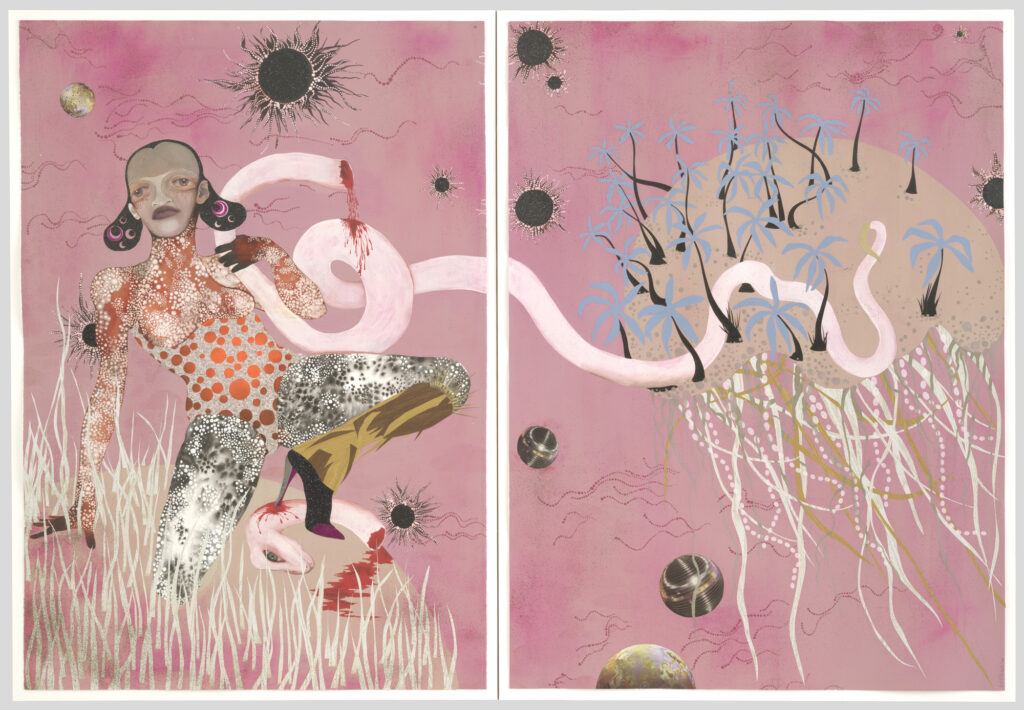
The core relationship between the work and the material
Mutu creates highly recognizable hybrid bodies through magazine clippings, photographic images, ink, acrylic, natural materials, and sculpture. The figures often resemble women, machines, animals, and future organisms, and also incorporate fragments of fashion magazines, medical images, and African culture. In Mutu’s work, collage is not merely a technique of form; it is a way of redistributing the power of images. How society and the media originally cut, defined, and consumed female bodies, the artist then re-cuts and recombines these images. The material process and the subject of identity are therefore deeply interconnected.
What conditions must an artist possess to achieve success?
Her success stems first from clear subject matter and a long-term visual language. Artists must know why they choose a particular type of magazine, photography, and body fragments rather than random collages. Second, strong drawing and composition skills are necessary to bring disparate images together into a unified portrait. Third, cross-cultural experiences must be translated into concrete visual methods. Mutu does not directly write down concepts such as Africa, women, or immigrants in her work; instead, she presents complex identities through body blending, material sources, and image conflicts. Fourth, she continuously expands from graphic collage to sculpture and public art, allowing core ideas to develop across different materials rather than being limited by a single style.
Why can this material help the work achieve success?
The most important characteristic of collage materials is that each image has its original source. Fashion magazines carry consumer and body standards, medical images carry the logic of scientific viewing and body cutting, and advertising images are related to desire and commodification. The artist cuts these fragments together, effectively returning the original body that was previously controlled by the media to the creator. Ink and acrylic allow her to overlay, connect, and rewrite the original images, making the new body no longer belonging to a single source. The key to the success of the material is not in its abundance, but in the cutting and reorganization themselves, which correspond to the process of identity construction and redefinition by society.
The history and personal background of artists
Mutu was born in Nairobi in 1972 and later moved to the United States to study and develop her artistic career. Her upbringing in East Africa combined with her American education and life experiences shaped her cross-cultural perspective. During her migration, she constantly confronted how the outside world imagined Africa, Black women, and the identity of immigrants. She did not accept these fixed categories, but instead created new subjectivities through the hybridization of the body. The characters in her works often possess a sense of power, danger, and mythology; they are neither traditional Western female figures nor simple ethnic cultural symbols. This personal history has kept her acutely sensitive to how identity is maintained through visual cultural production.
The international and domestic social art environment at the time
Since the 1990s, the international art world has been deeply concerned with postcolonial theory, feminism, African diaspora, global migration, and media representation. American society has also experienced ongoing discussions about race, gender, and immigration. Fashion magazines and advertising have produced idealized bodies in large numbers, and racial and gender biases have persisted for a long time. International institutions have gradually expanded their representation of African and non-Western artists, and the global art narrative has begun to change. Mutu’s work has dual power in this context: on the one hand, it directly uses mass media materials, and on the other hand, it deconstructs the identity imaginaries created from these materials from within.
Further analysis
Mutu’s practice also reveals the relationship between “discarded images” and “new identities.” After being read, magazines are often discarded; the human figures and advertising images within them also quickly become outdated as the consumption cycle progresses. The artist re-cuts these discarded print materials, giving them a second life. This approach involves both material reuse and the redistribution of visual power. Images originally intended for advertising and consumption are reorganized into hybrid figures with autonomous power. For creators who synthesize materials, this means that the value of discarded materials lies not only in their environmental aspects but also in the fact that they have undergone social use and left historical traces. Reusing is not simply recycling; it is reinterpreting their past functions and power relationships.
Inspiration for comprehensive material creation
Mutu’s case reminds composite material creators that the source of the material itself can become the content of the work. When using old newspapers, advertisements, industrial waste, or household items, it is important to document where they came from, what function they originally served, and how the meaning of the material has changed after entering the work. Material is not anonymous substance, but carries social history. Especially in collage creation, choosing which images to use is more important than the cutting technique. Truly powerful composite material works conflict the original meaning of the material and its new combinations, thereby generating new cultural interpretations.
Further analysis
Furthermore, the case of Wangzhi Mutu also illustrates that material research must simultaneously consider the ways in which a work enters into society after its creation. Whether a work can be remembered is not only due to its use of magazine clippings, photography, ink, acrylics, natural and industrial materials; it is also because a stable relationship forms between materials, forms, themes, historical contexts, and viewing experiences. Artists need to constantly test the durability, scale, surface, connection methods, and display conditions of materials, and find a balance between technical feasibility and conceptual necessity. When materials are merely visual effects, a work is easily replaced by a new material; when materials become part of a thematic structure, even as the times change, a work may still maintain its explanatory space. Therefore, the study of comprehensive material art should not stop at the material list but should include comprehensive research into the history of materials, social significance, production logic, bodily experience, and display mechanisms.
1. Choose 2–5 materials
2. Core topics
3. Material relationships
4. Composition structure
5. Color direction
6. Technical choices
7. The artistic language of each material
8. Material language combination / matching / comparison
9. Technical integration recommendations
Option A: Material relationship is clear
Option B: Space-level enhancement type
Program C: Experimental Expression Form
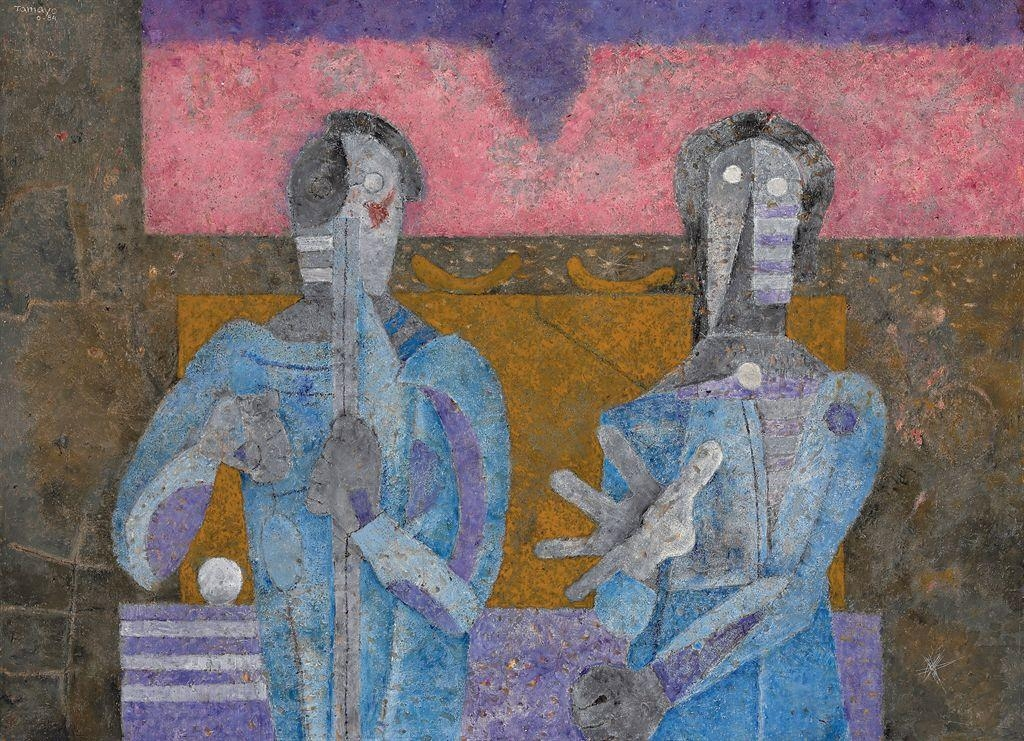
Texture materials and texture language
Texture is not only a surface effect; it can also express strength, time, emotion, and space. Different textures—rough, smooth, piled up, scraped, embossed, and cracked—can evoke completely different sensations for the viewer. Through experiments with material properties, texture formulations, and specific techniques, it is possible to gradually find the surface language that suits one’s own work and to develop texture from decorative effects into truly meaningful artistic expression within the work.
Texture materials play an important role in contemporary integrated material art. Not only do they add visual depth and complexity, but they also change the audience’s tactile perception, emotional judgment, and cultural understanding of the work.
Textured materials are materials that can impart special surface textures, thicknesses, grains, textures, glosses, transparencies, or tactile effects to a work of art. They can be derived from natural materials such as sand, stone, clay, wood, and plant fibers; or from artificial materials such as polyurethane foam, plastics, metal foils, fabrics, resins, and various specialized texture media. Composite material art also often combines materials of different properties, allowing the contrast between rough and smooth, soft and hard, transparent and opaque to be seen simultaneously.
The texture first changes the way the work is viewed. Traditional painting, although it can also create space through the use of light and dark, perspective, and color, most of these spaces remain illusory; the texture material transforms the “depth” from the illusion of visual perception into the real surface structure of the image. Raised, concave, granular, crack, accumulation, wear, cutting, fiber, reflection, and semi-transparent layers realistically alter the light, creating different effects in different viewing angles. When viewed from the front, the viewer may first perceive color and composition; when the light is directed from the side, the raised material creates shadows, and the originally inconspicuous surface structure is reactivated. In other words, texture not only increases the “thickness” of the painting but also introduces time, light, and viewing angle into the work.
Visual depth is also reflected in the relationships between the layers of material. Composite material works are often not completed in a single process; they are often composed of multiple layers of material that are successively laid down, covered, scraped off, sanded, torn off, re-applied, and repainted. Each layer may leave traces. The new material covers the old material, but does not completely eliminate the old layer; this “reveal—cover—reveal again” process produces visual impressions similar to geological layers, old walls, urban surfaces, and memory deposits. The viewer can judge from the surface that the work appears to have undergone a kind of time process, rather than being completed in a single moment. The texture thus gives the image a “experienced” appearance.
Different particle sizes also alter the visual space. Fine particles create fog-like, sand-like, and continuous surfaces; medium-sized particles easily form rock, soil, wall surfaces, and industrial textures; large-scale material accumulations push painting towards reliefs and even sculpture. Artists can use this scale variation to establish relationships between distant and near areas: the distant regions remain smooth or dense, while the near areas enhance the bumps and roughness, allowing the surface itself to participate in spatial composition. Compared to perspective, this is a more direct physical language of space.
Visual depth does not equate to “the thicker the better.” If all areas are used with the same strong texture, the image loses its rhythm and the audience’s attention is not divided into primary and secondary elements. Mature texture design emphasizes the contrast between “density and sparsity, thickness and thinness, roughness and smoothness.” A small area of rough texture often has more strength in a large area of smooth background. Texture should serve the overall composition, not cover it. Artists need to arrange surfaces in the same way they arrange colors: where things need to be quiet, where things need to be moving; where areas need to absorb light and where areas need to reflect it; where textures need to be seen up close to be discovered and where they should create structure from afar.
In contemporary integrated material art, visual depth also forms a distinct difference from photography and digital images. Screen images can simulate any texture, but the screen itself remains smooth. The bumps, shadows, material edges, and realistic reflections of physical textures are difficult for digital images to completely replicate. Because of this, in an age when digital images are highly popular, the real texture actually enhances the work’s physical presence. It reminds the viewer that this is not an image that can be infinitely reproduced, but a physical work with weight, surface, and traces of time and production.
The second important characteristic of texture is tactileness. Tactility does not mean that the audience must actually touch the work with their hands. Many museum artworks do not allow touching, yet viewers still imagine the material’s tactile sensation in their minds based on visual experience. Seeing sandstone evokes the idea of roughness; seeing polished metal evokes the idea of coldness and hardness; seeing woven fabric evokes the idea of softness and warmth; and seeing wax, silicone, or resin may evoke the idea of skin, stickiness, transparency, or smoothness. The visual system thus automatically mobilizes bodily memory, forming a “preconceived tactile sensation.”
This tactile expectation makes texture art more likely to elicit physical engagement than purely planar images. The viewer not only “sees” a rough surface, but imagines it as possibly sharp, cold, soft, or heavy in their bodily experience. The artist is not using a single visual sense, but rather the experiences accumulated from past human contact with materials. Materials such as wood, rust, old cloth, mud, ash, glass, and foam have strong expressive qualities because they already possess clear tactile memories in their lives.
Tactile perception is also closely related to scale. Fine textures attract viewers to watch closely, while large surface irregularities create a sense of physical pressure from a distance. The rough materials in large installations can evoke the experience of “entering rock layers, ruins, or industrial spaces,” transforming the work from a visual object into an environment. Tactile perception can also be enhanced by the viewer’s movement: as people move from smooth areas towards rough ones, or around protruding material structures, their body position and direction become part of the work.
The tactile contrast between different materials is a particularly important expressive resource in integrated material art. When soft fabrics and sharp metals appear simultaneously, the audience immediately feels the conflict between safety and danger; when transparent resin is wrapped around rough sandstone, a “sealed tactile sensation” is created; and when smooth mirror surfaces are juxtaposed with cracked earth, a contrast between industrial precision and natural decay emerges. These tactile contrasts do not require textual explanation; the body reacts before language.
Artists also need to consider the differences between the real touch of materials and the visual tactile sensation. Some works allow interaction, with the audience able to directly touch, step on, or move the material; others deliberately maintain a distance, creating a tactile experience through observation only. Both approaches have their merits. Real touch emphasizes participation, but it also involves durability, safety, hygiene, and maintenance; visual touch is more suitable for fragile or dangerous materials. Mature texture design should determine whether the audience needs to actually touch the material based on the subject matter.
From an art education perspective, haptic research helps creators break free from thinking based solely on color and graphics. Materials themselves are language. Creators can create a “haptic vocabulary”: rough, soft, prickly, sticky, cold and hard, warm, slippery, dry, granular, fluffy, oppressive, and light. Then they can find materials that correspond to these sensations. In this way, texture no longer serves only as a superficial decoration but becomes a system for transforming between the body and emotions.
Texture can directly influence the mood of a work of art. People’s judgments of surfaces often carry psychological connotations: a cracked surface is easily associated with damage, time, and fragility; a thick, cluttered surface can evoke oppression, strength, or heaviness; soft fibers evoke intimacy, protection, and the body; smooth, mirror-like, and glossy surfaces are often associated with precision, calmness, industrial technology, and modern science and technology. Artists can use these psychological associations to create an emotional atmosphere before the audience understands the specific subject matter.
Rough textures often have a direct physical nature. Materials such as sand, gravel, ash, tar, mud, and rags easily evoke images of land, labor, ruins, and time. When discussing war, history, disaster, physical trauma, and experiences on the margins of society, such surfaces often have more convincing power than perfectly smooth materials. The heavy sense of scale in Anselm Kiefer’s large-scale works is not only because the subject matter involves German history; it is also because lead, ash, straw, mud, and thick paint itself have a weight and worn-out feel. Materials make emotion become an entity.
Conversely, extremely smooth surfaces can also create strong psychological effects. Mirror-like metals make works appear calm, perfect, and difficult to touch, even creating a sense of distance. Artists such as Anish Kapoor use mirrors to allow viewers to see themselves distorted, shrunk, or disappeared; the smooth texture thus goes from being “refined” to further becoming a psychological experience about space, existence, and self-awareness. As such, emotion does not only come from rough materials; any surface, as long as it is clearly related to the subject, can generate psychological intensity.
Texture can also convey a sense of time. The peeling of old walls, the oxidation of metal, the cracking of wood, the fading of paper, and the wear of textiles all make one realize that time has passed. Artists can directly use old materials with historical traces, or they can artificially create a sense of time through methods such as scraping, polishing, burning, or corrosion. However, the two have different meanings: real old materials carry their own experiences, while the artificially created aged effect tends to be more visual simulation. Integrative material art requires a clear understanding of whether they are using real history or borrowing from historical appearances.
Accidentality is also an important source of emotional expression. Flows of water, sedimentation, cracks, combustion, and material reactions often produce effects that are not entirely predictable. Accidental traces easily make a work appear alive and process-like, while over-controlled surfaces can appear mechanical. The artist’s task is not simply to pursue “nature”; rather, it is to decide which accidental elements are worth preserving. Retaining an accidental trace means acknowledging the material’s own creativity. Giving it up, however, means the artist still bears the overall judgment. The balance between control and randomness itself can form the work’s emotional tone.
In terms of emotional expression, the value of texture ultimately depends on whether the material truly conveys emotion. If the subject is fragile but the material is overly rigid and perfect, the work may produce intentional contrast or simply lack consistency; if the subject is memory, layering, erasing, and residues often convey the complexity of memory better than a one-time flat application. Therefore, creators should translate emotions into material issues: what is the texture of anxiety? What is the surface of calm? Should memory be transparent or fragmented fragments? Once these questions are concretized, the material becomes psychological language.
Textured materials not only possess physical properties but also carry cultural and social significance. Different materials have different functions in human history, and therefore do not automatically lose their original memories upon entering the arts. Wood is related to architecture, craftsmanship, nature; metal is related to industry, war, technology, and modern cities; fabric is related to the body, labor, family, gender, and identity; soil and land are related to life, death, and geography; plastic is related to consumption, artificiality, convenience, and environmental pollution. When artists choose materials, they are actually choosing a whole set of cultural associations.
The symbolic significance of materials often stems from their “original use.” For example, cloth was used for transportation and packaging; old clothes belong to the physical experiences of specific individuals; newspapers belong to public information; industrial parts belong to the production system; and waste carries social traces from post-consumer use. When these materials enter a work, they bring not neutral colors and textures, but the original lived context. When Alberto Burri uses cloth, plastic, and burn marks, the damage, stitching, and repairs of the material evoke physical trauma and post-war experiences; when David Hammons uses street items and discarded materials, the material’s social origins directly engage in discussions about race, class, and urban experiences.
Symbolic significance is also related to the country and region. Some materials have different meanings in different cultures. Paper is closely associated with writing, painting, archives, and rituals in East Asian culture; gold leaf has different symbolic meanings in religious art, luxury goods, and architectural decoration; and the meaning of clay in agricultural and urban societies is also different. Therefore, contemporary integrated material art should not view materials as neutral objects that are universally applicable, but should study their historical significance in specific societies.
Materials can also symbolize power relations. The value judgments between expensive materials and inexpensive materials, industrial materials and handmade materials, permanent materials and disposable materials all contain a sense of judgment. Jeff Koons transforms the image of cheap balloons into a high-cost stainless steel sculpture, directly transforming the material grade into the work’s theme; Kara Walker uses cheap black paper to deal with heavy history, demonstrating that low-cost materials can also carry a monumental significance. The price of materials does not determine artistic value, but the social hierarchy of materials can be actively exploited by artists.
Contemporary environmental issues have further expanded the symbolic meaning of materials. Plastics, resins, electronic waste, construction waste, and industrial products now not only represent modern life but are also associated with resource consumption, pollution, and ecological crises. When artists use these materials, they need to be aware that the work itself is also part of the material cycle. The use of recycled materials, degradable materials, and locally sourced materials can expand the texture from a visual issue to an ethical one.
Therefore, symbolic meaning is not an interpretation added after the work is completed; it should be considered at the material selection stage. A mature integrated material creation requires simultaneously answering: What is this material? Where did it come from? Who has used it in the past? What does it mean in what culture? How does its meaning change after it enters the work? When the artist is able to answer these questions, texture becomes not just a superficial quality but an important language that connects personal experience, cultural memory, social structure, and historical time.
The early 20th century was an important period of fundamental change in modern integrated material art. Prior to this, in traditional European painting, although surface texture was highly valued, artists often “painted” wood, cloth, metal, skin, and stone using paint, rather than bringing these real materials directly into the painting. Cubism changed this. Artists such as Picasso and Braque began pasting newspapers, wallpaper, fabric, cardboard, and printed matter directly onto the canvas. Materials no longer served only as objects to be imitated; they became an authentic part of the work.
This seemingly simple change transformed the fundamental logic of painting. Once pasted onto a canvas, a newspaper is both a gray or white shape and a newspaper in the real world; it participates in composition while also carrying the traces of text, printing, social information, and everyday life. The work begins to simultaneously possess two identities: an “image” and an “object.” The texture also shifts from visual illusion to a tangible sense of touch.
The significance of the Cubist collage lies in breaking down the hierarchy between fine art and everyday materials. Artists no longer rely solely on traditional paints and high-quality canvases, but can directly use the most ordinary paper in everyday life. This practice laid the foundation for later Dadaism, Constructivism, ready-made art, collage, assemblage art, and installation art. The source of materials, their original functions, and their social attributes gradually became part of the art.
Meanwhile, Futurism, Constructivism, and Dadaism are constantly expanding the range of materials used. The metal, mechanical parts, printed matter, photography, and urban waste brought by industrialized societies enter the art world. Artists begin to realize that the true face of modern society exists not only in images but also in the materials themselves. Industrial materials represent technological progress and modern cities, while waste suggests consumption, war, and social change.
Although the textures of this period did not yet form surfaces that were as thick and complex as later ones, the most important revolution had already occurred: art no longer had to hide the authenticity of materials. Paper was paper, wood was wood, and metal was metal. Materials could retain their identity without needing to be disguised by paint into something else. This principle later became central to the development of integrated material art.
In terms of the creative process, artists in the early 20th century also established the basic logic of “collage”: cutting, selecting, moving, rearranging, covering, and pasting. Today, many integrated material works still build on this method, only with a broader range of materials and larger scale. Digital collage, image collage, and data collage essentially continue this idea.
Therefore, the true contribution of early comprehensive material texture was not the invention of a particular texture, but rather a change in the artist’s attitude towards materials. Materials shifted from being depicted objects to becoming active agents in the production of meaning. Texture shifted from being “painted” to being “made,” laying the foundation for material art throughout the 20th and 21st centuries.The studio gradually transformed from a “painting space” into a “material experimentation space.” Whether a piece of old newspaper, a piece of wrapping paper, or a piece of wood enters the work depends on its color, texture, and shape, as well as its original social function. This selection behavior later developed into a very important research method in contemporary integrated material art: first establishing a material archive, then conducting combinatorial experiments.As can be seen, the significance of early collage goes beyond the history of art itself; it actually established the basic thinking behind today's material laboratories—that materials must be observed, classified, compared, and reorganized according to the needs of the work.
By the mid-20th century, texture was no longer merely an effect produced by collage; it gradually became the core language of the work itself. Abstract Expressionism fueled this change. Through drip, splash, and flowing paint, Jackson Pollock brought the surface of his works to record the movement of bodies, gravity, and the passage of time. Paint no longer simply was applied uniformly with a brush; it fell, crossed, and overlapped on the canvas in a liquid state. Texture thus became a trace of action.
Artists such as Willem de Kooning, through thick layers, scratching, covering, and repeated modifications, preserve the intense process of creation in their works. Artists no longer seek to conceal their modifications; instead, they retain the traces of failure, covering, and starting over. The surface thus presents a state of ongoing struggle. Texture becomes a record of the artist’s body, emotions, and creative process.
Meanwhile, Europe saw a more direct emphasis on the “material painting” of the material itself. Artists such as Antoni Tàpies, Jean Dubuffet, and Alberto Burri used sand, clay, tar, plaster, cloth, plastic, metal, and discarded materials in large quantities, bringing the paintings closer to the walls, the ground, and damaged objects. These works no longer used the materials as auxiliary pigments, but instead made the materials themselves the subject matter.
The social context of the post-war period was very important during this period. The devastation, ruins, trauma, and reconstruction brought about by the Second World War gave a strong real-life sense to the damaged, burned, cracked, and rough surfaces. Burri’s cloth and burned plastic are often understood as related to wounds, sutures, and repairs; Tàpies’ wall-like textures evoke the surfaces of cities, the erosion of time, and the traces of the spirit. The textures thus shifted from formal experimentation to historical and psychological expression.
This phase also reinforced the value of the “process of creating works.” Drip, burning, cutting, scraping, and piling are not just techniques; they are acts. Artists began to value the unpredictability brought by the production process itself. Materials can flow, crack, burn, and deform; artists must work together with the material to respond to it. This idea laid the foundation for later process art, performance art, and material experimentation.
Texture is also beginning to challenge the boundaries between painting and sculpture. The thick materials transform the canvas from a flat surface into an object with real thickness. When the surface protrusions reach a certain degree, the work has become close to relief; when the material extends from the wall into space, it gradually enters into installation art. The classification of media begins to loosen.
Another important change in the mid-20th century was the artists“ reevaluation of ”non-refined” materials. Traditional academic art valued control, technique, and perfection; Dubuffet and others actively sought surfaces that were rough, primitive, and unrefined. This aesthetic attitude opposed excessive elegance and cultural norms, emphasizing a direct sense of life. Texture thus had the significance of being counter-academic, counter-refined, and counter-traditional in value hierarchies.
This period transformed texture from a secondary effect into an independent artistic language. The surface no longer served merely as a vehicle for images, but became a place to record the body, history, time, destruction, and material reactions. This period also changed artists“ understanding of ”completion.” Works no longer sought to completely erase traces of production; instead, the process was allowed to remain on the surface. Dripping could be preserved, and damaged areas could once again become compositional elements. Cracks and peeling could be seen as part of the work’s life. This concept truly integrated texture with time. What the viewer saw was not just a result; they could also infer what had happened in the past from the surface. Materials thus became a recording device, preserving the artist’s actions, pressure, pauses, and modifications. Today, many integrated material courses emphasize process recording, experimental logs, and version management, with their ideas dating back to this period: the creative process itself is knowledge; failure and deviation can equally serve as the basis for the next experiment.
After the 1960s, the concept of texture expanded further. Artists no longer limited themselves to creating texture on the surface of the canvas, but began to incorporate real space, architecture, bodies, and everyday objects into their works. Texture became a “spatial problem,” rather than a “surface problem.”
Robert Rauschenberg's Combine works represent an important turning point. He combined painting, photography, fabrics, newspapers, furniture, and everyday objects, allowing the canvas to interpenetrate with the real world. Texture no longer consisted solely of the thickness of the paint, but included real objects such as sheets of cloth, wood, metal, and printed matter. The surface of the work thus had complex social origins.
Italian Arte Povera (Poor Art) further uses stone, wood, soil, cloth, rope, plants, and industrial waste to reject commercialization and technological worship. The simplicity, volatility, and impermanence of materials become an artistic attitude. Artists no longer seek the preciousness and permanence of traditional art objects, but focus on how materials change over time. The texture thus takes on a political and social critical meaning.
During the same period, although minimalism superficially appears to be the opposite of rough textures, it also expanded the concept of material. Artists such as Donald Judd and Richard Serra emphasized steel, industrial processing, weight, and space. The surfaces of minimalism are often smooth and precise, but this “absence of texture” itself is also a choice of texture. This makes the viewer more aware of the weight, scale, and architectural space of the material.
Postmodern art further breaks through the boundaries of media. Artists are free to use plastic, light, fiber, photographs, old furniture, trash, and building materials. Works no longer have to belong to a specific category of painting or sculpture. Texture begins to include social identities and cultural origins. For example, textiles may relate to female labor, the family, and the body; street trash may relate to urban class and racial experiences.
The rise of installation art has brought the audience physically into the work. Texture is no longer just “rough to the touch”; it can be the sand and gravel on the viewer’s feet, the fabric around them, or the industrial materials on the walls. Watching becomes an experience of space. The artist begins to design how the audience walks, approaches, circles around, and experiences the material.
Environmental art and land art further incorporate natural materials and natural processes into their works. Mud, stone, plants, ice, wind, and water become the media of art. Texture can even change with the seasons, weather, and time. Works no longer seek a fixed state but accept change and disappearance.
The social context at this stage is also extremely important. The civil rights movement, feminism, anti-war movements, postcolonial theory, and identity politics give material new social meanings. Artists began to proactively use materials that had been overlooked by traditional art to challenge cultural power. For example, old clothing, household materials, and fibers entered feminist art, street materials entered the work of Black artists, and colonial trade-related items entered postcolonial art.
Therefore, the biggest change in the 1960s to 1990s was that texture expanded from a superficial form to a social space. Materials no longer had to be just “beautiful”; they were now asked to ask where they came from, who they belonged to, and what life systems they originally belonged to. This phase also promoted the “transparency of material sources.” Artists became increasingly willing to let their audiences know that materials came from the streets, families, factories, construction sites, or the natural environment, because the source itself was part of the work’s meaning. Old clothes and new fabrics had different psychological weight; real rusty metal and artificially painted iron also had different historical connotations. Materials were no longer just visual surrogates; they entered the art world with their own experiences. As a result, texture studies gradually developed a sociological direction: studying how materials once belonged to whom, how they were used, why they were discarded, and how their identity changed after entering an art gallery. This integration of material art has therefore developed increasingly close relationships with anthropology, urban studies, gender studies, and social history.
After the 1990s, the global art system expanded rapidly. Biennales, international art museums, and cross-cultural curatorial practices enabled artists to work within broader cultural contexts. Textured materials became increasingly complex, with traditional materials from different regions, industrial materials, and personal memories being incorporated into the same works.
Anselm Kiefer’s large-scale integrated material works became an important reference point for this period. Using lead, straw, ash, mud, plants, and thick layers of paint, he transformed the surface of his works into historical ruins. The materials themselves oxidize, crack, and change; time no longer serves as the external condition of the work, but becomes its internal mechanism. The textures carry German historical, war memory, and mythological symbols.
Meanwhile, feminist and body art continue to advance the development of soft materials, fibers, silicone, wax, and body sculpting. There is a more direct relationship between texture and the skin, the body, gender, intimacy, and trauma. Soft materials are no longer seen as secondary craft media but have become an important contemporary art language.
Globalization also brings about a blending of material cultures. Artists may simultaneously use African textiles, Chinese paper, industrial plastics, Western oil paint pigments, and digital printing. The collision of different cultural materials in the same work creates textures that serve as carriers of identity and migratory experiences.
During this period, large-scale textural devices formed by numerous “repetitive units” also emerged. Artists such as Tara Donovan gathered together ordinary industrial products such as straws, plastic cups, paper, and tape, transforming individual objects from their original functions into structures resembling clouds, rock layers, cells, or landscapes. Texture shifted from handprints to effects produced by quantity and system.
The development of materials science has also brought resin, silicone, foam, composite materials, laser cutting, and digital manufacturing into the realm of art. Artists no longer use traditional art materials, but instead begin to borrow materials from the fields of architecture, industry, medicine, and science and technology. Texture rendering is therefore more precise and complex.
The audience experience has also become an important direction. Immersive installations immerse visitors in material environments, where works no longer exist solely on walls. Sound, light, scent, and temperature combine with texture to expand the scope of art beyond the visual to encompass multiple senses.
Another key issue in the early 21st century is preservation. Many composite material works use materials that age, discolor, and decompose; museums have had to rethink their restoration principles. Should materials be prevented from changing? Or should they be allowed to continue to age? This question illustrates that the aesthetic concerns have expanded from issues of fabrication to philosophical questions about art.
This phase makes texture truly an interdisciplinary language. Artists, engineers, material scientists, architects, and digital technology professionals begin to collaborate; works can now involve chemistry, structure, ecology, and data simultaneously. As large installations and cross-cultural exhibitions proliferate, texture also faces a new scale issue. In the past, particles only a few centimeters across on a canvas could become accessible walls, landscapes, and environments at the architectural scale. Artists need to rethink structural safety, transportation, installation, lighting, and audience flow. Material research therefore extends from the studio’s manual skills to engineering collaboration. Many works require woodworking, metalworking, chemical materials, digital modeling, and even architectural calculations to be completed collaboratively. This change illustrates that contemporary texture art is not a simple extension of traditional craftsmanship; it brings artists into an interdisciplinary production system. The surface effects of the works remain important, but behind them often lie complex technologies, team coordination, and project management.
Today, texture is no longer limited to the surface of an object. Digital images, 3D scanning, 3D printing, virtual reality, augmented reality, and haptic feedback technologies are expanding the definition of “texture.” Artists can first scan real materials and then modify their scale in a digital environment; they can also generate complex surfaces using algorithms and then use 3D printing to transform the digital texture back into an object.
AI-generated images also bring new challenges. Artificial intelligence can quickly simulate visual textures such as oil paint, cracks, rocks, fabrics, and metals, but these textures remain primarily on the surface of the image. Real materials have weight, smell, temperature, resistance, and aging processes that AI images cannot directly reproduce. Therefore, future integrated material art is likely not “digital replacing physical,” but rather digital design interacting with physical materials.
Smart materials will further transform works. Thermoplastic materials, photochromic materials, shape-memory materials, conductive fabrics, and color-changing materials can respond to temperature, light, pressure, and electrical signals. Texture may no longer be fixed but will change as the audience gets closer or the environment changes.
Tactile technology is also worth paying attention to. Tactile gloves, vibration feedback, and force feedback devices in virtual reality can simulate roughness, resistance, and shape. Although they cannot fully replace real touch at present, they have already shown that “texture” can be part of digital interaction. In the future, artists may design virtual surfaces that cannot be seen but can be felt with the touch.
Sustainability will become an important criterion for material selection. Traditional resins, plastics, and chemical media, while offering abundant effects, may also pose environmental problems. More and more artists are beginning to research recycled plastics, biomaterials, mycelia, plant fibers, biodegradable polymers, and waste industrial materials. Texture research is therefore expanding from visual innovation to ecological responsibility.
Interdisciplinary collaborations in the future will become increasingly important. Material scientists can help artists understand the strength, transparency, reactivity, and aging mechanisms of new materials; engineers can solve large-scale structures and interactive systems; programmers can translate digital parameters into physical textures. The role of artists will also expand from being mere artisans to being material researchers and system designers.
But no matter how technology advances, the core of texture art will remain unchanged: the materials must be authentically connected to the subject matter of the work. New technologies themselves cannot guarantee artistic value. 3D printing, AI, intelligent materials, and virtual haptics can truly become an art language only when they can change the viewing, bodily experience, or cultural significance.
Therefore, contemporary texture research can establish a new working framework: first, studying the physical properties of materials; second, studying the cultural and historical background of materials; third, studying the production process and randomness; fourth, studying the physical experiences of the audience; fifth, studying the material life cycle and environmental impact; sixth, studying the transformation between digital and physical forms. Texture will no longer be just the “effect” on the surface of a painting, but become an important artistic system connecting matter, technology, body, history, and the future.\n\nAnother important direction in the future is to establish measurable, repeatable, and comparable material experimental systems. Traditional artistic experience often relies on personal intuition, while digital tools can record thickness, particle size, temperature, humidity, curing time, pressure, and color changes. If artists correlate these data with visual results, they can gradually build their own material databases. AI can also find patterns in large experimental records to help predict the cracks, flow, or transparency that might occur in certain combinations, but the final artistic judgment still rests with the creator. This working method combines the intuition of artists with experimental methods, allowing texture research to retain randomness while also accumulating more clear knowledge. The future development of integrated material art is likely to continue expanding within this cycle of “experience—data—re-experimentation.”
The value of common texture media lies in helping artists control thickness, particle size, transparency, and surface structure. Texture gels, silica gel, texture media, molding pastes, and lightweight molding pastes can be combined with acrylics, wood panels, paper, fabrics, and other composite materials to form new surface languages through various tools.
1. Texture Gels:Suitable for creating transparent or opaque highlights, knife marks, and thickness; can be used directly or mixed with paint.
2. Pumice Gel:Contains gravel particles, suitable for manufacturing rough surfaces similar to sandstones, rocks, old walls, and soil.
3. Texture Mediums:Used to change the density, transparency, and surface texture of pigments, these are one of the most flexible media in comprehensive material experiments.
4. Molding paste:Thick, opaque, suitable for making reliefs, grooves, carvings, and heavy structures, suitable for solid bases.
5. Light Molding Paste:While maintaining volume, it significantly reduces weight, making it suitable for large areas and multi-layer textures.
Texture production not only relies on chance but also requires basic techniques. The following introduces five of the most basic and commonly used methods of texture production: stacking, scraping, embossing, collage, and casting. They form the technical foundation for further material experimentation.
A. Five basic texture production methods
By repeatedly layering thick coatings of paint, molding paste, gel-like materials, sand, fibers, pulp, or other materials, one can create realistic elevations and thicknesses. The key aspect of the layering method is the relationship between layers: whether each layer is completely dry, whether the underlying layer is strong enough, whether the material will crack, and whether the weight exceeds the base’s load-bearing capacity. Artistically, layering is suitable for representing sedimentation, growth, weight, and the accumulation of time and matter.
Using tools such as a scraper, colorimeter, sandpaper, and wire brush on the surface of wet or semi-dry materials removes some of the material, revealing the underlying color and base again. Scratches can both create directionality and form wear and time marks. Controlling the force of the scraping, the width of the tool, and the dryness or wetness of the material are key to achieving a stable effect.
On surfaces of pigments, gels, mud-like materials, or molding pastes that have not yet completely dried, pressure is applied using cloth, wood chips, grids, ropes, leaves, metal parts, or homemade molds. The pressure can quickly transfer the structure of the real object onto the work surface, making it suitable for studying repetition, rhythm, and material memory.
Layering is created by pasting paper, fabric, wood chips, metal foil, photographs, fibers, old objects, and natural materials. Collage not only creates texture but also brings the original cultural significance of the materials into the work. The key lies in the choice of adhesive, the differences in thermal expansion and contraction between different materials, edge treatment, and overall composition.
Pour resin, liquid acrylic, plaster slurry, wax, or other fluid materials into the screen, mold, or containment area to allow gravity and flow to determine the final shape. Pour the material to create transparent layers, encrustation, flowing edges, and natural deposition. When handling the material, pay attention to the material ratio, curing time, bubbles, temperature and humidity, and safe ventilation.
B. Five practical texture application methods
1. Water flushing method:Apply acrylic or water-based colors with high water content, then use a hairdryer, air pump, or dye-free spray gun to push the color based on the changing water flow. The key is to control the flow so that the water marks are in harmony with the overall composition.
2. Sedimentation method:The mineral pigments with high water content naturally settle on a substrate-based wooden board, resulting in the accumulation of particles, color differences, and edge deposits. The occurrence of these phenomena is highly random, and moisture, particle, and drying conditions should be recorded using small samples.
3. Grinding method:On the wood board, build a base layer of acrylic and plaster powder. After completely drying, use sandpaper to sand the surface to reveal the colors and particles beneath. The sanding direction should follow the rhythm of the image, and attention should be paid to dust protection.
4. Pressing method:By deliberately preserving structural lines through dark underlayers and light overlays, tool marks, water flow compression, or partial scraping, the lines should be part of the composition rather than appearing randomly.
5. Strange phenomena:Flow, cracks, sedimentation, and scratching often take on forms that cannot be predetermined. The artist’s key ability is to judge between “keeping and discarding,” transforming the accidental into a holistic language rather than accepting it all.
This column not only introduces the materials used by artists, but also focuses on analyzing how texture forms an individual style, what significance the materials have, what the works look like, and how the artists specifically control texture. Each artist can click “View” to read the full text, or click “Listen” to listen to the Chinese text read aloud.
Select one work image
Jasper Johns
Featured work / Genre:Works such as "Flag"
Main material of texture:Wax, newspapers, pigments, collages and symbols
The work of Jasper Johns is particularly well suited to understanding the principle that “texture is not decoration, but the language of the work.” His representative practices can be observed in works such as Flag and related works. The core materials used by the artist include wax, newspapers, pigments, collage, and symbols. These materials are not added to the work after it is completed in order to increase its surface richness; rather, they are associated with the form, subject, and viewing method of the work during the conceptualization stage.
I. The unique style of texture formed in the work
Wax layers, newspaper collages, and repeated overlays transform familiar public symbols into objects with depth and a sense of history. This style is recognizable because the surface of the material and the work’s structure remain consistent over time. Even if the viewer is temporarily unaware of the work’s title, they can still determine the artist’s basic language from the thickness, gloss, cracks, overlaying methods, or material edges. A truly mature textural style is not a beautiful effect produced by chance at one time; it is a set of stable rules formed by the artist after prolonged experimentation: which materials are suitable for piling up, which are suitable for scraping off, and which need to be preserved with natural damage; and which must be meticulously processed. The texture thus becomes the “material signature” of the individual style.
II. The significance of texture in works of art
His textures are built on the contradiction between “images and objects.” The national flag is both a national symbol and a real surface made of paper, wax, and paint. The material significance usually exists on three levels simultaneously. The first is the physical level, namely the material’s true weight, hardness, transparency, graininess, and aging characteristics; the second is the psychological level, namely the bodily and emotional associations that the viewer generates when seeing these surfaces; and the third is the social and historical level, namely where the material was used in the past and what cultural experiences it was associated with. The work of Jasper Jones illustrates that when these three levels can mutually support each other, the material ceases to be a neutral tool of production and becomes part of the work’s ideology. The value of texture thus rises from “visual effects” to “conceptual structures.”
III. The Appearance and Visual Effects of the Work
At first glance, the works appear simple and flat, resembling symbols; on closer inspection, they are filled with newspaper edges, wax layers, brushstrokes, cracks, and traces of covering materials. Their surface is complex yet quiet. The appearance of these works often requires the viewer to change their viewing distance. At a distance, the viewer first perceives the overall composition, color, and scale; upon closer inspection, the material’s true surface begins to take center stage, allowing the viewer to see fine cracks, particles, scratches, fibers, edges, reflections, or layers. Different distances provide different information, which is an important advantage of texture art. The work no longer has a single fixed viewing point; instead, it encourages the viewer to move through space. Side light, natural light, and artificial lighting constantly alter the surface, making the work have different states at different times.
Fourth, the techniques of using texture
Mainly through wax painting, paper collage, covering, scraping, and partial exposure, different layers of time coexist. The key to the technique is not mechanical repetition of steps, but understanding how materials react under different conditions. Thickness, humidity, temperature, tool angle, substrate wettability, pressure, and drying time can all alter the result. Artists need to build experience through small-scale experiments to control the unpredictable aspects within acceptable limits. Mature texture production often combines planning with randomness: structural, compositional, and material choices can be predetermined, while cracks, flow, reflections, burnishing, or scraping-off details allow the material to generate its own changes.
5. Why this texture can have artistic value
Jasper Jones’s practice illustrates that the artistic value of texture does not come from complexity. The more complex the surface, the less likely it is to be good. Truly effective textures change the meaning, space, and way of viewing of a work. If all these materials were replaced with smooth printing or digital simulation, the weight, tactile perception, and sense of time of the work would be diminished. Texture preserves the act of making in the work, allowing the viewer to infer the artist’s actions and material experience from the surface.
VI. Lessons Learned from the Compilation of Materials
For those studying integrated material art, the most important thing is not to pursue “special effects” first, but to first determine what the work is intended to express, and then find the most suitable material structure. One can start with several questions: Is the subject rough or smooth? Is it light or heavy? Is it transparent or opaque? Is it permanent or subject to change? Does the audience need to be close or at a distance? Do the materials carry cultural or social significance? Only then can one decide which methods to use in wax, newspaper, pigment, collage, and symbols. Only when the texture and subject, composition, space, and material history form a holistic relationship will it become an art language with real personal value.
Looking more broadly at contemporary art, Jasper Jones’s material language also illustrates that texture is an important bridge between traditional craftsmanship and modern concepts. Traditional art education often understands texture as a technical issue on the surface of a painting, but contemporary art is more concerned with why materials are chosen, what they mean in society, and how material changes affect the audience. Jasper Jones’s work has continued to be discussed because its texture does not exist in isolation but is related to the times, cultural contexts, and changes in media in which the artist operates. This is particularly important for today’s creators: digital tools can help design compositions and simulate surfaces, but ultimately the physical material still has an irreplaceable weight, tactility, and aging process. Combining digital design with experimental real-material techniques can form a new texture language.
Select one work image
Gerhard Richter
Featured work / Genre:Abstract Painting Series
Main material of texture:Oil paint, sandpaper, covering, scraping, and dragging
Gerhard Richter’s work is particularly suited to understanding the principle that “texture is not decoration, but the language of the work.” His representative practices can be observed in his abstract painting series and related works. The core materials used by the artist include oil paint, sandpaper, covering, scraping, and dragging. These materials are not added to the work after it is completed in order to increase its surface richness; rather, they are associated with the work’s form, subject, and viewing method during the conceptualization stage.
I. The unique style of texture formed in the work
The large spatula drags the pigment to form wide and continuous surface movement, making texture a record of speed, pressure, and randomness. This style is recognizable because the material surface and the work structure remain consistent over time. Even if the viewer is temporarily unaware of the work’s title, they can still infer the artist’s basic language from the thickness, gloss, cracks, covering methods, or edge of the material. A truly mature textural style is not a beautiful effect produced by chance once in a while, but a set of stable rules formed by the artist after prolonged experimentation: which materials are suitable for piling up, which ones for scraping off, which ones to preserve natural damage, and which ones that must be meticulously processed. Texture thus becomes the “material signature” of the individual style.
II. The significance of texture in works of art
Texture frees painting from a single gesture, presenting the relationship between control and randomness. It also discusses how images are generated, obscured, and destroyed. Material significance often exists on three levels simultaneously. The first is the physical level, namely the true weight, hardness, transparency, graininess, and aging characteristics of the material; the second is the psychological level, namely the bodily and emotional associations that viewers generate when they see these surfaces; and the third is the social and historical level, namely where the material has been used in the past and what cultural experiences it is associated with. Gerhard Richter’s work illustrates that when these three levels can mutually support each other, the material ceases to be a neutral means of production and becomes part of the work’s thought. The value of texture thus rises from being a “visual effect” to a “conceptual structure.”
III. The Appearance and Visual Effects of the Work
When viewed from a distance, a strong overall color block and motion structure are formed; when viewed closely, the edges of the scraping boards, the accumulation of paint, the exposed surface, and the erasing are visible; the surface appears to have been repeatedly altered. The appearance of this work often requires the viewer to change their viewing distance. At a distance, the viewer first perceives the overall composition, color, and scale; as they get closer, the real surface of the material begins to take center stage, allowing them to see fine cracks, particles, scratches, fibers, edges, reflections, or layers. Different distances provide different information, which is an important advantage of texture art. The work no longer has a single fixed viewing point; instead, it encourages the viewer to move through space. Side light, natural light, and artificial lighting also continuously alter the surface, making the work have different states at different times.
Fourth, the techniques of using texture
Repeated coats, sanding, dragging, covering old layers, and scraping again, combined with the difference between wet and dry paint to create non-repeating textures. The key to the technique is not mechanical repetition of steps, but understanding how materials react under different conditions. Thickness, humidity, temperature, tool angle, substrate wettability, pressure, and drying time can all change the outcome. Artists need to build experience through small-scale experiments to control the unpredictable aspects within acceptable limits. Mature texture production often involves both planning and chance: the structure, composition, and range of materials can be predetermined, while cracks, flow, reflections, burns, or scrapes left behind by the material allow the material to generate changes on its own.
5. Why this texture can have artistic value
Gerhard Richter’s practice demonstrates that the artistic value of texture does not come from complexity. The more complex the surface, the less likely it is to be good. Truly effective textures change the meaning, space, and way of viewing of a work. If all these materials were replaced by smooth printing or digital simulation, the weight, tactile perception, and sense of time of the work would be diminished. Texture preserves the act of making in the work, allowing the viewer to infer the artist’s actions and material experience from the surface.
VI. Lessons Learned from the Compilation of Materials
For those studying integrated material art, the most important thing is not to pursue “special effects” first, but to first determine what the work is intended to express, and then find the most suitable material structure. One can start with several questions: Is the subject rough or smooth? Is it light or heavy? Is it transparent or opaque? Is it permanent or subject to change? Should the audience be close or at a distance? Does the material carry cultural or social significance? Then decide which methods of painting, scraping, covering, sanding, and dragging are appropriate. Only when the texture and subject, composition, space, and material history form a coherent whole will it become an art language truly of personal value.
Looking more broadly at contemporary art, Gerhard Richter’s material language also illustrates that texture is an important bridge between traditional craftsmanship and modern concepts. Traditional art education often understands texture as a technical issue on the surface of a painting, but contemporary art is more concerned with why materials are chosen, what they mean in society, and how material changes affect the audience. Gerhard Richter’s work continues to be discussed because its texture does not exist in isolation but is related to the times, cultural contexts, and changing media in which artists operate. This is particularly important for today’s creators: digital tools can help design compositions and simulate surfaces, but the physical material still has an irreplaceable weight, tactility, and aging process. Combining digital design with experimental real-material techniques can potentially form a new texture language.\n\nRichter’s scraping method also illustrates that large tools can change the relationship between the artist and the painting. Small brushes rely on wrist and local control, while large scrapers require movement of the entire body, with pressure and speed leaving continuous marks on large areas of surface. The artist cannot fully see the immediate changes beneath the scraper, so they must accept a certain risk. This technique is particularly suited to studying the boundaries between “control and randomness” and also reminds creators that the size of the tool itself is an important variable in determining the texture language.
Select one work image
Antoni Tàpies
Featured work / Genre:The Material Painting Series
Main material of texture:Sand, dust, plaster, wood, fabric and mixed media
The works of Antoni Tàpies are perfectly suited to understanding the principle that “texture is not decoration, but the language of the work.” His representative practices can be observed in his series of material paintings and related works. The core materials used by the artist include sand, dust, plaster, wood, fabric, and mixed media. These materials are not added to the works after they are completed in order to increase their surface richness; rather, they are associated with the form, subject, and viewing method of the work during the conceptualization stage.
I. The unique style of texture formed in the work
The rough wall texture becomes its most important personal language. The works resemble old walls, land, scars, and the surface eroded by time. This style is recognizable because the material’s surface remains consistent with the work’s structure over time. Even if the viewer does not know the title of the work for a moment, they can still determine the artist’s basic language from the thickness, gloss, cracks, covering methods, or the edge of the material. A truly mature textural style is not a beautiful effect produced by chance at one time; it is a set of stable rules formed by the artist after long-term experimentation: which materials are suitable for piling up, which are suitable for scraping off, and which need to be preserved with natural damage; and which must be meticulously processed. Texture thus becomes the “material signature” of the personal style.
II. The significance of texture in works of art
Texture connects mental thought with concrete material, expressing the relationship between the body, life, time, religion, Eastern philosophy, and everyday things. Material significance often exists on three levels simultaneously. First is the physical level, namely the true weight, hardness, transparency, graininess, and aging characteristics of the material; second is the psychological level, namely the bodily and emotional associations that viewers generate when they see these surfaces; and third is the social and historical level, namely where the material was used in the past and what cultural experiences it was associated with. Anthony Tapies’s work illustrates that when these three levels can mutually support each other, the material ceases to be a neutral means of production and becomes part of the work’s thought. The value of texture thus rises from being a “visual effect” to a “conceptual structure.”
III. The Appearance and Visual Effects of the Work
The works are usually thick, gloomy, and simple, with scratches, cracks, symbols, and material particles. They possess a strong tactile and historical sense. The appearance of these works often requires the viewer to change their viewing distance. At a distance, the viewer first perceives the overall composition, color, and scale; as they get closer, the real surface of the material begins to take center stage, allowing them to see fine cracks, particles, scratches, fibers, edges, reflections, or layers. Different distances provide different information, which is an important advantage of texture art. The work no longer has a single fixed viewing point; instead, it encourages the viewer to move through space. Side light, natural light, and artificial lighting also continuously alter the surface, making the work have different states at different times.
Fourth, the techniques of using texture
Mixing sand, plaster, dust, and other materials into the paint, repeatedly piling, scraping, carving, and covering, while preserving the cracks and natural variations in the material. The key to the technique is not mechanical repetition of steps, but understanding how materials react under different conditions. Thickness, humidity, temperature, tool angle, substrate wettability, pressure, and drying time can all change the result. Artists need to build experience through small-scale experiments to control the unpredictable aspects within acceptable limits. Mature texture production often involves both planning and chance: the structure, composition, and range of materials can be predetermined, while the cracks, flow, reflections, burns, or scratches left behind allow the material to generate its own changes.
5. Why this texture can have artistic value
Anthony Tapies’s practice illustrates that the artistic value of texture does not come from complexity. The more complex the surface, the less likely it is to be good. Truly effective textures change the meaning, space, and way of viewing of a work. If all these materials were replaced with smooth printing or digital simulation, the weight, tactile perception, and sense of time of the work would be diminished. Texture preserves the act of making in the work, allowing the viewer to infer the artist’s actions and material experiences from the surface.
VI. Lessons Learned from the Compilation of Materials
For those studying the art of composite material, the most important thing is not to pursue “special effects” first, but to first determine what the work is intended to express. Then, the most suitable material structure should be sought. One can start with several questions: Is the subject rough or smooth? Is it light or heavy? Is it transparent or opaque? Is it permanent or subject to change? Should the audience be close or at a distance? Does the material carry cultural or social significance? Then, decide which methods to use from sand, dust, plaster, wood, fabric, and mixed media. Only when the texture and subject, composition, space, and material history form a holistic relationship will it become an art language truly of personal value.
Looking more broadly at contemporary art, Anthony Tapie’s material language also illustrates that texture is an important bridge connecting traditional craftsmanship with modern concepts. Traditional art education often understands texture as a technical issue on the surface of a painting, but contemporary art is more concerned with why materials are chosen, what they mean in society, and how material changes affect the audience. The continued discussion of Anthony Tapie’s work is precisely because its texture does not exist in isolation but is related to the era, cultural context, and changing media in which the artist operates. This is particularly important for today’s creators: digital tools can help design compositions and simulate surfaces, but the physical material itself still has an irreplaceable weight, tactility, and aging process. By combining digital design with experimental real-material materials, it is possible to create a new texture language.\n\tTapie also uses the wall as an important visual metaphor. The wall can protect and also obstruct; it preserves writings and scars, but is constantly covered over. The scratches, symbols, and particles on the surface of the work are therefore like the long-accumulated records of urban walls. For material experimentation, this means that the “surface” can be understood as a time archive rather than a one-time finished skin. By covering, inscribing, erasing, and re-covering, artists are able to make texture bear the relationship between memory and forgetting.
Select one work image
Anish Kapoor
Featured work / Genre:Sculpture and material works such as "Cloud Gate"
Main material of texture:Mirror-finished metal, wax, pigment, and highly reflective surfaces
The works of Anish Kapoor are particularly well suited to understanding the principle that “texture is not decoration, but the language of the work.” His representative practices can be observed in sculptures and material works such as Cloud Gate, as well as related works. The core materials used by the artist include mirror-like metals, wax, pigments, and highly reflective surfaces. These materials are not added to the works after they are completed in order to increase the surface richness; rather, they are connected to the form, subject, and viewing method of the work during the conceptualization stage.
I. The unique style of texture formed in the work
He developed “extreme smoothness” into a unique textural language, making the surface almost disappear. Instead, what the audience sees is distorted space and themselves. This style is recognizable because the surface material and the work’s structure remain consistent over time. Even if the audience does not know the title of the work for a moment, they can still determine the artist’s basic language from the thickness, gloss, cracks, covering methods, or the edge of the material. A truly mature textural style is not a beautiful effect produced by chance once, but a set of stable rules formed by the artist after long experimentation: which materials are suitable for piling up, which ones are suitable for scraping off, and which ones need to be preserved with natural damage, and which ones must be meticulously processed. The texture thus becomes the “material signature” of the individual style.
II. The significance of texture in works of art
Texture here is not rough; rather, it is discussed through highly polished surfaces to explore emptiness, infinity, the body, space, and existence. Material meaning usually exists on three levels simultaneously. The first is the physical level, namely the true weight, hardness, transparency, graininess, and aging characteristics of the material; the second is the psychological level, namely the bodily and emotional associations that the viewer creates when seeing these surfaces; and the third is the social and historical level, namely where the material has been used in the past and what cultural experiences it is associated with. Anish Kapoor’s work illustrates that when these three levels can support each other, the material ceases to be a neutral tool of production and becomes part of the work’s thought. The value of texture thus rises from being a “visual effect” to a “conceptual structure.”
III. The Appearance and Visual Effects of the Work
The works often present perfect mirrors, deep black voids, pure-colored powders, or dense wax bodies, with a minimalist visual appearance but a strong psychological effect. The visual appearance of these works often requires the viewer to change their viewing distance. At a distance, the viewer first perceives the overall composition, color, and scale; closer in, the true surface of the material begins to take center stage, allowing the viewer to see fine cracks, particles, scratches, fibers, edges, reflections, or layers. Different distances provide different information, which is an important advantage of texture art. Instead of having only one fixed viewing point, the works encourage the viewer to move through space. Side light, natural light, and artificial lighting also constantly change the surface, making the work have different states at different times.
Fourth, the techniques of using texture
Precision polishing metals, controlling reflective curvature, and using pure-color pigments and waxes transform surfaces from material into spatial perception devices. The key to the technique is not mechanical repetition of steps, but understanding how materials react under different conditions. Thickness, humidity, temperature, tool angle, substrate wettability, pressure, and drying time can all alter the result. Artist need to build experience through small-scale experiments to control the unpredictable aspects within an acceptable range. Mature texture production often involves both planning and chance: structural, compositional, and material choices can be predetermined, while cracks, flow, reflections, burnishing, or scraping-off details left behind by the material itself allow it to generate changes on its own.
5. Why this texture can have artistic value
Anish Kapoor’s practice demonstrates that the artistic value of texture does not come from complexity. The more complex the surface, the less likely it is to be good. Truly effective texture changes the meaning, space, and way of viewing of a work. If all these materials were replaced with smooth printing or digital simulation, the weight, tactile perception, and sense of time in the work would be diminished. Texture preserves the act of making in the work, allowing the viewer to infer the artist’s actions and material experience from the surface.
VI. Lessons Learned from the Compilation of Materials
For those studying integrated material art, the most important thing is not to pursue “special effects” first, but to first determine what the work is intended to express. One can start with several questions: Is the subject rough or smooth? Is it light or heavy? Is it transparent or opaque? Is it permanent or subject to change? Should the audience be close or at a distance? Does the material carry cultural or social significance? Then decide on which methods to use with mirror metal, wax, pigments, and highly reflective surfaces. Only when the texture and subject, composition, space, and material history form a holistic relationship will it become an art language truly of personal value.
Looking more broadly at contemporary art, Anish Kapoor’s material language also illustrates that texture is an important bridge between traditional craftsmanship and modern concepts. Traditional art education often understands texture as a technical issue on the surface of a painting, but contemporary art is more concerned with why materials are chosen, what they mean in society, and how material changes affect the audience. Anish Kapoor’s work is able to be continuously discussed because its texture does not exist in isolation but is related to the times, cultural contexts, and changing media in which the artist operates. This is particularly important for today’s creators: digital tools can help design compositions and simulate surfaces, but the physical material itself still has an irreplaceable weight, tactility, and aging process. Combining digital design with experimental real-material materials can form a new texture language.\n\nKapoor’s practice particularly reminds us that texture research cannot focus solely on roughness. Extremely smooth, mirror-like, and seamless surfaces also require complex techniques and can produce completely different bodily experiences. When facing a mirror, viewers often cannot find stable boundaries; space and their own image are constantly changing. For integrated material creators, it is possible to view “roughness—smoothness” as a continuous spectrum, choosing the most appropriate location based on the subject rather than assuming that texture must be represented through particles and thick coatings.
Select one work image
Anselm Kiefer
Featured work / Genre:Large-scale historical paintings and installations
Main material of texture:Lead, straw, ash, mud, oil paint, and composite materials
The works of Anselm Kiefer are particularly well suited to understanding the principle that “texture is not decoration, but the language of the work.” His representative practices can be observed in large historical paintings and installations as well as related works. The core materials used by the artist include lead, straw, ash, mud, oil paint, and mixed media. These materials are not added to the works after they are completed in order to increase their surface richness; rather, they are associated with the form, subject, and viewing method of the work during the conceptualization stage.
I. The unique style of texture formed in the work
The heavy, dilapidated, and layered textures are the most recognizable features of his works, making the images resemble ruins, scorched earth, and historical sites. The reason for their recognition is that the surface of the materials has long remained consistent with the structure of the works. Even if the audience does not know the title of the work for a moment, they can still determine the artist’s basic language from the thickness, gloss, cracks, covering methods, or the edge of the material. A truly mature textural style is not a beautiful effect produced by chance at one time, but a set of stable rules formed by the artist after long experiments: which materials are suitable for piling up, which ones are suitable for scraping off, and which ones need to be preserved with natural damage; and which ones must be meticulously processed. The texture thus becomes the “material signature” of the individual style.
II. The significance of texture in works of art
Texture carries the meanings of war memories, German history, mythology, death, rebirth, and time. The aging of materials itself becomes a process of history. The material significance usually exists on three levels simultaneously. First is the physical level, that is, the actual weight, hardness, transparency, graininess, and aging characteristics of the material; second is the psychological level, that is, the bodily and emotional associations that the viewer experiences when seeing these surfaces; and third is the social and historical level, that is, where this material was used in the past and what cultural experiences it was associated with. Anselm Kiefer’s work illustrates that when these three levels can mutually support each other, the material ceases to be a neutral means of production and becomes part of the work’s thought. The value of texture thus rises from being a “visual effect” to a “conceptual structure.”
III. The Appearance and Visual Effects of the Work
The works are heavy, gloomy, cracked, and oxidized; they often have a tremendous physical weight and a desolate atmosphere. The audience will feel oppressive and immersed in time. The appearance of these works usually requires the audience to change their viewing distance. At a distance, the audience first perceives the overall composition, color, and scale; closer in, the true surface of the material begins to take center stage, allowing the audience to see tiny cracks, particles, scratches, fibers, edges, reflections, or layers. Different distances provide different information, which is an important advantage of texture art. The work no longer has a single fixed viewing point; instead, it encourages the audience to move through space. Side light, natural light, and artificial lighting also continuously alter the surface, making the work have different states at different times.
Fourth, the techniques of using texture
Massive accumulations of thick layers of paint are combined with materials such as straw, ash, mud, and lead, and allowed to crack, flake off, oxidize, and naturally age. The key to the technique is not mechanical repetition of steps, but understanding how materials react under different conditions. Thickness, humidity, temperature, tool angle, substrate wettability, pressure, and drying time can all alter the result. Artists need to build experience through small-scale experiments to control the unpredictable aspects within acceptable limits. Mature textures often combine planning with randomness: structural, compositional, and material choices can be predetermined, while cracks, flow, reflections, burnishing, or scraping-off details allow the material to generate its own changes.
5. Why this texture can have artistic value
The practice of Anselm Kiefer demonstrates that the artistic value of texture does not come from complexity. The more complex the surface, the less likely it is to be good. Truly effective texture transforms the meaning, space, and way of viewing of a work. If all these materials were replaced by smooth printing or digital simulation, the weight, tactile perception, and sense of time of the work would be diminished. Texture preserves the act of making in the work, allowing the viewer to infer the artist’s actions and material experience from the surface.
VI. Lessons Learned from the Compilation of Materials
For those studying the art of composite materials, the most important thing is not to pursue “special effects” first, but to first determine what the work is intended to express. Then, the most suitable material structure should be sought. One can start with several questions: Is the subject rough or smooth? Is it light or heavy? Is it transparent or opaque? Is it permanent or subject to change? Should the audience be close or at a distance? Does the material carry cultural or social significance? Then, decide which methods to use with lead, straw, ash, mud, oil paint, and composite materials. Only when the texture and subject, composition, space, and history of the material form a holistic relationship will it become an art language with genuine personal value.
Looking more broadly at contemporary art, Anselm Kiefer’s material language also illustrates that texture is an important bridge between traditional craftsmanship and modern concepts. Traditional art education often understands texture as a technical issue on the surface of a painting, but contemporary art is more concerned with why materials are chosen, what they mean in society, and how material changes affect the audience. The continued discussion of Anselm Kiefer’s work is precisely because its texture does not exist in isolation but is related to the era, cultural context, and changing media in which the artist works. This is especially important for today’s creators: digital tools can help design compositions and simulate surfaces, but the physical material still has an irreplaceable weight, tactility, and aging process. By combining digital design with experimental real-material techniques, new textures can be created.
Select one work image
David Hammons
Featured work / Genre:Installations, sculptures, and street interventions
Main material of texture:Street items, waste materials, old clothes, metals, and finished products
David Hammons’s work is particularly well suited to understanding the principle that “texture is not decoration, but the language of the work.” His representative practices can be observed in installations, sculptures, street interventions, and related works. The core materials used by the artist include street objects, discarded materials, old clothing, metal, and finished products. These materials are not added to the work after it is completed to increase its surface richness; rather, they are connected to the form, subject, and viewing method of the work during the conceptualization stage.
I. The unique style of texture formed in the work
The texture of the work comes from real-life usage traces, not deliberately created by the studio. Scratches, stains, and wear become the surface of social experience. This style is recognizable because the surface of the material and the structure of the work remain consistent over time. Even if the viewer does not know the title of the work for a moment, they can still judge the artist’s basic language from the thickness, gloss, cracks, covering methods, or edge of the material. A truly mature texture style is not a beautiful effect produced by chance at one time, but a set of stable rules formed by the artist after long experiments: which materials are suitable for piling up, which are suitable for scraping off, and which need to be preserved with natural damage; and which must be meticulously processed. The texture thus becomes the “material signature” of the individual style.
II. The significance of texture in works of art
Material texture directly connects to race, class, urban life, and art systems, emphasizing who can have material access to the gallery. The significance of material often exists on three levels simultaneously. The first is the physical level, i.e., the actual weight, hardness, transparency, graininess, and aging characteristics of the material; the second is the psychological level, i.e., the bodily and emotional associations that viewers experience when they see these surfaces; and the third is the social and historical level, i.e., where the material has been used in the past and what cultural experiences it is associated with. David Hammons’s work illustrates that when these three levels can support each other, material ceases to be a neutral means of production and becomes part of the work’s ideology. The value of material also rises from being a “visual effect” to a “conceptual structure.”
III. The Appearance and Visual Effects of the Work
The works often maintain an ephemeral, rough, and non-refined state, in conflict with the high level of completion found in traditional art galleries. These works often require the viewer to change their viewing distance. From a distance, the viewer first notices the overall composition, color, and scale; closer up, the true surface of the material begins to take center stage, allowing the viewer to see fine cracks, particles, scratches, fibers, edges, reflections, or layers. Different distances provide different information, which is an important advantage of texture art. The work no longer has a single fixed viewing point; instead, it encourages the viewer to move through space. Side light, natural light, and artificial lighting constantly alter the surface, making the work have different states at different times.
Fourth, the techniques of using texture
Selecting objects that have been used and discarded, retaining their original wear, marks, fibers, and damage, and reconfiguring them to change their social meaning through recombination is the key to the technique. The key to the technique is not mechanical repetition of steps, but understanding how materials react under different conditions. Thickness, humidity, temperature, tool angle, substrate wettability, pressure, and drying time can all change the outcome. Artists need to build experience through small-scale experiments to control the unpredictable aspects within acceptable limits. Mature sculptural production often contains both planning and chance: structural, compositional, and material choices can be predetermined, while cracks, flow, reflections, burns, or scratches left behind by the material allow the material itself to generate changes.
5. Why this texture can have artistic value
David Hammond’s practice illustrates that the artistic value of texture does not come from complexity. The more complex the surface, the less likely it is to be good. Truly effective textures change the meaning, space, and way of viewing of a work. If all these materials were replaced by smooth printing or digital simulation, the weight, tactile perception, and sense of time of the work would be diminished. Texture preserves the act of making in the work, allowing the viewer to infer the artist’s actions and material experience from the surface.
VI. Lessons Learned from the Compilation of Materials
For those studying integrated material art, the most important thing is not to pursue “special effects” first, but to first determine what the work is intended to express. Then, the most suitable material structure should be sought. One can start with several questions: Is the subject rough or smooth? Is it light or heavy? Is it transparent or opaque? Is it permanent or subject to change? Should the audience be close or at a distance? Does the material carry cultural or social significance? Only then should decisions be made about which methods to use from street items, discarded materials, old clothes, metals, and ready-made products. Only when texture and subject, composition, space, and the history of materials are integrated into a holistic relationship will it become an art language with real personal value.
Looking more broadly at contemporary art, David Hammons“ material language also illustrates that texture is an important bridge between traditional craftsmanship and modern concepts. Traditional art education often understands texture as a technical issue on the surface of a painting, but contemporary art is more concerned with why materials are chosen, what they mean in society, and how material changes affect the audience. David Hammons” work is still being discussed because its texture does not exist in isolation but is related to the times, cultural contexts, and changing media in which artists operate. It is particularly important for today’s creators: digital tools can help design compositions and simulate surfaces, but the physical material itself still has an irreplaceable weight, tactility, and aging process. Combining digital design with experimental real-material materials has the potential to form a new texture language.\n\nHammons’ material strategy also emphasizes that “choice itself is a skill.” He may not need complex processing; the key is to find objects in the urban environment that have precise social meaning and decide how to present them in the least intrusive way. The wear of old surfaces is the texture left by real life; over-manipulation can actually weaken the power. For creators, this is a contrary approach to traditional craftsmanship: not by constantly adding technology, but by learning when to stop and let the material’s own history speak.
Select one work image
Alberto Burri
Featured work / Genre:Material painting such as "Sacchi"
Main material of texture:Cloth, iron plate, plastic, burning, tearing and sewing
Alberto Burri’s work is particularly well suited to understanding the principle that “texture is not decoration, but the language of the work.” His representative practices can be observed in works such as Sacchi, which are material paintings. The core materials used by the artist include burlap, iron sheets, plastic, burning, tearing, and stitching. These materials are not added to the work after it is completed in order to increase its surface richness; rather, they are associated with the form, subject, and viewing method of the work at the conceptual stage.
I. The unique style of texture formed in the work
Damage, scarring, stitching, and tears become the language of its texture; the surface of the work has a material feel similar to skin, wounds, and healing. This style is recognizable because the surface of the material and the structure of the work remain consistent over time. Even if the viewer does not know the title of the work for a moment, they can still determine the artist’s basic language from the thickness, gloss, cracks, covering methods, or edge of the material. A truly mature texture style is not a beautiful effect produced by chance; it is a set of stable rules formed by the artist after long-term experimentation: which materials are suitable for piling up, which ones are suitable for scraping off, and which ones need to be preserved with natural damage; and which ones must be meticulously processed. Texture thus becomes the “material signature” of the individual style.
II. The significance of texture in works of art
Texture transforms post-war experience, material scarcity, trauma, and repair into material expressions that are not dependent on narrative. Material meaning often exists on three levels simultaneously. The first is the physical level, namely the real weight, hardness, transparency, graininess, and aging characteristics of the material; the second is the psychological level, namely the bodily and emotional associations that the viewer experiences when seeing these surfaces; and the third is the social and historical level, namely where the material was used in the past and what cultural experiences it was associated with. The work of Alberto Burri illustrates that when these three levels can support each other, material ceases to be a neutral means of production and becomes part of the work’s thought. The value of texture thus rises from being a “visual effect” to a “conceptual structure.”
III. The Appearance and Visual Effects of the Work
The works are usually restrained in color and have a simple structure, yet they are filled with tearing, seams, scorch marks, melted plastic, and edges of materials, evoking a strong physical sense. The appearance of these works often requires the viewer to change their viewing distance. From a distance, the viewer first perceives the overall composition, color, and scale; as they get closer, the real surface of the material begins to take center stage, allowing them to see fine cracks, particles, scratches, fibers, edges, reflections, or layers. Different distances provide different information, which is an important advantage of texture art. The work no longer has a single fixed viewing point; instead, it encourages the viewer to move through space. Side light, natural light, and artificial lighting also constantly change the surface, making the work have different states at different times.
Fourth, the techniques of using texture
Tearing canvas, sewing open wounds, burning plastic and oxidizing metals, and allowing the process of material destruction to become an integral part of the composition. The key to the technique is not mechanical repetition of steps, but understanding how materials react under different conditions. Thickness, humidity, temperature, tool angle, substrate wettability, pressure, and drying time can all change the outcome. Artists need to build experience through small-scale experiments to control the unpredictable aspects within an acceptable range. Mature texture production often involves both planning and chance: the structure, composition, and range of materials can be predetermined, while the cracks, flow, reflections, burnishing, or scraping-off details left behind by the material allow the material to generate its own changes.
5. Why this texture can have artistic value
Alberto Burri’s practice illustrates that the artistic value of texture does not come from complexity. The more complex the surface, the less likely it is to be good. Truly effective textures change the meaning, space, and way of viewing of a work. If all these materials were replaced with smooth printing or digital simulation, the weight, tactile perception, and sense of time in the work would be diminished. Texture preserves the act of making in the work, allowing the viewer to infer the artist’s actions and material experience from the surface.
VI. Lessons Learned from the Compilation of Materials
For those studying the art of composite material, the most important thing is not to pursue “special effects” first, but to first determine what the work is intended to express. Then, the most suitable material structure can be found. One can start with several questions: Is the subject rough or smooth? Is it light or heavy? Is it transparent or opaque? Is it permanent or subject to change? Does the audience need to be close or at a distance? Does the material carry cultural or social significance? Only then can decisions be made about which methods of draping, ironwork, plastic, burning, tearing and stitching to use. Only when the texture and subject, composition, space, and material history form a holistic relationship will it become an art language with genuine personal value.
From a broader perspective of contemporary art, Alberto Burri’s material language also illustrates that texture is an important bridge connecting traditional craftsmanship with modern concepts. Traditional art education often understands texture as a technical issue on the surface of a painting, but contemporary art is more concerned with why materials are chosen, what they mean in society, and how material changes affect the audience. Alberto Burri’s work continues to be discussed because its texture does not exist in isolation, but is related to the times, cultural contexts, and changes in media in which the artist operates. For today’s creators, this is particularly important: digital tools can help design compositions and simulate surfaces, but the material itself still has an irreplaceable weight, tactility, and aging process. Combining digital design with experimental real-material techniques has the potential to form a new texture language.\n\nBurri’s burnishing and stitching directly translate the production process into a metaphor of the body. After tearing and stitching again, after breaking and repairing again, the surface of the material thus has an order of events. The audience not only sees a single seam, but also speculates about what was previously torn apart. This time structure is very worth emulating: texture techniques can be designed as “action chains,” such as cutting first, connecting, and covering over, leaving visible evidence at every step, eventually forming a meaning more complex than a single step.
Select one work image
Lucio Fontana
Featured work / Genre:The "Concetto spaziale" series
Main material of texture:Canvas, cutting, perforating, metal foil and paint
Lucio Fontana’s work is particularly well suited to understanding the principle that “texture is not decoration, but the language of the work.” His representative practices can be observed in the “Concetto spaziale” series and related works. The core materials used by the artist include canvas, cutting, perforating, metallic foil, and paint. These materials are not added to the work after it is completed in order to increase its surface richness; rather, they are associated with the form, subject, and viewing method of the work during the conceptualization stage.
I. The unique style of texture formed in the work
Cutting itself becomes the texture. The artist does not add material to the surface; rather, he or she opens up real space by reducing and destroying the surface. The reason this style is recognizable is because the material’s surface remains consistent with the work’s structure. Even if the viewer is temporarily unaware of the work’s title, they can still infer the artist’s basic language from the thickness, gloss, cracks, covering methods, or edge of the material. A truly mature texture style is not a beautiful effect produced by chance at one time; rather, it is a set of stable rules formed by the artist after prolonged experimentation: which materials are suitable for piling up, which ones are suitable for scraping off, and which ones need to be preserved with natural damage; and which ones must be meticulously processed. The texture thus becomes the “material signature” of the individual style.
II. The significance of texture in works of art
The cut transforms painting from a two-dimensional plane into a real space, symbolizing the artistic breakthrough of modern technology over traditional canvas boundaries. Material significance usually exists on three levels simultaneously. The first is the physical level, namely the real weight, hardness, transparency, graininess, and aging characteristics of the material; the second is the psychological level, namely the bodily and emotional associations that viewers generate when they see these surfaces; and the third is the social and historical level, namely where these materials have been used in the past and what cultural experiences they are associated with. Lucio Fontana’s work illustrates that when these three levels can mutually support each other, the material ceases to be a neutral production tool and becomes part of the work’s ideology. The value of texture also rises from “visual effects” to “conceptual structure” as a result.
III. The Appearance and Visual Effects of the Work
The works are minimalist, often consisting of a single color canvas with one or several cuts. Due to the minimal elements, the edges of the cuts, shadows, and the tension of the canvas are particularly noticeable. The appearance of these works often requires the viewer to change their viewing distance. From a distance, the viewer first perceives the overall composition, color, and scale; closer in, the true surface of the material begins to take center stage, allowing the viewer to see fine cracks, particles, scratches, fibers, edges, reflections, or layers. Different distances provide different information, which is an important advantage of texture art. The works no longer have a single fixed viewing point; instead, they encourage the viewer to move through space. Side light, natural light, and artificial lighting constantly alter the surface, making the work have different states at different times.
Fourth, the techniques of using texture
First, create a uniform surface; then cut the canvas with precise control, controlling the length, direction, and number of incisions and the dark areas behind them to create spatial effects. The key to the technique is not mechanical repetition of steps, but understanding how materials react under different conditions. Thickness, humidity, temperature, tool angle, substrate wettability, pressure, and drying time can all change the result. Artists need to build experience through small-scale experiments to control the unpredictable aspects within acceptable limits. Mature texture production often involves both planning and chance: the structure, composition, and range of materials can be predetermined, while cracks, flow, reflections, burns, or details left by scraping allow the material to generate its own changes.
5. Why this texture can have artistic value
Lucio Fontana’s practice demonstrates that the artistic value of texture does not come from complexity. The more complex the surface, the less likely it is to be good. Truly effective textures change the meaning, space, and way of viewing of a work. If all these materials were replaced by smooth printing or digital simulation, the weight, tactile perception, and sense of time of the work would be diminished. Texture preserves the act of making in the work, allowing the viewer to infer the artist’s actions and material experiences from the surface.
VI. Lessons Learned from the Compilation of Materials
For those studying integrated material art, the most important thing is not to pursue “special effects” first, but to first determine what the work is intended to express. Then look for the most suitable material structure. You can start with a few questions: Is this subject rough or smooth? Is it light or heavy? Is it transparent or opaque? Is it permanent or subject to change? Does the audience need to be close or at a distance? Do the materials carry cultural or social significance? Only then can you decide which methods to use in canvas, cutting, perforating, metal foil, and painting. Only when the texture and subject, composition, space, and material history form a holistic relationship will it become an art language with real personal value.
Looking at the broader context of contemporary art, Lucius Fontana’s material language also illustrates that texture is an important bridge connecting traditional craftsmanship with modern concepts. Traditional art education often understands texture as a technical issue on the surface of a painting, but contemporary art is more concerned with why materials are chosen, what they mean in society, and how material changes affect the audience. Lucius Fontana’s work is able to continue to be discussed because its texture does not exist in isolation but is related to the times, cultural contexts, and changes in media in which the artist operates. This is particularly important for today’s creators: digital tools can help design compositions and simulate surfaces, but the physical material itself still has an irreplaceable weight, tactility, and aging process. Combining digital design with experimental real-material techniques can potentially form a new texture language.\n\nWhile Fontana’s techniques may seem simple, they rely heavily on control of movement. A single cut in the canvas can lose its tension if the direction, length, and force are not precise. The dark areas behind the cut are also important; they make the opening appear to lead to a deeper space. This case illustrates that reducing material sometimes is more difficult than adding material. For material creators, they should also include “removing, cutting, perforating, and leaving gaps” in the texture method, because space and absence can themselves be a material language.
Select one work image
Jean Dubuffet
Featured work / Genre:Heavy Material Painting and Works Related to Art Brut
Main material of texture:Soil, sand, tar, crushed stone, plaster and pulp
The works of Jean Dubuffet are particularly well suited to understanding the principle that “texture is not decoration, but the language of the work.” His representative practices can be observed in his works related to thick material painting and Art Brut, as well as in related works. The core materials used by the artist include clay, sand, tar, crushed stone, plaster, and pulp. These materials are not added to the works after they are completed in order to increase their surface richness; rather, they are associated with the form, subject, and viewing method of the work during the conceptualization phase.
I. The unique style of texture formed in the work
The rough, primitive, and approximate texture of the land or wall surfaces becomes a direct challenge to the academy’s aesthetic standards. This style is recognizable because the surface of the material and the structure of the work remain consistent over time. Even if the viewer is temporarily unaware of the work’s title, they can still determine the artist’s basic language from the thickness, gloss, cracks, covering methods, or edge of the material. A truly mature textural style is not a beautiful effect produced by chance once in a while, but rather a set of stable rules formed by the artist after long-term experimentation: which materials are suitable for piling up, which ones are suitable for scraping off, and which ones need to be preserved with natural damage, and which ones must be meticulously processed. The texture thus becomes the “material signature” of the individual style.
II. The significance of texture in works of art
Texture emphasizes ordinary materials, non-refined experiences, and the immediacy of the body. It rejects the traditional notion that art must be elegant, smooth, and professional. Material significance often exists on three levels simultaneously. The first is the physical level, i.e., the true weight, hardness, transparency, grain, and aging characteristics of the material; the second is the psychological level, i.e., the bodily and emotional associations that viewers experience when they see these surfaces; and the third is the social and historical level, i.e., where the material was used in the past and what cultural experiences it was associated with. Jean Dubuffet’s work illustrates that when these three levels can support each other, material ceases to be a neutral means of production and becomes part of the work’s thought. The value of texture thus rises from “visual effects” to “conceptual structure.”
III. The Appearance and Visual Effects of the Work
The surface of the works often appears thick, rough, and densely packed with particles; the figures and images are simplified and distorted, blending into the background texture. This often requires the viewer to change their viewing distance. From a distance, the viewer first notices the overall composition, color, and scale; closer in, the true surface of the material begins to take center stage, allowing the viewer to see fine cracks, particles, scratches, fibers, edges, reflections, or layers. Different distances provide different information, which is an important advantage of texture art. The work no longer has a single fixed viewing point; instead, it encourages the viewer to move through space. Side light, natural light, and artificial lighting constantly alter the surface, making the work have different states at different times.
Fourth, the techniques of using texture
Directly mixing sand, tar, plaster, and crushed stone into a medium creates a surface on the material through piling, scratching, rubbing, embedding, and pressing. The key to the technique is not mechanical repetition of steps but understanding how materials react under different conditions. Thickness, humidity, temperature, tool angle, substrate wettability, pressure, and drying time can all change the outcome. Artists need to build experience through small-scale experiments to control the unpredictable aspects within an acceptable range. Mature texture production often combines planning with randomness: the structure, composition, and range of materials can be predetermined, while cracks, flow, reflections, burnishing, or scraping-off details allow the material to generate changes on its own.
5. Why this texture can have artistic value
Jean Dubuffet’s practice illustrates that the artistic value of texture does not come from complexity. The more complex the surface, the less likely it is to be good. Truly effective textures change the meaning, space, and way of viewing of a work. If all these materials were replaced with smooth printing or digital simulation, the weight, tactile perception, and sense of time in the work would be diminished. Texture preserves the act of making in the work, allowing the viewer to infer the artist’s actions and material experiences from the surface.
VI. Lessons Learned from the Compilation of Materials
For those studying the art of composite materials, the most important thing is not to pursue “special effects” first, but to first determine what the work is intended to express. Then, the most suitable material structure should be sought. One can start with several questions: Is the subject rough or smooth? Is it light or heavy? Is it transparent or opaque? Is it permanent or subject to change? Should the audience be close or at a distance? Do the materials carry cultural or social significance? Only then should decisions be made about which methods to use in clay, sand, tar, crushed stone, plaster, and pulp. Only when texture and subject, composition, space, and the history of materials form a holistic relationship will it become an art language truly of personal value.
Looking more broadly at contemporary art, Jean Dubuffet’s material language also illustrates that texture is an important bridge between traditional craftsmanship and modern concepts. Traditional art education often understands texture as a technical issue on the surface of a painting, but contemporary art is more concerned with why materials are chosen, what they mean in society, and how material changes affect the audience. The continued discussion of Jean Dubuffet’s work is precisely because its texture does not exist in isolation, but is related to the times, cultural contexts, and changing media in which the artist operates. This is especially important for today’s creators: digital tools can help design compositions and simulate surfaces, but the physical material itself still has an irreplaceable weight, tactility, and aging process. Combining digital design with experimental real-material techniques has the potential to form a new texture language.\n\nDubuffet’s emphasis on rough materials also has a clear aesthetic stance: he opposes the idea that art must look refined, expensive, and expertly executed. Materials such as sand, mud, tar, and others make works feel like everyday walls and soil, and also bring art closer to direct experience. For today’s creators, this reminds us not to confuse material value with price. Materials that are cheap or even overlooked can, provided they are accurately related to the subject matter, also form a strong and historically significant artistic language.
Select one work image
Pamela Caughey
Featured work / Genre:Abstract integrated material painting
Main material of texture:Acrylic, oil painting, graphite, charcoal pen, wax, and mixed media
Pamela Caughey’s work is well suited to understanding the principle that “texture is not decoration, but the language of the work.” Her representative practices can be observed in abstract combined material paintings and related works. The core materials used by the artist include acrylics, oil paintings, graphite, charcoal, wax, and mixed media. These materials are not added to the work after it is completed in order to increase its surface richness; they are already connected to the form, subject, and viewing method at the conceptual stage.
I. The unique style of texture formed in the work
The superposition and scraping of multiple layers form complex, serene, and time-rich abstract textures, giving the painting a continuous layer of exposure and concealment. This style is recognizable because the surface of the material and the structure of the work remain consistent over time. Even if the viewer is temporarily unaware of the title of the work, they can still determine the artist’s basic language from the thickness, gloss, cracks, covering methods, or edge of the material. A truly mature textural style is not a beautiful effect produced by chance at one time, but rather a set of stable rules formed by the artist after prolonged experimentation: which materials are suitable for piling up, which are suitable for scraping off, and which need to be preserved with natural damage; and which must be meticulously processed. The texture thus becomes the “material signature” of the individual style.
II. The significance of texture in works of art
Texture connects color, memory, and the painting process, emphasizing that creation is not a one-time event but a continuous process of modification and discovery. Material significance often exists on three levels simultaneously. The first is the physical level, namely the true weight, hardness, transparency, graininess, and aging characteristics of the material; the second is the psychological level, namely the bodily and emotional associations that viewers experience when they see these surfaces; and the third is the social and historical level, namely where the material has been used in the past and what cultural experiences it is associated with. Pamela Cowell’s work illustrates that when these three levels can support each other, the material ceases to be a neutral tool of production and becomes part of the work’s ideology. The value of texture thus rises from being a “visual effect” to a “conceptual structure.”
III. The Appearance and Visual Effects of the Work
The works often feature delicate integrated layers of color, traces of erasing, linear structures, and localized rough areas. The overall appearance is both restrained and rich. In such works, the viewer often needs to change their viewing distance. At a distance, the viewer first perceives the overall composition, color, and scale; closer in, the real surface of the material begins to take center stage, allowing the viewer to see fine cracks, particles, scratches, fibers, edges, reflections, or layers. Different distances provide different information, which is an important advantage of texture art. Instead of having only one fixed viewing point, works encourage viewers to move through space. Side light, natural light, and artificial lighting constantly alter the surfaces, making the works have different states at different times.
Fourth, the techniques of using texture
By repeatedly applying transparent layers, graphite lines, charcoal pencils, wax, and acrylic paint, and then using scraping, wiping, and sanding to reveal the underlying layers again, the key to the technique is not mechanical repetition of steps but understanding how materials react under different conditions. Thickness, humidity, temperature, tool angle, substrate wettability, pressure, and drying time can all change the outcome. Artists need to build experience through small-scale experiments to control the unpredictable aspects within an acceptable range. Mature texture production often combines planning with randomness: structural, compositional, and material choices can be predetermined, while cracks, flow, reflections, burnishing, or scraping-induced details allow the material to generate its own changes.
5. Why this texture can have artistic value
Pamela Coe’s practice demonstrates that the artistic value of texture does not come from complexity. The more complex the surface, the less likely it is to be good. Truly effective textures change the meaning, space, and way of viewing of a work. If all these materials were replaced with smooth printing or digital simulation, the weight, tactile perception, and sense of time in the work would be diminished. Texture preserves the act of making in the work, allowing the viewer to infer the artist’s actions and material experiences from the surface.
VI. Lessons Learned from the Compilation of Materials
For those studying the art of composite material, the most important thing is not to pursue “special effects” first, but to first determine what the work is intended to express. Then, the most suitable material structure should be sought. One can start with several questions: Is the subject rough or smooth? Is it light or heavy? Is it transparent or opaque? Is it permanent or subject to change? Should the audience be close or at a distance? Does the material carry cultural or social significance? Only then should decisions be made about which methods to use in acrylic, oil painting, graphite, charcoal, wax, and composite media. Only when texture and subject, composition, space, and the history of materials form a coherent whole will it become an art language truly of personal value.
Looking more broadly at contemporary art, Pamela Coey’s material language also illustrates that texture is an important bridge between traditional craftsmanship and modern concepts. Traditional art education often understands texture as a technical issue on the surface of a painting, but contemporary art is more concerned with why materials are chosen, what they mean in society, and how material changes affect the audience. Pamela Coey’s work has been continuously discussed because its texture does not exist in isolation but is related to the times, cultural contexts, and changes in media in which artists work. This is especially important for today’s creators: digital tools can help design compositions and simulate surfaces, but ultimately physical materials still have an irreplaceable weight, tactility, and aging process. Combining digital design with experimental real-material materials can form a new texture language.\n\nCaughey’s layering method is particularly suited for teaching material experimentation. Each layer can be recorded: what medium is used, how transparent it is, when it is scraped off, and which lines are retained. Over the long term, artists develop their own “layering database,” knowing how different combinations of materials can produce different surfaces. This illustrates that mature texture does not depend entirely on chance but can be gradually built through continuous recording, comparison, and correction into a repeatable personal approach.
Known conditions (optional)
Instructions for use
The plugin only uses the images as a “visual reference”; it does not claim to identify the original chemical formula.
The output is two sets of reproducible formulas that can be tested in practice: A is more conservative, B is more experimental.
If you know the base or medium, please fill it out; this will make the recipe closer to the actual production.
After filling in the actual width of the image, the particle size and grit count will be converted to real-scale; when shooting, please try to use side light and face the image directly.
Formulation A|A reliable replication scheme
Recipe B: Experimental replication scheme
Experimental materials
Experimental parameters
Tools and goals
Experiment A|Basic control scheme
Experiment B|Variable experimental design
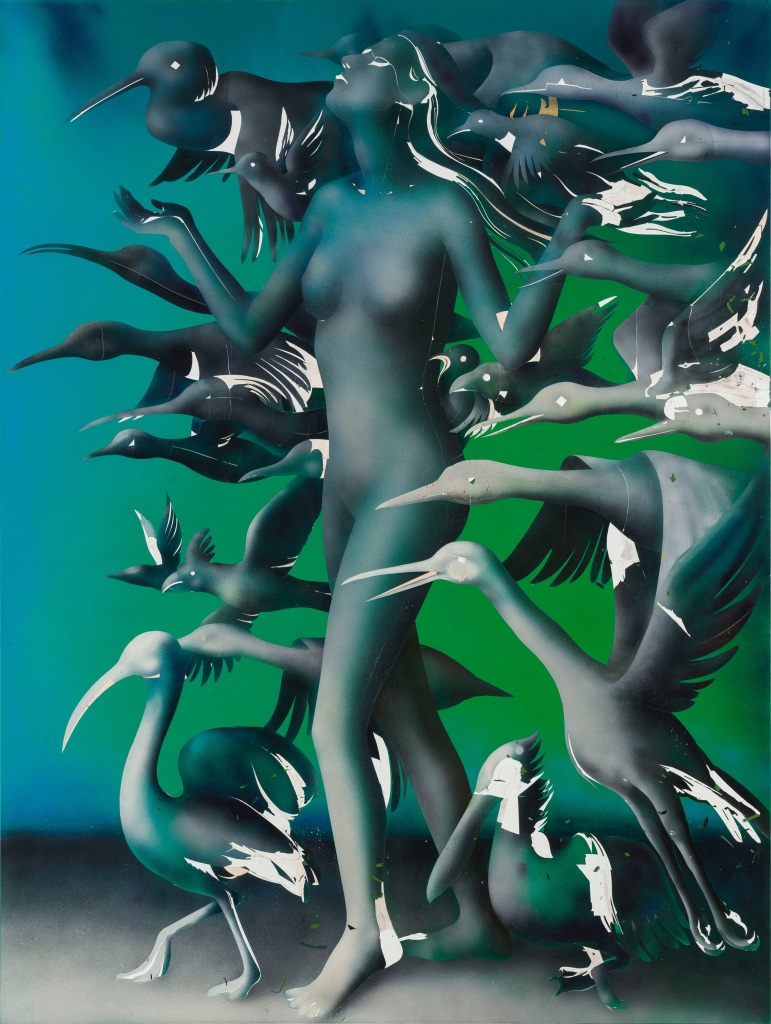
. Traditional and modern craft techniques in integrated material art.
The development of comprehensive material art cannot be separated from the inclusion of different production techniques. Traditional methods such as collage, screen printing, and hand-painted techniques retain the traces of manual labor and immediacy; modern technologies such as laser cutting, CNC machining, and 3D printing bring more precise structures and new spatial possibilities. By combining these technologies with materials, they can break through the limitations of a single painting style and allow for more variation in the work between flat, relief, and three-dimensional structures.
Collage is an artistic method of reassembling different materials, images, or objects into a new whole. Materials can include paper, photographs, fabrics, metals, wood, prints, and ready-made items, or even digital images. The core of collage is not just cutting and pasting, but establishing new visual, cultural, and narrative relationships between heterogeneous materials, allowing the original materials to take on new meaning in the new combination.
The development of collage art was a significant turning point in modern art in the 20th century, from “depicting reality” to “direct use of real materials.” Although the practice of pasting paper, photographs, fabrics, bills, or souvenirs onto book pages dates back to the 19th century or even earlier, these activities primarily belonged to private commemorative, decorative, and craft activities. What truly brought collage into the history of modern art was the artists“ beginning to use materials from the real world as part of the meaning of their works, rather than treating them as ancillary decorations. Once cut from their original living environment and incorporated into the painting, these materials simultaneously retain their original identity and acquire a new artistic identity, this ”dualism” constituting the most important modern significance of collage.
Around 1912, Georges Braque and Pablo Picasso experimented with cubist techniques, pasting wood-grain paper, newspapers, printing paper, and oilcloth directly onto the canvas. Traditional painting used paint to mimic wood grain, tabletop surfaces, newspapers, or chairs, but collage used real materials directly, forcing the viewer to confront a new question: Was the image depicting an object, or had part of the real object been brought into the art? This approach broke with the idea that painting must maintain its pure medium and also changed the way space was organized. Real paper has its own thickness, edges, text, and print marks, and the conflict between it and hand-drawn lines creates new tensions between the image, the material, and reality.
Before and during the First World War, Dadaism took collage from a form of experimentation to a form of social criticism. Hanna Hoch, Kurt Schwitters, John Hartfield, and others drew material from newspapers, magazines, political propaganda, advertising, and urban life. Photographic images were cut, enlarged, displaced, and reassembled; images originally meant for news and propaganda were reinterpreted. Collage thus became a method of “deconstructing the image of power.” The source of the material thus became the content: newspapers meant mass media, advertising meant consumption, official photographs meant power, bills and waste paper meant urban life.
Meanwhile, Schwitters“ Merz practice introduced tickets, wrapping paper, wood chips, and street waste into his works, further eliminating the hierarchy between precious and low-value materials. The debris of modern cities can become artistic resources. Collage is no longer a two-dimensional flat technique, but rather a method of collecting, classifying, selecting, and reconstructing relationships. Today, the concepts of ”material archive,“ ”waste research,“ and ”discovery” in integrated material art can be found as important sources in this historical context.
In the 1920s and 1940s, Surrealism gave collage a new psychological dimension. Artists put unrelated images together, allowing familiar things to produce dreamlike, desire-inducing, and subconscious effects in strange combinations. This principle later profoundly influenced advertising, photography, film montage, graphic design, and contemporary digital imagery.
After the Second World War, Robert Rauschenberg in the American art environment pushed collage to the “Combine” stage. Instead of simply sticking things like blankets, pillows, photos, newspapers, paints, wood, and ready-made materials onto the surface of a painting, they were now being inserted into the real space from the walls. Collage gradually merged with assemblage art, sculpture, and installation art. Artists began to see a room, a furniture combination, or even a living space as structures that could be collaged. The concept of collage expanded from “the combination between sheets of paper” to “the combination between real objects.”
Pop art in the 1950s and 1960s again transformed the social subjects of collage. Postwar advertising, television, product packaging, celebrity photographs, and comics became the visual everyday life of the masses. Richard Hamilton concentrated consumer society’s automobiles, appliances, bodybuilding physiques, and advertising language in a single interior space; Peter Blake and Andy Warhol, among others, dealt extensively with popular culture symbols. Collage became closely intertwined with reproduction, consumption, and the media landscape during this period. Artists no longer relied solely on classical art history but directly sourced visual material from supermarkets, television, magazines, and the record industry.
Meanwhile, artists like Romare Bearden developed collage into an important method of cultural memory and identity expression. He depicted the communities, music, families, and migration experiences of African Americans through fragments of photography, colored paper, painting, and printmaking materials. The fragmented bodies of the figures are reassembled not for the sake of form play, but to express how memory is composed from multiple historical fragments. Collage thus proves to be particularly suited to dealing with complex identities, because identities themselves are often not a single source but are composed of geography, family, history, music, language, and social experiences.
In the 1970s and 1980s, feminist, postcolonial art, political posters, and conceptual art further expanded collage. Artists began to reexamine who controlled the production of images, who was seen in advertisements, and whose histories were not included in mainstream archives. Artists like Barbara Kruger directly juxtaposed photography and text, bringing collage closer to visual communication and critical design. At the same time, the development of collage continued. David Hockney’s “joiners” used multiple photographs to stitch together the same space, transforming a single point of view into a process of viewing across time and perspective.
The digital age has not ended collage; on the contrary, it has made it one of the most common forms of visual logic. Photoshop, mobile apps, AI image and digital editing tools make cutting, masking, transparent overlaying, copying and transforming extremely easy. Digital collage is not limited by physical materials; it can instantly combine images from different eras, scales and spaces. But it also brings new problems: when “cutting and pasting” has almost no technical threshold, artistic value relies more on selection criteria, image sources, copyright awareness, structural judgment and conceptual depth.
In contemporary integrated material art, the physical collage still has value that digital images cannot fully replicate. Paper has thickness, old photographs have creases, textiles have fibers, metals have weight, and wood has texture and smell. Once the material enters the work, it produces realistic shadows, tactile sensations, and aging processes. Digital collage can first help artists design compositions, while physical collage brings design back to the material world. The combination of the two is creating new workflows: first digital planning, then laser cutting, printing, transfer printing, hand-applied pasting, stitching, and surface finishing.
Therefore, the evolution of collage art over the past hundred years has not been a gradual transition from “simple cutting and pasting” to “complex cutting and pasting”; rather, it has continuously expanded the range of “what can be recombined”: from paper to photography, from everyday objects to space, from cultural symbols to identity, from physical materials to digital data. It ultimately became a fundamental way of thinking about contemporary art: through selection, cutting, reorganization, overlaying, and renaming, artists allow materials that were originally separated from each other to establish new relationships. For integrated material art, the most important revelation of collage is that materials do not have to be created from scratch; the real world itself is a vast repository of materials; the artist’s creativity lies in discovering materials, understanding their history, and creating meanings that did not exist in the past through new combinations.
From a teaching and research perspective, the development of collage can also be understood as three constantly expanding issues. The first is “where materials come from”: early artists drew on newspapers, wallpaper, and everyday items; contemporary artists are confronted with online images, databases, AI-generated content, and global packaging for goods. The second is “who decides the relationships between images”: collage gives editorial control to the artist, who reorders meaning through cropping, scaling, blocking, and positioning. The third is “where the work ultimately exists”: collage moves from paper to books, walls, photography, installations, architecture, and digital screens, and can even become an interactive database. Because these three issues continue to change, collage is not a static historical technique but rather a foundational method that continuously adapts to new media.
For composite material creators, collage also has very practical experimental value. It allows low-cost trial and error; you can first test compositions using paper models, then replace them with wood, metal, fabric, or transparent materials; you can also scan the physical collage first, adjust the proportions in the computer, and then reprint or laser cut it. This back and forth process connects manual intuition with digital control. Collage is therefore suitable for both beginners to build a sense of material relationships and professional artists to develop complex cross-media systems.
Another important development in the material language of collage is the shift from “image collage” to “material collage.” In the early days, collage was often based on paper and printed materials; contemporary artists are increasingly paying attention to the thickness, weight, smell, fibers, and wear of materials. Fabrics can be sewn together, wooden panels can be cut, metal can be riveted, and transparent plastic can form spatial layers. This means that collage is no longer just a visual narrative but a structural relationship between real materials. The methods of connecting different materials also become the language of the work: glue emphasizes covering and fixing, stitching emphasizes repairing and the body, rivets and bolts emphasize industrial structures, and rope knots evoke a sense of craftsmanship and labor.
Collage art has also profoundly influenced 20th-century design education. Modern graphic design, photo editing, film editing, advertising composition, and even web page interfaces all employ collage-like thinking to varying degrees: breaking images, text, and color blocks into modules and then establishing informational relationships through placement, scale, and hierarchy. What the artist learns from collage is not a fixed style but the ability to “edit reality.” The real world provides abundant existing visual information, and creators re-establish meaning through selection and arrangement.
In the age of globalization, collage has also become an important tool for cross-cultural expression. Materials from different countries, religions, and language systems can be brought together in a single work. Passports, maps, letters from home, old photographs, packaging texts, ethnic fabrics, and industrial products can all serve as evidence of migration experiences. For immigrant or transcultural artists, collage is particularly suited to expressing the multifaceted nature of identity, as the work need not force all elements into complete harmony but can preserve contradictions and discontinuities.
Contemporary collage also involves archival ethics and image responsibility. When artists use news photos, historical figures, or online images, they need to consider whether the original context of the image has been excessively distorted, whether it involves personal trauma, copyright issues, or stereotypes. Especially in the digital age, accessing images is extremely easy, but responsible collage requires documenting the source and understanding the history behind the image. Technological convenience should not replace research.
From a material conservation perspective, collage is one of the most complex art forms. The acidity of different papers, the aging of adhesives, the stretching of fabrics, the oxidation of metals, and the yellowing of plastics all have different rates of change. The more materials a work contains, the more difficult it is to predict their long-term changes. Artists need to decide whether the work aims for long-term stability or allows the materials to age naturally. If the aging itself is part of the concept, the changes can be preserved; if the work is intended to be exhibited over the long term, archival-quality paper, reversible adhesives, and stable supports should be chosen.
Collage also offers important insights for contemporary AI art. AI-generated images often produce visually complex combinations quickly, but physical collages remind artists that the value of combinations lies not in the number of elements, but in the relationships between them. AI can help propose image solutions; artists still need to decide what content is worth preserving, what must be removed, and what needs to be transformed into real materials. In the future, collage is likely to become a bridge between AI images and physical materials: the generated images are printed, cut, transferred, and then reassembled with wood, fabric, metal, and handprints.
Therefore, the history of collage art ultimately illustrates a fundamental fact: the innovation of modern art does not always rely on inventing new materials; many times it comes from reinterpreting what already exists. Newspapers, old photographs, waste paper, packaging, everyday objects, and digital images can all become art as long as the artist is able to establish new structures and meanings. Collage trains an extremely important creative ability—the ability to select, judge, connect, and reorganize within a complex world.
If we put collage back into the entire history of modern art, we will still see that it has always maintained a close relationship with “copying technology.” Every time photography, printing, photocopying, scanning, and the Internet change the way images are produced, collage finds new sources of material. In the early 20th century, artists cut out newspaper pages; in the 1960s, artists cut out advertisements; in the 1980s, artists used photocopying machines; today, artists extract images from screens, databases, and social media. Although the media have changed, the core task of artists has always been to judge: what do these ready-made images originally represent and what are they transformed into after being incorporated into new works? Collage thus becomes one of the most sensitive methods for studying the changes in visual culture.
From a formal structural perspective, collage has also profoundly influenced contemporary abstract art. Even when works do not contain recognizable photographs, as long as different materials, color blocks, transparent layers, and shapes are juxtaposed and overlaid, the essence of collage logic remains essentially intact. Many integrated material abstract works are formed in this way: first, the image is understood as a structure that can be continuously disassembled and reconnected; then, decisions are made about which materials carry different levels of meaning. Ultimately, collage transcends a specific technique to become the fundamental method for organizing complex visual information.
Paper, magazine clippings, photographs, fabric, metal pieces, wood pieces, text, old book pages, bills, or digital images can all be used. The materials should be related to the theme and composition.
Using scissors, blades, tearing, punching, or digital selection, the raw material is separated from its original context. The edge treatment itself changes the work’s overall aesthetic.
Move and test the material repeatedly before officially pasting to determine its size, orientation, overlap, and visual center.
By juxtaposing materials to create conflicts, memories, identities, satire, or narratives, collage evolves from a combination of forms into an expression of ideas.
Choose the appropriate adhesive based on the different materials such as paper, fabric, wood, and metal, and fix it gradually.
The covering, scraping, painting, writing, sewing, or transparent coating processes can be continued to achieve a more uniform relationship between the materials.
Depending on the material properties, decide whether to use a transparent protective layer, fixing agent, mounting frame, or isolation layer, and consider humidity, ultraviolet light, and long-term preservation.
Choose one artwork image for this artist
Pablo Picasso
Representative works:Still Life with a Ficus Chair (1912)
Main materials/technologies:Oil paintings, printed canvas, ropes, and collages
1. The effect of unique style
In the context of collage art, the artist’s uniqueness stems from the fact that he/she does not treat the technique as a mere means of production, but instead allows the technique itself to participate in the style of the work. The materials and images in the work, the repeated cutting of edges, the layers, the mechanical precision or the manual deviations, all combine with his/her personal visual language. Picasso and Braque jointly promoted the development of modern collage art. In “Still Life with a Fiddle Chair,” real oilcloth and rope are incorporated into the painting, bringing real material and pictorial images into existence simultaneously, re-establishing what is an image and what is reality.
2. The significance of technology and materials
The significance of technology lies not only in “how to do it,” but also in “why it must be done.” Oil paintings, printmaking on canvas, ropes, and collages themselves possess clear material properties and a logical production process; when combined with subjects like Still Life with a Fiddle Chair (1912), the technical process becomes part of the content. The viewer not only sees the final image but also realizes that replication, cutting, spraying, processing, layering, or digital transformation have already occurred.
3. Appearance and visual effects of the work
From a visual perspective, Still Life with a Ficus Chair (1912) often combines both the overall effect at a distance and the technical details at close range. At first glance, the viewer perceives the composition, scale, color, and spatial relationships; closer inspection reveals the edges of materials, ink layers, spray marks, cutting marks, printed layers, or collage seams. It is this scale shift that gives the work a more complex viewing experience than a single planar image.
4. Specific technical skills
Technically speaking, the design, material testing, and production sequence need to be coordinated. Before creating a work, it is necessary to make small samples to confirm material compatibility, connection methods, size errors, and color and surface effects. During the formal production process, tool parameters, overlay sequences, and local adjustments are controlled. In the case of collage techniques, the truly mature skill is not to seek complete absence of errors, but to know which deviations should be corrected and which can be retained as part of the work’s language.
5. Artistic value
Its artistic value lies in transforming the collage technique from a means of production or reproduction into a system of personal expression. The more advanced the technology, the less automatically does the work become valuable; only when the choice of technology is inseparable from the subject matter, materials, and viewing method does the craft truly possess artistic necessity. If the same work is transformed into another entirely different technology, the visual logic and cultural meaning of the work will be significantly altered; this “uniqueness” is precisely the crucial criterion for judging the value of technology.
6. Creative inspiration
The lesson learned from creating comprehensive materials is: first establish the problem, then choose the technique. You can ask yourself: why use the collage technique? What effects can it provide that traditional crafts cannot? What unique marks will it leave? Are these marks related to the theme? You also need to consider cost, safety, equipment, preservation, and post-processing. By documenting the technical experiments and creating your own parameters, failure cases, and material databases, you can gradually transform external techniques into your own artistic language.
Choose one artwork image for this artist
Georges Braque
Representative works:Fruit Plate and Glass (1912)
Main materials/technologies:Paper, wood-patterned paper, charcoal pen, and collages
1. The effect of unique style
In the context of collage, the artist’s uniqueness stems primarily from the fact that he/she does not treat the technique as a mere means of production, but instead allows the technique itself to participate in the style of the work. The materials and images in the works—repetitions, cutting edges, layers, mechanical precision, or manual deviations—are all combined with his/her personal visual language. Brull inserts everyday materials such as imitation wood-print paper into the works, conflating the real texture with the drawn texture and pushing the movement of Cubism from painting into real material.
2. The significance of technology and materials
The significance of technology lies not only in “how to do it,” but also in “why it must be done.” Paper, wood-free paper, charcoal pen, and the collage itself possess clear material properties and a logical production process; when combined with themes such as “Fruit Plate and Glass Cup” (1912), the technical process becomes part of the content. The audience not only sees the final image but also realizes that the copying, cutting, spraying, processing, layering, or digital transformation that took place once again.
3. Appearance and visual effects of the work
From a visual perspective, Fruit Plate and Glass (1912) often simultaneously incorporates both the overall effect at a distance and the technical details at close range. From a distance, the viewer first perceives the composition, scale, color, and spatial relationships; upon closer inspection, they discover the edges of materials, ink layers, spray marks, cutting marks, printed layers, or collage seams. It is this scale shift that gives the work a more complex viewing experience than a single planar image.
4. Specific technical skills
Technically speaking, the design, material testing, and production sequence need to be coordinated. Before creating a work, it is necessary to make small samples to confirm material compatibility, connection methods, size errors, and color and surface effects. During the formal production process, tool parameters, overlay sequences, and local adjustments are controlled. In the case of collage techniques, the truly mature skill is not to seek complete absence of errors, but to know which deviations should be corrected and which can be retained as part of the work’s language.
5. Artistic value
Its artistic value lies in transforming the collage technique from a means of production or reproduction into a system of personal expression. The more advanced the technology, the less automatically does the work become valuable; only when the choice of technology is inseparable from the subject matter, materials, and viewing method does the craft truly possess artistic necessity. If the same work is transformed into another entirely different technology, the visual logic and cultural meaning of the work will be significantly altered; this “uniqueness” is precisely the crucial criterion for judging the value of technology.
6. Creative inspiration
The lesson learned from creating comprehensive materials is: first establish the problem, then choose the technique. You can ask yourself: why use the collage technique? What effects can it provide that traditional crafts cannot? What unique marks will it leave? Are these marks related to the theme? You also need to consider cost, safety, equipment, preservation, and post-processing. By documenting the technical experiments and creating your own parameters, failure cases, and material databases, you can gradually transform external techniques into your own artistic language.
Choose one artwork image for this artist
Hannah Höch
Representative works:Dada Photography Montage Works
Main materials/technologies:Newspapers, photos, printed materials and clippings
1. The effect of unique style
In the context of collage, the artist’s uniqueness stems primarily from the fact that he/she does not treat the technique as a mere means of production, but rather allows the technique itself to become part of the work’s style. The materials and images in the works—repetitions, cutting of edges, layers, mechanical precision, or manual deviations—are all combined with his/her personal visual language. Hooge reworks news photography, advertising, and portrait images to discuss politics, gender, and the modern society, revealing the power relations behind the images of the mass media.
2. The significance of technology and materials
The significance of technology lies not only in “how to do it,” but also in “why it must be done.” Newspapers, photographs, printed materials, and collages themselves possess clear material properties and a logical production logic; when combined with subjects such as Dadaist photographic montage works, the technological process becomes part of the content. The audience not only sees the final image but also realizes that replication, cutting, spraying, processing, layering, or digital transformation have already taken place.
3. Appearance and visual effects of the work
From a visual perspective, Dada photography montages often combine both the overall effect at a distance and the technical details at close range. When viewed from a distance, the audience first notices the composition, scale, color, and spatial relationships; upon closer inspection, they discover the edges of materials, ink layers, sprays, cutting marks, printed layers, or collage seams. It is this scale shift that gives the work a more complex viewing experience than a single flat image.
4. Specific technical skills
Technically speaking, the design, material testing, and production sequence need to be coordinated. Before creating a work, it is necessary to make small samples to confirm material compatibility, connection methods, size errors, and color and surface effects. During the formal production process, tool parameters, overlay sequences, and local adjustments are controlled. In the case of collage techniques, the truly mature skill is not to seek complete absence of errors, but to know which deviations should be corrected and which can be retained as part of the work’s language.
5. Artistic value
Its artistic value lies in transforming the collage technique from a means of production or reproduction into a system of personal expression. The more advanced the technology, the less automatically does the work become valuable; only when the choice of technology is inseparable from the subject matter, materials, and viewing method does the craft truly possess artistic necessity. If the same work is transformed into another entirely different technology, the visual logic and cultural meaning of the work will be significantly altered; this “uniqueness” is precisely the crucial criterion for judging the value of technology.
6. Creative inspiration
The lesson learned from creating comprehensive materials is: first establish the problem, then choose the technique. You can ask yourself: why use the collage technique? What effects can it provide that traditional crafts cannot? What unique marks will it leave? Are these marks related to the theme? You also need to consider cost, safety, equipment, preservation, and post-processing. By documenting the technical experiments and creating your own parameters, failure cases, and material databases, you can gradually transform external techniques into your own artistic language.
Choose one artwork image for this artist
Robert Rauschenberg
Representative works:Bed (1955) and Combine works
Main materials/technologies:Blankets, pillows, paints, photos, and ready-made items
1. The effect of unique style
In the context of collage art, the artist’s uniqueness stems primarily from the fact that he/she does not treat the technique as a mere means of production, but instead allows the technique itself to influence the style of the work. The materials and images in the works—repetitions, cutting edges, layers, mechanical precision, or manual deviations—are all combined with his/her personal visual language. Lawsonberg brings real-life objects into painting, extending collage from the page to objects and space, continuously blurring the boundaries between art and everyday life.
2. The significance of technology and materials
The significance of technology lies not only in “how to do it,” but also in “why it must be done.” Blankets, pillows, paints, photographs, and the ready-made objects themselves possess clear material properties and a logical production process; when combined with themes such as Bed (1955) and the Combine works, the technological process becomes part of the content. The audience not only sees the final image but also realizes that replication, cutting, spraying, processing, layering, or digital transformation have already occurred.
3. Appearance and visual effects of the work
From a visual perspective, the works of Bed (1955) and Combine often incorporate both the overall effect at a distance and the technical details at close range. At first glance, the viewer perceives the composition, scale, color, and spatial relationships; closer inspection reveals the edges of materials, ink layers, spray marks, cutting marks, printed layers, or collage seams. It is this scale shift that gives the works a more complex viewing experience than a single planar image.
4. Specific technical skills
Technically speaking, the design, material testing, and production sequence need to be coordinated. Before creating a work, it is necessary to make small samples to confirm material compatibility, connection methods, size errors, and color and surface effects. During the formal production process, tool parameters, overlay sequences, and local adjustments are controlled. In the case of collage techniques, the truly mature skill is not to seek complete absence of errors, but to know which deviations should be corrected and which can be retained as part of the work’s language.
5. Artistic value
Its artistic value lies in transforming the collage technique from a means of production or reproduction into a system of personal expression. The more advanced the technology, the less automatically does the work become valuable; only when the choice of technology is inseparable from the subject matter, materials, and viewing method does the craft truly possess artistic necessity. If the same work is transformed into another entirely different technology, the visual logic and cultural meaning of the work will be significantly altered; this “uniqueness” is precisely the crucial criterion for judging the value of technology.
6. Creative inspiration
The lesson learned from creating comprehensive materials is: first establish the problem, then choose the technique. You can ask yourself: why use the collage technique? What effects can it provide that traditional crafts cannot? What unique marks will it leave? Are these marks related to the theme? You also need to consider cost, safety, equipment, preservation, and post-processing. By documenting the technical experiments and creating your own parameters, failure cases, and material databases, you can gradually transform external techniques into your own artistic language.
Choose one artwork image for this artist
Joseph Cornell
Representative works:The Shadow Box Series
Main materials/technologies:Old photos, maps, boxes, glass and artifacts
1. The effect of unique style
In the context of collage art, the artist’s uniqueness stems first from the fact that he/she does not treat the technique as a mere means of production, but rather allows the technique itself to participate in the style of the work. The materials and images in the work, the repetition of edges, the layering, the mechanical precision, or the manual deviations all combine with his/her personal visual language. Cornell transforms images, objects, and fragments of memory from different eras into poetic spaces, turning collage from a two-dimensional plane into a three-dimensional visual theater.
2. The significance of technology and materials
The significance of technology lies not only in “how to do it,” but also in “why it must be done.” Old photographs, maps, boxes, glass, and the objects themselves possess clear material properties and a logical production process; when combined with a subject like the Shadowbox series, the technological process becomes part of the content. The audience not only sees the final image but also realizes that replication, cutting, spraying, processing, layering, or digital transformation have already taken place.
3. Appearance and visual effects of the work
From a visual perspective, the Shadowbox series often combines both the overall effect at a distance and the technical details at close range. At first glance, the viewer perceives the composition, scale, color, and spatial relationships; closer inspection reveals the edges of materials, ink layers, spray marks, cutting marks, printed layers, or collage seams. It is this scale shift that gives the work a more complex viewing experience than a single planar image.
4. Specific technical skills
Technically speaking, the design, material testing, and production sequence need to be coordinated. Before creating a work, it is necessary to make small samples to confirm material compatibility, connection methods, size errors, and color and surface effects. During the formal production process, tool parameters, overlay sequences, and local adjustments are controlled. In the case of collage techniques, the truly mature skill is not to seek complete absence of errors, but to know which deviations should be corrected and which can be retained as part of the work’s language.
5. Artistic value
Its artistic value lies in transforming the collage technique from a means of production or reproduction into a system of personal expression. The more advanced the technology, the less automatically does the work become valuable; only when the choice of technology is inseparable from the subject matter, materials, and viewing method does the craft truly possess artistic necessity. If the same work is transformed into another entirely different technology, the visual logic and cultural meaning of the work will be significantly altered; this “uniqueness” is precisely the crucial criterion for judging the value of technology.
6. Creative inspiration
The lesson learned from creating comprehensive materials is: first establish the problem, then choose the technique. You can ask yourself: why use the collage technique? What effects can it provide that traditional crafts cannot? What unique marks will it leave? Are these marks related to the theme? You also need to consider cost, safety, equipment, preservation, and post-processing. By documenting the technical experiments and creating your own parameters, failure cases, and material databases, you can gradually transform external techniques into your own artistic language.
Choose one artwork image for this artist
Richard Hamilton
Representative works:What exactly makes today's families so different and so appealing? (1956)
Main materials/technologies:Magazine images, advertisements, and photo collages
1. The effect of unique style
In the context of collage art, the artist’s uniqueness stems primarily from the fact that he/she does not treat the technique as a mere means of production, but rather allows the technique itself to influence the style of the work. The materials and images in the works—repetitions, cutting edges, layers, mechanical precision, or manual deviations—are all combined with his/her personal visual language. Through the combination of consumer goods, figures, and advertising images, Hamilton presents the visual culture of the post-war consumer society, making collage an important method for analyzing mass culture.
2. The significance of technology and materials
The significance of technology lies not only in “how to do it,” but also in “why it must be done.” The magazine images, advertisements, and photographic collages themselves possess clear material properties and a logical production logic; when they are combined with themes like “What makes today’s families so different and so appealing?” (1956), the technological process becomes part of the content. The audience not only sees the final image but also realizes that replication, cutting, spraying, processing, layering, or digital transformation have already occurred.
3. Appearance and visual effects of the work
From a visual perspective, “What exactly makes today’s home so different and so appealing?” (1956) often simultaneously incorporates the overall effect at a distance and the technical details at close range. From a distance, the viewer first perceives the composition, scale, color, and spatial relationships; upon closer inspection, they discover the edges of materials, ink layers, spray marks, cutting marks, printed layers, or collage seams. It is this scale shift that gives the work a more complex viewing experience than a single planar image.
4. Specific technical skills
Technically speaking, the design, material testing, and production sequence need to be coordinated. Before creating a work, it is necessary to make small samples to confirm material compatibility, connection methods, size errors, and color and surface effects. During the formal production process, tool parameters, overlay sequences, and local adjustments are controlled. In the case of collage techniques, the truly mature skill is not to seek complete absence of errors, but to know which deviations should be corrected and which can be retained as part of the work’s language.
5. Artistic value
Its artistic value lies in transforming the collage technique from a means of production or reproduction into a system of personal expression. The more advanced the technology, the less automatically does the work become valuable; only when the choice of technology is inseparable from the subject matter, materials, and viewing method does the craft truly possess artistic necessity. If the same work is transformed into another entirely different technology, the visual logic and cultural meaning of the work will be significantly altered; this “uniqueness” is precisely the crucial criterion for judging the value of technology.
6. Creative inspiration
The lesson learned from creating comprehensive materials is: first establish the problem, then choose the technique. You can ask yourself: why use the collage technique? What effects can it provide that traditional crafts cannot? What unique marks will it leave? Are these marks related to the theme? You also need to consider cost, safety, equipment, preservation, and post-processing. By documenting the technical experiments and creating your own parameters, failure cases, and material databases, you can gradually transform external techniques into your own artistic language.
Choose one artwork image for this artist
Edward Kienholz
Representative works:Large-scale collection and installation works
Main materials/technologies:Old furniture, photos, ready-made items, and environmental materials
1. The effect of unique style
In the context of collage art, the artist’s uniqueness stems first from the fact that he/she does not treat the technique as a mere means of production, but instead allows the technique itself to influence the style of the work. The materials and images in the works, the repeated use of edges, the layering, the mechanical precision or the manual deviations all combine with his/her personal visual language. Kienholz expanded collage to include real-world environments and character installations, using a large number of old objects, allowing the traces of material life to directly engage in social criticism.
2. The significance of technology and materials
The significance of technology lies not only in “how to do it,” but also in “why it must be done.” Old furniture, photographs, ready-made items, and environmental materials themselves possess clear material properties and a logical production process; when combined with themes such as large-scale assemblage and installation works, the technological process becomes part of the content. The audience not only sees the final image but also realizes that replication, cutting, spraying, processing, layering, or digital transformation have already occurred.
3. Appearance and visual effects of the work
From a visual perspective, large-scale assemblage and installation works often simultaneously incorporate both the overall effect at a distance and the technical details at close range. At first glance, viewers first notice the composition, scale, color, and spatial relationships; upon closer inspection, they discover the edges of materials, ink layers, spray marks, cutting marks, printed layers, or collage seams. It is this scale transformation that gives the works a more complex viewing experience than a single planar image.
4. Specific technical skills
Technically speaking, the design, material testing, and production sequence need to be coordinated. Before creating a work, it is necessary to make small samples to confirm material compatibility, connection methods, size errors, and color and surface effects. During the formal production process, tool parameters, overlay sequences, and local adjustments are controlled. In the case of collage techniques, the truly mature skill is not to seek complete absence of errors, but to know which deviations should be corrected and which can be retained as part of the work’s language.
5. Artistic value
Its artistic value lies in transforming the collage technique from a means of production or reproduction into a system of personal expression. The more advanced the technology, the less automatically does the work become valuable; only when the choice of technology is inseparable from the subject matter, materials, and viewing method does the craft truly possess artistic necessity. If the same work is transformed into another entirely different technology, the visual logic and cultural meaning of the work will be significantly altered; this “uniqueness” is precisely the crucial criterion for judging the value of technology.
6. Creative inspiration
The lesson learned from creating comprehensive materials is: first establish the problem, then choose the technique. You can ask yourself: why use the collage technique? What effects can it provide that traditional crafts cannot? What unique marks will it leave? Are these marks related to the theme? You also need to consider cost, safety, equipment, preservation, and post-processing. By documenting the technical experiments and creating your own parameters, failure cases, and material databases, you can gradually transform external techniques into your own artistic language.
Choose one artwork image for this artist
Peter Blake
Representative works:Cover of Sgt. Pepper’s Lonely Hearts Club Band (1967)
Main materials/technologies:Photographic images, cutout figures, and visual collages
1. The effect of unique style
In the context of collage art, the artist’s uniqueness stems first from the fact that he/she does not treat the technique as a mere means of production, but instead allows the technique itself to influence the style of the work. The materials and images in the works—repetitions, cutting edges, layers, mechanical precision, or manual deviations—are all combined with his/her personal visual language. Peter Blake brings celebrities, pop culture, and photographic images together in the same visual scene, forming a highly recognizable Pop collage language.
2. The significance of technology and materials
The significance of technology lies not only in “how to do it,” but also in “why it must be done.” Photography images, cutout figures, and visual collages themselves possess clear material properties and a logical production logic; when they are combined with works such as the cover of Sgt. Pepper’s Lonely Hearts Club Band (1967), the technological process becomes part of the content. The audience not only sees the final image but also realizes that replication, cutting, spraying, processing, layering, or digital transformation have already occurred.
3. Appearance and visual effects of the work
From a visual perspective, the cover of Sgt. Pepper’s Lonely Hearts Club Band (1967) often simultaneously incorporates both the overall effect at a distance and the technical details at close range. When viewed from a distance, the audience first perceives the composition, scale, color, and spatial relationships; upon closer inspection, they discover material edges, ink layers, spray marks, cutting marks, printed layers, or collage seams. It is this scale shift that gives the work a more complex viewing experience than a single planar image.
4. Specific technical skills
Technically speaking, the design, material testing, and production sequence need to be coordinated. Before creating a work, it is necessary to make small samples to confirm material compatibility, connection methods, size errors, and color and surface effects. During the formal production process, tool parameters, overlay sequences, and local adjustments are controlled. In the case of collage techniques, the truly mature skill is not to seek complete absence of errors, but to know which deviations should be corrected and which can be retained as part of the work’s language.
5. Artistic value
Its artistic value lies in transforming the collage technique from a means of production or reproduction into a system of personal expression. The more advanced the technology, the less automatically does the work become valuable; only when the choice of technology is inseparable from the subject matter, materials, and viewing method does the craft truly possess artistic necessity. If the same work is transformed into another entirely different technology, the visual logic and cultural meaning of the work will be significantly altered; this “uniqueness” is precisely the crucial criterion for judging the value of technology.
6. Creative inspiration
The lesson learned from creating comprehensive materials is: first establish the problem, then choose the technique. You can ask yourself: why use the collage technique? What effects can it provide that traditional crafts cannot? What unique marks will it leave? Are these marks related to the theme? You also need to consider cost, safety, equipment, preservation, and post-processing. By documenting the technical experiments and creating your own parameters, failure cases, and material databases, you can gradually transform external techniques into your own artistic language.
Choose one artwork image for this artist
David Hockney
Representative works:Pearblossom Hwy. 11–18th April 1986 #2
Main materials/technologies:Multiple photographic photos are stitched together
1. The effect of unique style
In the context of collage art, the artist’s uniqueness stems first from the fact that he/she does not treat the technique as a mere means of production, but instead allows the technique itself to influence the style of the work. The materials and images in the work, repeated cropping of edges, layers, mechanical precision, or manual deviations, are all combined with his/her personal visual language. Hockney combines photos taken from different times and perspectives to create a scene that transforms photography from a single moment into a multi-perspective, continuously viewed experience.
2. The significance of technology and materials
The significance of technology lies not only in “how to do it,” but also in “why it must be done.” The stitching together of multiple photographic images itself has clear material properties and a logical production logic; when it is combined with a subject like “Pearblossom Hwy. 11–18th April 1986 #2,” the technological process becomes part of the content. The viewer not only sees the final image but also realizes that replication, cutting, spraying, processing, layering, or digital transformation have already taken place.
3. Appearance and visual effects of the work
From a visual perspective, “Pearblossom Hwy. 11–18th April 1986 #2” often simultaneously incorporates the overall long-distance effect and the close-up technical details. When viewed from a distance, the audience first perceives the composition, scale, color, and spatial relationships; upon closer inspection, they discover the edges of materials, ink layers, spray marks, cutting marks, printed layers, or collage seams. It is this scale shift that gives the work a more complex viewing experience than a single planar image.
4. Specific technical skills
Technically speaking, the design, material testing, and production sequence need to be coordinated. Before creating a work, it is necessary to make small samples to confirm material compatibility, connection methods, size errors, and color and surface effects. During the formal production process, tool parameters, overlay sequences, and local adjustments are controlled. In the case of collage techniques, the truly mature skill is not to seek complete absence of errors, but to know which deviations should be corrected and which can be retained as part of the work’s language.
5. Artistic value
Its artistic value lies in transforming the collage technique from a means of production or reproduction into a system of personal expression. The more advanced the technology, the less automatically does the work become valuable; only when the choice of technology is inseparable from the subject matter, materials, and viewing method does the craft truly possess artistic necessity. If the same work is transformed into another entirely different technology, the visual logic and cultural meaning of the work will be significantly altered; this “uniqueness” is precisely the crucial criterion for judging the value of technology.
6. Creative inspiration
The lesson learned from creating comprehensive materials is: first establish the problem, then choose the technique. You can ask yourself: why use the collage technique? What effects can it provide that traditional crafts cannot? What unique marks will it leave? Are these marks related to the theme? You also need to consider cost, safety, equipment, preservation, and post-processing. By documenting the technical experiments and creating your own parameters, failure cases, and material databases, you can gradually transform external techniques into your own artistic language.
Choose one artwork image for this artist
Romare Bearden
Representative works:African American Life and Community Collage Series
Main materials/technologies:Photos, colored paper, prints and paintings
1. The effect of unique style
In the context of collage art, the artist’s uniqueness stems primarily from the fact that he/she does not treat the technique as a mere means of production, but rather allows the technique itself to influence the style of the work. The materials and images in the work—repetitions, cutting edges, layers, mechanical precision, or manual deviations—are all combined with his/her personal visual language. By creating rhythmic collages that convey the history, music, community, and personal experiences of African Americans, Bilden fuses cultural memory with modern formal language.
2. The significance of technology and materials
The significance of technology lies not only in “how to do it,” but also in “why it must be done.” Photographs, colored paper, prints, and paintings themselves have clear material properties and a logical production process; when they are combined with themes such as the works in the African American Life and Community Collage series, the technological process becomes part of the content. The audience not only sees the final image but also realizes that replication, cutting, spraying, processing, layering, or digital transformation have already occurred.
3. Appearance and visual effects of the work
From a visual perspective, the African American Life and Community collage series often simultaneously incorporates both the overall long-distance effect and the close-up technical details. When viewed from a distance, the audience first notices the composition, scale, color, and spatial relationships; upon closer inspection, they discover the edges of materials, ink layers, spray marks, cutting marks, printed layers, or the collage seams. It is this scale shift that gives the work a more complex viewing experience than a single planar image.
4. Specific technical skills
Technically speaking, the design, material testing, and production sequence need to be coordinated. Before creating a work, it is necessary to make small samples to confirm material compatibility, connection methods, size errors, and color and surface effects. During the formal production process, tool parameters, overlay sequences, and local adjustments are controlled. In the case of collage techniques, the truly mature skill is not to seek complete absence of errors, but to know which deviations should be corrected and which can be retained as part of the work’s language.
5. Artistic value
Its artistic value lies in transforming the collage technique from a means of production or reproduction into a system of personal expression. The more advanced the technology, the less automatically does the work become valuable; only when the choice of technology is inseparable from the subject matter, materials, and viewing method does the craft truly possess artistic necessity. If the same work is transformed into another entirely different technology, the visual logic and cultural meaning of the work will be significantly altered; this “uniqueness” is precisely the crucial criterion for judging the value of technology.
6. Creative inspiration
The lesson learned from creating comprehensive materials is: first establish the problem, then choose the technique. You can ask yourself: why use the collage technique? What effects can it provide that traditional crafts cannot? What unique marks will it leave? Are these marks related to the theme? You also need to consider cost, safety, equipment, preservation, and post-processing. By documenting the technical experiments and creating your own parameters, failure cases, and material databases, you can gradually transform external techniques into your own artistic language.
Screen printing is a printing technique that transfers ink onto a substrate by transferring it through a mesh. The mesh is usually made of polyester or nylon, and the ink is controlled by a photosensitive emulsion, a stencil, or other blocking methods. Screen printing is suitable for a wide range of surfaces such as paper, fabric, plastic, wood, metal, and glass, and is particularly well-suited for combining with painting, collage, photography, and installations.
The history of the development of screen printing spans manual printing, industrial printing, commercial advertising, and contemporary art. What is most noteworthy about it is how the same technology has continuously changed identities in different social stages. The basic idea of screen printing is to use a mesh medium to control the color or ink through a blocking area. Similar traditional methods of stencil printing and fabric printing have a long history in Asia, with China, Japan, and other regions developing methods for reproducing patterns using templates, anti-dyeing, and mesh support very early on. These early processes were primarily used in textile, decorative, and household goods production, providing an important technological foundation for later modern screen printing techniques.
From the late 19th to the early 20th centuries, with the development of industrialization, modern advertising and product packaging, screen printing gradually formed more standardized commercial production methods in Europe and North America. Modern mesh materials, squeegee plates, and template technology improved printing efficiency, making it particularly suitable for producing signs, packaging, posters, and large-area flat-surface patterns. Compared with traditional printmaking methods such as stone plates and copper plates, the advantages of screen printing are that the printing material is less limited, the ink layer can be very thick, the colors are saturated, and it can be applied to a wide range of surfaces such as paper, cloth, wood, plastic, glass, and metal.
The advances in sensitizing emulsions and photographic plate making techniques in the early 20th century were a major turning point in screen printing. Artists and commercial printers were able to convert photographic images into plates, no longer relying entirely on hand-cut paper templates. Images could be more complex and precise, and more suitable for repeated production. Screen printing thus gradually combined with modern mass media, photography, and mechanical reproduction.
In the 1930s and 1940s, the United States promoted the term “serigraphy” to distinguish it from artistic screen printing and commercial screen printing. Artists began experimenting with this industrial method for independent printmaking. At this time, screen printing gradually gained recognition in museums and printmaking systems, but it was the rapid expansion of popular culture in the 1950s and 1960s that truly made it a language of contemporary international art.
When Pop Art emerged, screen printing became almost the most suitable technology for the times. Television, magazines, movie stars, advertising, and product packaging all reproduced images in large numbers. Andy Warhol realized that the mechanical nature of screen printing was not a flaw in art but could precisely be used to discuss a society surrounded by replicated images. He repeatedly printed Marilyn Monroe, Elvis Presley, news photos, the dollar sign, and product images. Repetition transformed the characters from unique individuals into media symbols, and it also made viewers feel the process of images constantly appearing, being consumed, and being replaced in modern consumer society.
Warhol’s techniques also changed people’s understanding of “printing errors.” Chromatic aberration, uneven ink layers, partial omissions, and differences in repetition were problems that commercial printing had to avoid; in art, however, they could become part of a work’s life. The coexistence of machine reproduction and hand-drawn printing made each print both similar and different. Screen printing thus lies between industrial standardization and manual randomness; this contradiction is one of its most unique artistic potential.
Pop artists such as Roy Lichtenstein also used the language of screen printing and lithography to simulate commercial printing. Visual characteristics such as flat color blocks, clear black lines, and Ben-Day meshes made the artwork more closely resemble comic and commercial images. Instead of simply replicating commercial visual imagery, the artists enlarged and brought the original low-cost, mass-produced printing language into museums, thereby re-examining the boundaries between “high art” and “mass culture.”
In the 1960s and 80s, screen printing became an important tool for political posters, social movements, and independent publishing. It was relatively simple to set up and suitable for mass reproduction; it could also be operated in community studios and informal spaces. Civil rights, antiwar, feminist, and street culture movements all used similar printing methods. Images could be quickly disseminated, so screen printing was not only an art production technique but also had public dissemination attributes. Shepard Fairey later continued this tradition by combining high-contrast graphics, posters, stickers, and street art.
The importance of screen printing in integrated material art comes from the fact that it can be applied to a wide variety of materials. Artists can first screen print on fabric, then embroider, sew, or print on wood panels; they can screen print on wood panels, then sand, paint, and cover with resin; they can print on transparent acrylic panels to create images that overlap in real space; they can also print on metal, glass, and finished products to create repeated images in sculpture. Screen printing is no longer confined to two-dimensional printmaking, but has become a cross-media image transfer system.
After the late 20th century, digital technology revolutionized the printing process. Computers can process photographic, grayscale, semi-tone, and color-matching files, and inkjet printing plates allow small studios to produce high-quality plates. Laser cutting can also create complex templates. Digital tools improve precision but do not eliminate the value of manual work. Instead, many artists proactively retain the pressure on the squeegee, the thickness of the ink layer, and the color-matching errors, allowing digital control to coexist with manual marks.
Contemporary screen printing art is increasingly emphasizing material safety and sustainability. Traditional solvent-based inks require higher standards in ventilation and cleaning, while water-based inks and low-volatile materials are being adopted by more art studios. Screen cleaning, emulsion removal, and wastewater treatment are also becoming part of professional practice. Artists must consider not only the image effect but also understand the material chemistry, adhesion of the printing material, and long-term preservation.
From an artistic language perspective, the core characteristics of screen-printing remain unchanged: first, it is “repeatable”; the same image can appear multiple times; second, it is “layered”; different colors and images can be superimposed on multiple layers of mesh; third, it is “transferable”; the image can cross over different materials; and fourth, it can produce deviations; slight differences are always possible in repetition. It is these characteristics that make it particularly suitable for discussing replication, media, identity, consumption, political communication, and memory.
After entering the 21st century, screen printing no longer has to be in conflict with digital technology. Artists can first generate images using AI or photography, then perform digital colorization and manual screen printing; they can also combine screen printing with collage, embroidery, hand-painted artwork, laser cutting, and installations. Digital technology handles image calculations, while screen printing transfers the image onto the material surface. This workflow has restored value to screen printing in contemporary integrated material art, as it transforms “images” into material objects with thickness, layers of ink, and a tactile surface.
Therefore, the development of screen printing is not a unidirectional path from manual to machine, and then from machine to digital; it is a continuous history of overlapping. Traditional templates, industrial printing, photographic plate making, Pop art, political communication, and digital tools coexist. For today’s integrated material artists, what is most worth learning about screen printing is not how to produce a standard print, but how to use repetition, layering, overlapping, chromaticism, dislocation, and cross-material transfer to build one’s own visual language.
Logically speaking, screen printing has also changed the artist’s understanding of the “original work.” Traditional painting emphasizes uniqueness, while screen printing naturally allows for multiple prints. The artist must decide the relationship between the number of prints, color variations, trial prints, and the final version. Prints on the same mesh can be printed on different materials, which can also result in completely different works. This characteristic of being reproducible yet with handmade differences places screen printing between unique works and mass production.
In integrated material teaching, screen printing technology is particularly suitable for training “image entry into materials.” Students can print the same image separately on paper, cloth, wood, and transparent plastic to observe how the absorption of ink changes the effect. After that, by overlaying painting, collage, or embroidery, they can clearly see that there is not a one-way relationship between the image and the material. The printed material, in turn, changes the image; this is the important thinking behind integrated material art.
The overall color layer of screen printing also influences modern color perception. Since each color is typically printed on a separate screen plate, artists need to consider the order of colors, transparency, and overlap relationships in advance. The overlapping of two semi-transparent colors can produce a third color; this “printed blending” is completely different from mixing colors on a color palette. By deliberately shifting the color boundaries, creators can create double shadows and vibrations at the edges, or use transparent ink to create depth. Color thus no longer just comes from the choice of pigments, but is closely linked to plate size and the order of the printing process.
With the introduction of screen printing, pointillism and threshold processing became important languages. Continuous color photographs had to be converted into dot matrix or high-contrast images that could be printed through holes. This conversion lost detail but produced strong media characteristics. The work of artists like Warhol used this “loss of information” to transform celebrity photographs from private portraits into public symbols. Today artists still can use this “loss of information” by deliberately reducing resolution, enlarging the dots, or distorting the grid to reveal the mechanisms of reproduction in digital images.
Screen-printing has also had a broad impact in the textile and fashion fields. T-shirts, flags, fabric installations, and soft sculptures can all be printed using screen printing, allowing artists to bring flat images into the body and space. Once printed on fabric, the image undergoes deformation as it is folded, stitched, and hung. This change transforms screen printing from a static plane into a flexible structure, highly compatible with integrated material art.
In public art and community art, screen printing has the advantages of low barriers to entry, reproducibility, and collective collaboration. Multiple people can co-plate, print, and distribute the work; the work does not necessarily exist only in galleries; it can also be part of posters, publications, and live events. In this way, the social value of technology extends from “producing works” to “establishing a communication network.”
Contemporary artists also often combine silkscreen prints with transparent materials. The images can be printed on acrylic, film, or glass, and then projected to create a realistic space through multiple layers stacked one on top of the other. The distance between the front and back layers creates parallax, and the relationship of the images changes as the viewer moves. Silk screen printing has transitioned from a two-dimensional reproduction technique to a spatial construction tool.
From a studio management perspective, screen printing emphasizes process discipline. The cleanliness of the mesh, the thickness of the emulsion, the exposure time, the angle of the scraper, the viscosity of the ink, the positioning of the substrate, and the drying conditions all need to be recorded. The more systematically the artist can record the parameters, the more they can translate accidental errors into repeatable language. For the integrated material laboratory, this process awareness is crucial because it combines artistic intuition with comparative experiments.
The history of screen printing also shows that the “entry of industrial technology into the arts” does not automatically eliminate manual labor. On the contrary, artists often use the differences between machines and manual labor as a source of expression. Screen printing can be derived from digital files, but the scraping process is still done by hand; the image can be precisely colored, but the ink layer may vary depending on pressure changes. It is this lack of complete mechanization that has long kept screen printing unique and charming.
The relationship between silkscreen prints and contemporary photography also deserves a separate discussion. Photography provides continuous color tones and concrete reality, while silkscreen printing forces photography to be simplified, divided into colors, and reencoded. Artists can decide how much detail to retain, which areas to turn into pure black, and which into dots. This transformation process is not a passive technological step, but a reinterpretation of the photograph. The image transforms from “recording reality” into “selected printed structure.” Therefore, silkscreen printing is particularly suited for processing news, archival, and public figure images.
From a collection and preservation perspective, silk-screen works also require understanding the long-term relationship between the inks, paper, and printing materials. Thick layers of ink may crack, different plastics and fabrics change over time, and some bright colors fade in strong light. The preservation issues are even more complex for silk-screen works in a comprehensive material, which may also include adhesives, embroidery, and transparent plastic. Artists should record the material brand, printing order, and curing method during the production phase to leave information for future maintenance.
Today, screen printing still holds significant educational value because it forces creators to break down a complex image into several independent layers. Each layer is responsible for only one color or one piece of information, ultimately being reconstructed into a whole through precise printing. This “layered thinking” is common to digital layers, animation synthesis, architectural layers, and AI workflows. Learning screen printing is not just learning traditional printmaking; it is also learning how to break down complex visual problems into manageable steps.
In contemporary studios, screen printing is often used as an intermediate technique between handmade and mass production. An image can be printed in small quantities first, then continuously modified based on observations of color matching, ink layers, and material reactions, before deciding whether to produce the full version. This process of trial printing allows artists to combine experimentation and production rather than completing the work in one go. For integrated material creation, the trial print itself can also become part of the work: different colors, different offsets, and different substrates form a series of variations.
Therefore, the true value of screen printing lies not only in its historical significance, but also in the ability to train artists to be sensitive to layers, repetition, surface materials, and production processes. It is a traditional technique and also a very modern system of thinking.
Apply a photosensitive emulsion on the clean net version, dry it, then expose the positive plate to the net version, and rinse the areas that have not hardened to form a transparent ink pattern. Complex plate making can be entrusted to professional plate makers.
Fix the mesh on a printing table or hinge bracket, and position the paper, fabric, or other media. For multicolor printing, a guide mark is required.
Place the ink on one side of the mesh plate and use a scraper to push the ink through the open mesh holes at a stable angle and pressure. The hardness, angle, and speed of the scraper all affect the ink layer.
Multi-color works usually use separate nets for each color, and the colors are printed and dried in sequence.
Choose between air drying, heat curing, or other methods based on the type of ink to ensure a strong image.
After the printing is completed, you can continue to paint, collage, embroider, cut, screen-print, or assemble the pieces to create a relationship between the replicated image and the real material.
Choose one artwork image for this artist
Andy Warhol
Representative works:Such as "Marilyn Diptych"
Main materials/technologies:Photographic mesh, bright color layers, and repeated images
1. The effect of unique style
In the context of screen printing, the artist’s uniqueness stems first from the fact that he/she does not treat the technique as a mere means of production; instead, he/she allows the technique itself to influence the style of the work. The materials and images in the work—repetitions, cutting edges, layers, mechanical precision, or manual errors—are all integrated into his/her personal visual language. Warhol transforms commercial screen printing into the language of pop art. Repetition, color matching, offset printing, and mechanical reproduction make the star and the commodity image both familiar and distant, responding to mass media and consumer society.
2. The significance of technology and materials
The significance of technology lies not only in “how to do it,” but also in “why it must be done.” Photography mesh, colorful layers, and repetitive images themselves possess clear material properties and a logical production logic; when combined with themes like works such as “Marilyn Diptych,” the technological process becomes part of the content. The audience not only sees the final image but also realizes that replication, cutting, spraying, processing, layering, or digital transformation have already occurred.
3. Appearance and visual effects of the work
From a visual perspective, works like Marilyn Diptych often combine both the overall effect at a distance and the technical details at close range. When viewed from a distance, the audience first notices the composition, scale, color, and spatial relationships; upon closer inspection, they discover the edges of materials, ink layers, sprays, cutting marks, printed layers, or collage seams. It is this scale shift that gives the work a more complex viewing experience than a single planar image.
4. Specific technical skills
Technically speaking, the design, material testing, and production sequence need to be coordinated. Before creating a work, it is necessary to make small samples to verify the compatibility of materials, the connection method, the size error, and the color and surface effect. During the formal production process, control over tool parameters, overlay sequence, and local adjustments are necessary. In the case of screen printing, the truly mature technique is not to aim for complete absence of errors, but to know which deviations should be corrected and which can be retained to become the language of the work.
5. Artistic value
Its artistic value lies in transforming screen printing technology from a means of production or reproduction into a system of personal expression. The more advanced the technology, the less automatically does the work become valuable; only when the choice of technology is inseparable from the subject matter, material, and viewing method does the craft truly possess artistic necessity. If the same work is replaced with another entirely different technology, the visual logic and cultural implications of the work will be significantly altered; this “uniqueness” is precisely the crucial criterion for judging the value of technology.
6. Creative inspiration
The lesson learned from comprehensive material creation is: first establish the problem, then choose the technique. You can ask yourself: why use screen printing? What effects can it provide that traditional handcraft cannot? What unique marks will it leave? Are these marks related to the theme? You also need to consider cost, safety, equipment, preservation, and post-processing. Recording the technical experiments and creating your own parameters, failure cases, and material databases can gradually transform external techniques into your own artistic language.
Choose one artwork image for this artist
Shepard Fairey
Representative works:Poster designs such as "HOPE" and street images
Main materials/technologies:Screen printing, templates, posters and graphic design
1. The effect of unique style
In the context of screen printing, the artist’s uniqueness stems first from the fact that he/she does not treat the technique as a mere means of production; instead, he/she allows the technique itself to influence the style of the work. The materials and images in the works—repetitions, cutting edges, layers, mechanical precision, or manual deviations—are all combined with his/her personal visual language. Fairey uses the high contrast and repetition of screen printing to apply to street art and public graphics, enabling the images to be quickly reproduced and disseminated.
2. The significance of technology and materials
The significance of technology lies not only in “how to do it,” but also in “why it must be done.” Screen printing, templates, posters, and graphic design themselves have clear material properties and production logics; when combined with themes such as posters and street images like HOPE, the technological process becomes part of the content. The audience not only sees the final image but also realizes that replication, cutting, spraying, processing, layering, or digital transformation have already taken place.
3. Appearance and visual effects of the work
From a visual perspective, posters like HOPE often combine both the overall effect at a distance and the technical details at close range. When viewed from a distance, the viewer first notices the composition, scale, color, and spatial relationships; upon closer inspection, they discover the edges of materials, ink layers, spray marks, cutting marks, printed layers, or collage seams. It is this scale shift that gives the work a more complex viewing experience than a single flat image.
4. Specific technical skills
Technically speaking, the design, material testing, and production sequence need to be coordinated. Before creating a work, it is necessary to make small samples to verify the compatibility of materials, the connection method, the size error, and the color and surface effect. During the formal production process, control over tool parameters, overlay sequence, and local adjustments are necessary. In the case of screen printing, the truly mature technique is not to aim for complete absence of errors, but to know which deviations should be corrected and which can be retained to become the language of the work.
5. Artistic value
Its artistic value lies in transforming screen printing technology from a means of production or reproduction into a system of personal expression. The more advanced the technology, the less automatically does the work become valuable; only when the choice of technology is inseparable from the subject matter, material, and viewing method does the craft truly possess artistic necessity. If the same work is replaced with another entirely different technology, the visual logic and cultural implications of the work will be significantly altered; this “uniqueness” is precisely the crucial criterion for judging the value of technology.
6. Creative inspiration
The lesson learned from comprehensive material creation is: first establish the problem, then choose the technique. You can ask yourself: why use screen printing? What effects can it provide that traditional handcraft cannot? What unique marks will it leave? Are these marks related to the theme? You also need to consider cost, safety, equipment, preservation, and post-processing. Recording the technical experiments and creating your own parameters, failure cases, and material databases can gradually transform external techniques into your own artistic language.
Choose one artwork image for this artist
Ed Ruscha
Representative works:Letter and Image Printworks
Main materials/technologies:Text, photographic images and screen printing
1. The effect of unique style
In the context of screen printing, the artist’s uniqueness stems first from the fact that he/she does not treat the technique as a mere means of production, but rather allows the technique itself to influence the style of the work. The materials and images in the works—repetitions, cutting edges, layers, mechanical precision, or manual deviations—are all combined with his/her personal visual language. Ruscha has long explored language, advertising composition, and the visual culture of American cities; screen printing helped form clean, even color layers.
2. The significance of technology and materials
The significance of technology lies not only in “how to do it,” but also in “why it must be done.” Text, photographic images, and screen printing themselves have distinct material properties and production logics; when they are combined with the subject matter of works such as text and image prints, the technological process becomes part of the content. The audience not only sees the final image but also realizes that replication, cutting, spraying, processing, layering, or digital transformation have already occurred.
3. Appearance and visual effects of the work
From a visual perspective, text and image printmaking works often simultaneously incorporate both the overall effect at a distance and the technical details at close range. When viewed from a distance, the audience first notices the composition, scale, color, and spatial relationships; upon closer inspection, they discover the edges of the materials, the ink layers, the spray marks, the cutting marks, the printed layers, or the collage seams. It is precisely this scale shift that gives the work a more complex viewing experience than a single planar image.
4. Specific technical skills
Technically speaking, the design, material testing, and production sequence need to be coordinated. Before creating a work, it is necessary to make small samples to verify the compatibility of materials, the connection method, the size error, and the color and surface effect. During the formal production process, control over tool parameters, overlay sequence, and local adjustments are necessary. In the case of screen printing, the truly mature technique is not to aim for complete absence of errors, but to know which deviations should be corrected and which can be retained to become the language of the work.
5. Artistic value
Its artistic value lies in transforming screen printing technology from a means of production or reproduction into a system of personal expression. The more advanced the technology, the less automatically does the work become valuable; only when the choice of technology is inseparable from the subject matter, material, and viewing method does the craft truly possess artistic necessity. If the same work is replaced with another entirely different technology, the visual logic and cultural implications of the work will be significantly altered; this “uniqueness” is precisely the crucial criterion for judging the value of technology.
6. Creative inspiration
The lesson learned from comprehensive material creation is: first establish the problem, then choose the technique. You can ask yourself: why use screen printing? What effects can it provide that traditional handcraft cannot? What unique marks will it leave? Are these marks related to the theme? You also need to consider cost, safety, equipment, preservation, and post-processing. Recording the technical experiments and creating your own parameters, failure cases, and material databases can gradually transform external techniques into your own artistic language.
Choose one artwork image for this artist
James Rosenquist
Representative works:Pop art images and printmaking works
Main materials/technologies:Advertisement images, video clips, and printing layers
1. The effect of unique style
In the context of screen-printing technology, the artist’s uniqueness stems first from the fact that he/she does not treat the technique as a mere means of production, but rather allows the technique itself to influence the style of the work. The materials and images in the works—repetitions, cutting edges, layers, mechanical precision, or manual deviations—are all combined with his/her personal visual language. Rosenquist combines advertising visuals with the idea of large-scale painting, emphasizing the fragmentation and recombination of modern media images.
2. The significance of technology and materials
The significance of technology lies not only in “how to do it,” but also in “why it must be done.” Advertising images, footage shots, and the printing layer itself possess distinct material properties and production logic; when combined with themes such as Pop art and printmaking works, the technological process becomes part of the content. The audience not only sees the final image but also realizes that replication, cutting, spraying, processing, layering, or digital transformation have already occurred.
3. Appearance and visual effects of the work
From a visual perspective, Pop art and printmaking works often simultaneously incorporate both the overall effect at a distance and the technical details at close range. When viewed from a distance, the audience first perceives compositional elements, scale, color, and spatial relationships; upon closer inspection, they discover material edges, ink layers, spray marks, cutting marks, printed layers, or collage seams. It is this scale shift that gives the work a more complex viewing experience than a single planar image.
4. Specific technical skills
Technically speaking, the design, material testing, and production sequence need to be coordinated. Before creating a work, it is necessary to make small samples to verify the compatibility of materials, the connection method, the size error, and the color and surface effect. During the formal production process, control over tool parameters, overlay sequence, and local adjustments are necessary. In the case of screen printing, the truly mature technique is not to aim for complete absence of errors, but to know which deviations should be corrected and which can be retained to become the language of the work.
5. Artistic value
Its artistic value lies in transforming screen printing technology from a means of production or reproduction into a system of personal expression. The more advanced the technology, the less automatically does the work become valuable; only when the choice of technology is inseparable from the subject matter, material, and viewing method does the craft truly possess artistic necessity. If the same work is replaced with another entirely different technology, the visual logic and cultural implications of the work will be significantly altered; this “uniqueness” is precisely the crucial criterion for judging the value of technology.
6. Creative inspiration
The lesson learned from comprehensive material creation is: first establish the problem, then choose the technique. You can ask yourself: why use screen printing? What effects can it provide that traditional handcraft cannot? What unique marks will it leave? Are these marks related to the theme? You also need to consider cost, safety, equipment, preservation, and post-processing. Recording the technical experiments and creating your own parameters, failure cases, and material databases can gradually transform external techniques into your own artistic language.
Choose one artwork image for this artist
Chris Johanson
Representative works:Painting and printmaking works
Main materials/technologies:Graphics, text, blocks of color, and mesh screens
1. The effect of unique style
In the context of screen printing, the artist’s uniqueness stems first from the fact that he/she does not treat the technique as a mere means of production; instead, he/she allows the technique itself to influence the style of the work. The materials and images in the works—repetitions, cutting edges, layers, mechanical precision, or manual deviations—are all combined with his/her personal visual language. Johanson discusses urban life and social issues through a direct, highly tactile graphic language, and screen printing helps repeat and disseminate the images.
2. The significance of technology and materials
The significance of technology lies not only in “how to do it,” but also in “why it must be done.” Graphics, text, color blocks, and the mesh itself possess clear material properties and a logical production process; when combined with subject matter such as paintings and printmaking works, the technological process becomes part of the content. The audience not only sees the final image but also realizes that replication, cutting, spraying, processing, layering, or digital transformation have already occurred.
3. Appearance and visual effects of the work
From a visual perspective, paintings and prints often combine both the overall effect at a distance and the technical details at close range. At first glance, viewers first notice the composition, scale, color, and spatial relationships; closer inspection reveals the edges of materials, ink layers, spray marks, cutting marks, printed layers, or collage seams. It is this scale shift that gives the work a more complex viewing experience than a single planar image.
4. Specific technical skills
Technically speaking, the design, material testing, and production sequence need to be coordinated. Before creating a work, it is necessary to make small samples to verify the compatibility of materials, the connection method, the size error, and the color and surface effect. During the formal production process, control over tool parameters, overlay sequence, and local adjustments are necessary. In the case of screen printing, the truly mature technique is not to aim for complete absence of errors, but to know which deviations should be corrected and which can be retained to become the language of the work.
5. Artistic value
Its artistic value lies in transforming screen printing technology from a means of production or reproduction into a system of personal expression. The more advanced the technology, the less automatically does the work become valuable; only when the choice of technology is inseparable from the subject matter, material, and viewing method does the craft truly possess artistic necessity. If the same work is replaced with another entirely different technology, the visual logic and cultural implications of the work will be significantly altered; this “uniqueness” is precisely the crucial criterion for judging the value of technology.
6. Creative inspiration
The lesson learned from comprehensive material creation is: first establish the problem, then choose the technique. You can ask yourself: why use screen printing? What effects can it provide that traditional handcraft cannot? What unique marks will it leave? Are these marks related to the theme? You also need to consider cost, safety, equipment, preservation, and post-processing. Recording the technical experiments and creating your own parameters, failure cases, and material databases can gradually transform external techniques into your own artistic language.
Choose one artwork image for this artist
Rita Ackermann
Representative works:Painting and Printmaking Series
Main materials/technologies:Drawing lines, transparent layers, and printed images
1. The effect of unique style
In the context of screen printing, the artist’s uniqueness stems first from the fact that he/she does not treat the technique as a mere means of production; instead, he/she allows the technique itself to influence the style of the work. The materials and images in the works—repetitions, cutting edges, layers, mechanical precision, or manual deviations—are all combined with his/her personal visual language. Ackerman often overlays figures, abstract brushstrokes, and printed layers, using screen printing as a way to repeat, transfer, and cover images.
2. The significance of technology and materials
The significance of technology lies not only in “how to do it,” but also in “why it must be done.” The lines of paint, the transparent layers, and the printed images themselves possess clear material properties and a logical production process; when combined with works such as the Painting Lines, Transparent Layers, and Printed Images series, the technical process becomes part of the content. The audience not only sees the final image but also realizes that replication, cutting, spraying, processing, layering, or digital transformation have already occurred.
3. Appearance and visual effects of the work
From a visual perspective, the painting and print series often simultaneously incorporate both the overall effect at a distance and the technical details at close range. When viewed from a distance, the audience first notices the composition, scale, color, and spatial relationships; upon closer inspection, they discover the edges of the materials, the ink layers, the spray marks, the cutting marks, the printed layers, or the collage seams. It is this scale shift that gives the work a more complex viewing experience than a single planar image.
4. Specific technical skills
Technically speaking, the design, material testing, and production sequence need to be coordinated. Before creating a work, it is necessary to make small samples to verify the compatibility of materials, the connection method, the size error, and the color and surface effect. During the formal production process, control over tool parameters, overlay sequence, and local adjustments are necessary. In the case of screen printing, the truly mature technique is not to aim for complete absence of errors, but to know which deviations should be corrected and which can be retained to become the language of the work.
5. Artistic value
Its artistic value lies in transforming screen printing technology from a means of production or reproduction into a system of personal expression. The more advanced the technology, the less automatically does the work become valuable; only when the choice of technology is inseparable from the subject matter, material, and viewing method does the craft truly possess artistic necessity. If the same work is replaced with another entirely different technology, the visual logic and cultural implications of the work will be significantly altered; this “uniqueness” is precisely the crucial criterion for judging the value of technology.
6. Creative inspiration
The lesson learned from comprehensive material creation is: first establish the problem, then choose the technique. You can ask yourself: why use screen printing? What effects can it provide that traditional handcraft cannot? What unique marks will it leave? Are these marks related to the theme? You also need to consider cost, safety, equipment, preservation, and post-processing. Recording the technical experiments and creating your own parameters, failure cases, and material databases can gradually transform external techniques into your own artistic language.
Choose one artwork image for this artist
Roy Lichtenstein
Representative works:Pop art works
Main materials/technologies:Point of sale, flat color blocks, black outline and mesh screen
1. The effect of unique style
In the context of screen printing technology, the artist’s uniqueness stems primarily from the fact that he/she does not treat the technique as a mere means of production, but instead allows the technique itself to influence the style of the work. The materials and images in the works—repetitions, cutting edges, layers, mechanical precision, or manual deviations—are all combined with his/her personal visual language. Lichtenstein amplifies the grid patterns and comic language found in commercial printing into an artistic language, and the screen printing technique is highly consistent with its mechanized visual effects.
2. The significance of technology and materials
The significance of technology lies not only in “how to do it,” but also in “why it must be done.” The locations, the flat-painted blocks, the black outlines, and the mesh itself possess clear material properties and a logical production logic; when combined with the subject matter of works such as Pop Art prints, the technological process becomes part of the content. The audience not only sees the final image but also realizes that replication, cutting, spraying, processing, layering, or digital transformation have already occurred.
3. Appearance and visual effects of the work
From a visual perspective, Pop art prints often combine both the overall effect at a distance and the technical details at close range. At first glance, the viewer perceives the composition, scale, color, and spatial relationships; upon closer inspection, they discover the edges of materials, ink layers, spray marks, cutting marks, printed layers, or collage seams. It is this scale shift that gives the work a more complex viewing experience than a single planar image.
4. Specific technical skills
Technically speaking, the design, material testing, and production sequence need to be coordinated. Before creating a work, it is necessary to make small samples to verify the compatibility of materials, the connection method, the size error, and the color and surface effect. During the formal production process, control over tool parameters, overlay sequence, and local adjustments are necessary. In the case of screen printing, the truly mature technique is not to aim for complete absence of errors, but to know which deviations should be corrected and which can be retained to become the language of the work.
5. Artistic value
Its artistic value lies in transforming screen printing technology from a means of production or reproduction into a system of personal expression. The more advanced the technology, the less automatically does the work become valuable; only when the choice of technology is inseparable from the subject matter, material, and viewing method does the craft truly possess artistic necessity. If the same work is replaced with another entirely different technology, the visual logic and cultural implications of the work will be significantly altered; this “uniqueness” is precisely the crucial criterion for judging the value of technology.
6. Creative inspiration
The lesson learned from comprehensive material creation is: first establish the problem, then choose the technique. You can ask yourself: why use screen printing? What effects can it provide that traditional handcraft cannot? What unique marks will it leave? Are these marks related to the theme? You also need to consider cost, safety, equipment, preservation, and post-processing. Recording the technical experiments and creating your own parameters, failure cases, and material databases can gradually transform external techniques into your own artistic language.
Choose one artwork image for this artist
Clare Woods
Representative works:Printmaking and Painting Works
Main materials/technologies:Image transformation, planar color layers, and printmaking
1. The effect of unique style
In the context of screen printing, the artist’s uniqueness stems first from the fact that he/she does not treat the technique as a mere means of production, but rather allows the technique itself to influence the style of the work. The materials and images in the works, the repeated cutting of edges, the layers, the mechanical precision or the manual deviations all combine with his/her personal visual language. Clare Woods’s work shifts between the figurative and the abstract; the screen printing technique helps her transform the form of painting into more generalized levels.
2. The significance of technology and materials
The significance of technology lies not only in “how to do it,” but also in “why it must be done.” Image transformation, the plane color layer, and the print itself possess clear material properties and a logical production process; when combined with the subject matter of works such as prints and paintings, the technological process becomes part of the content. The audience not only sees the final image but also realizes that replication, cutting, spraying, processing, layering, or digital transformation have already occurred.
3. Appearance and visual effects of the work
From a visual perspective, printmaking and painting often combine both the overall effect at a distance and the technical details at close range. On closer inspection, the viewer first notices the composition, scale, color, and spatial relationships; closer inspection reveals the edges of materials, ink layers, spray marks, cutting marks, printed layers, or collage seams. It is this scale shift that gives the work a more complex viewing experience than a single planar image.
4. Specific technical skills
Technically speaking, the design, material testing, and production sequence need to be coordinated. Before creating a work, it is necessary to make small samples to verify the compatibility of materials, the connection method, the size error, and the color and surface effect. During the formal production process, control over tool parameters, overlay sequence, and local adjustments are necessary. In the case of screen printing, the truly mature technique is not to aim for complete absence of errors, but to know which deviations should be corrected and which can be retained to become the language of the work.
5. Artistic value
Its artistic value lies in transforming screen printing technology from a means of production or reproduction into a system of personal expression. The more advanced the technology, the less automatically does the work become valuable; only when the choice of technology is inseparable from the subject matter, material, and viewing method does the craft truly possess artistic necessity. If the same work is replaced with another entirely different technology, the visual logic and cultural implications of the work will be significantly altered; this “uniqueness” is precisely the crucial criterion for judging the value of technology.
6. Creative inspiration
The lesson learned from comprehensive material creation is: first establish the problem, then choose the technique. You can ask yourself: why use screen printing? What effects can it provide that traditional handcraft cannot? What unique marks will it leave? Are these marks related to the theme? You also need to consider cost, safety, equipment, preservation, and post-processing. Recording the technical experiments and creating your own parameters, failure cases, and material databases can gradually transform external techniques into your own artistic language.
Choose one artwork image for this artist
Jean-Michel Basquiat
Representative works:Later editions of prints and copies
Main materials/technologies:Text, symbols, figures and engravings
1. The effect of unique style
In the context of screen-printing, the artist’s uniqueness stems first from the fact that he/she does not treat the technique as a mere means of production, but rather allows the technique itself to influence the style of the work. The materials and images in the works—repetitions, cutting edges, layers, mechanical precision, or manual deviations—are all integrated with his/her personal visual language. Basquiat’s iconic words, crowns, bones, and scribbled images are reorganized in the print, reinforcing the relationship between repetition and the urban visual culture.
2. The significance of technology and materials
The significance of technology lies not only in “how to do it,” but also in “why it must be done.” Text, symbols, figurative images, and printmaking itself possess distinct material properties and production logics; when combined with subject matter such as later printmaking and reproduction works, the technological process becomes part of the content. The audience not only sees the final image but also realizes that replication, cutting, spraying, processing, layering, or digital transformation have already occurred.
3. Appearance and visual effects of the work
From a visual perspective, later versions of paintings and reproductions often incorporate both the overall effect at a distance and the technical details at close range. At first glance, viewers first notice the composition, scale, color, and spatial relationships; closer inspection reveals the edges of materials, ink layers, spray marks, cutting marks, printed layers, or collage seams. It is this scale shift that gives the work a more complex viewing experience than a single planar image.
4. Specific technical skills
Technically speaking, the design, material testing, and production sequence need to be coordinated. Before creating a work, it is necessary to make small samples to verify the compatibility of materials, the connection method, the size error, and the color and surface effect. During the formal production process, control over tool parameters, overlay sequence, and local adjustments are necessary. In the case of screen printing, the truly mature technique is not to aim for complete absence of errors, but to know which deviations should be corrected and which can be retained to become the language of the work.
5. Artistic value
Its artistic value lies in transforming screen printing technology from a means of production or reproduction into a system of personal expression. The more advanced the technology, the less automatically does the work become valuable; only when the choice of technology is inseparable from the subject matter, material, and viewing method does the craft truly possess artistic necessity. If the same work is replaced with another entirely different technology, the visual logic and cultural implications of the work will be significantly altered; this “uniqueness” is precisely the crucial criterion for judging the value of technology.
6. Creative inspiration
The lesson learned from comprehensive material creation is: first establish the problem, then choose the technique. You can ask yourself: why use screen printing? What effects can it provide that traditional handcraft cannot? What unique marks will it leave? Are these marks related to the theme? You also need to consider cost, safety, equipment, preservation, and post-processing. Recording the technical experiments and creating your own parameters, failure cases, and material databases can gradually transform external techniques into your own artistic language.
Choose one artwork image for this artist
Ghada Amer
Representative works:Combined media and printmaking works
Main materials/technologies:Print images, paintings, lines, and embroidery
1. The effect of unique style
In the context of screen printing, the artist’s uniqueness stems first from the fact that he/she does not treat the technique as a mere means of production, but instead allows the technique itself to influence the style of the work. The materials and images in the works—repetitions, cutting edges, layers, mechanical precision, or manual deviations—are all combined with his/her personal visual language. Amer combines female body images, paintings, and embroidery with printmaking techniques to create a stark contrast between the printed layer and the handmade linear materials.
2. The significance of technology and materials
The significance of technology lies not only in “how to do it,” but also in “why it must be done.” The printing of images, painting, lines, and embroidery themselves possess distinct material properties and a logical production process; when combined with themes such as integrated media and printmaking works, the technological process becomes part of the content. The audience not only sees the final image but also realizes that replication, cutting, spraying, processing, layering, or digital transformation have already occurred.
3. Appearance and visual effects of the work
From a visual perspective, integrated media and printmaking works often simultaneously incorporate both the overall effect at a distance and the technical details at close range. When viewed from a distance, the audience first notices the composition, scale, color, and spatial relationships; upon closer inspection, they discover the edges of materials, ink layers, spray marks, cutting marks, printed layers, or collage seams. It is precisely this scale shift that gives the work a more complex viewing experience than a single planar image.
4. Specific technical skills
Technically speaking, the design, material testing, and production sequence need to be coordinated. Before creating a work, it is necessary to make small samples to verify the compatibility of materials, the connection method, the size error, and the color and surface effect. During the formal production process, control over tool parameters, overlay sequence, and local adjustments are necessary. In the case of screen printing, the truly mature technique is not to aim for complete absence of errors, but to know which deviations should be corrected and which can be retained to become the language of the work.
5. Artistic value
Its artistic value lies in transforming screen printing technology from a means of production or reproduction into a system of personal expression. The more advanced the technology, the less automatically does the work become valuable; only when the choice of technology is inseparable from the subject matter, material, and viewing method does the craft truly possess artistic necessity. If the same work is replaced with another entirely different technology, the visual logic and cultural implications of the work will be significantly altered; this “uniqueness” is precisely the crucial criterion for judging the value of technology.
6. Creative inspiration
The lesson learned from comprehensive material creation is: first establish the problem, then choose the technique. You can ask yourself: why use screen printing? What effects can it provide that traditional handcraft cannot? What unique marks will it leave? Are these marks related to the theme? You also need to consider cost, safety, equipment, preservation, and post-processing. Recording the technical experiments and creating your own parameters, failure cases, and material databases can gradually transform external techniques into your own artistic language.
Hand-painted is a painting technique that involves spraying paint onto a surface using a spray gun, paintbrush, or spray can. Artists use control over nozzle size, distance, pressure, paint concentration, movement speed, and masking to create soft gradients, mist-like layers, clear template edges, large areas of color, or spray effects that convey speed. It can be applied to paper, canvas, wood panels, walls, metal, glass, and large environmental spaces.
The development of hand-painted techniques is closely related to modern industrial and commercial imagery, automotive culture, street art, and contemporary large-scale installations. Its core principle is to spray paint onto surfaces by atomizing pigment through airflow or pressure. Unlike a brush or oil painting brush, the spray gun does not directly contact the surface, allowing for very smooth gradients, gentle edges, transparent mist layers, and large areas of uniform color. This “non-contact painting” has given it a unique place in modern art.
In the late 19th century, airbrushes gradually developed and were used for photo retouching, commercial illustration, and industrial painting. Early photography often required manual retouching; the airbrush was able to create continuous, smooth transitions between light and dark, making it easier to hide handwork than traditional brushes. As advertising and the printing industry developed, the airbrush became an important tool for commercial art, used to create smooth, idealized, and mechanically produced surfaces. Automotive and industrial painting further advanced the improvements in airbrushes, compressed air, and paint formulations.
In the first half of the 20th century, spray painting was predominantly associated with “commercial technology”; it did not fully enter the realm of fine art. However, the interest in industrial materials and mechanical surfaces sparked by modernism gradually changed this situation. Artists began to realize that the spray gun could produce visual effects unattainable by traditional brushstrokes: it could eliminate the traces of the hand and also allow colors to spread like air. As a result, spray painting not only became a convenient tool for coloring but also changed the way works were understood in terms of “the hand of the artist.”
In the 1950s and 1960s, advertising, photography, and the mass media expanded rapidly. Pop artists absorbed flat painting, templates, grids, and spray-painted gradients from commercial design. Although not all pop artists used the spray gun as their primary medium, the interest in mechanized surfaces and commercial imagery throughout the era provided the cultural conditions for spray painting to enter contemporary art. The textual and visual works of artists such as Ed Ruscha demonstrate that smooth color layers and advertising-style visuals can become a serious art language.
What truly transformed the spray-painting community was the emergence of graffiti and street culture in the late 1960s and 1980s. The spray can was portable, quick-drying, and highly versatile, making it ideal for urban walls, subways, and public spaces. Artists could quickly write names, symbols, and large letters, and they could also create fine lines, broad lines, misting, and drip effects using different nozzles. Spray paint transformed from an industrial commodity into an expressive tool for urban youth culture. Works of art were no longer created in studios but directly entered the public sphere.
The development of street culture in New York has connected graffiti with hip hop, music, font design, social identity, and urban politics. Although artists such as Jean-Michel Basquiat and Keith Haring used a wide variety of media, their work together with this environment led to the entry of street art into galleries and museums. The sense of speed, scale, and publicness left by spray paint are gradually being recognized by the mainstream art system.
The development of stencil painting has enabled spray paint to have greater control over the image. Artists can first create a stencil and then quickly replicate complex contours. The practices of artists like Banksy demonstrate that stencils are particularly suited to quick action in public spaces: the image can be pre-designed and the scene only needs to be positioned and sprayed on site. The combination of technical efficiency with the timeliness of political communication makes stencil painting a powerful tool for social commentary. The clarity of the edges of the stencil, its positive and negative forms, and its limited color palette also form a very distinct visual style.
Spray guns and paint cans are not the same in the artistic language. Fine spray pens are suitable for photos with gradations, partial light and shadow effects and details; professional spray guns are suitable for medium-sized to large-sized images and smooth color layers; spray cans emphasize portability, speed and street graffiti; industrial spray equipment can cover architectural scale spaces. Artists choose equipment, in effect, to choose the scale of their work, the precision of the surface, and the body movements.
Katharina Grosse’s practice takes spray painting from wall painting to spatial art. Using industrial spray guns, she directly sprays high-saturation colors onto walls, floors, fabrics, furniture, buildings, and natural terrain. Color no longer obeys the boundaries of objects, but flows continuously across multiple materials. Spray painting here becomes a technique of “spatial coverage”: it changes the audience’s understanding of the relationship between architecture and objects, making the colors appear to move freely in space.
Large murals by artists such as Maya Hayuk showcase another direction that combines spray painting with geometric structures. Blocking, repeating lines, and strong color bands can establish rhythm on a building scale. Compared to traditional canvases, the wall brings real structures such as windows, corners, brick joints, and pipes, and spray painting must actively respond to these on-site conditions. Therefore, public spray painting is not just enlarged painting, but rather site-specific art.
In the late 20th century and into the 21st century, digital design further transformed the spray painting process. Artists could first complete the composition in the computer, then transfer it to the wall using projection, grids, laser cut templates, or digital printing. Digital tools improved positioning accuracy, while the spray gun still handled the real color and surface. Many works thus have a hybrid nature of “digital design—hand-painted.”
When combining spray painting with integrated material art, the advantages are particularly evident. Colors can transcend wood, metal, fabric, foam, plastic, and prefabricated materials, visually connecting disparate materials into a whole. Spraying can also penetrate grooves and irregular surfaces, creating continuous integrated color layers that are difficult to achieve with traditional brush painting. Artists can also first create collages and textures, then spray transparent colors or gradients to unify complex surfaces.
Safety issues are also an integral part of modern spray painting technology. The spray creates fine particles in the air, and different pigments and solvents may pose different health risks. Professional handling requires ventilation, proper respiratory protection, goggles, and material instructions. Water-based, low-volatile products can reduce some risks, but that does not mean that air management can be ignored. Large indoor spray painting requires particular attention to safety design as part of the work production process.
From the perspective of art history, hand-painted spray painting has undergone a transformation from commercial retouching and industrial painting to street expression and large-scale contemporary installations. It continuously challenges the traditional notion that “painting must be done with a paintbrush.” Hand-painted spray painting can completely eliminate brushstrokes; it can also deliberately retain drips, mist, and masking of edges; it can create perfect smoothness or rough, fast-paced expression. For integrated material artists, the most important thing is to choose the spray painting method based on the work’s concept, rather than using the spray gun solely as a quick-painting device. Distance, pressure, transparency, masking, and the surface of the material all jointly determine the language of spray painting. In the future, with the development of robotic spraying, digital positioning, and intelligent materials, spray painting will continue to expand between manual, machine, and space.
Spray painting also changes the concept of “edges.” Brushes usually leave clear contact edges, while spray painting can transition from sharp template edges to completely borderless color mist. Artists can control the softness and hardness of the edges by adjusting the distance, pressure, and masking distance of the spray gun. The edges thus become not just shapes and contours, but important tools for emotion and space. Soft edges easily convey air, light, and distance, while hard edges have a graphic, identifying, and mechanical quality.
In the case of mixed-media art, spray painting also serves to unify heterogeneous materials. Wood, metal, foam, and fabric inherently have completely different visual identities; when a layer of transparent or semi-transparent spray paint is applied across them, it allows multiple materials to be integrated into the same overall color scheme while retaining their respective surfaces. Conversely, artists can also take advantage of the differences in the absorption of paint by different materials to create variations within the same spray color in different areas. Therefore, spray painting is not simply a simple overlay, but can also serve as a tool for connecting materials or highlighting material differences.
Hand-painted techniques have also formed an important connection with 20th-century automobiles and the custom culture. Car paintwork, motorcycle painting, and commercial signage have driven the development of glazes, metallic coatings, transparent coatings, and high-gloss protective paints. Artists have borrowed materials and techniques from these industries to achieve unprecedented luster and color depth on the painting surfaces. Some integrated color layers require priming, then applying transparent colors, and finally covering with gloss, each layer changing the way light is reflected. This multi-layer painting logic has subsequently been widely applied to the surfaces of contemporary painting and sculpture.
Spray painting also changes the relationship between the work and gravity. Traditional liquid paints easily flow downward, while misting spray painting can form relatively uniform thin layers on vertical walls or even complex three-dimensional surfaces. Artists can therefore paint directly on buildings and sculptures. Colors do not have to rely on a horizontal canvas or be limited by borders. Space becomes the new canvas for spray painting.
The development of template technology has led to a dual approach to spray painting: the positive and negative aspects. The areas that are covered and the areas that are sprayed are equally important. Artists can reuse the same template, or move, rotate, and overlay it repeatedly to create complex layers. With the advent of laser cutting technology, templates can have more precise edges and complex structures, thus directly connecting traditional spray painting with modern digital manufacturing.
The spray particles themselves are also textures. Close-up spraying can form dense, uniform patterns; at greater distances, the particles diffuse; rapid movement creates a mist; slow movement can accumulate and flow. Artists can use these differences to create a sense of air, texture, and speed. Spray painting is therefore not “texture-less”; it has a completely different microscopic texture than a paintbrush.
In contemporary installations, spray painting can also serve as a means of “temporarily changing the space.” After the exhibition ends, the sprayed-on building surfaces may be repainted, making the work time-limited. Large-scale spray paintings are not permanent murals, but rather a spatial event. What the viewer sees is the state of a building that has been re-defined by color over a specific period of time.
Digital robotic painting is becoming a new direction. Industrial robots can control the path, distance, and speed of the spray gun according to a program to create extremely complex large-scale gradients. Artists can design rules for the robot to perform repetitive actions, then intervene manually to change the result. This method extends painting from direct control by the body to algorithmic control, while still maintaining the physical response of the paint to the real surface.
From a creative training perspective, the most important thing about spray painting isn’t achieving beautiful gradients quickly; it’s building an understanding of the “air—color—distance” relationship. Artists must learn to observe the nuances of the misting edge, coverage, wet-and-dry layers, and the differences in adsorption between different substrates. Only through long-term testing can the spray gun be truly transformed from an industrial tool into an individual painting language.
There has also been an important connection between hand-painted art and photographic realism. The paintbrush can create skin, metal, and gloss without obvious brushstrokes, and was therefore widely used in the pursuit of precise surface painting. Later, some artists deliberately exposed the spray particles, the edges of the templates, and the drip flow, making the audience realize that these were not photographs but the surfaces of pigments controlled by artificial means. Hand-painting shifted from “hidden techniques” to “displaying techniques,” reflecting the change in contemporary art regarding the conscious manipulation of media.
Another important development in spray painting is moving from the work’s interior to the viewer’s body size. Large-scale spray painting environments surround the viewer with color; viewing no longer takes place outside the frame of the painting. The corners of buildings, columns, and ground change the color continuity, and different areas enter the viewer’s field of view as the viewer moves. Spray painting thus combines with the spatial experience of installation art.
When spray painting is combined with textured materials, new technical problems also arise. Rough surfaces trap more paint, while smooth surfaces are more likely to form uniform thin films; water-absorbing materials quickly lose their saturation, while water-repellent materials may appear runny. Artists can take advantage of these differences to create different textures for different materials using the same spray technique. In this way, spray painting not only covers the material but also “reveals” the material.
Spray painting also offers a very significant time advantage. With a large-scale painting that relies entirely on brushes, it takes a lot of time to apply the colors repeatedly; with a spray gun, you can quickly create a comprehensive color field, allowing artists to focus more on spatial structure and color relationships. However, speed can also be a trap: if composition judgment is lacking, quick coverage can only magnify errors. Therefore, professional spray painting usually begins with small sketches, masking planning, and color layer sequencing.
The value of hand-painted artwork lies precisely in the “hand control of the machine.” The equipment is responsible for atomizing the paint, and the final rhythm, pauses, distance, and coverage are still judged by the artist. This semi-mechanical, semi-physical working method ensures that hand-painted artwork retains its distinct handmade character in the digital age.
In addition, the long-term preservation of spray-painted artworks requires special attention. If the compatibility between the different substrates, primers, paints, and protective layers is insufficient, adhesion may decrease, crack may appear, or discoloration may occur. Large public artworks also face the challenges of ultraviolet rays, rainwater, and temperature fluctuations. Therefore, professional artists should incorporate material testing, construction records, and maintenance plans into their creative process.
Choose the appropriate spray pen, spray gun, spray can, or industrial spraying equipment based on the size of the work, and prepare suitable pigments, diluents, bases, and personal protective equipment.
Use masking tape, templates, paper, or thin film to protect areas that do not need to be sprayed. The distance between the template and the surface will affect the clarity of the edges.
The nozzle size, air pressure, and paint output are adjusted according to the viscosity of the paint. High pressure can easily produce mist, while low pressure can lead to particles and uneven paint spots.
Maintain an appropriate distance from the surface for uniform motion of the spray gun. Multiple thin coats are often easier to control the gradient and transparent layers than a single thick coat.
Use smaller nozzles, templates, masking tape, hand-drawn touches, or partial erasing to refine the edges and structure.
After the pigment dries, it is decided whether to add a transparent protective layer based on the base material and the nature of the pigment.
When using spray guns, paint, and solvents, maintain adequate ventilation and use appropriate respiratory protection, goggles, and gloves in accordance with material safety instructions.
Choose one artwork image for this artist
Banksy
Representative works:Stencil artwork such as "Flower Thrower"
Main materials/technologies:Spray paint, templates, and public walls
1. The effect of unique style
In the context of hand-painted techniques, the artist’s uniqueness stems first from the fact that he/she does not treat the technique as a mere means of production, but rather allows the technique itself to influence the style of the work. The materials and images in the works—repeated, cut edges, layers, mechanical precision, or manual errors—are all combined with his/her personal visual language. Banksy combines the rapid reproducibility of template-based spray painting with concise imagery, enabling the works to appear quickly in public spaces. High contrast contours and limited color enhance their communicative power.
2. The significance of technology and materials
The significance of technology lies not only in “how to do it,” but also in “why it must be done.” The paint spray, the template, and the public wall itself have clear material properties and a logical production process; when combined with themes such as stencil art works like Flower Thrower, the technological process becomes part of the content. The audience not only sees the final image but also realizes that replication, cutting, spraying, processing, layering, or digital transformation have already taken place.
3. Appearance and visual effects of the work
From a visual perspective, templates such as Flower Thrower often combine both the overall effect at a distance and the technical details at close range. When viewed from a distance, the audience first notices the composition, scale, color, and spatial relationships; upon closer inspection, they discover the edges of the materials, the ink layers, the spray marks, the cutting marks, the printed layers, or the collage seams. It is this scale shift that gives the work a more complex viewing experience than a single planar image.
4. Specific technical skills
Technically speaking, the design, material testing, and production sequence need to be coordinated. Before creating a work, it is necessary to make small samples to verify the compatibility of materials, the connection method, the size error, and the color and surface effect. During the formal production process, control over tool parameters, overlay sequence, and local adjustments are necessary. In the case of hand-painted techniques, the true goal is not to achieve complete error-free results, but rather to know which deviations should be corrected and which can be retained as part of the work’s language.
5. Artistic value
Its artistic value lies in transforming the hand-painted technique from a means of production or reproduction into a system of personal expression. The more advanced the technology, the less automatically does the work become valuable; only when the choice of technology is inseparable from the subject matter, materials, and viewing method does the craft truly possess the artistic necessity. If the same work is replaced with another entirely different technology, the visual logic and cultural significance of the work will be significantly altered; this “uniqueness” is precisely the crucial criterion for judging the value of technology.
6. Creative inspiration
The lesson learned from creating comprehensive materials is: first establish the problem, then choose the process. You can ask yourself: why use the hand-painted technique? What effects can it provide that traditional handcraft cannot? What unique marks will it leave? Are these marks related to the theme? You also need to consider costs, safety, equipment, preservation, and post-processing. By recording the technical experiments and creating your own parameters, failure cases, and material databases, you can gradually transform external processes into your own artistic language.
Choose one artwork image for this artist
Louisa Gagliardi
Representative works:Integrated work of numbers and painting
Main materials/technologies:Digital images, spray-painted gradients, and painting surfaces
1. The effect of unique style
In the context of hand-painted techniques, the artist’s uniqueness stems primarily from the fact that he/she does not treat the technique as a mere means of production; rather, he/she allows the technique itself to influence the style of the work. The materials and images in the works are repeated, cut at the edges, layered, mechanically precise, or with manual imperfections, all of which are combined with his/her personal visual language. Gagliardi’s works are often based on digitally generated or digitally processed images, which are then translated into physical surfaces to present a composite color layer of smooth, blurred, and approximate spray painting.
2. The significance of technology and materials
The significance of technology lies not only in “how to do it,” but also in “why it must be done.” Digital images, spray-painted gradients, and the painting surface itself possess distinct material properties and a logical production process; when combined with works such as integrated digital and painting compositions, the technical process becomes part of the content. The audience not only sees the final image but also realizes that replication, cutting, spraying, processing, layering, or digital transformation have already occurred.
3. Appearance and visual effects of the work
From a visual perspective, digital and painting combined works often contain both the overall effect at a distance and the technical details at close range. When viewed from a distance, the audience first notices the composition, scale, color, and spatial relationships; upon closer inspection, they discover the edges of materials, ink layers, spray marks, cutting marks, printed layers, or collage seams. It is this scale shift that gives the work a more complex viewing experience than a single planar image.
4. Specific technical skills
Technically speaking, the design, material testing, and production sequence need to be coordinated. Before creating a work, it is necessary to make small samples to verify the compatibility of materials, the connection method, the size error, and the color and surface effect. During the formal production process, control over tool parameters, overlay sequence, and local adjustments are necessary. In the case of hand-painted techniques, the true goal is not to achieve complete error-free results, but rather to know which deviations should be corrected and which can be retained as part of the work’s language.
5. Artistic value
Its artistic value lies in transforming the hand-painted technique from a means of production or reproduction into a system of personal expression. The more advanced the technology, the less automatically does the work become valuable; only when the choice of technology is inseparable from the subject matter, materials, and viewing method does the craft truly possess the artistic necessity. If the same work is replaced with another entirely different technology, the visual logic and cultural significance of the work will be significantly altered; this “uniqueness” is precisely the crucial criterion for judging the value of technology.
6. Creative inspiration
The lesson learned from creating comprehensive materials is: first establish the problem, then choose the process. You can ask yourself: why use the hand-painted technique? What effects can it provide that traditional handcraft cannot? What unique marks will it leave? Are these marks related to the theme? You also need to consider costs, safety, equipment, preservation, and post-processing. By recording the technical experiments and creating your own parameters, failure cases, and material databases, you can gradually transform external processes into your own artistic language.
Choose one artwork image for this artist
Ron English
Representative works:Popaganda series
Main materials/technologies:Stencil printing, templates, painting, and images from popular culture
1. The effect of unique style
In the context of hand-painted techniques, the artist’s uniqueness stems first from the fact that he/she does not treat the technique as a mere means of production, but rather allows the technique itself to influence the style of the work. Materials and images in the work are combined with repetition, cutting edges, layers, mechanical precision, or manual errors, all of which are integrated into his/her personal visual language. By combining commercial advertising, cartoons, brand imagery, and satirical images, English’s hand-painted work helps to create a highly saturated, smooth, and billboard-like visual effect.
2. The significance of technology and materials
The significance of technology lies not only in “how to do it,” but also in “why it must be done.” Spraying, templates, painting, and popular culture images themselves have clear material properties and production logics; when combined with themes like the Popaganda series, the technological process becomes part of the content. The audience not only sees the final image but also realizes that replication, cutting, spraying, processing, layering, or digital transformation have already occurred.
3. Appearance and visual effects of the work
From a visual perspective, the Popaganda series often combines both the overall effect at a distance and the technical details at close range. At first glance, the viewer perceives the composition, scale, color, and spatial relationships; closer inspection reveals the edges of materials, ink layers, spray marks, cutting marks, printed layers, or collage seams. It is this scale shift that gives the work a more complex viewing experience than a single planar image.
4. Specific technical skills
Technically speaking, the design, material testing, and production sequence need to be coordinated. Before creating a work, it is necessary to make small samples to verify the compatibility of materials, the connection method, the size error, and the color and surface effect. During the formal production process, control over tool parameters, overlay sequence, and local adjustments are necessary. In the case of hand-painted techniques, the true goal is not to achieve complete error-free results, but rather to know which deviations should be corrected and which can be retained as part of the work’s language.
5. Artistic value
Its artistic value lies in transforming the hand-painted technique from a means of production or reproduction into a system of personal expression. The more advanced the technology, the less automatically does the work become valuable; only when the choice of technology is inseparable from the subject matter, materials, and viewing method does the craft truly possess the artistic necessity. If the same work is replaced with another entirely different technology, the visual logic and cultural significance of the work will be significantly altered; this “uniqueness” is precisely the crucial criterion for judging the value of technology.
6. Creative inspiration
The lesson learned from creating comprehensive materials is: first establish the problem, then choose the process. You can ask yourself: why use the hand-painted technique? What effects can it provide that traditional handcraft cannot? What unique marks will it leave? Are these marks related to the theme? You also need to consider costs, safety, equipment, preservation, and post-processing. By recording the technical experiments and creating your own parameters, failure cases, and material databases, you can gradually transform external processes into your own artistic language.
Choose one artwork image for this artist
David Choe
Representative works:Wall paintings and painting works
Main materials/technologies:Spray paint, markers, acrylics, and graffiti
1. The effect of unique style
In the context of hand-painted techniques, the artist’s uniqueness stems first from the fact that he/she does not treat the technique as a mere means of production, but instead allows the technique itself to influence the style of the work. The materials and images in the works are repeated, the edges are cut, the layers are layered, the mechanical precision or manual deviations are all combined with his/her personal visual language. David Choe, an American artist of Korean descent, is known for his high-energy, free-flowing lines and multi-media murals. By combining spray painting with hand-painting, he creates works that combine a sense of speed and a comprehensive color palette.
2. The significance of technology and materials
The significance of technology lies not only in “how to do it,” but also in “why it must be done.” Paint sprayers, markers, acrylics, and graffiti themselves have distinct material properties and production logics; when combined with subject matter such as murals and paintings, the technological process becomes part of the content. The audience not only sees the final image but also realizes that replication, cutting, spraying, processing, layering, or digital transformation have already occurred.
3. Appearance and visual effects of the work
From a visual perspective, murals and paintings often combine both the overall effect at a distance and the technical details at close range. At a distance, the viewer first notices the composition, scale, color, and spatial relationships; closer in, they discover the edges of materials, ink layers, spray marks, cutting marks, printed layers, or collage seams. It is this scale shift that gives the work a more complex viewing experience than a single planar image.
4. Specific technical skills
Technically speaking, the design, material testing, and production sequence need to be coordinated. Before creating a work, it is necessary to make small samples to verify the compatibility of materials, the connection method, the size error, and the color and surface effect. During the formal production process, control over tool parameters, overlay sequence, and local adjustments are necessary. In the case of hand-painted techniques, the true goal is not to achieve complete error-free results, but rather to know which deviations should be corrected and which can be retained as part of the work’s language.
5. Artistic value
Its artistic value lies in transforming the hand-painted technique from a means of production or reproduction into a system of personal expression. The more advanced the technology, the less automatically does the work become valuable; only when the choice of technology is inseparable from the subject matter, materials, and viewing method does the craft truly possess the artistic necessity. If the same work is replaced with another entirely different technology, the visual logic and cultural significance of the work will be significantly altered; this “uniqueness” is precisely the crucial criterion for judging the value of technology.
6. Creative inspiration
The lesson learned from creating comprehensive materials is: first establish the problem, then choose the process. You can ask yourself: why use the hand-painted technique? What effects can it provide that traditional handcraft cannot? What unique marks will it leave? Are these marks related to the theme? You also need to consider costs, safety, equipment, preservation, and post-processing. By recording the technical experiments and creating your own parameters, failure cases, and material databases, you can gradually transform external processes into your own artistic language.
Choose one artwork image for this artist
George Condo
Representative works:Contemporary portrait painting
Main materials/technologies:Spray-painted color layers and painting
1. The effect of unique style
In the context of hand-painted techniques, the artist’s uniqueness stems primarily from the fact that he/she does not treat the technique as a mere means of production; instead, he/she allows the technique itself to influence the style of the work. The materials and images in the works, the repetition of shapes and edges, and the layers of texture, mechanical precision, or manual imperfections all combine with his/her personal visual language. Condo is primarily known for his paintings, some of which combine traditional painting with modern image processing; the sprayed color layers can form gentle transitions.
2. The significance of technology and materials
The significance of technology lies not only in “how to do it,” but also in “why it must be done.” The spray-painted color layers and the painting itself possess clear material properties and a logical production process; when combined with the subject matter of contemporary portrait painting, the technological process becomes part of the content. The audience not only sees the final image but also realizes that replication, cutting, spraying, processing, layering, or digital transformation have already taken place.
3. Appearance and visual effects of the work
From a visual perspective, contemporary portrait painting often combines both the overall effect at a distance and the technical details at close range. At first glance, the viewer perceives the composition, scale, color, and spatial relationships; closer inspection reveals the edges of materials, ink layers, spray marks, cutting marks, printed layers, or collage seams. It is this scale shift that gives the work a more complex viewing experience than a single planar image.
4. Specific technical skills
Technically speaking, the design, material testing, and production sequence need to be coordinated. Before creating a work, it is necessary to make small samples to verify the compatibility of materials, the connection method, the size error, and the color and surface effect. During the formal production process, control over tool parameters, overlay sequence, and local adjustments are necessary. In the case of hand-painted techniques, the true goal is not to achieve complete error-free results, but rather to know which deviations should be corrected and which can be retained as part of the work’s language.
5. Artistic value
Its artistic value lies in transforming the hand-painted technique from a means of production or reproduction into a system of personal expression. The more advanced the technology, the less automatically does the work become valuable; only when the choice of technology is inseparable from the subject matter, materials, and viewing method does the craft truly possess the artistic necessity. If the same work is replaced with another entirely different technology, the visual logic and cultural significance of the work will be significantly altered; this “uniqueness” is precisely the crucial criterion for judging the value of technology.
6. Creative inspiration
The lesson learned from creating comprehensive materials is: first establish the problem, then choose the process. You can ask yourself: why use the hand-painted technique? What effects can it provide that traditional handcraft cannot? What unique marks will it leave? Are these marks related to the theme? You also need to consider costs, safety, equipment, preservation, and post-processing. By recording the technical experiments and creating your own parameters, failure cases, and material databases, you can gradually transform external processes into your own artistic language.
Choose one artwork image for this artist
KAWS (Brian Donnelly) KAWS
Representative works:Street art, painting, and large-scale public art
Main materials/technologies:Spray paint, graphics, cartoon symbols, and flat color blocks
1. The effect of unique style
In the context of hand-painted techniques, the artist’s uniqueness stems primarily from the fact that he/she does not treat the technique as a mere means of production, but rather allows the technique itself to influence the style of the work. The materials and images in the works—repeated, cut edges, layers, mechanical precision, or manual errors—are all combined with his/her personal visual language. KAWS’s early work was closely associated with street imagery and advertising, and his clear contours, even colors, and repetitive symbols formed a highly recognizable visual language.
2. The significance of technology and materials
The significance of technology lies not only in “how to do it,” but also in “why it must be done.” Spraying paint, graphics, cartoon symbols, and flat color blocks themselves have clear material properties and a logical production process; when combined with themes such as street art, painting, and large-scale public art, the technological process becomes part of the content. The audience not only sees the final image but also realizes that replication, cutting, spraying, processing, layering, or digital transformation have already occurred.
3. Appearance and visual effects of the work
From a visual perspective, street art, painting, and large-scale public art often simultaneously incorporate both the overall effect at a distance and the technical details at close range. When viewed from a distance, the audience first notices the composition, scale, color, and spatial relationships; upon closer inspection, they discover the edges of materials, ink layers, spray marks, cutting marks, printed layers, or collage seams. It is this scale shift that gives the work a more complex viewing experience than a single planar image.
4. Specific technical skills
Technically speaking, the design, material testing, and production sequence need to be coordinated. Before creating a work, it is necessary to make small samples to verify the compatibility of materials, the connection method, the size error, and the color and surface effect. During the formal production process, control over tool parameters, overlay sequence, and local adjustments are necessary. In the case of hand-painted techniques, the true goal is not to achieve complete error-free results, but rather to know which deviations should be corrected and which can be retained as part of the work’s language.
5. Artistic value
Its artistic value lies in transforming the hand-painted technique from a means of production or reproduction into a system of personal expression. The more advanced the technology, the less automatically does the work become valuable; only when the choice of technology is inseparable from the subject matter, materials, and viewing method does the craft truly possess the artistic necessity. If the same work is replaced with another entirely different technology, the visual logic and cultural significance of the work will be significantly altered; this “uniqueness” is precisely the crucial criterion for judging the value of technology.
6. Creative inspiration
The lesson learned from creating comprehensive materials is: first establish the problem, then choose the process. You can ask yourself: why use the hand-painted technique? What effects can it provide that traditional handcraft cannot? What unique marks will it leave? Are these marks related to the theme? You also need to consider costs, safety, equipment, preservation, and post-processing. By recording the technical experiments and creating your own parameters, failure cases, and material databases, you can gradually transform external processes into your own artistic language.
Choose one artwork image for this artist
Belin (Miguel Ángel Belinchón) Belin
Representative works:Surrealist Portraits and Wall Paintings
Main materials/technologies:Spray paint, acrylics, and realistic painting
1. The effect of unique style
In the context of hand-painted techniques, the artist’s uniqueness stems primarily from the fact that he/she does not treat the technique as a mere means of production, but instead allows the technique itself to influence the style of the work. The materials and images in the works, the repetition of edges, the layering, the mechanical precision or the manual deviations all combine with his/her personal visual language. Spanish artist Belin combines realistic portraits, street graffiti and distorted forms to create a mural language that lies somewhere between realism and surrealism.
2. The significance of technology and materials
The significance of technology lies not only in “how to do it,” but also in “why it must be done.” Painting with spray paint, acrylics, and realistic painting itself have clear material properties and production logics; when it is combined with themes such as surrealist portraits and murals, the technological process becomes part of the content. The audience not only sees the final image but also realizes that replication, cutting, spraying, processing, layering, or digital transformation have already taken place.
3. Appearance and visual effects of the work
From a visual perspective, surrealist portraits and murals often combine both the overall effect at a distance and the technical details at close range. At first glance, the viewer perceives the composition, scale, color, and spatial relationships; closer inspection reveals the edges of materials, ink layers, spray marks, cutting marks, printed layers, or collage seams. It is this scale shift that gives the work a more complex viewing experience than a single planar image.
4. Specific technical skills
Technically speaking, the design, material testing, and production sequence need to be coordinated. Before creating a work, it is necessary to make small samples to verify the compatibility of materials, the connection method, the size error, and the color and surface effect. During the formal production process, control over tool parameters, overlay sequence, and local adjustments are necessary. In the case of hand-painted techniques, the true goal is not to achieve complete error-free results, but rather to know which deviations should be corrected and which can be retained as part of the work’s language.
5. Artistic value
Its artistic value lies in transforming the hand-painted technique from a means of production or reproduction into a system of personal expression. The more advanced the technology, the less automatically does the work become valuable; only when the choice of technology is inseparable from the subject matter, materials, and viewing method does the craft truly possess the artistic necessity. If the same work is replaced with another entirely different technology, the visual logic and cultural significance of the work will be significantly altered; this “uniqueness” is precisely the crucial criterion for judging the value of technology.
6. Creative inspiration
The lesson learned from creating comprehensive materials is: first establish the problem, then choose the process. You can ask yourself: why use the hand-painted technique? What effects can it provide that traditional handcraft cannot? What unique marks will it leave? Are these marks related to the theme? You also need to consider costs, safety, equipment, preservation, and post-processing. By recording the technical experiments and creating your own parameters, failure cases, and material databases, you can gradually transform external processes into your own artistic language.
Choose one artwork image for this artist
Maya Hayuk
Representative works:Large geometric murals
Main materials/technologies:Spray paint, acrylic paint, repeated lines and geometric color bands
1. The effect of unique style
In the context of hand-painted techniques, the artist’s uniqueness stems first from the fact that he/she does not treat the technique as a mere means of production, but rather allows the technique itself to influence the style of the work. The materials and images in the works—repeated patterns, cut edges, layers, mechanical precision, or manual imperfections—are all combined with his/her personal visual language. Maya Hayuk is known for his large-scale cross-hatching, vivid color bands, and geometric grids; the wall paintings and spray-painted tools help to cover the surfaces of the buildings with color.
2. The significance of technology and materials
The significance of technology lies not only in “how to do it,” but also in “why it must be done.” Paint spraying, acrylics, repeated lines, and geometric bands themselves have clear material properties and a logical production process; when combined with the subject matter of works such as large-scale geometric murals, the technological process becomes part of the content. The audience not only sees the final image but also realizes that replication, cutting, spraying, processing, layering, or digital transformation have already taken place.
3. Appearance and visual effects of the work
From a visual perspective, large geometric murals often combine both the overall effect at a distance and the technical details at close range. At first glance, the viewer first notices the composition, scale, color, and spatial relationships; closer inspection reveals the edges of materials, ink layers, spray marks, cutting marks, printed layers, or patchwork seams. It is this scale shift that gives the work a more complex viewing experience than a single planar image.
4. Specific technical skills
Technically speaking, the design, material testing, and production sequence need to be coordinated. Before creating a work, it is necessary to make small samples to verify the compatibility of materials, the connection method, the size error, and the color and surface effect. During the formal production process, control over tool parameters, overlay sequence, and local adjustments are necessary. In the case of hand-painted techniques, the true goal is not to achieve complete error-free results, but rather to know which deviations should be corrected and which can be retained as part of the work’s language.
5. Artistic value
Its artistic value lies in transforming the hand-painted technique from a means of production or reproduction into a system of personal expression. The more advanced the technology, the less automatically does the work become valuable; only when the choice of technology is inseparable from the subject matter, materials, and viewing method does the craft truly possess the artistic necessity. If the same work is replaced with another entirely different technology, the visual logic and cultural significance of the work will be significantly altered; this “uniqueness” is precisely the crucial criterion for judging the value of technology.
6. Creative inspiration
The lesson learned from creating comprehensive materials is: first establish the problem, then choose the process. You can ask yourself: why use the hand-painted technique? What effects can it provide that traditional handcraft cannot? What unique marks will it leave? Are these marks related to the theme? You also need to consider costs, safety, equipment, preservation, and post-processing. By recording the technical experiments and creating your own parameters, failure cases, and material databases, you can gradually transform external processes into your own artistic language.
Choose one artwork image for this artist
Katharina Grosse
Representative works:Large-scale spray painting equipment
Main materials/technologies:Industrial spray guns, acrylics, and architectural spaces
1. The effect of unique style
In the context of hand-painted techniques, the artist’s uniqueness stems first from the fact that he/she does not treat the technique as a mere means of production, but rather allows the technique itself to influence the style of the work. The materials and images in the works—repetitions, cutting edges, layers, mechanical precision, or manual deviations—are all combined with his/her personal visual language. Grosse uses industrial spray guns to directly spray color onto walls, floors, fabrics, buildings, and the natural environment; the process of painting transforms into a spatial tool.
2. The significance of technology and materials
The significance of technology lies not only in “how to do it,” but also in “why it must be done.” Industrial spray guns, acrylic paint, and the architectural space itself possess clear material properties and a logical production process; when combined with the subject matter of works such as large-scale spray painting devices, the technological process becomes part of the content. The audience not only sees the final image but also realizes that replication, cutting, spraying, processing, layering, or digital transformation have already occurred.
3. Appearance and visual effects of the work
From a visual perspective, large-scale spray painting installations often combine both the overall effect at a distance and the technical details at close range. At first glance, viewers first notice the composition, scale, color, and spatial relationships; closer inspection reveals the edges of the materials, the ink layers, the spray patterns, the cutting marks, the printed layers, or the collage seams. It is this scale shift that gives the work a more complex viewing experience than a single planar image.
4. Specific technical skills
Technically speaking, the design, material testing, and production sequence need to be coordinated. Before creating a work, it is necessary to make small samples to verify the compatibility of materials, the connection method, the size error, and the color and surface effect. During the formal production process, control over tool parameters, overlay sequence, and local adjustments are necessary. In the case of hand-painted techniques, the true goal is not to achieve complete error-free results, but rather to know which deviations should be corrected and which can be retained as part of the work’s language.
5. Artistic value
Its artistic value lies in transforming the hand-painted technique from a means of production or reproduction into a system of personal expression. The more advanced the technology, the less automatically does the work become valuable; only when the choice of technology is inseparable from the subject matter, materials, and viewing method does the craft truly possess the artistic necessity. If the same work is replaced with another entirely different technology, the visual logic and cultural significance of the work will be significantly altered; this “uniqueness” is precisely the crucial criterion for judging the value of technology.
6. Creative inspiration
The lesson learned from creating comprehensive materials is: first establish the problem, then choose the process. You can ask yourself: why use the hand-painted technique? What effects can it provide that traditional handcraft cannot? What unique marks will it leave? Are these marks related to the theme? You also need to consider costs, safety, equipment, preservation, and post-processing. By recording the technical experiments and creating your own parameters, failure cases, and material databases, you can gradually transform external processes into your own artistic language.
Choose one artwork image for this artist
Ed Ruscha
Representative works:Letter Painting and Image Works
Main materials/technologies:Spray guns, gradient layers, text and painting
1. The effect of unique style
In the context of the hand-painted technique, the artist’s uniqueness stems primarily from the fact that he/she does not treat the technique as a mere means of production, but rather allows the technique itself to influence the style of the work. The materials and images in the works are repeated, the edges are cut, the layers are layered, the mechanical precision or manual deviations all combine with his/her personal visual language. In some of his works, Ruscha uses a spray gun and uniform color layers to create soft, smooth backgrounds, which give the text and images an effect similar to that of advertisements and film shots.
2. The significance of technology and materials
The significance of technology lies not only in “how to do it,” but also in “why it must be done.” The spray gun, gradient layers, text and painting themselves possess clear material properties and a logical production process; when combined with works such as text paintings and image works, the technological process becomes part of the content. The audience not only sees the final image but also realizes that replication, cutting, spraying, processing, layering, or digital transformation have already occurred.
3. Appearance and visual effects of the work
From a visual perspective, text paintings and image works often simultaneously incorporate both the overall effect at a distance and the technical details at close range. When viewed from a distance, the audience first perceives the composition, scale, color, and spatial relationships; upon closer inspection, they discover the edges of materials, ink layers, spray marks, cutting marks, printed layers, or collage seams. It is precisely this scale shift that gives the work a more complex viewing experience than a single planar image.
4. Specific technical skills
Technically speaking, the design, material testing, and production sequence need to be coordinated. Before creating a work, it is necessary to make small samples to verify the compatibility of materials, the connection method, the size error, and the color and surface effect. During the formal production process, control over tool parameters, overlay sequence, and local adjustments are necessary. In the case of hand-painted techniques, the true goal is not to achieve complete error-free results, but rather to know which deviations should be corrected and which can be retained as part of the work’s language.
5. Artistic value
Its artistic value lies in transforming the hand-painted technique from a means of production or reproduction into a system of personal expression. The more advanced the technology, the less automatically does the work become valuable; only when the choice of technology is inseparable from the subject matter, materials, and viewing method does the craft truly possess the artistic necessity. If the same work is replaced with another entirely different technology, the visual logic and cultural significance of the work will be significantly altered; this “uniqueness” is precisely the crucial criterion for judging the value of technology.
6. Creative inspiration
The lesson learned from creating comprehensive materials is: first establish the problem, then choose the process. You can ask yourself: why use the hand-painted technique? What effects can it provide that traditional handcraft cannot? What unique marks will it leave? Are these marks related to the theme? You also need to consider costs, safety, equipment, preservation, and post-processing. By recording the technical experiments and creating your own parameters, failure cases, and material databases, you can gradually transform external processes into your own artistic language.
Laser cutting is a digital manufacturing technology that uses high-energy laser beams to precisely cut, engrave, and etch materials. It can process wood panels, acrylics, paper, fabrics, leather, some metals, and composite materials. For integrated material art, the key value of laser cutting lies in accurately converting digital graphics, geometric structures, and complex repeating patterns into real materials, allowing artists to create with precision, repeatability, and scale that are difficult to achieve by hand while retaining the color, thickness, and edge characteristics of the material itself.
Laser cutting has a history in the art world, built on the common development of laser science, industrial manufacturing, and digital design. After the emergence of laser technology in the 1960s, high-energy, directional beams were quickly studied for cutting, welding, measurement, and precision machining. Early equipment was expensive and primarily served aviation, automotive, electronics, and industrial production; artists could hardly use it directly.
In the 1980s and 1990s, computer-aided design (CAD) gradually became more popular, and the connection between laser equipment and digital files became more mature. Designers could create vector paths on the screen and have the machine cut them precisely according to coordinates. Architects, signage designers, packaging designers, and product designers first began to adopt this process. As universities introduced Fab Labs, design schools established digital manufacturing centers, and commercial machining services emerged, artists began to explore laser cutting.
For art, the biggest revolution of laser cutting is that it partially separates the “graphic precision” from manual craftsmanship. Very complex repeating patterns, fine carvings, and geometric structures can be accurately replicated, scaled, and mirrored. Artists can directly convert traditional patterns, photographic contours, algorithmic geometry, and parametric graphics into real structures on wood panels, paper, acrylic, or metal. Digital files thus become an important intermediate layer in the production of works.
In the 21st century, desktop laser cutters and open-source manufacturing platforms have further lowered the threshold. Artists no longer need to own large industrial equipment; they can complete their works in schools, Maker Spaces, or processing service agencies. By combining laser cutting with lighting devices, paper sculpture, architectural components, clothing, image projection, and interactive art, two-dimensional cutting has expanded into three-dimensional space.
Anila Quayyum Agha’s light and shadow installation beautifully illustrates the artistic potential of this technology. The precise carved structure is only part of the object; the light passing through the pattern projects geometric patterns onto the entire room. Laser cutting thus not only creates physical surfaces but also the path of light. Artists such as Eric Standley use multi-layered laser-cut paper to create architectural-scale depth, making the “cut edges” and “layered spaces” the core language.
Laser cutting also reconnects traditional patterns with digital fabrication. Many historical decorative systems inherently possess repetitive, symmetrical, and geometric patterns; vector software can re-draw, deform, and parameterize these patterns before they are processed by laser into contemporary materials. The artistic value lies not in the machine being faster than handwork, but in the artist being able to study which structures can only be achieved with digital precision, and how machine processing works in conjunction with wood grain, edge details, transparency, and hand assembly.
In contemporary art, laser cutting is increasingly used as an “intermediate process” rather than the final result. Artists can cut templates and then spray-paint them; cut wood panels and then color, burnish, and coat with resin; cut metal and then bend, weld, and fold; and cut paper and then layer and light up. This makes it ideal for integrated material art.
At the same time, laser processing also has material limitations. Different materials react differently to laser wavelengths and heat; certain plastics release dangerous gases when cut, and metal processing requires higher power and specialized equipment. Flaring edges, melted edges, and hot-affected areas can be both defects and artistic language. Professional creators need to understand device parameters, safety regulations, and material chemistry, rather than relying solely on software.
In the future, laser cutting will increasingly be combined with parametric design, AI-generated graphics, computational folding, and robotic assembly. Artists can let algorithms generate hundreds of different modules, which are then precisely manufactured by laser equipment. Finally, they can hand-assemble them into large-scale installations. This “digital generation—machine processing—manual assembly” chain represents an important direction in modern integrated material art.
The impact of laser cutting on modern art education is also becoming increasingly evident. Traditional studios typically categorize materials, such as woodworking, goldsmithing, and paper crafts; digital fabrication starts from a file, allowing the same vector graphics to be tested on paper, wood, acrylic, and some metals. Students are able to quickly compare material differences, which encourages new research relationships between “graphics” and “materials.”
The heat marks produced by cutting also have a unique aesthetic appeal. The edges of wood can become charred and deepen, while acrylic can form smooth burn edges, and paper requires control over combustion and discoloration. Industrial processing often seeks to minimize these marks, but artists can use them as part of material variation. The parameters are therefore not only used to ensure precision but also proactively used to create different edge effects.
Laser technology is also suitable for converting two-dimensional structures into foldable, plug-in three-dimensional systems. Through slotting, dovetailing, and repeating modules, flat materials can be assembled into complex spatial structures. Artists can eliminate adhesives and permanent connections, making the works capable of being disassembled, transported, and reconfigured. This modular thinking is particularly suited for large-scale installations.
As machine vision and automation continue to develop, future laser processing may combine with real-time scanning to automatically adjust the cutting path based on the natural texture of the material. Artists can also have AI generate a large number of patterns, which can then be filtered through rules to be processed into a final product. The key remains to avoid the situation where “what a machine can do” replaces “why a work needs to be done.” Digital precision can only create artistic value when it is combined with the significance of the material.
Laser cutting has also promoted the “layered manufacturing” in art. Although the single sheet of material remains two-dimensional, dozens of layers of different contours can be superimposed to create complex reliefs and three-dimensional spaces. Paper, wood panels, and acrylic can all be used in this way to create depth. Artists can cut three-dimensional models into two-dimensional slices and then reassemble them using positioning, which allows two-dimensional equipment to participate in three-dimensional sculpture as well.
In public and architectural scale works, laser cutting is also often used to fabricate repeating perforated panels. Light, air, and human vision can pass through the holes, resulting in a surface that simultaneously has both a covering and an open aspect. The density, size, and direction of the holes can even be generated based on image grayscale or environmental data, allowing decorative patterns to be combined with information visualization.
In terms of the creative process, laser cutting requires artists to establish “file discipline.” Whether the lines are closed, whether the repetitive paths are cleaned up, and whether the units and proportions are correct all directly affect the final result. Although the digital file may appear clean, any minor errors are faithfully executed by the machine. Artists therefore need to combine design aesthetics with engineering checks.
Use Illustrator, CAD, or other vector software to create cutting lines, engraving areas, and dimensions. The closed paths, line widths, and layers should be clear.
Choose wood panels, acrylic, paper, fabric, or metal based on the capabilities of the equipment, and confirm whether the material is suitable for laser processing to avoid materials containing chlorine or those that may release harmful gases.
First, test the power, speed, frequency, and focal length using a small sample. Different materials with different thicknesses and colors require different parameters.
After leveling and fixing the materials, the machining process is performed after setting the origin and focal length. Complex works can be cut in layers and then assembled manually.
Remove the dust, chips, or protective film, and continue grinding, spraying, staining, bonding, and applying a transparent protective layer.
Cut pieces are combined with light, metal, resin, fabric, painting, or digital images to form reliefs, sculptures, and spatial installations.
Choose one artwork image for this artist
Anila Quayyum Agha
Representative works:Light and shadow installations such as "Intersections"
Main materials/technologies:Laser cutting metal, lighting, and projection
1. The effect of unique style
In the context of laser cutting technology, the artist’s uniqueness stems primarily from the fact that he/she does not treat the technology as a mere means of production, but rather allows the technology itself to influence the style of the work. The materials, repetitions of images, cutting edges, layers, mechanical precision, or manual deviations in the work all combine with his/her personal visual language. Agha creates hollow cubic forms using complex Islamic geometric patterns, with internal lighting projecting the cutting patterns into the entire space. Laser cutting gives fine repeated patterns structural precision and transforms the solid material into a light and shadow environment.
2. The significance of technology and materials
The significance of technology lies not only in “how to do it,” but also in “why it must be done.” Laser cutting metal, lighting, and the projection itself have clear material properties and a logical production logic; when combined with works such as light installations like Intersections, the technological process becomes part of the content. The audience not only sees the final image but also realizes that replication, cutting, spraying, processing, layering, or digital transformation have already occurred.
3. Appearance and visual effects of the work
From a visual perspective, light and shadow installations like Intersections often combine both the overall effect at a distance and the technical details at close range. When viewed from a distance, the audience first notices the composition, scale, color, and spatial relationships; upon closer inspection, they discover the edges of materials, ink layers, sprays, cutting marks, printed layers, or collage seams. It is this scale shift that gives the work a more complex viewing experience than a single flat image.
4. Specific technical skills
Technically speaking, the design, material testing, and production sequence need to be coordinated. Before creating a work, it is necessary to make small samples to verify the compatibility of materials, the connection method, the size error, and the color and surface finish. During the formal production process, tool parameters, overlay sequence, and local adjustments are controlled. In the case of laser cutting technology, the true skill is not to achieve complete zero error, but to know which deviations should be corrected and which can be retained to create a work of art.
5. Artistic value
Its artistic value lies in transforming laser cutting technology from a means of production or reproduction into a system for personal expression. The more advanced the technology, the more value the work does not automatically imply; only when the choice of technology is inseparable from the subject matter, materials, and viewing method does the craftsmanship truly possess the artistic necessity. If the same work is replaced with another entirely different technology, the visual logic and cultural significance of the work will be significantly altered; this “uniqueness” is precisely the crucial criterion for judging the value of technology.
6. Creative inspiration
The lesson learned from comprehensive material creation is: first establish the problem, then choose the process. You can ask yourself: why use laser cutting technology? What effects can it provide that traditional handcraft cannot? What unique marks will it leave? Are these marks related to the theme? You also need to consider cost, safety, equipment, preservation, and post-processing. By documenting the technical experiments and creating your own parameters, failure cases, and material databases, you can gradually transform external processes into your own artistic language.
Choose one artwork image for this artist
Eric Standley
Representative works:Multi-layer Paper Carved Architecture Series
Main materials/technologies:Laser cutting paper with a layered structure
1. The effect of unique style
In the context of laser cutting technology, the artist’s uniqueness stems primarily from the fact that he/she does not treat the technology as a mere means of production, but rather allows the technology itself to participate in the style of the work. The materials and images in the works, the repeated cutting edges, the layers, the mechanical precision, or the manual deviations all combine with his/her personal visual language. Standley layers and overlaps large quantities of laser-cut paper to create paper sculptures resembling rose windows, architectural domes, and complex geometric structures. The stark contrast between digital precision and the fragility of the paper creates a striking effect.
2. The significance of technology and materials
The significance of technology lies not only in “how to do it,” but also in “why it must be done.” Laser cutting paper and the layered structure itself possess distinct material properties and a logical production process; when combined with a subject such as the multi-layer paper sculpture series, the technological process becomes part of the content. The audience not only sees the final image but also realizes that replication, cutting, spraying, processing, layering, or digital transformation have already occurred.
3. Appearance and visual effects of the work
From a visual perspective, the multi-layered paper sculpture series often simultaneously incorporates both the overall effect at a distance and the technical details at close range. When viewed from a distance, the audience first notices the composition, scale, color, and spatial relationships; upon closer inspection, they discover the edges of the materials, the ink layers, the spray marks, the cutting marks, the printed layers, or the patchwork seams. It is this scale shift that gives the work a more complex viewing experience than a single planar image.
4. Specific technical skills
Technically speaking, the design, material testing, and production sequence need to be coordinated. Before creating a work, it is necessary to make small samples to verify the compatibility of materials, the connection method, the size error, and the color and surface finish. During the formal production process, tool parameters, overlay sequence, and local adjustments are controlled. In the case of laser cutting technology, the true skill is not to achieve complete zero error, but to know which deviations should be corrected and which can be retained to create a work of art.
5. Artistic value
Its artistic value lies in transforming laser cutting technology from a means of production or reproduction into a system for personal expression. The more advanced the technology, the more value the work does not automatically imply; only when the choice of technology is inseparable from the subject matter, materials, and viewing method does the craftsmanship truly possess the artistic necessity. If the same work is replaced with another entirely different technology, the visual logic and cultural significance of the work will be significantly altered; this “uniqueness” is precisely the crucial criterion for judging the value of technology.
6. Creative inspiration
The lesson learned from comprehensive material creation is: first establish the problem, then choose the process. You can ask yourself: why use laser cutting technology? What effects can it provide that traditional handcraft cannot? What unique marks will it leave? Are these marks related to the theme? You also need to consider cost, safety, equipment, preservation, and post-processing. By documenting the technical experiments and creating your own parameters, failure cases, and material databases, you can gradually transform external processes into your own artistic language.
Choose one artwork image for this artist
Gabriel Schama
Representative works:Layered wood relief series
Main materials/technologies:Laser cutting wood panels and stacking them together
1. The effect of unique style
In the context of laser cutting technology, the artist’s uniqueness stems primarily from the fact that he/she does not treat the technology as a mere means of production, but instead allows the technology itself to influence the style of the work. The materials, repetitions of images, cutting edges, layers, mechanical precision, or manual deviations in his/her work all combine with his/her personal visual language. Schama uses thin wood panels for laser cutting and then layers multiple patterns to create highly complex geometric and figurative reliefs. The cutting edges, wood grain, and layers together form the material language of the work.
2. The significance of technology and materials
The significance of technology lies not only in “how to do it,” but also in “why it must be done.” Laser cutting wood panels and stacking are inherently material properties and have a logical production process; when combined with a subject like the stacked wood relief series, the technical process becomes part of the content. The audience not only sees the final image but also realizes that replication, cutting, spraying, processing, stacking, or digital transformation have already taken place.
3. Appearance and visual effects of the work
From a visual perspective, the layered wood relief series often simultaneously incorporates both the overall effect at a distance and the technical details at close range. When viewed from a distance, the audience first perceives the composition, scale, color, and spatial relationships; upon closer inspection, they discover the edges of the materials, the ink layers, the spray marks, the cutting marks, the printed layers, or the patchwork seams. It is this scale shift that gives the work a more complex viewing experience than a single planar image.
4. Specific technical skills
Technically speaking, the design, material testing, and production sequence need to be coordinated. Before creating a work, it is necessary to make small samples to verify the compatibility of materials, the connection method, the size error, and the color and surface finish. During the formal production process, tool parameters, overlay sequence, and local adjustments are controlled. In the case of laser cutting technology, the true skill is not to achieve complete zero error, but to know which deviations should be corrected and which can be retained to create a work of art.
5. Artistic value
Its artistic value lies in transforming laser cutting technology from a means of production or reproduction into a system for personal expression. The more advanced the technology, the more value the work does not automatically imply; only when the choice of technology is inseparable from the subject matter, materials, and viewing method does the craftsmanship truly possess the artistic necessity. If the same work is replaced with another entirely different technology, the visual logic and cultural significance of the work will be significantly altered; this “uniqueness” is precisely the crucial criterion for judging the value of technology.
6. Creative inspiration
The lesson learned from comprehensive material creation is: first establish the problem, then choose the process. You can ask yourself: why use laser cutting technology? What effects can it provide that traditional handcraft cannot? What unique marks will it leave? Are these marks related to the theme? You also need to consider cost, safety, equipment, preservation, and post-processing. By documenting the technical experiments and creating your own parameters, failure cases, and material databases, you can gradually transform external processes into your own artistic language.
Choose one artwork image for this artist
Jen Stark
Representative works:Layered Paper Sculpture and Color Installations
Main materials/technologies:Cutting paper, color layering, and digital design
1. The effect of unique style
In the context of laser cutting technology, the artist’s uniqueness stems primarily from the fact that he/she does not treat the technology as a mere means of production, but rather allows the technology itself to influence the style of the work. The materials, repetitions of images, cutting edges, layers, mechanical precision, or manual deviations in the work all combine with his/her personal visual language. Stark is known for his layered color structure. His works demonstrate that digital cutting and hand-stacking can be combined to create a surface paper that possesses visual depth and spatial movement.
2. The significance of technology and materials
The significance of technology lies not only in “how to do it,” but also in “why it must be done.” Cutting paper, layering colors, and digital design itself have clear material properties and a logical production process; when combined with themes such as layered paper sculpture and color installations, the technological process becomes part of the content. The audience not only sees the final image but also realizes that the replication, cutting, spraying, processing, layering, or digital transformation have already occurred.
3. Appearance and visual effects of the work
From a visual perspective, layered paper sculptures and color installations often simultaneously incorporate both the overall effect at a distance and the technical details at close range. At first glance, viewers first notice the composition, scale, color, and spatial relationships; closer inspection reveals the edges of materials, ink layers, spray marks, cutting marks, printed layers, or collage seams. It is this scale shift that gives the work a more complex viewing experience than a single planar image.
4. Specific technical skills
Technically speaking, the design, material testing, and production sequence need to be coordinated. Before creating a work, it is necessary to make small samples to verify the compatibility of materials, the connection method, the size error, and the color and surface finish. During the formal production process, tool parameters, overlay sequence, and local adjustments are controlled. In the case of laser cutting technology, the true skill is not to achieve complete zero error, but to know which deviations should be corrected and which can be retained to create a work of art.
5. Artistic value
Its artistic value lies in transforming laser cutting technology from a means of production or reproduction into a system for personal expression. The more advanced the technology, the more value the work does not automatically imply; only when the choice of technology is inseparable from the subject matter, materials, and viewing method does the craftsmanship truly possess the artistic necessity. If the same work is replaced with another entirely different technology, the visual logic and cultural significance of the work will be significantly altered; this “uniqueness” is precisely the crucial criterion for judging the value of technology.
6. Creative inspiration
The lesson learned from comprehensive material creation is: first establish the problem, then choose the process. You can ask yourself: why use laser cutting technology? What effects can it provide that traditional handcraft cannot? What unique marks will it leave? Are these marks related to the theme? You also need to consider cost, safety, equipment, preservation, and post-processing. By documenting the technical experiments and creating your own parameters, failure cases, and material databases, you can gradually transform external processes into your own artistic language.
Choose one artwork image for this artist
Olafur Eliasson
Representative works:Geometric installation and model project
Main materials/technologies:Digital design, cutting elements, mirrors and light
1. The effect of unique style
In the context of laser cutting technology, the artist’s uniqueness stems primarily from the fact that he/she does not treat the technology as a mere means of production, but rather allows the technology itself to influence the style of the work. The materials, repetition of images, cutting edges, layers, mechanical precision or manual deviations in the work all combine with his/her personal visual language. Eliasson’s studio extensively uses digital modeling and precision manufacturing to achieve complex geometric structures. The cutting elements combine with mirrors, light and space, making the production technique part of a perceptual experiment.
2. The significance of technology and materials
The significance of technology lies not only in “how to do it,” but also in “why it must be done.” Digital design, cutting elements, mirrors, and light themselves possess clear material properties and a logical production process; when combined with themes such as geometric installations and model projects, the technological process becomes part of the content. The audience not only sees the final image but also realizes that replication, cutting, spraying, processing, layering, or digital transformation have already taken place.
3. Appearance and visual effects of the work
From a visual perspective, geometric installations and model projects often combine both the overall effect at a distance and the technical details at close range. At first glance, viewers first notice the composition, scale, color, and spatial relationships; upon closer inspection, they discover the edges of materials, ink layers, spray marks, cutting marks, printed layers, or collage seams. It is this scale shift that gives the work a more complex viewing experience than a single flat image.
4. Specific technical skills
Technically speaking, the design, material testing, and production sequence need to be coordinated. Before creating a work, it is necessary to make small samples to verify the compatibility of materials, the connection method, the size error, and the color and surface finish. During the formal production process, tool parameters, overlay sequence, and local adjustments are controlled. In the case of laser cutting technology, the true skill is not to achieve complete zero error, but to know which deviations should be corrected and which can be retained to create a work of art.
5. Artistic value
Its artistic value lies in transforming laser cutting technology from a means of production or reproduction into a system for personal expression. The more advanced the technology, the more value the work does not automatically imply; only when the choice of technology is inseparable from the subject matter, materials, and viewing method does the craftsmanship truly possess the artistic necessity. If the same work is replaced with another entirely different technology, the visual logic and cultural significance of the work will be significantly altered; this “uniqueness” is precisely the crucial criterion for judging the value of technology.
6. Creative inspiration
The lesson learned from comprehensive material creation is: first establish the problem, then choose the process. You can ask yourself: why use laser cutting technology? What effects can it provide that traditional handcraft cannot? What unique marks will it leave? Are these marks related to the theme? You also need to consider cost, safety, equipment, preservation, and post-processing. By documenting the technical experiments and creating your own parameters, failure cases, and material databases, you can gradually transform external processes into your own artistic language.
Choose one artwork image for this artist
Wim Delvoye
Representative works:Gothic Works, etc.
Main materials/technologies:Laser cutting steel with Gothic patterns
1. The effect of unique style
In the context of laser cutting technology, the artist’s uniqueness stems primarily from the fact that he/she does not treat the technology as a mere means of production, but instead allows the technology itself to influence the style of the work. The materials and images in the works, the repeated cutting edges, the layers, the mechanical precision or manual deviations, all combine with his/her personal visual language. Delvoye combines industrial steel sheets with Gothic architectural decoration, creating highly detailed metallic patterns through digital cutting, establishing a conflict between industrial materials and historical decorative language.
2. The significance of technology and materials
The significance of technology lies not only in “how to do it,” but also in “why it must be done.” Laser cutting steel and Gothic patterns inherently possess clear material properties and a logical production process; when combined with themes such as Gothic Works, the technological process becomes part of the content. The audience not only sees the final image but also realizes that replication, cutting, spraying, processing, layering, or digital transformation have already taken place.
3. Appearance and visual effects of the work
From a visual perspective, Gothic Works often simultaneously incorporates both the overall effect at a distance and the technical details at close range. On closer inspection, the viewer first notices the composition, scale, color, and spatial relationships; closer scrutiny reveals the edges of materials, ink layers, spray marks, cutting marks, printed layers, or collage seams. It is this scale shift that gives the work a more complex viewing experience than a single planar image.
4. Specific technical skills
Technically speaking, the design, material testing, and production sequence need to be coordinated. Before creating a work, it is necessary to make small samples to verify the compatibility of materials, the connection method, the size error, and the color and surface finish. During the formal production process, tool parameters, overlay sequence, and local adjustments are controlled. In the case of laser cutting technology, the true skill is not to achieve complete zero error, but to know which deviations should be corrected and which can be retained to create a work of art.
5. Artistic value
Its artistic value lies in transforming laser cutting technology from a means of production or reproduction into a system for personal expression. The more advanced the technology, the more value the work does not automatically imply; only when the choice of technology is inseparable from the subject matter, materials, and viewing method does the craftsmanship truly possess the artistic necessity. If the same work is replaced with another entirely different technology, the visual logic and cultural significance of the work will be significantly altered; this “uniqueness” is precisely the crucial criterion for judging the value of technology.
6. Creative inspiration
The lesson learned from comprehensive material creation is: first establish the problem, then choose the process. You can ask yourself: why use laser cutting technology? What effects can it provide that traditional handcraft cannot? What unique marks will it leave? Are these marks related to the theme? You also need to consider cost, safety, equipment, preservation, and post-processing. By documenting the technical experiments and creating your own parameters, failure cases, and material databases, you can gradually transform external processes into your own artistic language.
Choose one artwork image for this artist
Zaha Hadid Design Research / practice
Representative works:Parameterized display and furniture structure
Main materials/technologies:Numerical modeling, cutting sheet metal, and complex curved components
1. The effect of unique style
In the context of laser cutting technology, the artist’s uniqueness stems primarily from the fact that he/she does not treat the technology as a mere means of production, but instead allows the technology itself to influence the style of the work. The materials, repetitions of images, cutting edges, layers, mechanical precision or manual deviations in the works all combine with his/her personal visual language. Relevant design practices widely employ digital cutting and numerical control fabrication, converting complex curves and parametric structures into physical components, providing an important reference for contemporary art installations and cross-media productions.
2. The significance of technology and materials
The significance of technology lies not only in “how to do it,” but also in “why it must be done.” Digital modeling, cutting sheet metal, and complex curved components themselves possess clear material properties and production logic; when combined with themes such as parametric display and furniture structures, the technological process becomes part of the content. The audience not only sees the final image but also realizes that replication, cutting, spraying, processing, layering, or digital transformation have already taken place.
3. Appearance and visual effects of the work
From a visual perspective, parametric display and furniture structure often simultaneously incorporate both the overall effect at a distance and the technical details at close range. From a distance, the viewer first perceives the composition, scale, color, and spatial relationships; upon closer inspection, they discover the edges of materials, ink layers, spray marks, cutting marks, printed layers, or patchwork seams. It is this scale transformation that gives the work a more complex viewing experience than a single planar image.
4. Specific technical skills
Technically speaking, the design, material testing, and production sequence need to be coordinated. Before creating a work, it is necessary to make small samples to verify the compatibility of materials, the connection method, the size error, and the color and surface finish. During the formal production process, tool parameters, overlay sequence, and local adjustments are controlled. In the case of laser cutting technology, the true skill is not to achieve complete zero error, but to know which deviations should be corrected and which can be retained to create a work of art.
5. Artistic value
Its artistic value lies in transforming laser cutting technology from a means of production or reproduction into a system for personal expression. The more advanced the technology, the more value the work does not automatically imply; only when the choice of technology is inseparable from the subject matter, materials, and viewing method does the craftsmanship truly possess the artistic necessity. If the same work is replaced with another entirely different technology, the visual logic and cultural significance of the work will be significantly altered; this “uniqueness” is precisely the crucial criterion for judging the value of technology.
6. Creative inspiration
The lesson learned from comprehensive material creation is: first establish the problem, then choose the process. You can ask yourself: why use laser cutting technology? What effects can it provide that traditional handcraft cannot? What unique marks will it leave? Are these marks related to the theme? You also need to consider cost, safety, equipment, preservation, and post-processing. By documenting the technical experiments and creating your own parameters, failure cases, and material databases, you can gradually transform external processes into your own artistic language.
Choose one artwork image for this artist
Jürgen Mayr H. J. MAYER H.
Representative works:Architecture and spatial installations
Main materials/technologies:Numerical graphics, cutting panels, and spatial structure
1. The effect of unique style
In the context of laser cutting technology, the artist’s uniqueness stems primarily from the fact that he/she does not treat the technology as a mere means of production, but rather allows the technology itself to influence the style of the work. The materials, repetitions of images, cutting edges, layers, mechanical precision, or manual deviations in his/her works are all combined with his/her personal visual language. His architectural and installation practices often combine digital patterns, repetitive surfaces, and precision manufacturing to demonstrate how laser cutting extends from planar graphics into spatial skin.
2. The significance of technology and materials
The significance of technology lies not only in “how to do it,” but also in “why it must be done.” Digital graphics, cutting panels, and the spatial structure itself possess clear material properties and a logical production logic; when combined with works such as architecture and spatial installations, the technological process becomes part of the content. The audience not only sees the final image but also realizes that replication, cutting, spraying, processing, layering, or digital transformation have already taken place.
3. Appearance and visual effects of the work
From a visual perspective, architectural and spatial installations often simultaneously incorporate both the overall effect at a distance and the technical details at close range. At first glance, viewers first notice the composition, scale, color, and spatial relationships; closer inspection reveals the edges of materials, ink layers, spray marks, cutting marks, printed layers, or patchwork seams. It is this scale transformation that gives the work a more complex viewing experience than a single planar image.
4. Specific technical skills
Technically speaking, the design, material testing, and production sequence need to be coordinated. Before creating a work, it is necessary to make small samples to verify the compatibility of materials, the connection method, the size error, and the color and surface finish. During the formal production process, tool parameters, overlay sequence, and local adjustments are controlled. In the case of laser cutting technology, the true skill is not to achieve complete zero error, but to know which deviations should be corrected and which can be retained to create a work of art.
5. Artistic value
Its artistic value lies in transforming laser cutting technology from a means of production or reproduction into a system for personal expression. The more advanced the technology, the more value the work does not automatically imply; only when the choice of technology is inseparable from the subject matter, materials, and viewing method does the craftsmanship truly possess the artistic necessity. If the same work is replaced with another entirely different technology, the visual logic and cultural significance of the work will be significantly altered; this “uniqueness” is precisely the crucial criterion for judging the value of technology.
6. Creative inspiration
The lesson learned from comprehensive material creation is: first establish the problem, then choose the process. You can ask yourself: why use laser cutting technology? What effects can it provide that traditional handcraft cannot? What unique marks will it leave? Are these marks related to the theme? You also need to consider cost, safety, equipment, preservation, and post-processing. By documenting the technical experiments and creating your own parameters, failure cases, and material databases, you can gradually transform external processes into your own artistic language.
Choose one artwork image for this artist
Andrew Pearson
Representative works:Laser cutting paper crafts and installations
Main materials/technologies:Paper, cutting patterns, and layering
1. The effect of unique style
In the context of laser cutting technology, the artist’s uniqueness stems primarily from the fact that he/she does not treat the technology as a mere means of production, but instead allows the technology itself to influence the style of the work. The materials and images in the works, the repetition of cuts, the layers, the mechanical precision or manual deviations, all combine with his/her personal visual language. The complex paper cutting case illustrates how laser equipment can extend the traditional paper-cutting logic to higher precision and repeatable modular systems, and is suitable for integration with lighting and wall installations.
2. The significance of technology and materials
The significance of technology lies not only in “how to do it,” but also in “why it must be done.” Paper, cutting patterns, and layering themselves have clear material properties and a logical production process; when combined with themes such as laser-cut paper crafts and installations, the technological process becomes part of the content. The audience not only sees the final image but also realizes that replication, cutting, spraying, processing, layering, or digital transformation have already occurred.
3. Appearance and visual effects of the work
From a visual perspective, laser-cut paper art and installations often combine both the overall effect at a distance and the technical details at close range. At first glance, the viewer perceives composition, scale, color, and spatial relationships; upon closer inspection, they discover the edges of materials, ink layers, spray marks, cutting marks, printed layers, or collage seams. It is this scale shift that gives the work a more complex viewing experience than a single planar image.
4. Specific technical skills
Technically speaking, the design, material testing, and production sequence need to be coordinated. Before creating a work, it is necessary to make small samples to verify the compatibility of materials, the connection method, the size error, and the color and surface finish. During the formal production process, tool parameters, overlay sequence, and local adjustments are controlled. In the case of laser cutting technology, the true skill is not to achieve complete zero error, but to know which deviations should be corrected and which can be retained to create a work of art.
5. Artistic value
Its artistic value lies in transforming laser cutting technology from a means of production or reproduction into a system for personal expression. The more advanced the technology, the more value the work does not automatically imply; only when the choice of technology is inseparable from the subject matter, materials, and viewing method does the craftsmanship truly possess the artistic necessity. If the same work is replaced with another entirely different technology, the visual logic and cultural significance of the work will be significantly altered; this “uniqueness” is precisely the crucial criterion for judging the value of technology.
6. Creative inspiration
The lesson learned from comprehensive material creation is: first establish the problem, then choose the process. You can ask yourself: why use laser cutting technology? What effects can it provide that traditional handcraft cannot? What unique marks will it leave? Are these marks related to the theme? You also need to consider cost, safety, equipment, preservation, and post-processing. By documenting the technical experiments and creating your own parameters, failure cases, and material databases, you can gradually transform external processes into your own artistic language.
Choose one artwork image for this artist
Computational Arts and FabLab Practice Digital Fabrication Artists
Representative works:Parameterized cutting device
Main materials/technologies:Vector design, laser cutting, and module assembly
1. The effect of unique style
In the context of laser cutting technology, the artist’s uniqueness stems primarily from the fact that he/she does not treat the technology as a mere means of production; instead, he/she allows the technology itself to influence the style of the work. The materials and images in the work, the repeated cutting edges, layers, mechanical precision, or manual deviations all combine with his/her personal visual language. Contemporary digital fabrication artists often generate graphics from algorithms and then cut the graphics into wood panels, acrylic modules, or paper modules. Their value lies in establishing a complete conversion chain from “code—graphics—material—space.”
2. The significance of technology and materials
The significance of technology lies not only in “how to do it,” but also in “why it must be done.” Vector design, laser cutting, and module assembly themselves have clear material properties and production logic; when combined with a work theme such as parametric cutting equipment, the technological process becomes part of the content. The audience not only sees the final image but also realizes that replication, cutting, spraying, processing, layering, or digital transformation have already occurred.
3. Appearance and visual effects of the work
From a visual perspective, parametric cutting devices often combine both the overall effect at a distance and the technical details at close range. At first glance, the viewer first notices the composition, scale, color, and spatial relationships; upon closer inspection, they discover the edges of materials, ink layers, spray marks, cutting marks, printed layers, or collage seams. It is this scale transformation that gives the work a more complex viewing experience than a single planar image.
4. Specific technical skills
Technically speaking, the design, material testing, and production sequence need to be coordinated. Before creating a work, it is necessary to make small samples to verify the compatibility of materials, the connection method, the size error, and the color and surface finish. During the formal production process, tool parameters, overlay sequence, and local adjustments are controlled. In the case of laser cutting technology, the true skill is not to achieve complete zero error, but to know which deviations should be corrected and which can be retained to create a work of art.
5. Artistic value
Its artistic value lies in transforming laser cutting technology from a means of production or reproduction into a system for personal expression. The more advanced the technology, the more value the work does not automatically imply; only when the choice of technology is inseparable from the subject matter, materials, and viewing method does the craftsmanship truly possess the artistic necessity. If the same work is replaced with another entirely different technology, the visual logic and cultural significance of the work will be significantly altered; this “uniqueness” is precisely the crucial criterion for judging the value of technology.
6. Creative inspiration
The lesson learned from comprehensive material creation is: first establish the problem, then choose the process. You can ask yourself: why use laser cutting technology? What effects can it provide that traditional handcraft cannot? What unique marks will it leave? Are these marks related to the theme? You also need to consider cost, safety, equipment, preservation, and post-processing. By documenting the technical experiments and creating your own parameters, failure cases, and material databases, you can gradually transform external processes into your own artistic language.
CNC numerical control machining uses computer programs to control the cutting, engraving, drilling, and milling of tools along preset paths. It is particularly suitable for wood, foam, plastic, aluminum, stone, and composite materials. Unlike laser cutting, which primarily deals with contours and surfaces, CNC can truly change the thickness of materials and create reliefs, grooves, curved surfaces, and large-scale three-dimensional structures. For integrated material artists, it combines digital models with physical carving to allow for the accurate fabrication of complex surfaces and repetitive components.
The development of CNC numerical control machining originated from the need for high-precision and repeatable mechanical machining in manufacturing in the mid-20th century. Initially, CNC machines input machining instructions through methods such as punch-sheet feeding; later, as computers evolved, CAD design and CAM toolpaths were gradually integrated, allowing machines to automatically control the tool movement along multiple axes based on digital models. Originally designed primarily for aerospace, automotive, mold and mechanical manufacturing, its high precision and ability to handle complex curved surfaces quickly influenced architecture, design, and sculpture.
Woodcarving, stone carving, and metalworking in traditional sculpture rely heavily on manual removal of material. CNC retains the basic principle of “removing material,” but delegates the action part to digital control. Artists can first create a 3D model in the computer, then have the machine perform rough and fine machining. This makes it easier to achieve complex curves, repetitive modules, and large-scale dimensions, while digital files can be scaled, flipped, and re-edited.
Since the 1990s, the combination of 3D scanning and CNC has driven changes in the sculpting workflow. Artists can scan figures, historical sculptures, or handmade models, convert the entities into data, modify the digital models, and reprocess them into stone, wood, or foam. The practices of artists such as Barry X Ball show that CNC does not necessarily replace traditional hand sculpting; instead, it can handle complex geometries and rough machining, and the final polishing, finishing, and surface finishing are still done by artists and craftsmen.
Another important use of CNC in integrated material arts is the production of molds and structural frameworks. Large sculptures often start with CNC-engraved foam, then proceed to fiberglass, resin, metal cladding, or coatings. Machine processing creates precise volumes, with subsequent materials changing their surface and strength. In this way, digital manufacturing becomes a bridge between multiple materials.
The development of parametric design further expands the art of CNC machining. Complex structures can be broken down into a large number of two-dimensional slices or modules, which are then assembled by CNC milling and cutting. Michael Hansmeyer and Marc Fornes, among other relevant digital design practitioners, demonstrated the relationship between algorithms, repetitive elements, and large spatial structures. Artists no longer simply carve out a whole, but can design a set of generative rules and assembly systems.
CNC machining also retains a unique surface language. The toolpaths leave behind parallel patterns, layers, and cutting marks. Traditional industries often want to smooth these marks away, but artists can proactively retain them, making the machine motion visible in texture. Different tool diameters, pitch, and machining directions create different visual rhythms, so the “toolpaths” themselves can also be designed.
From an educational perspective, CNC requires artists to simultaneously understand digital models, material properties, and machining processes. Wood has a grain direction, foam is easy to process but has low strength, metal requires the right tools and cooling, and stone requires high requirements for machine rigidity and dust management. Correct digital models do not guarantee successful physical machining; fixtures, feed rates, tool collisions, and material deformation all require experience.
In the future, CNC will be more integrated with robotic processing, five-axis machining, scanning, and AI design. Its significance in art is not to have machines “carve for the artist,” but to establish a new division of labor: the artist designs the form and the machining logic, the machine performs high-precision repetitive actions, and the hand is responsible for judgment, refinement, and the final surface. The combination of digital and manual labor is shaping a new way of sculpting production.
CNC technology has also revolutionized the scale control of sculpture. A digital model can be first printed or milled in small sizes for verification, then scaled up to large-scale foam, wood, or stone. Artists can switch back and forth between different scales, reducing the risk of directly processing large materials. The digital file thus becomes a scalable “sculpture blueprint.”
Machine processing also makes it easier to create repetitive components. Large-scale devices may contain dozens or even hundreds of parts with slight differences. Traditional hand-made production is time-consuming, whereas CNC machining can process each part individually based on the numbered cutting paths. Artists can therefore design more complex modular systems. But the higher the repetition accuracy, the more necessary it is to consider the relationship between mechanical consistency and manual differences in the work.
The combination of CNC with traditional mold-making and casting is particularly important. The machine can first process the master mold, then copy it into a silicone mold, plaster mold, or fiberglass mold, and then convert it into metal, resin, or concrete. In this way, CNC technology does not limit the final material, but can instead serve as a starting point for cross-material conversion.
In artistic practice, the cost and equipment threshold of CNC are still higher than those of ordinary hand tools. Therefore, planning capacity is important. Misguided cutting paths can damage materials and tools, and large-scale machining also involves noise, dust, and safety issues. Mature creators need to incorporate machine time, material waste, post-processing, and transportation into their design, rather than focusing solely on whether the digital model looks beautiful.
Five-axis CNC and robotic machining are further expanding the freedom of sculpting. Traditional three-axis machines cut from above, requiring turning over or splitting complex structures; five-axis equipment can change the angle of the tool, allowing for closer inspection of more surfaces. This enables artists to create more continuous and complex shapes, but the cost of the equipment, programming, and safety requirements also increase significantly.
The combination of digital scanning and CNC also opens up the possibility of “magnifying minute forms.” A hand-pressed clay, natural stone, or a part of the human body can be scanned, then magnified dozens of times to be processed into large sculptures. The originally tiny textures become surface-like terrains after being magnified; the material scale is transformed.
Therefore, the most valuable aspect of CNC is not in replacing manual labor; rather, it creates a channel for converting between handmade models, digital data, and large-scale physical objects. Artists can start with handmade work, undergo scanning and digital modifications, and then return to wood, stone, or composite materials to complete the cycle of work.
In terms of comprehensive color and surface treatment, works processed by CNC often require a second stage of finishing. Wood can be stained, charred, or covered with transparent coatings; foam can be coated with fiberglass and resin; metal can be polished, sandblasted, or oxidized. CNC processing provides precise shapes, and the final finish of the surface determines the final appearance of the work.
Therefore, for artists, the most effective CNC workflow is not “designing and handing over to the machine”; it is the cycle between digital modeling, machining testing, manual corrections, and re-designing. Machine output should be seen as a new state of material, not an absolute endpoint.
Use CAD or 3D software to create dimensionally accurate 2D paths or 3D models, and plan the machining area based on the material dimensions.
In the CAM software, select the tool, cutting depth, step size, feed rate, and machining sequence to convert the model into machine-executable toolpaths.
Secure the wood planks, foam, plastic, metal, or stone firmly to the worktable to ensure that the origin point, clamps, and tools do not collide.
First use a larger tool to quickly remove material, then use a smaller tool to fine-tune the details and curves.
After processing, it undergoes plucking, sanding, filling, polishing, or partial hand-carved work to harmonize the mechanical processing marks with the artistic effect.
It can continue with painting, resin coating, metal plating, assembly, casting, or combining with other materials such as lights and fabrics.
Choose one artwork image for this artist
Barry X Ball
Representative works:Recreating Portraits and Stone Sculptures
Main materials/technologies:3D Scanning, CNC Stone Processing, and Hand Polishing
1. The effect of unique style
In the context of CNC numerical control machining technology, the artist’s uniqueness stems first from the fact that he/she does not treat the technology as a mere means of production, but rather allows the technology itself to influence the style of the work. The materials, repetitions of images, cutting edges, layers, mechanical precision or manual deviations in the works all combine with his/her personal visual language. By combining digital scanning, CNC machining, and traditional stone carving, Ball reinterprets historical sculpture and portraiture using precision digital fabrication. Machining is responsible for complex geometries, with the final surface still being meticulously hand-finished.
2. The significance of technology and materials
The significance of technology lies not only in “how to do it,” but also in “why it must be done.” 3D scanning, CNC stone processing, and hand polishing inherently possess clear material properties and a logical production process; when combined with themes such as recreating portraits and stone sculptures, the technological process becomes part of the content. The audience not only sees the final image but also realizes that replication, cutting, spraying, processing, layering, or digital transformation have already occurred.
3. Appearance and visual effects of the work
From a visual perspective, recreating portraits and stone sculptures often simultaneously incorporate both the overall effect at a distance and the technical details at close range. At first glance, the viewer first notices the composition, scale, color, and spatial relationships; upon closer inspection, they discover the edges of the materials, the ink layers, the spray marks, the cutting marks, the printed layers, or the collage seams. It is this scale shift that gives the work a more complex viewing experience than a single flat image.
4. Specific technical skills
Technically speaking, the design, material testing, and production sequence need to be coordinated. Before creating a work, it is necessary to make small samples to verify the compatibility of materials, the connection method, the size error, and the color and surface finish; during the formal production process, tool parameters, overlay sequence, and local adjustments are controlled. In the case of CNC machining technology, the true skill is not to achieve complete zero error, but to know which deviations should be corrected and which can be retained to create a work of art.
5. Artistic value
Its artistic value lies in transforming CNC numerical control machining technology from a means of production or reproduction into a system of personal expression. The more advanced the technology, the less automatically does that mean the work is more valuable; only when the choice of technology is inseparable from the subject, material, and viewing method does the craftsmanship truly possess the artistic necessity. If the same work is replaced with another entirely different technology, the visual logic and cultural significance of the work will be significantly altered; this “uniqueness” is precisely the crucial criterion for judging the value of technology.
6. Creative inspiration
The lesson learned from comprehensive material creation is: first establish the problem, then choose the process. You can ask yourself: why use CNC machining technology? What effects can it provide that traditional handwork cannot? What unique marks will it leave? Are these marks related to the theme? You also need to consider cost, safety, equipment, preservation, and post-processing. Recording the technical experiments and creating your own parameters, failure cases, and material databases can gradually transform external processes into your own artistic language.
Choose one artwork image for this artist
Frank Stella
Representative works:Late-period large-scale reliefs and sculptures
Main materials/technologies:CAD, CNC/Digital Manufacturing, Metals and Composite Materials
1. The effect of unique style
In the context of CNC numerical control machining technology, the artist’s uniqueness stems first from the fact that he/she does not treat the technology as a mere means of production, but instead allows the technology itself to influence the style of the work. The materials, repetition of images, cutting edges, layers, mechanical precision, or manual deviations in the works all combine with his/her personal visual language. Stella’s late works extend from flat painting to complex spatial structures, and digital modeling and industrial manufacturing help him/her achieve surfaces and multi-layered components that are difficult to produce using traditional handcraft techniques.
2. The significance of technology and materials
The significance of technology lies not only in “how to do it,” but also in “why it must be done.” CAD, CNC/digital manufacturing, and metal and composite materials themselves possess clear material properties and production logics; when combined with themes such as late-era large-scale reliefs and sculptures, the technological process becomes part of the content. The audience not only sees the final image but also realizes that replication, cutting, spraying, processing, layering, or digital transformation have already occurred.
3. Appearance and visual effects of the work
From a visual perspective, late-period large-scale reliefs and sculptures often combine both the overall effect at a distance and the technical details at close range. At first glance, the viewer first perceives the composition, scale, color, and spatial relationships; closer inspection reveals the edges of the materials, the ink layers, the spray marks, the cutting marks, the printed layers, or the collage seams. It is this scale shift that gives the work a more complex viewing experience than a single planar image.
4. Specific technical skills
Technically speaking, the design, material testing, and production sequence need to be coordinated. Before creating a work, it is necessary to make small samples to verify the compatibility of materials, the connection method, the size error, and the color and surface finish; during the formal production process, tool parameters, overlay sequence, and local adjustments are controlled. In the case of CNC machining technology, the true skill is not to achieve complete zero error, but to know which deviations should be corrected and which can be retained to create a work of art.
5. Artistic value
Its artistic value lies in transforming CNC numerical control machining technology from a means of production or reproduction into a system of personal expression. The more advanced the technology, the less automatically does that mean the work is more valuable; only when the choice of technology is inseparable from the subject, material, and viewing method does the craftsmanship truly possess the artistic necessity. If the same work is replaced with another entirely different technology, the visual logic and cultural significance of the work will be significantly altered; this “uniqueness” is precisely the crucial criterion for judging the value of technology.
6. Creative inspiration
The lesson learned from comprehensive material creation is: first establish the problem, then choose the process. You can ask yourself: why use CNC machining technology? What effects can it provide that traditional handwork cannot? What unique marks will it leave? Are these marks related to the theme? You also need to consider cost, safety, equipment, preservation, and post-processing. Recording the technical experiments and creating your own parameters, failure cases, and material databases can gradually transform external processes into your own artistic language.
Choose one artwork image for this artist
Michael Rees
Representative works:The series of digital sculptures
Main materials/technologies:3D modeling, CNC and additive manufacturing
1. The effect of unique style
In the context of CNC numerical control machining technology, the artist’s uniqueness stems first from the fact that he/she does not treat technology as a mere means of production, but rather allows the technology itself to influence the style of the work. Materials and images in the work are repeated, edges are cut, layers are created, mechanical precision is used, or manual errors occur; all of these are combined with his/her personal visual language. Rees has long studied the transition between digital models and physical sculptures, and his works connect virtual forms, mechanical processing, and traditional sculptural concepts.
2. The significance of technology and materials
The significance of technology lies not only in “how to do it,” but also in “why it must be done.” 3D modeling, CNC, and additive manufacturing themselves have clear material properties and production logic; when combined with a subject matter like the Digital Sculptures series, the technological process becomes part of the content. The audience not only sees the final image but also realizes that replication, cutting, spraying, processing, layering, or digital transformation have already occurred.
3. Appearance and visual effects of the work
From a visual perspective, the digital sculpture series often combines both the overall effect at a distance and the technical details at close range. At first glance, the viewer perceives the composition, scale, color, and spatial relationships; closer inspection reveals the edges of the materials, the ink layers, the spray marks, the cutting marks, the printed layers, or the collage seams. It is this scale shift that gives the work a more complex viewing experience than a single planar image.
4. Specific technical skills
Technically speaking, the design, material testing, and production sequence need to be coordinated. Before creating a work, it is necessary to make small samples to verify the compatibility of materials, the connection method, the size error, and the color and surface finish; during the formal production process, tool parameters, overlay sequence, and local adjustments are controlled. In the case of CNC machining technology, the true skill is not to achieve complete zero error, but to know which deviations should be corrected and which can be retained to create a work of art.
5. Artistic value
Its artistic value lies in transforming CNC numerical control machining technology from a means of production or reproduction into a system of personal expression. The more advanced the technology, the less automatically does that mean the work is more valuable; only when the choice of technology is inseparable from the subject, material, and viewing method does the craftsmanship truly possess the artistic necessity. If the same work is replaced with another entirely different technology, the visual logic and cultural significance of the work will be significantly altered; this “uniqueness” is precisely the crucial criterion for judging the value of technology.
6. Creative inspiration
The lesson learned from comprehensive material creation is: first establish the problem, then choose the process. You can ask yourself: why use CNC machining technology? What effects can it provide that traditional handwork cannot? What unique marks will it leave? Are these marks related to the theme? You also need to consider cost, safety, equipment, preservation, and post-processing. Recording the technical experiments and creating your own parameters, failure cases, and material databases can gradually transform external processes into your own artistic language.
Choose one artwork image for this artist
Daniel Widrig
Representative works:Digital sculptures and wearable structures
Main materials/technologies:Algorithm modeling, CNC and composite manufacturing
1. The effect of unique style
In the context of CNC numerical control machining technology, the artist’s uniqueness stems primarily from the fact that he/she does not treat technology as a mere means of production, but instead allows the technology itself to influence the style of the work. The materials, images, repeated patterns, cutting edges, layers, mechanical precision, or manual deviations in the works all combine with his/her personal visual language. Widrig is known for his complex computational forms; his works often require numerical control to convert digital geometry into physical form, emphasizing the relationship between algorithmic forms and material structure.
2. The significance of technology and materials
The significance of technology lies not only in “how to do it,” but also in “why it must be done.” Algorithm modeling, CNC machining, and composite manufacturing inherently have clear material properties and production logic; when combined with works such as digital sculpture and wearable structures, the technological process becomes part of the content. The audience not only sees the final image but also realizes that replication, cutting, spraying, processing, layering, or digital transformation have already taken place.
3. Appearance and visual effects of the work
From a visual perspective, digital sculptures and wearable structures often simultaneously incorporate both the overall effect at a distance and the technical details at close range. At first glance, viewers first notice the composition, scale, color, and spatial relationships; upon closer inspection, they discover the edges of materials, ink layers, spray marks, cutting marks, printed layers, or collage seams. It is this scale transformation that gives the work a more complex viewing experience than a single planar image.
4. Specific technical skills
Technically speaking, the design, material testing, and production sequence need to be coordinated. Before creating a work, it is necessary to make small samples to verify the compatibility of materials, the connection method, the size error, and the color and surface finish; during the formal production process, tool parameters, overlay sequence, and local adjustments are controlled. In the case of CNC machining technology, the true skill is not to achieve complete zero error, but to know which deviations should be corrected and which can be retained to create a work of art.
5. Artistic value
Its artistic value lies in transforming CNC numerical control machining technology from a means of production or reproduction into a system of personal expression. The more advanced the technology, the less automatically does that mean the work is more valuable; only when the choice of technology is inseparable from the subject, material, and viewing method does the craftsmanship truly possess the artistic necessity. If the same work is replaced with another entirely different technology, the visual logic and cultural significance of the work will be significantly altered; this “uniqueness” is precisely the crucial criterion for judging the value of technology.
6. Creative inspiration
The lesson learned from comprehensive material creation is: first establish the problem, then choose the process. You can ask yourself: why use CNC machining technology? What effects can it provide that traditional handwork cannot? What unique marks will it leave? Are these marks related to the theme? You also need to consider cost, safety, equipment, preservation, and post-processing. Recording the technical experiments and creating your own parameters, failure cases, and material databases can gradually transform external processes into your own artistic language.
Choose one artwork image for this artist
Michael Hansmeyer
Representative works:Subdivided Columns etc.
Main materials/technologies:Algorithm design, CNC cutting and stacking construction
1. The effect of unique style
In the context of CNC numerical control machining technology, the artist’s uniqueness stems first from the fact that he/she does not treat the technology as a mere means of production, but instead allows the technology itself to influence the style of the work. The materials and images in the work are repeated, the edges are cut, the layers are arranged, the mechanical precision is controlled, or the manual deviations are present—all of which are combined with his/her personal visual language. Hansmeyer generates extremely complex columns using algorithms and then uses numerical control to fabricate a large number of sections and assemble them. The work directly translates the complexity of the calculation into spatial and surface textures.
2. The significance of technology and materials
The significance of technology lies not only in “how to do it,” but also in “why it must be done.” Algorithm design, CNC cutting, and the layering of construction itself have clear material properties and a logical production process; when combined with themes such as Subdivided Columns, the technological process becomes part of the content. The audience not only sees the final image but also realizes that replication, cutting, spraying, processing, layering, or digital transformation have already occurred.
3. Appearance and visual effects of the work
From a visual perspective, works such as Subdivided Columns often simultaneously incorporate both the overall effect at a distance and the technical details at close range. When viewed from a distance, the audience first notices the composition, scale, color, and spatial relationships; upon closer inspection, they discover the edges of materials, ink layers, spray marks, cutting marks, printed layers, or collage seams. It is this scale shift that gives the work a more complex viewing experience than a single planar image.
4. Specific technical skills
Technically speaking, the design, material testing, and production sequence need to be coordinated. Before creating a work, it is necessary to make small samples to verify the compatibility of materials, the connection method, the size error, and the color and surface finish; during the formal production process, tool parameters, overlay sequence, and local adjustments are controlled. In the case of CNC machining technology, the true skill is not to achieve complete zero error, but to know which deviations should be corrected and which can be retained to create a work of art.
5. Artistic value
Its artistic value lies in transforming CNC numerical control machining technology from a means of production or reproduction into a system of personal expression. The more advanced the technology, the less automatically does that mean the work is more valuable; only when the choice of technology is inseparable from the subject, material, and viewing method does the craftsmanship truly possess the artistic necessity. If the same work is replaced with another entirely different technology, the visual logic and cultural significance of the work will be significantly altered; this “uniqueness” is precisely the crucial criterion for judging the value of technology.
6. Creative inspiration
The lesson learned from comprehensive material creation is: first establish the problem, then choose the process. You can ask yourself: why use CNC machining technology? What effects can it provide that traditional handwork cannot? What unique marks will it leave? Are these marks related to the theme? You also need to consider cost, safety, equipment, preservation, and post-processing. Recording the technical experiments and creating your own parameters, failure cases, and material databases can gradually transform external processes into your own artistic language.
Choose one artwork image for this artist
Mark Fornes / THEVERYMANY Marc Fornes / THEVERYMANY
Representative works:Large parameterized structure
Main materials/technologies:Calculation design, CNC/digital cutting, and thin-shell assembly
1. The effect of unique style
In the context of CNC numerical control machining technology, the artist’s uniqueness stems primarily from the fact that he/she does not treat the technology as a mere means of production, but instead allows the technology itself to influence the style of the work. The materials, repetition of images, cutting edges, layers, mechanical precision or manual deviations in the works all combine with his/her personal visual language. Fornes creates lightweight large-scale structures composed of numerous repeated elements to demonstrate how CNC machining supports the art of complex curved surfaces, modularity and architectural scale installations.
2. The significance of technology and materials
The significance of technology lies not only in “how to do it,” but also in “why it must be done.” Computer design, CNC/digital cutting, and thin-shell assembly themselves have clear material properties and production logic; when combined with themes such as large parametric structures, the technological process becomes part of the content. The audience not only sees the final image but also realizes that replication, cutting, spraying, processing, layering, or digital transformation have already taken place.
3. Appearance and visual effects of the work
From a visual perspective, large-scale parametric structures often simultaneously incorporate both the overall effect at a distance and the technical details at close range. At first glance, the viewer perceives composition, scale, color, and spatial relationships; closer inspection reveals the edges of materials, ink layers, spray marks, cutting marks, printed layers, or collage seams. It is this scale transformation that gives the work a more complex viewing experience than a single planar image.
4. Specific technical skills
Technically speaking, the design, material testing, and production sequence need to be coordinated. Before creating a work, it is necessary to make small samples to verify the compatibility of materials, the connection method, the size error, and the color and surface finish; during the formal production process, tool parameters, overlay sequence, and local adjustments are controlled. In the case of CNC machining technology, the true skill is not to achieve complete zero error, but to know which deviations should be corrected and which can be retained to create a work of art.
5. Artistic value
Its artistic value lies in transforming CNC numerical control machining technology from a means of production or reproduction into a system of personal expression. The more advanced the technology, the less automatically does that mean the work is more valuable; only when the choice of technology is inseparable from the subject, material, and viewing method does the craftsmanship truly possess the artistic necessity. If the same work is replaced with another entirely different technology, the visual logic and cultural significance of the work will be significantly altered; this “uniqueness” is precisely the crucial criterion for judging the value of technology.
6. Creative inspiration
The lesson learned from comprehensive material creation is: first establish the problem, then choose the process. You can ask yourself: why use CNC machining technology? What effects can it provide that traditional handwork cannot? What unique marks will it leave? Are these marks related to the theme? You also need to consider cost, safety, equipment, preservation, and post-processing. Recording the technical experiments and creating your own parameters, failure cases, and material databases can gradually transform external processes into your own artistic language.
Choose one artwork image for this artist
Lin Ying Maya Lin
Representative works:Landforms and Memorial Works
Main materials/technologies:Digital topographic data, numerical control machining and solid materials
1. The effect of unique style
In the context of CNC numerical control machining technology, the artist’s uniqueness stems primarily from the fact that he/she does not treat the technology as a mere means of production, but rather allows the technology itself to influence the style of the work. The materials and images in the works, the repeated cutting of edges, the layers, the mechanical precision or the manual deviations all combine with his/her personal visual language. Lin’s part of the topography-based works combines digital geographic data with precision manufacturing, transforming natural landscapes into tangible surfaces, providing an important case study for the transition between data and materials.
2. The significance of technology and materials
The significance of technology lies not only in “how to do it,” but also in “why it must be done.” Digital topographic data, numerical control processes, and physical materials themselves possess distinct material properties and production logics; when combined with themes such as topography and monumental works, the technological process becomes part of the content. The audience not only sees the final image but also realizes that replication, cutting, spraying, processing, layering, or digital transformation have already occurred.
3. Appearance and visual effects of the work
From a visual perspective, topographical and commemorative works often combine both the overall effect at a distance and the technical details at close range. When viewed from a distance, the audience first notices compositional elements, scale, color, and spatial relationships; upon closer inspection, they discover material edges, ink layers, spray marks, cutting marks, printed layers, or collage seams. It is this scale shift that gives the work a more complex viewing experience than a single planar image.
4. Specific technical skills
Technically speaking, the design, material testing, and production sequence need to be coordinated. Before creating a work, it is necessary to make small samples to verify the compatibility of materials, the connection method, the size error, and the color and surface finish; during the formal production process, tool parameters, overlay sequence, and local adjustments are controlled. In the case of CNC machining technology, the true skill is not to achieve complete zero error, but to know which deviations should be corrected and which can be retained to create a work of art.
5. Artistic value
Its artistic value lies in transforming CNC numerical control machining technology from a means of production or reproduction into a system of personal expression. The more advanced the technology, the less automatically does that mean the work is more valuable; only when the choice of technology is inseparable from the subject, material, and viewing method does the craftsmanship truly possess the artistic necessity. If the same work is replaced with another entirely different technology, the visual logic and cultural significance of the work will be significantly altered; this “uniqueness” is precisely the crucial criterion for judging the value of technology.
6. Creative inspiration
The lesson learned from comprehensive material creation is: first establish the problem, then choose the process. You can ask yourself: why use CNC machining technology? What effects can it provide that traditional handwork cannot? What unique marks will it leave? Are these marks related to the theme? You also need to consider cost, safety, equipment, preservation, and post-processing. Recording the technical experiments and creating your own parameters, failure cases, and material databases can gradually transform external processes into your own artistic language.
Choose one artwork image for this artist
El Anatsui
Representative works:Large metal tapestry
Main materials/technologies:Modules, cutting metal, and manual connection
1. The effect of unique style
In the context of CNC numerical control machining technology, the artist’s uniqueness stems primarily from the fact that he/she does not treat the technology as a mere means of production, but instead allows the technology itself to influence the style of the work. The materials, repetition of images, cutting edges, layers, mechanical precision, or manual deviations in his/her work all combine with his/her personal visual language. Although the core process relies primarily on manual connections, the work provides important insights into how modular cutting and repetitive units can form large, flexible surfaces, which can be compared to modern numerical control methods.
2. The significance of technology and materials
The significance of technology lies not only in “how to do it,” but also in “why it must be done.” The modules, cutting metal, and manual connection themselves possess clear material properties and a logical production process; when combined with the subject matter of works such as large metal tapestries, the technological process becomes part of the content. The audience not only sees the final image but also realizes that replication, cutting, spraying, processing, layering, or digital transformation have already taken place.
3. Appearance and visual effects of the work
From a visual perspective, large metal tapestries often combine both the overall effect at a distance and the technical details at close range. At first glance, the viewer perceives the composition, scale, color, and spatial relationships; closer inspection reveals the edges of the materials, the ink layers, the spray marks, the cutting marks, the printed layers, or the patchwork seams. It is this scale shift that gives the work a more complex viewing experience than a single planar image.
4. Specific technical skills
Technically speaking, the design, material testing, and production sequence need to be coordinated. Before creating a work, it is necessary to make small samples to verify the compatibility of materials, the connection method, the size error, and the color and surface finish; during the formal production process, tool parameters, overlay sequence, and local adjustments are controlled. In the case of CNC machining technology, the true skill is not to achieve complete zero error, but to know which deviations should be corrected and which can be retained to create a work of art.
5. Artistic value
Its artistic value lies in transforming CNC numerical control machining technology from a means of production or reproduction into a system of personal expression. The more advanced the technology, the less automatically does that mean the work is more valuable; only when the choice of technology is inseparable from the subject, material, and viewing method does the craftsmanship truly possess the artistic necessity. If the same work is replaced with another entirely different technology, the visual logic and cultural significance of the work will be significantly altered; this “uniqueness” is precisely the crucial criterion for judging the value of technology.
6. Creative inspiration
The lesson learned from comprehensive material creation is: first establish the problem, then choose the process. You can ask yourself: why use CNC machining technology? What effects can it provide that traditional handwork cannot? What unique marks will it leave? Are these marks related to the theme? You also need to consider cost, safety, equipment, preservation, and post-processing. Recording the technical experiments and creating your own parameters, failure cases, and material databases can gradually transform external processes into your own artistic language.
Choose one artwork image for this artist
Tony Cragg
Representative works:Complex curved sculpture
Main materials/technologies:Numerical modeling, industrial processing, and traditional sculpture
1. The effect of unique style
In the context of CNC numerical control machining technology, the artist’s uniqueness stems primarily from the fact that he/she does not treat the technology as a mere means of production, but rather allows the technology itself to influence the style of the work. The materials, repetition of images, cutting edges, layers, mechanical precision, or manual deviations in the works all combine with his/her personal visual language. Cragg’s contemporary sculptures often involve complex continuous surfaces and industrial-scale production processes, demonstrating the complementary relationship between digital processing and traditional sculptural craftsmanship.
2. The significance of technology and materials
The significance of technology lies not only in “how to do it,” but also in “why it must be done.” Digital modeling, industrial processing, and traditional sculpture itself possess distinct material properties and production logics; when combined with a subject matter such as complex curved sculpture, the technological process becomes part of the content. The audience not only sees the final image but also realizes that replication, cutting, spraying, processing, layering, or digital transformation have already occurred.
3. Appearance and visual effects of the work
From a visual perspective, complex three-dimensional sculptures often combine both the overall effect at a distance and the technical details at close range. At first glance, the viewer perceives the composition, scale, color, and spatial relationships; upon closer inspection, they discover the edges of materials, ink layers, spray marks, cutting marks, printed layers, or collage seams. It is this scale transformation that gives the work a more complex viewing experience than a single planar image.
4. Specific technical skills
Technically speaking, the design, material testing, and production sequence need to be coordinated. Before creating a work, it is necessary to make small samples to verify the compatibility of materials, the connection method, the size error, and the color and surface finish; during the formal production process, tool parameters, overlay sequence, and local adjustments are controlled. In the case of CNC machining technology, the true skill is not to achieve complete zero error, but to know which deviations should be corrected and which can be retained to create a work of art.
5. Artistic value
Its artistic value lies in transforming CNC numerical control machining technology from a means of production or reproduction into a system of personal expression. The more advanced the technology, the less automatically does that mean the work is more valuable; only when the choice of technology is inseparable from the subject, material, and viewing method does the craftsmanship truly possess the artistic necessity. If the same work is replaced with another entirely different technology, the visual logic and cultural significance of the work will be significantly altered; this “uniqueness” is precisely the crucial criterion for judging the value of technology.
6. Creative inspiration
The lesson learned from comprehensive material creation is: first establish the problem, then choose the process. You can ask yourself: why use CNC machining technology? What effects can it provide that traditional handwork cannot? What unique marks will it leave? Are these marks related to the theme? You also need to consider cost, safety, equipment, preservation, and post-processing. Recording the technical experiments and creating your own parameters, failure cases, and material databases can gradually transform external processes into your own artistic language.
Choose one artwork image for this artist
Practicality of the Digital Sculpture Studio: Contemporary Digital Sculpture
Representative works:Large-scale foam and composite material sculptures
Main materials/technologies:CNC foam carving, fiberglass, resin, and spraying
1. The effect of unique style
In the context of CNC numerical control machining technology, the artist’s uniqueness stems primarily from the fact that he/she does not treat the technology as a mere means of production, but instead allows the technology itself to influence the style of the work. The materials and images in the work, repeated cutting edges, layers, mechanical precision, or manual deviations all combine with his/her personal visual language. Contemporary large-scale sculpture often begins with CNC cutting foam to form a mold, followed by resin, fiberglass, coating, and manual finishing. CNC thus becomes an important intermediate step in the process from digital design to the final integrated material product.
2. The significance of technology and materials
The significance of technology lies not only in “how to do it,” but also in “why it must be done.” CNC foam carving, fiberglass, resin, and painting have distinct material properties and production logics in themselves; when combined with themes such as large-scale foam and composite sculpture, the technical process becomes part of the content. The audience not only sees the final image but also realizes that replication, cutting, painting, processing, layering, or digital transformation have already occurred.
3. Appearance and visual effects of the work
From a visual perspective, large-scale foam and composite sculpture often simultaneously incorporate both the overall effect at a distance and the technical details at close range. When viewed from a distance, the audience first notices the composition, scale, color, and spatial relationships; upon closer inspection, they discover the edges of the materials, the ink layers, the spray marks, the cutting marks, the printed layers, or the patchwork seams. It is precisely this scale shift that gives the work a more complex viewing experience than a single planar image.
4. Specific technical skills
Technically speaking, the design, material testing, and production sequence need to be coordinated. Before creating a work, it is necessary to make small samples to verify the compatibility of materials, the connection method, the size error, and the color and surface finish; during the formal production process, tool parameters, overlay sequence, and local adjustments are controlled. In the case of CNC machining technology, the true skill is not to achieve complete zero error, but to know which deviations should be corrected and which can be retained to create a work of art.
5. Artistic value
Its artistic value lies in transforming CNC numerical control machining technology from a means of production or reproduction into a system of personal expression. The more advanced the technology, the less automatically does that mean the work is more valuable; only when the choice of technology is inseparable from the subject, material, and viewing method does the craftsmanship truly possess the artistic necessity. If the same work is replaced with another entirely different technology, the visual logic and cultural significance of the work will be significantly altered; this “uniqueness” is precisely the crucial criterion for judging the value of technology.
6. Creative inspiration
The lesson learned from comprehensive material creation is: first establish the problem, then choose the process. You can ask yourself: why use CNC machining technology? What effects can it provide that traditional handwork cannot? What unique marks will it leave? Are these marks related to the theme? You also need to consider cost, safety, equipment, preservation, and post-processing. Recording the technical experiments and creating your own parameters, failure cases, and material databases can gradually transform external processes into your own artistic language.
3D printing is an additive manufacturing technology that builds up material layer by layer based on a digital model. Common materials include PLA, PETG, nylon, resin, metal powder, ceramics, and various composites. Unlike traditional sculpting methods that “remove material from a whole block,” 3D printing can directly create hollow, lattice, internal channels, and highly complex geometries. For integrated material art, the most valuable aspect of 3D printing is not the printing itself but the ability to convert scanned, algorithmic, AI-generated forms and digital models into tangible components that can be further processed, pieced together, cast, and assembled.
3D printing, also known as additive manufacturing, is the technology of adding material layer by layer to form a solid object from a digital model. Unlike “removing material” processes such as carving and milling, it can directly form hollow, lattice, internal channels, and complex surfaces, making it particularly suitable for geometric structures that are difficult to produce using traditional manual methods. Its modern development generally dates back to the commercialization of rapid prototyping technology in the 1980s; early applications were primarily for industrial prototypes and engineering testing.
Early 3D printing equipment was expensive and limited in materials; its applications in the art field were limited. With the expiration of patents, the widespread availability of desktop FDM printers, and the development of open-source hardware, artists, students, and independent studios began to have easier access to printing technology in the early 21st century. Thermoplastic materials such as PLA, ABS, and PETG made it possible to conduct low-cost, rapid experiments, while light-curing resins provided higher precision.
The development and printing of 3D scans are equally important. Real-life figures, bodies, artifacts, and natural objects can first be scanned into digital models, then scaled, deformed, cut, and reconstructed. Artists like Sophie Kahn even take the initiative to exploit errors in scanning and data gaps, turning the “digital incompleteness” into a form of expression for the body and memory. Digital fabrication thus goes beyond mere accuracy in replication; it can also utilize technical failures to develop new forms of language.
Mathematical modeling and algorithmic design further expand the forms of printing. Artists such as Bathsheba Grossman have used complex mathematical structures to create internal geometries that traditional carving techniques are almost unable to create. Joshua Harker’s open-grid sculptures also demonstrate that additive manufacturing is particularly suited to cross-over, suspended, and continuous curves. 3D printing thus transforms the structural imagination of sculpture.
As multi-material printing, metal printing, and ceramic printing develop, 3D printing is no longer synonymous with plastic. Different hardnesses, transparencies, and materials can be combined, and even continuously changed within the same object. Interdisciplinary practices by Neri Oxman and others combine computational design, material science, and biological-inspired structures, making the “distribution of materials” itself a design parameter.
In integrated material art, 3D printing is often not the final work but rather a component in the production chain. The printed parts can be used as molds, casting dies, structural frameworks, connectors, or partial components, then combined with wood, metal, resin, fabric, lighting, and electronic components. This hybrid manufacturing approach maximizes the value of plastic printed parts by showcasing them in a more holistic way.
3D printed surfaces also have unique textures. FDM layer-by-layer deposition leaves texture patterns, resin printing leaves support marks, and artists can choose to preserve these technical traces or remove them through sanding, filling, spraying, and electroplating. Whether to preserve the texture actually depends on whether the work wishes to emphasize the “machine-generated” identity.
3D printing also brings with it issues of digital files, replication, and originality. A sculpture file can be printed repeatedly in different locations and scaled and modified at will. The “original” of an artwork is therefore not necessarily just a physical object; it may also include digital models, printing parameters, and authorization rules. This challenges traditional notions of uniqueness and handmade marks in sculpture.
In the future, robotic printing, large-scale building printing, bio-based materials, and AI-generated 3D models will continue to expand additive manufacturing. The key task for artists remains not to pursue novelty in machines, but to determine why this form must be created through layer-by-layer manufacturing and how the printed structure relates to materials, themes, and the audience’s experience.
3D printing has also promoted the concept of “variational sculpture.” The same basic model can generate multiple versions with different parameters, changing holes, densities, scales, and surfaces. Artists no longer need to search for a final form; instead, a series of algorithmic variations can be used as the whole work. The parameters themselves become the tools of creation.
The development of multi-material and color printing allows for the design of internal structures and external surfaces simultaneously. For example, a piece of work can be both soft in some areas and hard in others, or the transparency gradually change. This continuous distribution of materials differs from traditional assembly, bringing a new structural language to sculpture.
3D printing also forms a new complementarity with traditional handcraft. The printed pieces often require polishing, stitching, painting, and surface finishing; artists can deliberately retain some machine-layer patterns and then hand-polish them in other areas, creating a contrast between the mechanical and the handmade. Therefore, printing is not the final stage of creation, but rather an intermediate phase.
From a sustainable perspective, printed materials and failed parts also deserve attention. Although PLA is often referred to as a biopolymer, its actual degradation conditions are limited; waste resin printing requires proper handling. In the future, recycled plastics, recyclable materials, and on-demand manufacturing will become important directions. Artists should incorporate the material life cycle into technical choices.
The application of 3D printing in restoration and cultural heritage also influences contemporary art. Scanning data can preserve the morphology of damaged artifacts, and printed objects can serve as research models, alternative displays, or the basis for artistic reinterpretations. This allows artists to discuss the relationship between original works, replicas, and digital archives. The practices of Morehshin Allahyari and others demonstrate how printing technology can be linked to war, vanishing cultural objects, and digital memory.
Large-scale 3D printing is changing the boundaries of sculpture and architecture. Robots can extrude plastic, concrete, or clay to form large structures, with textured layers directly recorded by the machine’s path. Artists can make the layers visible as surfaces, or continue carving and covering after printing.
Future AI-generated 3D models will lower the threshold for modeling, but they will also make “choice and judgment” more important. Being able to quickly generate complex shapes does not mean the work is unique. Artists still need to decide on materials, scale, printing direction, post-processing, and cultural significance. The true artistic value of 3D printing comes from the transformation between digital form and physical material, not the complexity itself.
In teaching, 3D printing also has an important advantage: it allows for the rapid creation of small mock-ups of complex forms. Artists can first print a 10-centimeter model to check proportions, then scale it up to a larger, integrated material work, significantly reducing the risk of directly producing large-scale pieces. The mock-ups can also be used to test lighting, connections, and colors.
Therefore, 3D printing is best understood as an “instrument of materialization.” It transforms intangible digital models into objects that can be picked up, modified, cut, and recombined, providing an accurate foundation for subsequent experiments with metal, resin, wood, and fabric.
Build printable models by using 3D modeling, 3D scanning, parametric design, or algorithm-generated models, and check the dimensions, wall thickness, and tightness.
In the slicing software, set the layer height, fill rate, support, print direction, speed, and temperature. The print direction significantly affects the surface texture and strength.
Choose the appropriate process based on the needs of the project, such as FDM plastic, light-sensitive resin, nylon, metal, or ceramics, and consider cost, size, and post-processing methods.
After starting printing, check the adhesion, support, and material supply of the first layer; paying special attention to the stability of the equipment is necessary especially during long-term printing.
Remove the support, clean, cure, grind, fill in the voids, spray or polish. Resin printing also requires secondary curing according to the material instructions.
The printed parts can be used as final works or as casting molds, molds, connecting parts, or structural frames, combined with metals, wood, resins, fabrics, and lighting.
Choose one artwork image for this artist
Joshua Harker
Representative works:Complex Grid Sculpture Series
Main materials/technologies:3D printed nylon and digital sculpture
1. The effect of unique style
In the context of 3D printing technology, the artist’s uniqueness stems primarily from the fact that he/she does not treat the technology as a mere means of production; rather, he/she allows the technology itself to influence the style of the work. The materials, repeated images, cutting edges, layers, mechanical precision, or manual deviations in the work all combine with his/her personal visual language. Harker is known for his highly complex open-grid structures. 3D printing makes possible interlaced curves and internal spaces that are difficult to achieve with traditional carving, and the work directly demonstrates the extension of the sculptural language through additive manufacturing.
2. The significance of technology and materials
The significance of technology lies not only in “how to do it,” but also in “why it must be done.” 3D-printed nylon and digital sculpture share clear material properties and a logical production process; when combined with works such as the Complex Grid Sculpture series, the technical process becomes part of the content. The audience not only sees the final image but also realizes that replication, cutting, spraying, processing, layering, or digital transformation have already occurred.
3. Appearance and visual effects of the work
From a visual perspective, the complex grid sculpture series often simultaneously incorporates both the overall effect at a distance and the technical details at close range. At first glance, the viewer perceives the composition, scale, color, and spatial relationships; closer inspection reveals the edges of the materials, the ink layers, the spray marks, the cutting marks, the printed layers, or the collage seams. It is this scale shift that gives the work a more complex viewing experience than a single planar image.
4. Specific technical skills
Technically speaking, the design, material testing, and fabrication sequence need to be coordinated. Before creating a final product, it is necessary to make small samples to verify material compatibility, connection methods, size errors, and color and surface effects. During the formal production process, tool parameters, overlay sequences, and local adjustments are controlled. In the case of 3D printing technology, the true skill is not to achieve complete zero error, but to know which deviations should be corrected and which can be retained as part of the work’s language.
5. Artistic value
Its artistic value lies in transforming 3D printing technology from a means of production or reproduction into a system for personal expression. The more advanced the technology, the less automatically does that mean the work is more valuable; only when the choice of technology is inseparable from the subject matter, materials, and viewing method does the craftsmanship truly possess the artistic necessity. If the same work is converted to another entirely different technology, the visual logic and cultural implications of the work will be significantly altered; this “uniqueness” is precisely the crucial criterion for judging the value of technology.
6. Creative inspiration
The lesson learned from creating comprehensive materials is: first establish the problem, then choose the process. You can ask yourself: why use 3D printing technology? What effects can it provide that traditional handcraft cannot? What unique marks will it leave? Are these marks related to the theme? You also need to consider costs, safety, equipment, preservation, and post-processing. By documenting the technical experiments and creating your own parameters, failure cases, and material databases, you can gradually transform external processes into your own artistic language.
Choose one artwork image for this artist
Neri Oxman
Representative works:Digital Manufacturing and Material Ecology Project
Main materials/technologies:Multimaterial 3D printing, computational design, and biological materials
1. The effect of unique style
In the context of 3D printing technology, the artist’s uniqueness stems first from the fact that he/she does not treat the technology as a mere means of production, but rather allows the technology itself to influence the style of the work. The materials and images in the works, repeated cutting edges, layers, mechanical precision or manual deviations, all combine with his/her personal visual language. Oxman’s research spans art, design, architecture and materials science. Multi-material printing allows different degrees of hardness, transparency and structure to be continuously varied within the same object.
2. The significance of technology and materials
The significance of technology lies not only in “how to do it,” but also in “why it must be done.” Multi-material 3D printing, computational design, and biological materials themselves possess clear material properties and logical production processes; when combined with works such as digital fabrication and material ecology projects, the technological process becomes part of the content. The audience not only sees the final image but also realizes that replication, cutting, spraying, processing, layering, or digital transformation have already occurred.
3. Appearance and visual effects of the work
From a visual perspective, digital fabrication and material ecology projects often simultaneously encompass the overall effect at a distance and the technical details at close range. From a distance, the viewer first perceives the composition, scale, color, and spatial relationships; upon closer inspection, they discover the edges of materials, ink layers, spray marks, cutting marks, printed layers, or collage seams. It is this scale shift that gives the work a more complex viewing experience than a single planar image.
4. Specific technical skills
Technically speaking, the design, material testing, and fabrication sequence need to be coordinated. Before creating a final product, it is necessary to make small samples to verify material compatibility, connection methods, size errors, and color and surface effects. During the formal production process, tool parameters, overlay sequences, and local adjustments are controlled. In the case of 3D printing technology, the true skill is not to achieve complete zero error, but to know which deviations should be corrected and which can be retained as part of the work’s language.
5. Artistic value
Its artistic value lies in transforming 3D printing technology from a means of production or reproduction into a system for personal expression. The more advanced the technology, the less automatically does that mean the work is more valuable; only when the choice of technology is inseparable from the subject matter, materials, and viewing method does the craftsmanship truly possess the artistic necessity. If the same work is converted to another entirely different technology, the visual logic and cultural implications of the work will be significantly altered; this “uniqueness” is precisely the crucial criterion for judging the value of technology.
6. Creative inspiration
The lesson learned from creating comprehensive materials is: first establish the problem, then choose the process. You can ask yourself: why use 3D printing technology? What effects can it provide that traditional handcraft cannot? What unique marks will it leave? Are these marks related to the theme? You also need to consider costs, safety, equipment, preservation, and post-processing. By documenting the technical experiments and creating your own parameters, failure cases, and material databases, you can gradually transform external processes into your own artistic language.
Choose one artwork image for this artist
Nick Ervinck
Representative works:Digital sculptures and printed works
Main materials/technologies:Numerical modeling, 3D printing, and high-gloss surfaces
1. The effect of unique style
In the context of 3D printing technology, the artist’s uniqueness stems primarily from the fact that he/she does not treat the technology as a mere means of production, but rather allows the technology itself to influence the style of the work. The materials, repetitions of images, cutting edges, layers, mechanical precision, or manual deviations in his/her work all combine with his/her personal visual language. Ervinck creates complex sculptures that lie somewhere between organs, architecture, and virtual forms; 3D printing helps him/her translate the forms in the digital world that are not constrained by traditional structures into reality.
2. The significance of technology and materials
The significance of technology lies not only in “how to do it,” but also in “why it must be done.” Digital modeling, 3D printing, and high-gloss surfaces themselves possess clear material properties and production logic; when combined with themes such as digital sculpture and printmaking, the technological process becomes part of the content. The audience not only sees the final image but also realizes that replication, cutting, spraying, processing, layering, or digital transformation have already occurred.
3. Appearance and visual effects of the work
From a visual perspective, digital sculptures and print works often simultaneously incorporate both the overall effect at a distance and the technical details at close range. When viewed from a distance, the audience first notices the composition, scale, color, and spatial relationships; upon closer inspection, they discover the edges of the materials, the ink layers, the spray marks, the cutting marks, the texture of the printed layer, or the stitching of the collage. It is precisely this scale shift that gives the work a more complex viewing experience than a single planar image.
4. Specific technical skills
Technically speaking, the design, material testing, and fabrication sequence need to be coordinated. Before creating a final product, it is necessary to make small samples to verify material compatibility, connection methods, size errors, and color and surface effects. During the formal production process, tool parameters, overlay sequences, and local adjustments are controlled. In the case of 3D printing technology, the true skill is not to achieve complete zero error, but to know which deviations should be corrected and which can be retained as part of the work’s language.
5. Artistic value
Its artistic value lies in transforming 3D printing technology from a means of production or reproduction into a system for personal expression. The more advanced the technology, the less automatically does that mean the work is more valuable; only when the choice of technology is inseparable from the subject matter, materials, and viewing method does the craftsmanship truly possess the artistic necessity. If the same work is converted to another entirely different technology, the visual logic and cultural implications of the work will be significantly altered; this “uniqueness” is precisely the crucial criterion for judging the value of technology.
6. Creative inspiration
The lesson learned from creating comprehensive materials is: first establish the problem, then choose the process. You can ask yourself: why use 3D printing technology? What effects can it provide that traditional handcraft cannot? What unique marks will it leave? Are these marks related to the theme? You also need to consider costs, safety, equipment, preservation, and post-processing. By documenting the technical experiments and creating your own parameters, failure cases, and material databases, you can gradually transform external processes into your own artistic language.
Choose one artwork image for this artist
Morehshin Allahyari
Representative works:Material Speculation etc.
Main materials/technologies:3D Scanning, 3D Printing, Digital Archives and Cultural Research
1. The effect of unique style
In the context of 3D printing technology, the artist’s uniqueness stems primarily from the fact that he/she does not treat the technology as a mere means of production, but instead allows the technology itself to influence the style of the work. The materials, repeated images, cutting edges, layers, mechanical precision, or manual deviations in his/her work all combine with his/her personal visual language. Allahyari combines 3D printing with cultural heritage, war, memory, and the issue of digital colonization, making the printed object not only a form of experimentation but also a vehicle for information and history.
2. The significance of technology and materials
The significance of technology lies not only in “how to do it,” but also in “why it must be done.” 3D scanning, 3D printing, digital archives, and cultural research themselves have clear material properties and production logics; when combined with themes such as Material Speculation, the technological process becomes part of the content. The audience not only sees the final image but also realizes that replication, cutting, spraying, processing, layering, or digital transformation have already occurred.
3. Appearance and visual effects of the work
From a visual perspective, works such as Material Speculation often simultaneously incorporate both the overall effect at a distance and the technical details at close range. When viewed from a distance, the audience first notices the composition, scale, color, and spatial relationships; upon closer inspection, they discover the edges of materials, ink layers, spray marks, cutting marks, printed layers, or collage seams. It is this scale shift that gives the work a more complex viewing experience than a single planar image.
4. Specific technical skills
Technically speaking, the design, material testing, and fabrication sequence need to be coordinated. Before creating a final product, it is necessary to make small samples to verify material compatibility, connection methods, size errors, and color and surface effects. During the formal production process, tool parameters, overlay sequences, and local adjustments are controlled. In the case of 3D printing technology, the true skill is not to achieve complete zero error, but to know which deviations should be corrected and which can be retained as part of the work’s language.
5. Artistic value
Its artistic value lies in transforming 3D printing technology from a means of production or reproduction into a system for personal expression. The more advanced the technology, the less automatically does that mean the work is more valuable; only when the choice of technology is inseparable from the subject matter, materials, and viewing method does the craftsmanship truly possess the artistic necessity. If the same work is converted to another entirely different technology, the visual logic and cultural implications of the work will be significantly altered; this “uniqueness” is precisely the crucial criterion for judging the value of technology.
6. Creative inspiration
The lesson learned from creating comprehensive materials is: first establish the problem, then choose the process. You can ask yourself: why use 3D printing technology? What effects can it provide that traditional handcraft cannot? What unique marks will it leave? Are these marks related to the theme? You also need to consider costs, safety, equipment, preservation, and post-processing. By documenting the technical experiments and creating your own parameters, failure cases, and material databases, you can gradually transform external processes into your own artistic language.
Choose one artwork image for this artist
Sophie Kahn
Representative works:Human body scanning and sculpture of fragments
Main materials/technologies:3D Scanning, Printing, and Traditional Sculptural Materials
1. The effect of unique style
In the context of 3D printing technology, the artist’s uniqueness stems primarily from the fact that he/she does not treat the technology as a mere means of production, but rather allows the technology itself to participate in the style of the work. The materials, images, repeated patterns, cutting edges, layers, mechanical precision, or manual deviations in the work all combine with his/her personal visual language. By utilizing scanning errors and digital fragmentation, Kahn presents the body, preserving the technical inaccuracies and making the incompleteness of the digital model an artistic language about memory and the body.
2. The significance of technology and materials
The significance of technology lies not only in “how to do it,” but also in “why it must be done.” 3D scanning, printing, and traditional sculptural materials themselves possess clear material properties and production logics; when combined with subjects such as human body scanning and fragment sculpture, the technological process becomes part of the content. The audience not only sees the final image but also realizes that replication, cutting, spraying, processing, layering, or digital transformation have already occurred.
3. Appearance and visual effects of the work
From a visual perspective, human body scanning and fragmented sculpture often simultaneously incorporate both the overall effect at a distance and the technical details at close range. At first glance, the viewer first perceives the composition, scale, color, and spatial relationships; upon closer inspection, they discover the edges of materials, ink layers, spray marks, cutting marks, printed layers, or collage seams. It is this scale transformation that gives the work a more complex viewing experience than a single planar image.
4. Specific technical skills
Technically speaking, the design, material testing, and fabrication sequence need to be coordinated. Before creating a final product, it is necessary to make small samples to verify material compatibility, connection methods, size errors, and color and surface effects. During the formal production process, tool parameters, overlay sequences, and local adjustments are controlled. In the case of 3D printing technology, the true skill is not to achieve complete zero error, but to know which deviations should be corrected and which can be retained as part of the work’s language.
5. Artistic value
Its artistic value lies in transforming 3D printing technology from a means of production or reproduction into a system for personal expression. The more advanced the technology, the less automatically does that mean the work is more valuable; only when the choice of technology is inseparable from the subject matter, materials, and viewing method does the craftsmanship truly possess the artistic necessity. If the same work is converted to another entirely different technology, the visual logic and cultural implications of the work will be significantly altered; this “uniqueness” is precisely the crucial criterion for judging the value of technology.
6. Creative inspiration
The lesson learned from creating comprehensive materials is: first establish the problem, then choose the process. You can ask yourself: why use 3D printing technology? What effects can it provide that traditional handcraft cannot? What unique marks will it leave? Are these marks related to the theme? You also need to consider costs, safety, equipment, preservation, and post-processing. By documenting the technical experiments and creating your own parameters, failure cases, and material databases, you can gradually transform external processes into your own artistic language.
Choose one artwork image for this artist
Bathsheba Grossman
Representative works:Mathematical Sculpture Series
Main materials/technologies:Mathematical models, metal 3D printing, and geometric structures
1. The effect of unique style
In the context of 3D printing technology, the artist’s uniqueness stems primarily from the fact that he/she does not treat the technology as a mere means of production, but rather allows the technology itself to influence the style of the work. The materials, repeated images, cutting edges, layers, mechanical precision, or manual deviations in his/her sculptures all combine with his/her personal visual language. Grossman creates sculptures based on mathematics and topological structures; additive manufacturing enables the direct formation of complex internal structures, making mathematical models tangible entities.
2. The significance of technology and materials
The significance of technology lies not only in “how to do it,” but also in “why it must be done.” Mathematical models, metal 3D printing, and the geometry itself possess clear material properties and a logical production logic; when combined with a subject matter like the Mathematical Sculpture series, the technological process becomes part of the content. The audience not only sees the final image but also realizes that replication, cutting, spraying, processing, layering, or digital transformation have already taken place.
3. Appearance and visual effects of the work
From a visual perspective, the Mathematical Sculpture series often combines both the overall effect at a distance and the technical details at close range. At first glance, the viewer perceives the composition, scale, color, and spatial relationships; upon closer inspection, they discover the edges of the materials, the ink layers, the spray marks, the cutting marks, the printed layers, or the collage seams. It is this scale shift that gives the work a more complex viewing experience than a single planar image.
4. Specific technical skills
Technically speaking, the design, material testing, and fabrication sequence need to be coordinated. Before creating a final product, it is necessary to make small samples to verify material compatibility, connection methods, size errors, and color and surface effects. During the formal production process, tool parameters, overlay sequences, and local adjustments are controlled. In the case of 3D printing technology, the true skill is not to achieve complete zero error, but to know which deviations should be corrected and which can be retained as part of the work’s language.
5. Artistic value
Its artistic value lies in transforming 3D printing technology from a means of production or reproduction into a system for personal expression. The more advanced the technology, the less automatically does that mean the work is more valuable; only when the choice of technology is inseparable from the subject matter, materials, and viewing method does the craftsmanship truly possess the artistic necessity. If the same work is converted to another entirely different technology, the visual logic and cultural implications of the work will be significantly altered; this “uniqueness” is precisely the crucial criterion for judging the value of technology.
6. Creative inspiration
The lesson learned from creating comprehensive materials is: first establish the problem, then choose the process. You can ask yourself: why use 3D printing technology? What effects can it provide that traditional handcraft cannot? What unique marks will it leave? Are these marks related to the theme? You also need to consider costs, safety, equipment, preservation, and post-processing. By documenting the technical experiments and creating your own parameters, failure cases, and material databases, you can gradually transform external processes into your own artistic language.
Choose one artwork image for this artist
Eyal Gever
Representative works:Digital simulation and physical sculpture
Main materials/technologies:Physical simulation, 3D printing, and digital manufacturing
1. The effect of unique style
In the context of 3D printing technology, the artist’s uniqueness stems first from the fact that he/she does not treat the technology as a mere means of production, but rather allows the technology itself to influence the style of the work. The materials, repeated images, cutting edges, layers, mechanical precision, or manual deviations in the work all combine with his/her personal visual language. Gever often freezes explosive, fluid, and dynamic simulations into sculptures; 3D printing enables instantaneous movement to be transformed into complex static entities.
2. The significance of technology and materials
The significance of technology lies not only in “how to do it,” but also in “why it must be done.” Physical simulations, 3D printing, and digital fabrication inherently possess clear material properties and production logic; when combined with themes such as digital simulations and physical sculptures, the technological process becomes part of the content. The audience not only sees the final image but also realizes that replication, cutting, spraying, processing, layering, or digital transformation have already occurred.
3. Appearance and visual effects of the work
From a visual perspective, digital simulations and physical sculptures often simultaneously incorporate both the overall effect at a distance and the technical details at close range. At first glance, the viewer perceives the composition, scale, color, and spatial relationships; upon closer inspection, they discover the edges of materials, ink layers, spray marks, cutting marks, printed layers, or collage seams. It is this scale transformation that gives the work a more complex viewing experience than a single planar image.
4. Specific technical skills
Technically speaking, the design, material testing, and fabrication sequence need to be coordinated. Before creating a final product, it is necessary to make small samples to verify material compatibility, connection methods, size errors, and color and surface effects. During the formal production process, tool parameters, overlay sequences, and local adjustments are controlled. In the case of 3D printing technology, the true skill is not to achieve complete zero error, but to know which deviations should be corrected and which can be retained as part of the work’s language.
5. Artistic value
Its artistic value lies in transforming 3D printing technology from a means of production or reproduction into a system for personal expression. The more advanced the technology, the less automatically does that mean the work is more valuable; only when the choice of technology is inseparable from the subject matter, materials, and viewing method does the craftsmanship truly possess the artistic necessity. If the same work is converted to another entirely different technology, the visual logic and cultural implications of the work will be significantly altered; this “uniqueness” is precisely the crucial criterion for judging the value of technology.
6. Creative inspiration
The lesson learned from creating comprehensive materials is: first establish the problem, then choose the process. You can ask yourself: why use 3D printing technology? What effects can it provide that traditional handcraft cannot? What unique marks will it leave? Are these marks related to the theme? You also need to consider costs, safety, equipment, preservation, and post-processing. By documenting the technical experiments and creating your own parameters, failure cases, and material databases, you can gradually transform external processes into your own artistic language.
Choose one artwork image for this artist
Gilles Azzaro
Representative works:Three-dimensional visual sculpture of sound
Main materials/technologies:Sound data, 3D modeling, and 3D printing
1. The effect of unique style
In the context of 3D printing technology, the artist’s uniqueness stems primarily from the fact that he/she does not treat the technology as a mere means of production, but rather allows the technology itself to influence the style of the work. The materials and images in the works, the repeated cutting of edges, the layers, the mechanical precision or the manual deviations, all combine with his/her personal visual language. Azzaro transforms sound waveforms and linguistic data into three-dimensional entities, allowing invisible information to be transformed into physical objects with length and surface through printing.
2. The significance of technology and materials
The significance of technology lies not only in “how to do it,” but also in “why it must be done.” Sound data, 3D modeling, and 3D printing themselves possess clear material properties and production logic; when combined with works such as sound three-dimensional visualization sculptures, the technological process becomes part of the content. The audience not only sees the final image but also realizes that replication, cutting, spraying, processing, layering, or digital transformation have already occurred.
3. Appearance and visual effects of the work
From a visual perspective, three-dimensional sound visualization sculptures often simultaneously incorporate both the overall effect at a distance and the technical details at close range. When viewed from a distance, the audience first notices the composition, scale, color, and spatial relationships; upon closer inspection, they discover the edges of materials, ink layers, spray marks, cutting marks, printed layers, or collage seams. It is precisely this scale shift that gives the work a more complex viewing experience than a single planar image.
4. Specific technical skills
Technically speaking, the design, material testing, and fabrication sequence need to be coordinated. Before creating a final product, it is necessary to make small samples to verify material compatibility, connection methods, size errors, and color and surface effects. During the formal production process, tool parameters, overlay sequences, and local adjustments are controlled. In the case of 3D printing technology, the true skill is not to achieve complete zero error, but to know which deviations should be corrected and which can be retained as part of the work’s language.
5. Artistic value
Its artistic value lies in transforming 3D printing technology from a means of production or reproduction into a system for personal expression. The more advanced the technology, the less automatically does that mean the work is more valuable; only when the choice of technology is inseparable from the subject matter, materials, and viewing method does the craftsmanship truly possess the artistic necessity. If the same work is converted to another entirely different technology, the visual logic and cultural implications of the work will be significantly altered; this “uniqueness” is precisely the crucial criterion for judging the value of technology.
6. Creative inspiration
The lesson learned from creating comprehensive materials is: first establish the problem, then choose the process. You can ask yourself: why use 3D printing technology? What effects can it provide that traditional handcraft cannot? What unique marks will it leave? Are these marks related to the theme? You also need to consider costs, safety, equipment, preservation, and post-processing. By documenting the technical experiments and creating your own parameters, failure cases, and material databases, you can gradually transform external processes into your own artistic language.
Choose one artwork image for this artist
Daniel Widrig
Representative works:Digital human figures and parametric sculptures
Main materials/technologies:Algorithm modeling, 3D printing, and digital manufacturing
1. The effect of unique style
In the context of 3D printing technology, the artist’s uniqueness stems primarily from the fact that he/she does not treat the technology as a mere means of production, but instead allows the technology itself to influence the style of the work. The materials, images, repeated patterns, cutting edges, layers, mechanical precision, or manual deviations in the work all combine with his/her personal visual language. Widrig uses complex algorithmic surfaces for sculptures and body-related works, and 3D printing provides a direct manufacturing method for continuous complex geometries.
2. The significance of technology and materials
The significance of technology lies not only in “how to do it,” but also in “why it must be done.” Algorithm modeling, 3D printing, and digital fabrication themselves possess clear material properties and production logic; when combined with themes such as digital human bodies and parametric sculptures, the technological process becomes part of the content. The audience not only sees the final image but also realizes that replication, cutting, spraying, processing, layering, or digital transformation have already occurred.
3. Appearance and visual effects of the work
From a visual perspective, digital human figures and parametric sculptures often combine both the overall effect at a distance and the technical details at close range. At first glance, the viewer perceives composition, scale, color, and spatial relationships; upon closer inspection, they discover material edges, ink layers, spray marks, cutting marks, printed layers, or patchwork seams. It is this scale shift that gives the work a more complex viewing experience than a single planar image.
4. Specific technical skills
Technically speaking, the design, material testing, and fabrication sequence need to be coordinated. Before creating a final product, it is necessary to make small samples to verify material compatibility, connection methods, size errors, and color and surface effects. During the formal production process, tool parameters, overlay sequences, and local adjustments are controlled. In the case of 3D printing technology, the true skill is not to achieve complete zero error, but to know which deviations should be corrected and which can be retained as part of the work’s language.
5. Artistic value
Its artistic value lies in transforming 3D printing technology from a means of production or reproduction into a system for personal expression. The more advanced the technology, the less automatically does that mean the work is more valuable; only when the choice of technology is inseparable from the subject matter, materials, and viewing method does the craftsmanship truly possess the artistic necessity. If the same work is converted to another entirely different technology, the visual logic and cultural implications of the work will be significantly altered; this “uniqueness” is precisely the crucial criterion for judging the value of technology.
6. Creative inspiration
The lesson learned from creating comprehensive materials is: first establish the problem, then choose the process. You can ask yourself: why use 3D printing technology? What effects can it provide that traditional handcraft cannot? What unique marks will it leave? Are these marks related to the theme? You also need to consider costs, safety, equipment, preservation, and post-processing. By documenting the technical experiments and creating your own parameters, failure cases, and material databases, you can gradually transform external processes into your own artistic language.
Choose one artwork image for this artist
Contemporary Hybrid Manufacturing Art Practice: Hybrid 3D Fabrication Artists
Representative works:3D printing and composite materials devices
Main materials/technologies:Printing materials, metals, resins, textiles, lighting, and electronic components
1. The effect of unique style
In the context of 3D printing technology, the artist’s uniqueness stems primarily from the fact that he/she does not treat the technology as a mere means of production, but rather allows the technology itself to influence the style of the work. The materials and images in the work—repeated patterns, cut edges, layers, mechanical precision, or manual imperfections—are all combined with his/her personal visual language. More and more artists are using 3D printing as an intermediate process rather than the final material: printing connecting components, molds, and structural frameworks, then combining them with traditional materials. This hybrid approach best embodies the potential of 3D printing in integrated material art.
2. The significance of technology and materials
The significance of technology lies not only in “how to do it,” but also in “why it must be done.” Prints, metal, resin, textiles, light, and electronic components themselves possess clear material properties and production logics; when combined with themes such as 3D printing and integrated material installations, the technological process becomes part of the content. The audience not only sees the final image but also realizes that replication, cutting, spraying, processing, layering, or digital transformation have already occurred.
3. Appearance and visual effects of the work
From a visual perspective, 3D printing and integrated material installations often simultaneously incorporate both the overall effect at a distance and the technical details at close range. When viewed from a distance, the audience first notices the composition, scale, color, and spatial relationships; upon closer inspection, they discover the edges of the materials, the ink layers, the spray marks, the cutting marks, the texture of the printed layers, or the stitching of the collage. It is this scale shift that gives the work a more complex viewing experience than a single planar image.
4. Specific technical skills
Technically speaking, the design, material testing, and fabrication sequence need to be coordinated. Before creating a final product, it is necessary to make small samples to verify material compatibility, connection methods, size errors, and color and surface effects. During the formal production process, tool parameters, overlay sequences, and local adjustments are controlled. In the case of 3D printing technology, the true skill is not to achieve complete zero error, but to know which deviations should be corrected and which can be retained as part of the work’s language.
5. Artistic value
Its artistic value lies in transforming 3D printing technology from a means of production or reproduction into a system for personal expression. The more advanced the technology, the less automatically does that mean the work is more valuable; only when the choice of technology is inseparable from the subject matter, materials, and viewing method does the craftsmanship truly possess the artistic necessity. If the same work is converted to another entirely different technology, the visual logic and cultural implications of the work will be significantly altered; this “uniqueness” is precisely the crucial criterion for judging the value of technology.
6. Creative inspiration
The lesson learned from creating comprehensive materials is: first establish the problem, then choose the process. You can ask yourself: why use 3D printing technology? What effects can it provide that traditional handcraft cannot? What unique marks will it leave? Are these marks related to the theme? You also need to consider costs, safety, equipment, preservation, and post-processing. By documenting the technical experiments and creating your own parameters, failure cases, and material databases, you can gradually transform external processes into your own artistic language.
Fixed standard model
Work plan
Share image transformations
This transformation takes effect simultaneously on the original image, the color preview, all color versions, and the final SVG.
Overlay printing preview of the point of sale
All visible-color plates use the same set of halftone algorithms, printed in sequential order, with their respective ink colors superimposed on the paper color (“working image → background”).
Fixed canvas
Mask extraction
Image location
Bridge support
The “isolated” parts that remain after cutting are reduced.
1. Base material
2. Main materials
3. Connection method
4. Surface and Color
5. Work structure
6. Objectives
Material compatibility check
The true value of materials often can only be discovered through repeated experiments. The same materials can produce completely different results because of differences in proportions, thickness, tools, connection methods, and drying time. By using a material experiment database, 100 experiments, and variable control, every attempt can be recorded, the reasons for success and failure can be compared, and one can gradually build their own material experience, providing a reliable technical foundation for future work creation.
Experimental records
0 itemsExperimental steps
- Prepare alkyd paint, ink, and base, and record the initial state.
- Form a first-layer material bond by bonding.
- Use the overlapping treatment on the main surface.
- Joining the scratches forms a second layer of change.
- Change the material proportions and compare the transparency and fluidity.
- Record structural, color, and surface changes after drying or curing.
- Summarize the points of failure and the direction of the next round of experiments.
Artistic value
The artistic value of this experiment lies not simply in juxtaposing acrylic paint and ink, but in utilizing bonding to establish real structural relationships between the materials, then transforming “translucency and fluidity” through overlapping and rubbing into forms that can be viewed and perceived. The intended rough, industrial feel of the resulting work transforms the scale, light, touch, and spatial perception of the surface, transforming the material from a passive medium into an active expressive subject. If this experiment is further developed into the theme of “time and industrial civilization,” the material’s own physical properties, processing marks, and changes in time can become part of the work’s meaning, rather than merely serving a decorative function.
Inspiration for creation
During the creation process, this experiment can be understood as a “parent experiment” that can be continuously evolved. The first step is not to immediately expand the work; instead, multiple small samples are created around the material proportions, thickness, drying/solidification time, tool pressure, and operating direction, comparing the transparency and whether the roughness and industrial feel change when the material undergoes changes. The second step can consciously retain traces of failure, cracking, leakage, deformation, or connections, allowing the material’s uncertainty to be incorporated into the composition. The third step involves screening the “time and industrial civilization” as the theme of the work: which material effects truly support the theme, and which are merely decorative; it is advisable to proactively remove them. Finally, the most effective set of material relationships can be developed into larger-scale, serialized, or spatial works, and compared with the two demonstration works added in the background. This analysis will also help to identify the differences between oneself and the reference works in material selection, process control, and visual language.
Safety tips
Follow the material instructions to ensure proper ventilation, gloves, goggles, and safety tools; use appropriate protective equipment when cutting, heating, or handling dust.
Experimental steps
- Prepare oil paint pigments, charcoal pencils, and a base, and record the initial state.
- This covers the establishment of the first layer of material relationships.
- Use the drip-flow treatment on the main surface.
- Joining the cap dye forms a second layer of variation.
- Change the material proportions and compare the coverage and infiltration.
- Record structural, color, and surface changes after drying or curing.
- Summarize the points of failure and the direction of the next round of experiments.
Artistic value
The artistic value of this experiment lies not simply in juxtaposing oil paint pigments and charcoal, but in utilizing the real structural relationships between the materials to be covered, and then transforming the “coverability and permeation” through drip flow + screen printing into forms that can be viewed and perceived. The expected formation of transparency and softness transforms the scale, light, touch, and spatial sense of the work’s surface, transforming the material from a passive medium into an active expressive subject. If this experiment is further developed into the theme of “memory and consumption,” the physical properties of the materials themselves, the traces of processing, and the changes in time can become part of the work’s meaning, rather than merely fulfilling a decorative function.
Inspiration for creation
During the creation process, this experiment can be understood as a “parent experiment” that can be continuously evolved. The first step is not to immediately expand the work; instead, multiple small samples are created around the material proportions, thickness, drying/solidification time, tool pressure, and operating direction, to compare the overall coverage and whether the transparency and softness change when the permeability changes. The second step can consciously retain traces of failure, cracking, leakage, deformation, or connections, allowing the material’s uncertainty to participate in the composition. The third step can further filter the “memory and consumption” as the theme of the work: which material effects truly support the theme, and which are merely decorative; it is advisable to proactively remove them. Finally, the most effective set of material relationships can be developed into larger-scale, serialized, or spatial works, and compared with the two demonstration works added in the background. This analysis can also be used to compare the differences between myself and the reference works in material selection, process control, and visual language.
Safety tips
Follow the material instructions to ensure proper ventilation, gloves, goggles, and safety tools; use appropriate protective equipment when cutting, heating, or handling dust.
Experimental steps
- Prepare watercolors, pastels, and a base to record the initial state.
- Build the first layer of material relationships through embedding.
- Use rubbing to treat the main surface.
- Adding spraying creates a second layer of variation.
- Change the material proportions and compare the flow and layering.
- Record structural, color, and surface changes after drying or curing.
- Summarize the points of failure and the direction of the next round of experiments.
Artistic value
The artistic value of this experiment lies not simply in juxtaposing watercolors and pastels, but in utilizing the real structural relationships embedded between the materials to transform “flow and layering” into forms that can be viewed and perceived. The high reflectivity and suspension expected to result in this experiment transforms the scale, light, touch, and spatial perception of the surface of the work, transforming the material from a passive medium into an active expressive subject. If this experiment is further developed into the theme of “nature and order,” the physical properties of the materials themselves, the traces of processing, and the changes in time can become part of the work’s meaning, rather than merely serving a decorative function.
Inspiration for creation
During the creation process, this experiment can be understood as a “parent experiment” that can be continuously evolved. The first step is not to immediately expand the work; instead, multiple small samples are created around the material proportions, thickness, drying/solidification time, tool pressure, and operating direction, comparing how the flow and layering change when high reflectance and suspension are subsequently altered. The second step can consciously retain signs of failure, fission, leakage, deformation, or connections, allowing the material’s uncertainty to participate in the composition. The third step involves screening the “naturalness and order” as the theme of the work: which material effects truly support the theme, and which are merely decorative; it is advisable to proactively remove them. Finally, the most effective set of material relationships can be developed into larger-scale, serialized, or spatial works, and compared with the two demonstration works added in the background. This analysis will also help to identify the differences between oneself and the reference works in material selection, process control, and visual language.
Safety tips
Follow the material instructions to ensure proper ventilation, gloves, goggles, and safety tools; use appropriate protective equipment when cutting, heating, or handling dust.
Experimental steps
- Prepare ink, pigment powder, and base, and record the initial state.
- The first layer of material is established by stitching.
- Use the mask dyeing process on the main surface.
- Joining the wet and dry layers forms a second layer of variation.
- Change the material proportions and compare the infiltration and color mixing.
- Record structural, color, and surface changes after drying or curing.
- Summarize the points of failure and the direction of the next round of experiments.
Artistic value
The artistic value of this experiment lies not simply in juxtaposing ink and pigment powder, but in utilizing stitching to establish the true structural relationships between the materials, then transforming “diffusion and color mixing” into forms that can be viewed and perceived through overlaying mask dyeing + wet and dry techniques. The resulting fission and layering of the material transforms the scale, light, touch, and spatial sense of the surface of the work, transforming the material from a passive medium into an active expressive subject. If this experiment is further developed into the theme of “body and chaos,” the material’s own physical properties, processing marks, and changes in time can become part of the work’s meaning, rather than merely serving a decorative function.
Inspiration for creation
During the creation process, this experiment can be understood as a “parent experiment” that can continue to evolve. The first step is not to immediately expand the work; instead, multiple small samples are created around the material proportions, thickness, drying/solidification time, tool pressure, and operating direction, comparing how the infiltration, color mixing, and cracking change when they are subjected to various conditions. The second step can consciously retain traces of failure, cracking, infiltration, deformation, or connections, allowing the material’s uncertainty to be incorporated into the composition. The third step involves screening the “body and chaos” as the theme of the work: which material effects truly support the theme, and which are merely decorative; it is advisable to proactively remove them. Finally, the most effective set of material relationships can be developed into larger-scale, serialized, or spatial works, and compared with the two works presented in the background. This analysis will also include a comparison with the reference works in terms of material selection, process control, and visual language.
Safety tips
Follow the material instructions to ensure proper ventilation, gloves, goggles, and safety tools; use appropriate protective equipment when cutting, heating, or handling dust.
Experimental steps
- Prepare charcoal pencil, acrylic paint, and a base, and record the initial state.
- Form a first-layer material bond by riveting.
- Use spraying to treat the main surface.
- Adding overlapping layers creates a second layer of variation.
- Change the material proportions and compare the layers and transparency.
- Record structural, color, and surface changes after drying or curing.
- Summarize the points of failure and the direction of the next round of experiments.
Artistic value
The artistic value of this experiment lies not simply in juxtaposing charcoal and acrylic paint, but in utilizing the rivet process to establish the true structural relationships between the materials, and then through spraying and layering, transforming the “layering and transparency” into forms that can be viewed and perceived. The intended geological and erosive feel of the resulting work transforms the scale, light, touch, and spatial perception of the surface of the artwork, transforming the material from a passive medium into an active expressive subject. If this experiment is further developed into the theme of “industrial civilization and fragility,” the physical properties of the materials themselves, the traces of processing, and the changes in time can become part of the work’s meaning, rather than merely serving a decorative function.
Inspiration for creation
During the creation process, this experiment can be understood as a “parent experiment” that can be continuously evolved. The first step is not to immediately expand the work; instead, multiple small samples are created around the material proportions, thickness, drying/solidification time, tool pressure, and operating direction, comparing how the geological feel and erosion feel change when layers overlap and transparency changes. The second step can consciously retain traces of failure, fission, seepage, deformation, or connections, allowing the material’s uncertainty to participate in the composition. The third step is to filter the “industrial civilization and fragility” theme into the work: which materials effectively support the theme, and which are merely decorative; it is advisable to proactively remove them. Finally, the most effective set of material relationships can be developed into larger-scale, serialized, or spatial works, and compared with the two works presented in the background. This analysis will also include a comparison between themselves and the reference works in terms of material selection, process control, and visual language.
Safety tips
Follow the material instructions to ensure proper ventilation, gloves, goggles, and safety tools; use appropriate protective equipment when cutting, heating, or handling dust.
Experimental steps
- Prepare the mica powder, oil paint pigments, and base materials; record the initial state.
- Tie the materials together to form the first layer of the structure.
- Use a combination of wet and dry surface treatments on the main surface.
- The addition of the jet flow creates a second layer of variation.
- Change the material proportions and compare the color mixing and coverage.
- Record structural, color, and surface changes after drying or curing.
- Summarize the points of failure and the direction of the next round of experiments.
Artistic value
The artistic value of this experiment lies not simply in juxtaposing powdered pigments and oil paint, but in utilizing the binding to establish the true structural relationships between the materials, then converting the “mixing and covering” of colors through wet-and-dry superposition and drip flow into forms that can be viewed and perceived. The intended industrial feel and lightness of the resulting work transforms the scale, light, tactile, and spatial perception of the surface of the artwork, transforming the material from a passive medium into an active expressive subject. If this experiment is further developed into the theme of “consumption and technology,” the physical properties of the materials themselves, the traces of processing, and the changes in time become part of the work’s meaning, rather than merely serving a decorative function.
Inspiration for creation
During the creation process, this experiment can be understood as a “parent experiment” that can be continuously evolved. The first step is not to immediately expand the work; instead, multiple small samples are created around the material proportions, thickness, drying/solidification time, tool pressure, and operating direction to compare how the color mixing and coverage change when the industrial feel and lightness change. The second step can consciously retain traces of failure, cracking, leakage, deformation, or connections, allowing the material’s uncertainty to participate in the composition. The third step can then screen the “consumerism and technology” theme as the work’s subject: which materials effectively support the theme, and which are merely decorative; it is advisable to proactively remove them. Finally, the most effective set of material relationships can be developed into larger-scale, serialized, or spatial works, and compared with the two works presented in the background to analyze the differences between themselves and the reference works in material selection, process control, and visual language.
Safety tips
Follow the material instructions to ensure proper ventilation, gloves, goggles, and safety tools; use appropriate protective equipment when cutting, heating, or handling dust.
Experimental steps
- Prepare the pigment powder, watercolor, and base, and record the initial state.
- Eka establishes the first layer of material relationships.
- Use the overlapping treatment on the main surface.
- Joining the scratches forms a second layer of change.
- Change the material proportions and compare the transparency and fluidity.
- Record structural, color, and surface changes after drying or curing.
- Summarize the points of failure and the direction of the next round of experiments.
Artistic value
The artistic value of this experiment lies not simply in juxtaposing pigment powder and watercolor, but in utilizing the card connection to establish the true structural relationships between the materials, then transforming “translucency and fluidity” through overlapping and rubbing to transform them into forms that can be viewed and perceived. The intended soft, mechanical order created will change the scale, light, touch, and spatial perception of the surface of the work, transforming the material from a passive medium into an active expressive subject. If this experiment is further developed into the theme of “order and city,” the physical properties of the materials themselves, the traces of processing, and the changes in time can become part of the work’s meaning, rather than merely serving a decorative function.
Inspiration for creation
During the creation process, this experiment can be understood as a “parent experiment” that can be continuously evolved. The first step is not to immediately expand the work; instead, multiple small samples are created around the material proportions, thickness, drying/solidification time, tool pressure, and operating direction to compare the transparency and whether the softness and mechanical order change when the material undergoes changes. The second step can consciously retain traces of failure, cracking, leakage, deformation, or connections, allowing the material’s uncertainty to participate in the composition. The third step can then screen the “order and city” as the theme of the work: which material effects truly support the theme, and which are merely decorative; it is advisable to proactively remove them. Finally, the most effective set of material relationships can be developed into larger-scale, serialized, or spatial works, and compared with the two works presented in the background to analyze the differences between oneself and the reference works in material selection, process control, and visual language.
Safety tips
Follow the material instructions to ensure proper ventilation, gloves, goggles, and safety tools; use appropriate protective equipment when cutting, heating, or handling dust.
Experimental steps
- Prepare alkyd paint, ink, and base, and record the initial state.
- The first layer of material is formed by encapsulating it with resin.
- Use the drip-flow treatment on the main surface.
- Joining the cap dye forms a second layer of variation.
- Change the material proportions and compare the coverage and infiltration.
- Record structural, color, and surface changes after drying or curing.
- Summarize the points of failure and the direction of the next round of experiments.
Artistic value
The artistic value of this experiment lies not simply in juxtaposing acrylic paint and ink, but in utilizing the resin to encapsulate and establish the true structural relationships between the materials. Through drip flow + screen printing, the “covering” transforms into a form that can be viewed and perceived. The intended result is a suspension of materials that transforms the scale, light, touch, and spatial perception of the surface, transforming the material from a passive medium into an active expressive entity. If this experiment is further developed into the theme of “chaos and identity,” the material’s own physical properties, processing marks, and temporal changes can become part of the work’s meaning, rather than merely serving a decorative function.
Inspiration for creation
During the creation process, this experiment can be understood as a “parent experiment” that can be continuously evolved. The first step is not to immediately expand the work; instead, multiple small samples are created around the material proportions, thickness, drying/solidification time, tool pressure, and operating direction, to achieve greater coverage and to see if the suspension and biological responses change with the infiltration. The second step can consciously retain traces of failure, fission, leakage, deformation, or connections, allowing the material’s uncertainty to be incorporated into the composition. The third step involves screening the “chaos and identity” as the theme of the work: which material effects truly support the theme, and which are merely decorative; it is advisable to proactively remove them. Finally, the most effective set of material relationships can be developed into larger-scale, serialized, or spatial works, and compared with the two works presented in the background to analyze the differences between themselves and the reference works in material selection, process control, and visual language.
Safety tips
Follow the material instructions to ensure proper ventilation, gloves, goggles, and safety tools; use appropriate protective equipment when cutting, heating, or handling dust.
Experimental steps
- Prepare oil paint pigments, charcoal pencils, and a base, and record the initial state.
- Establishing the first layer of material relationships through mechanical fixation.
- Use rubbing to treat the main surface.
- Adding spraying creates a second layer of variation.
- Change the material proportions and compare the flow and layering.
- Record structural, color, and surface changes after drying or curing.
- Summarize the points of failure and the direction of the next round of experiments.
Artistic value
The artistic value of this experiment lies not simply in juxtaposing oil paint pigments and charcoal, but in utilizing mechanical fixation to establish the true structural relationships between the materials. Then, through rubbing + spraying, the “flow, layering” is transformed into forms that can be viewed and perceived. The resulting layers and traces of time will alter the scale, light, touch, and spatial perception of the surface of the work, transforming the material from a passive medium into an active expressive subject. If this experiment is further developed into the theme of “fragility and the environment,” the material’s own physical properties, processing marks, and changes in time can become part of the work’s meaning, rather than merely serving a decorative function.
Inspiration for creation
During the creation process, this experiment can be understood as a “parent experiment” that can be continuously evolved. The first step is not to immediately expand the work; instead, multiple small samples are created around the material proportions, thickness, drying/solidification time, tool pressure, and operating direction, comparing how the layers change when fluidity and layering change. The second step can consciously retain traces of failure, cracking, leakage, deformation, or connections, allowing the material’s uncertainty to be incorporated into the composition. The third step involves screening the “fragile and environmental” theme as the work’s subject: which material effects truly support the theme, and which are merely decorative; it is advisable to proactively remove them. Finally, the most effective set of material relationships can be developed into larger-scale, serialized, or spatial works, and compared with the two works presented in the background to analyze the differences between themselves and the reference works in material selection, process control, and visual language.
Safety tips
Follow the material instructions to ensure proper ventilation, gloves, goggles, and safety tools; use appropriate protective equipment when cutting, heating, or handling dust.
Experimental steps
- Prepare watercolors, pastels, and a base to record the initial state.
- Layering builds the relationship between the first layer of material.
- Use the mask dyeing process on the main surface.
- Joining the wet and dry layers forms a second layer of variation.
- Change the material proportions and compare the infiltration and color mixing.
- Record structural, color, and surface changes after drying or curing.
- Summarize the points of failure and the direction of the next round of experiments.
Artistic value
The artistic value of this experiment lies not simply in juxtaposing watercolors and pastels, but in utilizing the layered structure between materials to create a real relationship between them. Then, through overlapping coating techniques + wet and dry techniques, the “permeation and mixing of colors” is transformed into a form that can be viewed and perceived. The intended erosion and spatial illusion created by this experiment transforms the scale, light, touch, and spatial perception of the surface of the work, transforming the material from a passive medium into an active expressive subject. If this experiment is further developed into the theme of “science and cultural memory,” the physical properties of the materials themselves, the traces of processing, and the changes in time become part of the work’s meaning, rather than merely serving a decorative function.
Inspiration for creation
During the creation process, this experiment can be understood as a “mother experiment” that can be continuously evolved. The first step is not to immediately expand the work; instead, multiple small samples are created around the material proportions, thickness, drying/solidification time, tool pressure, and operating direction, comparing how the infiltration, color mixing, and erosion change when the material becomes uncertain. The second step can consciously retain traces of failure, fission, leakage, deformation, or connections, allowing the material’s uncertainty to participate in the composition. The third step involves screening the “technological and cultural memories” as the theme of the work: which materials truly support the theme, and which are merely decorative; it is advisable to proactively remove them. Finally, the most effective set of material relationships can be developed into larger-scale, serialized, or spatial works, and compared with the two works presented in the background to analyze the differences between oneself and the reference works in material selection, process control, and visual language.
Safety tips
Follow the material instructions to ensure proper ventilation, gloves, goggles, and safety tools; use appropriate protective equipment when cutting, heating, or handling dust.
Experimental steps
- Prepare paper, cloth, and a base to record the initial state.
- This covers the establishment of the first layer of material relationships.
- Use collage processing on the main surface.
- Joining creates a second layer of tearing changes.
- Change the material ratio and compare the water absorption and folding properties.
- Record structural, color, and surface changes after drying or curing.
- Summarize the points of failure and the direction of the next round of experiments.
Artistic value
The artistic value of this experiment lies not simply in juxtaposing paper and fabric, but in utilizing the real structural relationships between the materials to be overlaid, then transforming “water absorption and folding” into forms that can be viewed and perceived through collage + tearing. The high reflectivity and suspension expected to result in this work transforms the scale, light, touch, and spatial perception of the surface of the work, transforming the material from a passive medium into an active expressive subject. If this experiment is further developed into the theme of “memory and consumption,” the physical properties of the materials themselves, the traces of processing, and the changes in time can become part of the work’s meaning, rather than merely serving a decorative function.
Inspiration for creation
During the creation process, this experiment can be understood as a “parent experiment” that can continue to evolve. The first step is not to immediately expand the work; instead, multiple small samples are created around the material proportions, thickness, drying/solidification time, tool pressure, and operating direction, comparing the water absorption, folding changes, and whether high reflectance and suspension change accordingly. The second step can consciously retain signs of failure, cracking, leakage, deformation, or connections, allowing the material’s uncertainty to be incorporated into the composition. The third step can then screen the “memory and consumption” as the theme of the work: which material effects truly support the theme, and which are merely decorative; it is advisable to proactively remove them. Finally, the most effective set of material relationships can be developed into larger-scale, serialized, or spatial works, and compared with the two works presented in the background to analyze the differences between themselves and the reference works in material selection, process control, and visual language.
Safety tips
Follow the material instructions to ensure proper ventilation, gloves, goggles, and safety tools; use appropriate protective equipment when cutting, heating, or handling dust.
Experimental steps
- Prepare pulp, silk, and base materials and record the initial state.
- Build the first layer of material relationships through embedding.
- Use the sewing process for the main surface.
- Adding folding creates a second layer of variation.
- Change the material proportions and compare tearing and weaving.
- Record structural, color, and surface changes after drying or curing.
- Summarize the points of failure and the direction of the next round of experiments.
Artistic value
The artistic value of this experiment lies not simply in juxtaposing pulp and silk, but in utilizing the real structural relationships embedded within the materials to transform “rupture and weaving” into forms that can be viewed and perceived through stitching and folding. The anticipated fission and layering created by this process transforms the scale, light, touch, and spatial perception of the surface of the work, transforming the material from a passive medium into an active expressive subject. If this experiment is further developed into the theme of “nature and order,” the material’s own physical properties, processing marks, and changes over time can become part of the work’s meaning, rather than merely serving a decorative function.
Inspiration for creation
During the creation process, this experiment can be understood as a “parent experiment” that can be continuously evolved. The first step is not to immediately expand the work; instead, multiple small samples are created around the material proportions, thickness, drying/solidification time, tool pressure, and operating direction, comparing how tearing and weaving change when cracking and folding occur. The second step allows for the conscious preservation of signs of failure, cracking, leakage, deformation, or connections, allowing the material’s uncertainty to be incorporated into the composition. The third step involves screening the “naturalness and order” as the theme of the work: which material effects truly support the theme, and which are merely decorative; it is advisable to proactively remove them. Finally, the most effective set of material relationships can be developed into larger-scale, serialized, or spatial works, and compared with the two demonstration works added in the background. This analysis will also include a comparison between oneself and the reference works in terms of material selection, process control, and visual language.
Safety tips
Follow the material instructions to ensure proper ventilation, gloves, goggles, and safety tools; use appropriate protective equipment when cutting, heating, or handling dust.
Experimental steps
- Prepare cotton cloth, wool, and a base to record the initial state.
- The first layer of material is established by stitching.
- Use the tearing treatment on the main surface.
- Joining the impregnation forms a second layer of change.
- Change the material proportions and compare the folding and stitching.
- Record structural, color, and surface changes after drying or curing.
- Summarize the points of failure and the direction of the next round of experiments.
Artistic value
The artistic value of this experiment lies not simply in juxtaposing cotton cloth and wool, but in utilizing stitching to establish the true structural relationships between the materials. Through tearing and soaking, this transformation from “folding and stitching” into a form that can be viewed and perceived transforms the expected geological and erosive qualities of the material, transforming it from a passive medium into an active expressive entity. If this experiment is further developed into the theme of “body and chaos,” the physical properties of the materials themselves, the traces of processing, and the changes in time become part of the work’s meaning, rather than merely serving a decorative function.
Inspiration for creation
During the creation process, this experiment can be understood as a “parent experiment” that can continue to evolve. The first step is not to immediately expand the work; instead, multiple small samples are created around the material proportions, thickness, drying/solidification time, tool pressure, and operating direction, comparing how the geological feel and erosion feel change when folding and stitching are altered. The second step can consciously retain traces of failure, fission, leakage, deformation, or connections, allowing the material’s uncertainty to participate in the composition. The third step involves screening the “body and chaos” as the theme of the work: which material effects truly support the theme, and which are merely decorative; it is advisable to proactively remove them. Finally, the most effective set of material relationships can be developed into larger-scale, serialized, or spatial works, and compared with the two works presented in the background to analyze the differences between themselves and the reference works in material selection, process control, and visual language.
Safety tips
Follow the material instructions to ensure proper ventilation, gloves, goggles, and safety tools; use appropriate protective equipment when cutting, heating, or handling dust.
Experimental steps
- Prepare cloth, plant fibers, and substrates, and record the initial state.
- Form a first-layer material bond by riveting.
- Use the folding treatment on the main surface.
- The addition of embossing creates a second layer of variation.
- Change the material proportions and compare the weaving and dyeing.
- Record structural, color, and surface changes after drying or curing.
- Summarize the points of failure and the direction of the next round of experiments.
Artistic value
The artistic value of this experiment lies not simply in juxtaposing fabric and plant fibers, but in utilizing riveting to establish the true structural relationships between the materials, and then transforming “weaving and dyeing” into forms that can be viewed and perceived through folding + stamping. The expected industrial feel and lightness of the resulting work transforms the scale, light, touch, and spatial perception of the surface of the artwork, transforming the material from a passive medium into an active expressive subject. If this experiment is further developed into the theme of “industrial civilization and fragility,” the physical properties of the materials themselves, the traces of processing, and the changes in time become part of the work’s meaning, rather than merely serving a decorative function.
Inspiration for creation
During the creation process, this experiment can be understood as a “parent experiment” that can continue to evolve. The first step is not to immediately expand the work; instead, multiple small samples are created around the material proportions, thickness, drying/solidification time, tool pressure, and operating direction, comparing how the weaving and dyeing change when industrial feel and lightness change. The second step can consciously retain signs of failure, cracking, leakage, deformation, or connections, allowing the uncertainty of the material to participate in the composition. The third step can further filter the “industrial civilization and fragility” as the theme of the work: which materials effectively support the theme, and which are merely decorative; it is advisable to proactively remove them. Finally, the most effective set of material relationships can be developed into larger-scale, serialized, or spatial works, and compared with the two works presented in the background to analyze the differences between themselves and the reference works in material selection, process control, and visual language.
Safety tips
Follow the material instructions to ensure proper ventilation, gloves, goggles, and safety tools; use appropriate protective equipment when cutting, heating, or handling dust.
Experimental steps
- Prepare silk, nonwoven fabric, and a base, and record the initial state.
- Tie the materials together to form the first layer of the structure.
- Use immersion treatment on the main surface.
- Adding the collage creates a second layer of variation.
- Change the material ratio and compare the seam strength and water absorption properties.
- Record structural, color, and surface changes after drying or curing.
- Summarize the points of failure and the direction of the next round of experiments.
Artistic value
The artistic value of this experiment lies not simply in juxtaposing silk and non-woven fabric, but in utilizing the binding to establish the true structural relationships between the materials, and then transforming “sewing and water absorption” into forms that can be viewed and perceived through impregnation + collage. The intended soft, mechanical order created will change the scale, light, touch, and spatial perception of the surface of the work, transforming the material from a passive medium into an active expressive subject. If this experiment is further developed into the theme of “consumption and technology,” the physical properties of the materials themselves, the traces of processing, and the changes in time can become part of the work’s meaning, rather than merely serving a decorative function.
Inspiration for creation
During the creation process, this experiment can be understood as a “parent experiment” that can be continuously evolved. The first step is not to immediately expand the work; instead, multiple small samples are created around the material proportions, thickness, drying/solidification time, tool pressure, and operating direction, comparing how the softness and mechanical order change when the seams and water absorption change. The second step can consciously retain traces of failure, cracking, leakage, deformation, or connections, allowing the material’s uncertainty to participate in the composition. The third step involves screening the “consumption and technology” as the theme of the work: which materials effectively support the theme, and which are merely decorative; the materials should be proactively removed. Finally, the most effective set of material relationships can be developed into larger-scale, serialized, or spatial works, and compared with the two demonstration works added in the background. This analysis will also include a comparison between oneself and the reference works in terms of material selection, process control, and visual language.
Safety tips
Follow the material instructions to ensure proper ventilation, gloves, goggles, and safety tools; use appropriate protective equipment when cutting, heating, or handling dust.
Experimental steps
- Prepare the yarn, paper, and substrate, and record the initial state.
- Eka establishes the first layer of material relationships.
- Use the printing process to process the main surface.
- Joining the sutures creates a second layer of variation.
- Change the material proportions and compare the staining and tearing.
- Record structural, color, and surface changes after drying or curing.
- Summarize the points of failure and the direction of the next round of experiments.
Artistic value
The artistic value of this experiment lies not simply in juxtaposing yarn, paper, and other materials, but in using the card binding to establish the true structural relationships between the materials. Then, by applying pressure and stitching, the “dyeing, tearing” transforms into forms that can be viewed and perceived. The resulting suspension and biomorphic elements change the scale, light, touch, and spatial perception of the surface of the work, transforming the material from a passive medium into an active expressive entity. If this experiment is further developed into the theme of “order and the city,” the material’s own physical properties, processing marks, and changes in time can become part of the work’s meaning, rather than merely serving a decorative function.
Inspiration for creation
During the creation process, this experiment can be understood as a “parent experiment” that can be continuously evolved. The first step is not to immediately expand the work; instead, multiple small samples are created around the material proportions, thickness, drying/solidification time, tool pressure, and operating direction, comparing how staining and tearing change when suspended and whether biological responses are altered. The second step can consciously retain traces of failure, cracking, leakage, deformation, or connections, allowing the material’s uncertainty to participate in the composition. The third step involves screening the “order and city” theme as the work’s subject: which material combinations truly support the theme, and which are merely decorative; it is advisable to proactively eliminate them. Finally, the most effective set of material relationships can be developed into larger-scale, serialized, or spatial works, and compared with the two works presented in the background to analyze the differences between oneself and the reference works in material selection, process control, and visual language.
Safety tips
Follow the material instructions to ensure proper ventilation, gloves, goggles, and safety tools; use appropriate protective equipment when cutting, heating, or handling dust.
Experimental steps
- Prepare plant fibers, pulp, and substrates, and record the initial state.
- The first layer of material is formed by encapsulating it with resin.
- Use collage processing on the main surface.
- Joining creates a second layer of tearing changes.
- Change the material ratio and compare the water absorption and folding properties.
- Record structural, color, and surface changes after drying or curing.
- Summarize the points of failure and the direction of the next round of experiments.
Artistic value
The artistic value of this experiment lies not simply in juxtaposing plant fibers and pulp, but in utilizing the resin to build up the real structural relationships between the materials. Through collage + tearing, the transformation of “water absorption and folding” into forms that can be viewed and perceived. The resulting layers and traces of time will change the scale, light, touch, and spatial perception of the surface of the work, transforming the material from a passive medium into an active expressive entity. If this experiment is further developed into the theme of “chaos and identity,” the physical properties of the materials themselves, the traces of processing, and the changes in time can become part of the work’s meaning, rather than merely serving a decorative function.
Inspiration for creation
During the creation process, this experiment can be understood as a “parent experiment” that can be continuously evolved. The first step is not to immediately expand the work; instead, multiple small samples are created around the material proportions, thickness, drying/solidification time, tool pressure, and operating direction, comparing the water absorption, folding changes, and whether the layers and traces of time change accordingly. The second step can consciously retain the signs of failure, cracking, leakage, deformation, or connections, allowing the material’s uncertainty to participate in the composition. The third step involves screening the theme of “chaos and identity”: which material effects truly support the theme, and which are merely decorative; it is advisable to proactively remove them. Finally, the most effective set of material relationships can be developed into larger-scale, serialized, or spatial works, and compared with the two demonstration works added in the background. This analysis will also help to identify the differences between oneself and the reference works in material selection, process control, and visual language.
Safety tips
Follow the material instructions to ensure proper ventilation, gloves, goggles, and safety tools; use appropriate protective equipment when cutting, heating, or handling dust.
Experimental steps
- Prepare non-woven fabric, cotton fabric, and a base to record the initial state.
- Establishing the first layer of material relationships through mechanical fixation.
- Use the sewing process for the main surface.
- Adding folding creates a second layer of variation.
- Change the material proportions and compare tearing and weaving.
- Record structural, color, and surface changes after drying or curing.
- Summarize the points of failure and the direction of the next round of experiments.
Artistic value
The artistic value of this experiment lies not simply in juxtaposing non-woven fabrics and cotton fabrics, but in utilizing mechanical fixation to establish the true structural relationships between the materials. Through stitching and folding, the “torn and woven” transformation is transformed into a form that can be viewed and perceived. The intended erosion and spatial illusion created by this experiment transforms the scale, light, touch, and spatial perception of the surface of the work, transforming the material from a passive medium into an active expressive subject. If this experiment is further developed into the theme of “fragility and the environment,” the physical properties of the materials themselves, the traces of processing, and the changes in time become part of the work’s meaning, rather than merely serving a decorative function.
Inspiration for creation
During the creation process, this experiment can be understood as a “parent experiment” that can continue to evolve. The first step is not to immediately expand the work; instead, multiple small samples are created around the material proportions, thickness, drying/solidification time, tool pressure, and operating direction, comparing how tearing and weaving change when erosion and spatial illusion change. The second step can consciously retain signs of failure, cracking, leakage, deformation, or connections, allowing the material’s uncertainty to participate in the composition. The third step involves screening the “fragile and environmental” theme as the work’s subject: which material effects truly support the theme, and which are merely decorative; it is advisable to proactively remove them. Finally, the most effective set of material relationships can be developed into larger-scale, serialized, or spatial works, and compared with the two works presented in the background to analyze the differences between themselves and the reference works in material selection, process control, and visual language.
Safety tips
Follow the material instructions to ensure proper ventilation, gloves, goggles, and safety tools; use appropriate protective equipment when cutting, heating, or handling dust.
Experimental steps
- Prepare paper, cloth, and a base to record the initial state.
- Layering builds the relationship between the first layer of material.
- Use the tearing treatment on the main surface.
- Joining the impregnation forms a second layer of change.
- Change the material proportions and compare the folding and stitching.
- Record structural, color, and surface changes after drying or curing.
- Summarize the points of failure and the direction of the next round of experiments.
Artistic value
The artistic value of this experiment lies not simply in juxtaposing paper and fabric, but in utilizing the layered structure between the materials to transform “folding and stitching” into forms that can be viewed and perceived through tearing and soaking. The intended lightness and roughness of the resulting work transforms the scale, light, touch, and spatial perception of the surface of the artwork, transforming the material from a passive medium into an active expressive subject. If this experiment is further developed into the theme of “science and cultural memory,” the physical properties of the materials themselves, the traces of processing, and the changes in time can become part of the work’s meaning, rather than merely serving a decorative function.
Inspiration for creation
During the creation process, this experiment can be understood as a “parent experiment” that can be continuously evolved. The first step is not to immediately expand the work; instead, multiple small samples are created around the material proportions, thickness, drying/solidification time, tool pressure, and operating direction, comparing how the lightness and roughness change when folding and sewing are altered. The second step can consciously retain traces of failure, cracking, leakage, deformation, or connections, allowing the material’s uncertainty to participate in the composition. The third step involves screening the “technological and cultural memories” as the theme of the work: which materials effectively support the theme and which are merely decorative; it is advisable to proactively remove them. Finally, the most effective set of material relationships can be developed into larger-scale, serialized, or spatial works, and compared with two other works presented in the background to analyze the differences between oneself and the reference works in material selection, process control, and visual language.
Safety tips
Follow the material instructions to ensure proper ventilation, gloves, goggles, and safety tools; use appropriate protective equipment when cutting, heating, or handling dust.
Experimental steps
- Prepare pulp, silk, and base materials and record the initial state.
- Form a first-layer material bond by bonding.
- Use the folding treatment on the main surface.
- The addition of embossing creates a second layer of variation.
- Change the material proportions and compare the weaving and dyeing.
- Record structural, color, and surface changes after drying or curing.
- Summarize the points of failure and the direction of the next round of experiments.
Artistic value
The artistic value of this experiment lies not simply in juxtaposing pulp and silk, but in utilizing bonding to establish real structural relationships between the materials, then transforming “weaving and dyeing” into forms that can be viewed and perceived through folding and printing. The expected mechanical order and transparency created by this experiment transform the scale, light, touch, and spatial perception of the surface of the work, transforming the material from a passive medium into an active expressive entity. If this experiment is further developed into the theme of “urban/real/virtual relationships,” the material’s own physical properties, processing marks, and changes in time can become part of the work’s meaning, rather than merely serving a decorative function.
Inspiration for creation
During the creation process, this experiment can be understood as a “parent experiment” that can be continuously evolved. The first step is not to immediately expand the work; instead, multiple small samples are made around the material proportions, thickness, drying/solidification time, tool pressure, and operating direction, comparing how the weaving and dyeing change when mechanical order and transparency change. The second step can consciously retain traces of failure, cracking, leakage, deformation, or connections, allowing the material’s uncertainty to participate in the composition. The third step can then screen the “urban/real-virtual relationship” as the theme of the work: which materials effectively support the theme, and which are merely decorative; it is advisable to proactively remove them. Finally, the most effective set of material relationships can be developed into larger-scale, serialized, or spatial works, and compared with the two works presented in the background to analyze the differences between themselves and the reference works in material selection, process control, and visual language.
Safety tips
Follow the material instructions to ensure proper ventilation, gloves, goggles, and safety tools; use appropriate protective equipment when cutting, heating, or handling dust.
Experimental steps
- Prepare wood boards, bark, and substrate, and record the initial state.
- Build the first layer of material relationships through embedding.
- Use cutting to process the main surface.
- Joining the burn creates a second layer of variation.
- Change the material proportions and compare the wood grain and carving.
- Record structural, color, and surface changes after drying or curing.
- Summarize the points of failure and the direction of the next round of experiments.
Artistic value
The artistic value of this experiment lies not simply in placing wood planks and tree bark together, but in utilizing the embedded structures between the materials to transform “wood patterns and carvings” into forms that can be viewed and perceived. The expected geological and erosion-like sensations created by this experiment transform the scale, light, touch, and spatial perception of the surface of the work, transforming the material from a passive medium into an active expressive subject. If this experiment is further developed into the theme of “nature and order,” the material’s own physical properties, processing marks, and changes over time can become part of the work’s meaning, rather than merely serving a decorative function.
Inspiration for creation
During the creation process, this experiment can be understood as a “parent experiment” that can continue to evolve. The first step is not to immediately expand the work; instead, multiple small samples are created around the material proportions, thickness, drying/solidification time, tool pressure, and operating direction, comparing how the wood texture and carving change when geological feel and erosion change. The second step can consciously retain traces of failure, fission, leakage, deformation, or connections, allowing the material’s uncertainty to participate in the composition. The third step can then filter the “naturalness and order” as the theme of the work: which material effects truly support the theme, and which are merely decorative; it is advisable to proactively remove them. Finally, the most effective set of material relationships can be developed into larger-scale, serialized, or spatial works, and compared with the two demonstration works added in the background. This analysis can also be used to compare oneself with the reference works in terms of material selection, process control, and visual language.
Safety tips
Follow the material instructions to ensure proper ventilation, gloves, goggles, and safety tools; use appropriate protective equipment when cutting, heating, or handling dust.
Experimental steps
- Prepare wood bars, bamboo, and a base to record the initial state.
- The first layer of material is established by stitching.
- Use grinding to process the main surface.
- Joining the stitching creates a second layer of variation.
- Change the material proportions and compare the cutting and burning results.
- Record structural, color, and surface changes after drying or curing.
- Summarize the points of failure and the direction of the next round of experiments.
Artistic value
The artistic value of this experiment lies not in simply juxtaposing wooden bars and bamboo, but in utilizing stitching to establish the true structural relationships between the materials. Through sanding and stitching, the “cutting and burning” process is transformed into a form that can be viewed and perceived. The intended industrial feel and lightness of the resulting work transforms the scale, light, touch, and spatial perception of the surface of the artwork, transforming the material from a passive medium into an active expressive entity. If this experiment is further developed into the theme of “body and chaos,” the physical properties of the materials themselves, the traces of processing, and the changes in time become part of the work’s meaning, rather than merely serving a decorative function.
Inspiration for creation
During the creation process, this experiment can be understood as a “mother experiment” that can be continuously evolved. The first step is not to immediately expand the work; instead, multiple small samples are created around the material proportions, thickness, drying/solidification time, tool pressure, and operating direction, comparing how cutting and burning change the industrial feel and whether lightness changes accordingly. The second step can consciously retain traces of failure, fission, leakage, deformation, or connections, allowing the material’s uncertainty to participate in the composition. The third step involves screening the “body, chaos” as the theme of the work: which material effects truly support the theme, and which are merely decorative; it is advisable to proactively remove them. Finally, the most effective set of material relationships can be developed into larger-scale, serialized, or spatial works, and compared with the two works presented in the background. This analysis will also include a comparison between oneself and the reference works in terms of material selection, process control, and visual language.
Safety tips
Follow the material instructions to ensure proper ventilation, gloves, goggles, and safety tools; use appropriate protective equipment when cutting, heating, or handling dust.
Experimental steps
- Prepare sawdust, softwood, and substrate, and record the initial state.
- Form a first-layer material bond by riveting.
- Use the burnishing process on the main surface.
- The addition of engraving creates a second layer of variation.
- Change the material proportions and compare the carving and grinding.
- Record structural, color, and surface changes after drying or curing.
- Summarize the points of failure and the direction of the next round of experiments.
Artistic value
The artistic value of this experiment lies not simply in juxtaposing sawdust and softwood, but in utilizing riveting to establish the true structural relationships between the materials, then transforming “carving and polishing” into forms that can be viewed and perceived. The intended soft, mechanical order formed will alter the scale, light, touch, and spatial perception of the surface of the work, transforming the material from a passive medium into an active expressive subject. If this experiment is further developed into the theme of “industrial civilization and fragility,” the material’s own physical properties, processing marks, and changes over time can become part of the work’s meaning, rather than merely serving a decorative function.
Inspiration for creation
During the creation process, this experiment can be understood as a “parent experiment” that can continue to evolve. The first step is not to immediately expand the work; instead, multiple small samples are created around the material proportions, thickness, drying/solidification time, tool pressure, and operating direction, comparing how the sculptures change when softness and mechanical order are altered. The second step can consciously retain signs of failure, cracking, leakage, deformation, or connections, allowing the material’s uncertainty to participate in the composition. The third step involves screening the “industrial civilization and fragility” as the theme of the work: which materials effectively support the theme and which are merely decorative; it is advisable to proactively remove those that do not. Finally, the most effective set of material relationships can be developed into larger-scale, serial, or spatial works, and compared with the two works presented in the background to analyze the differences between themselves and the reference works in material selection, process control, and visual language.
Safety tips
Follow the material instructions to ensure proper ventilation, gloves, goggles, and safety tools; use appropriate protective equipment when cutting, heating, or handling dust.
Experimental steps
- Prepare bark, dried flowers, and the base, and record the initial state.
- Tie the materials together to form the first layer of the structure.
- Use the main surface for splicing processing.
- Joining the dye creates a second layer of variation.
- Change the material proportions and compare the burn-in and natural aging processes.
- Record structural, color, and surface changes after drying or curing.
- Summarize the points of failure and the direction of the next round of experiments.
Artistic value
The artistic value of this experiment lies not simply in juxtaposing bark and dried flowers, but in utilizing the binding to establish the true structural relationships between the materials, and then transforming “burning and natural aging” into forms that can be viewed and perceived through stitching and staining. The intended result is a suspension and biological sense that transforms the scale, light, touch, and spatial perception of the surface of the work, transforming the material from a passive medium into an active expressive subject. If this experiment is further developed into the theme of “consumption and technology,” the physical properties of the materials themselves, the traces of processing, and the changes in time become part of the work’s meaning, rather than merely serving a decorative function.
Inspiration for creation
During the creation process, this experiment can be understood as a “parent experiment” that can continue to evolve. The first step is not to immediately expand the work; instead, multiple small samples are created around the material proportions, thickness, drying/solidification time, tool pressure, and operating direction, comparing how the burning, natural aging, and changes in suspension and biological responses are affected. The second step can consciously retain traces of failure, fission, leakage, deformation, or connections, allowing the material’s uncertainty to participate in the composition. The third step involves screening the “consumer and technology” theme as the work’s subject: which materials effectively support the theme, and which are merely decorative; it is advisable to proactively remove them. Finally, the most effective set of material relationships can be developed into larger-scale, serialized, or spatial works, and compared with two other works presented in the background. The differences between themselves and the reference works in material selection, process control, and visual language can be analyzed.
Safety tips
Follow the material instructions to ensure proper ventilation, gloves, goggles, and safety tools; use appropriate protective equipment when cutting, heating, or handling dust.
Experimental steps
- Prepare bamboo, leaves, and the base, and record the initial state.
- Eka establishes the first layer of material relationships.
- Use carving to process the main surface.
- Joining the cutting creates a second layer of variation.
- Change the material proportions and compare the sanding and wood grain patterns.
- Record structural, color, and surface changes after drying or curing.
- Summarize the points of failure and the direction of the next round of experiments.
Artistic value
The artistic value of this experiment lies not simply in juxtaposing bamboo and leaves, but in utilizing connectors to establish the true structural relationships between the materials, then through carving and cutting, transforming the “polished, wood-like” surface into a form that can be viewed and perceived. The resulting layers and traces of time will alter the scale, light, touch, and spatial perception of the surface of the work, transforming the material from a passive medium into an active expressive entity. If this experiment is further developed into the theme of “order and city,” the material’s own physical properties, processing marks, and changes in time can become part of the work’s meaning, rather than merely serving a decorative function.
Inspiration for creation
During the creation process, this experiment can be understood as a “parent experiment” that can be continuously evolved. The first step is not to immediately expand the work; instead, multiple small samples are created around the material proportions, thickness, drying/solidification time, tool pressure, and operating direction, comparing how the layers and traces of deformation change as the material is refined. The second step can consciously retain traces of failure, cracking, leakage, deformation, or connections, allowing the material’s uncertainty to be incorporated into the composition. The third step involves screening the “order and city” as the theme of the work: which material effects truly support the theme, and which are merely decorative; it is advisable to proactively remove them. Finally, the most effective set of material relationships can be developed into larger-scale, serialized, or spatial works, and compared with the two works presented in the background to analyze the differences between oneself and the reference works in material selection, process control, and visual language.
Safety tips
Follow the material instructions to ensure proper ventilation, gloves, goggles, and safety tools; use appropriate protective equipment when cutting, heating, or handling dust.
Experimental steps
- Prepare softwood, wood boards, and substrates to record the initial state.
- The first layer of material is formed by encapsulating it with resin.
- Use the surface of the main part for staining.
- The addition of grinding creates a second layer of variation.
- Change the material proportions and compare the natural aging and cutting process.
- Record structural, color, and surface changes after drying or curing.
- Summarize the points of failure and the direction of the next round of experiments.
Artistic value
The artistic value of this experiment lies not simply in juxtaposing softwood and wood panels, but in utilizing the resin-encased material to establish the true structural relationships between the elements. Through staining and sanding, the “natural aging and cutting” is transformed into forms that can be viewed and perceived. The intended erosion and spatial illusion change the scale, light, touch, and spatial perception of the surface of the work, transforming the material from a passive medium into an active expressive subject. If this experiment is further developed into the theme of “chaos and identity,” the material’s own physical properties, processing marks, and temporal changes can become part of the work’s meaning, rather than merely serving a decorative function.
Inspiration for creation
During the creation process, this experiment can be understood as a “parent experiment” that can be continuously evolved. The first step is not to immediately expand the work; instead, multiple small samples are created around the material proportions, thickness, drying/solidification time, tool pressure, and operating direction, to compare how the natural aging and changes in cutting affect the sense of erosion and spatial illusion. The second step can consciously retain signs of failure, cracking, leakage, deformation, or connections, allowing the material’s uncertainty to be incorporated into the composition. The third step involves screening the “chaos and identity” as the theme of the work: which material effects truly support the theme, and which are merely decorative; it is advisable to proactively remove them. Finally, the most effective set of material relationships can be developed into larger-scale, serialized, or spatial works, and compared with the two works presented in the background to analyze the differences between themselves and the reference works in terms of material selection, process control, and visual language.
Safety tips
Follow the material instructions to ensure proper ventilation, gloves, goggles, and safety tools; use appropriate protective equipment when cutting, heating, or handling dust.
Experimental steps
- Prepare the dry flowers, sticks, and bases, and record the initial state.
- Establishing the first layer of material relationships through mechanical fixation.
- Use cutting to process the main surface.
- Joining the burn creates a second layer of variation.
- Change the material proportions and compare the wood grain and carving.
- Record structural, color, and surface changes after drying or curing.
- Summarize the points of failure and the direction of the next round of experiments.
Artistic value
The artistic value of this experiment lies not simply in juxtaposing dried flowers and wooden bars, but in utilizing mechanical fixation to establish the true structural relationships between the materials. Through cutting and burning, the “wood grain and carving” are transformed into forms that can be viewed and perceived. The intended lightness and roughness of the resulting work change the scale, light, tactile, and spatial perception of the surface of the artwork, transforming the material from a passive medium into an active expressive entity. If this experiment is further developed into the theme of “fragility and the environment,” the physical properties of the materials themselves, the traces of processing, and the changes in time become part of the work’s meaning, rather than merely serving a decorative function.
Inspiration for creation
During the creation process, this experiment can be understood as a “parent experiment” that can be continuously evolved. The first step is not to immediately expand the work; instead, multiple small samples are created around the material proportions, thickness, drying/solidification time, tool pressure, and operating direction, comparing how the wood texture and carving change when lightness and roughness change. The second step can consciously retain traces of failure, cracking, leakage, deformation, or connections, allowing the material’s uncertainty to participate in the composition. The third step involves screening the “fragile” and “environment” as the theme of the work: which materials effectively support the theme, and which are merely decorative; it is advisable to proactively remove them. Finally, the most effective set of material relationships can be developed into larger-scale, serialized, or spatial works, and compared with the two demonstration works added in the background. This analysis will also include a comparison between oneself and the reference works in terms of material selection, process control, and visual language.
Safety tips
Follow the material instructions to ensure proper ventilation, gloves, goggles, and safety tools; use appropriate protective equipment when cutting, heating, or handling dust.
Experimental steps
- Prepare the blade, sawdust, and base, and record the initial state.
- Layering builds the relationship between the first layer of material.
- Use grinding to process the main surface.
- Joining the stitching creates a second layer of variation.
- Change the material proportions and compare the cutting and burning results.
- Record structural, color, and surface changes after drying or curing.
- Summarize the points of failure and the direction of the next round of experiments.
Artistic value
The artistic value of this experiment lies not simply in juxtaposing leaves and wood chips, but in utilizing the layered structure between materials to transform “cutting and burning” into forms that can be viewed and perceived. The expected mechanical order and transparency created by the process transform the scale, light, touch, and spatial perception of the surface of the work, transforming the material from a passive medium into an active expressive entity. If this experiment is further developed into the theme of “technology and cultural memory,” the physical properties of the materials themselves, the traces of processing, and the changes in time become part of the work’s meaning, rather than merely serving a decorative function.
Inspiration for creation
During the creation process, this experiment can be understood as a “parent experiment” that can be continuously evolved. The first step is not to immediately expand the work; instead, multiple small samples are created around the material proportions, thickness, drying/solidification time, tool pressure, and operating direction, comparing how the mechanical order and transparency change when cutting and burning occur. The second step can consciously retain traces of failure, fission, leakage, deformation, or connections, allowing the material’s uncertainty to participate in the composition. The third step involves screening the “technological and cultural memories” as the theme of the work: which materials effectively support the theme, and which are merely decorative; it is advisable to proactively remove them. Finally, the most effective set of material relationships can be developed into larger-scale, serialized, or spatial works, and compared with the two demonstration works added in the background. This analysis will also include a comparison between myself and the reference works in terms of material selection, process control, and visual language.
Safety tips
Follow the material instructions to ensure proper ventilation, gloves, goggles, and safety tools; use appropriate protective equipment when cutting, heating, or handling dust.
Experimental steps
- Prepare wood boards, bark, and substrate, and record the initial state.
- Form a first-layer material bond by bonding.
- Use the burnishing process on the main surface.
- The addition of engraving creates a second layer of variation.
- Change the material proportions and compare the carving and grinding.
- Record structural, color, and surface changes after drying or curing.
- Summarize the points of failure and the direction of the next round of experiments.
Artistic value
The artistic value of this experiment lies not simply in juxtaposing wood planks and bark, but in utilizing bonding to establish the true structural relationships between the materials, then transforming “sculpting and polishing” into forms that can be viewed and perceived through burning + carving. The intended biological sense and high reflectivity of the resulting work transform the scale, light, touch, and spatial perception of the surface, transforming the material from a passive medium into an active expressive entity. If this experiment is further developed into the theme of “urban/real-virtual relationships,” the material’s own physical properties, processing marks, and changes over time can become part of the work’s meaning, rather than merely serving a decorative function.
Inspiration for creation
During the creation process, this experiment can be understood as a “parent experiment” that can be continuously evolved. The first step is not to immediately expand the work; instead, multiple small samples are created around the material proportions, thickness, drying/solidification time, tool pressure, and operating direction, comparing how the sculpture changes when biological sensitivity and high contrast are altered. The second step can consciously retain traces of failure, fission, leakage, deformation, or connections, allowing the material’s uncertainty to be incorporated into the composition. The third step involves screening the “urban/real/virtual relationship” as the theme of the work: which materials effectively support the theme, and which are merely decorative; it is advisable to proactively remove those that are not necessary. Finally, the most effective set of material relationships can be developed into larger-scale, serialized, or spatial works, and compared with two other works presented in the background to analyze the differences between themselves and the reference works in terms of material selection, process control, and visual language.
Safety tips
Follow the material instructions to ensure proper ventilation, gloves, goggles, and safety tools; use appropriate protective equipment when cutting, heating, or handling dust.
Experimental steps
- Prepare wood bars, bamboo, and a base to record the initial state.
- This covers the establishment of the first layer of material relationships.
- Use the main surface for splicing processing.
- Joining the dye creates a second layer of variation.
- Change the material proportions and compare the burn-in and natural aging processes.
- Record structural, color, and surface changes after drying or curing.
- Summarize the points of failure and the direction of the next round of experiments.
Artistic value
The artistic value of this experiment lies not simply in juxtaposing wooden bars and bamboo, but in utilizing the real structural relationships between the covering materials to transform “burning and natural aging” into forms that can be viewed and perceived. The expected time traces and fission created by the process will alter the scale, light, touch, and spatial perception of the surface of the work, transforming the material from a passive medium into an active expressive subject. If this experiment is further developed into the theme of “identity and time,” the physical properties of the materials themselves, the traces of processing, and the changes in time become part of the work’s meaning, rather than merely serving a decorative function.
Inspiration for creation
During the creation process, this experiment can be understood as a “parent experiment” that can be continuously evolved. The first step is not to immediately expand the work; instead, multiple small samples are created around the material proportions, thickness, drying/solidification time, tool pressure, and operating direction, comparing how the time traces change when burning and natural aging occur. The second step allows for the conscious preservation of signs of failure, cracking, leakage, deformation, or connections, allowing the material’s uncertainty to be incorporated into the composition. The third step involves screening the “identity and time” as the theme of the work: which material effects truly support the theme, and which are merely decorative; it is advisable to proactively remove them. Finally, the most effective set of material relationships can be developed into larger-scale, serialized, or spatial works, and compared with the two works presented in the background to analyze the differences between oneself and the reference works in material selection, process control, and visual language.
Safety tips
Follow the material instructions to ensure proper ventilation, gloves, goggles, and safety tools; use appropriate protective equipment when cutting, heating, or handling dust.
Experimental steps
- Prepare iron, brass, and base materials, and record the initial state.
- The first layer of material is established by stitching.
- Use bending to process the main surface.
- Joining the twisting to form a second layer of variation.
- Change the material proportions and compare the reflectivity and welding.
- Record structural, color, and surface changes after drying or curing.
- Summarize the points of failure and the direction of the next round of experiments.
Artistic value
The artistic value of this experiment lies not simply in juxtaposing iron and brass, but in utilizing stitching to establish the true structural relationships between the materials, then transforming “reflection and welding” into forms that can be viewed and perceived through bending and twisting. The intended soft, mechanical order that is formed will change the scale, light, touch, and spatial perception of the work’s surface, transforming the material from a passive medium into an active expressive subject. If this experiment is further developed into the theme of “body and chaos,” the material’s own physical properties, processing marks, and changes in time can become part of the work’s meaning, rather than merely serving a decorative function.
Inspiration for creation
During the creation process, this experiment can be understood as a “parent experiment” that can be continuously evolved. The first step is not to immediately expand the work; instead, multiple small samples are created around the material proportions, thickness, drying/solidification time, tool pressure, and operating direction, comparing how the softness and mechanical order change when there are variations in reflection and welding. The second step can consciously retain signs of failure, cracking, leakage, deformation, or connections, allowing the material’s uncertainty to participate in the composition. The third step involves screening the “body, chaos” as the theme of the work: which material effects truly support the theme, and which are merely decorative; it is advisable to proactively remove them. Finally, the most effective set of material relationships can be developed into larger-scale, serialized, or spatial works, and compared with the two demonstration works added in the background. This analysis will also help to identify the differences between oneself and the reference works in material selection, process control, and visual language.
Safety tips
Follow the material instructions to ensure proper ventilation, gloves, goggles, and safety tools; use appropriate protective equipment when cutting, heating, or handling dust.
Experimental steps
- Prepare stainless steel, aluminum, and base materials, and record the initial state.
- Form a first-layer material bond by riveting.
- Use riveting to process the main surface.
- The addition of grinding creates a second layer of variation.
- Change the material proportions and compare the bending and riveting results.
- Record structural, color, and surface changes after drying or curing.
- Summarize the points of failure and the direction of the next round of experiments.
Artistic value
The artistic value of this experiment lies not simply in juxtaposing stainless steel and aluminum, but in utilizing riveting to establish the true structural relationships between the materials. Through riveting + polishing, this “bending and riveting” is transformed into a form that can be viewed and perceived. The intended result is a suspended, biomorphic appearance that transforms the scale, light, touch, and spatial perception of the surface of the work from a passive medium into an active expressive entity. If this experiment is further developed into the theme of “industrial civilization and fragility,” the physical properties of the materials themselves, the traces of processing, and the changes in time become part of the work’s meaning, rather than merely serving a decorative function.
Inspiration for creation
During the creation process, this experiment can be understood as a “mother experiment” that can be continuously evolved. The first step is not to immediately expand the work; instead, multiple small samples are created around the material proportions, thickness, drying/solidification time, tool pressure, and operating direction, comparing how bending and riveting change when suspended and whether biological responses change accordingly. The second step can consciously retain traces of failure, cracking, leakage, deformation, or connections, allowing the uncertainty of the material to participate in the composition. The third step involves screening the “industrial civilization and fragility” as the theme of the work: which material combinations truly support the theme, and which are merely decorative; it is advisable to proactively remove them. Finally, the most effective set of material relationships can be developed into larger-scale, serialized, or spatial works, and compared with the two works presented in the background to analyze the differences between themselves and the reference works in material selection, process control, and visual language.
Safety tips
Follow the material instructions to ensure proper ventilation, gloves, goggles, and safety tools; use appropriate protective equipment when cutting, heating, or handling dust.
Experimental steps
- Prepare copper, wire, and base material, and record the initial state.
- Tie the materials together to form the first layer of the structure.
- Use winding to process the main surface.
- Addition of oxidation leads to a second layer of changes.
- Change the material proportions and compare the welding and oxidation results.
- Record structural, color, and surface changes after drying or curing.
- Summarize the points of failure and the direction of the next round of experiments.
Artistic value
The artistic value of this experiment lies not simply in juxtaposing copper and wire, but in utilizing the binding to establish the true structural relationships between the materials. Through wrapping + oxidation, “welding” and “oxidation” are transformed into forms that can be viewed and perceived. The resulting layers and traces of time will alter the scale, light, touch, and spatial perception of the surface of the work, transforming the material from a passive medium into an active expressive subject. If this experiment is further developed into the theme of “consumption and technology,” the physical properties of the materials themselves, the traces of processing, and the changes in time will become part of the work’s meaning, rather than merely serving a decorative function.
Inspiration for creation
During the creation process, this experiment can be understood as a “parent experiment” that can be continuously evolved. The first step is not to immediately expand the work; instead, multiple small samples are created around the material proportions, thickness, drying/solidification time, tool pressure, and operating direction, comparing how the layers and traces of deformation change when welding and oxidation occur. The second step can consciously retain traces of failure, cracking, leakage, deformation, or connections, allowing the uncertainty of the material to participate in the composition. The third step involves screening the “consumption and technology” as the theme of the work: which materials truly support the theme, and which are merely decorative; it is advisable to proactively remove them. Finally, the most effective set of material relationships can be developed into larger-scale, serialized, or spatial works, and compared with the two works presented in the background. The differences between oneself and the reference works in terms of material selection, process control, and visual language can then be analyzed.
Safety tips
Follow the material instructions to ensure proper ventilation, gloves, goggles, and safety tools; use appropriate protective equipment when cutting, heating, or handling dust.
Experimental steps
- Prepare brass, metal mesh, and base, and record the initial state.
- Eka establishes the first layer of material relationships.
- Use grinding to process the main surface.
- Joining the assembled parts forms a second layer of change.
- Change the material proportions and compare the riveting and corrosion.
- Record structural, color, and surface changes after drying or curing.
- Summarize the points of failure and the direction of the next round of experiments.
Artistic value
The artistic value of this experiment lies not simply in juxtaposing brass and metal mesh, but in utilizing the connectors to establish the true structural relationships between the materials. Through grinding and assembly, the “rivetting” and “corrosion” are transformed into forms that can be viewed and perceived. The intended erosion effect and spatial illusion change the scale, light, touch, and spatial sense of the surface of the work, transforming the material from a passive medium into an active expressive subject. If this experiment is further developed into the theme of “order and city,” the physical properties of the materials themselves, the traces of processing, and the changes in time become part of the work’s meaning, rather than merely serving a decorative function.
Inspiration for creation
During the creation process, this experiment can be understood as a “parent experiment” that can be continuously evolved. The first step is not to immediately expand the work; instead, multiple small samples are created around the material proportions, thickness, drying/solidification time, tool pressure, and operating direction, comparing how the rivet attachment, corrosion, and erosion change as the material becomes uncertain. The second step can consciously retain traces of failure, fission, leakage, deformation, or connections, allowing the material’s uncertainty to participate in the composition. The third step involves screening the “order and city” as the theme of the work: which material effects truly support the theme, and which are merely decorative; it is advisable to proactively remove them. Finally, the most effective set of material relationships can be developed into larger-scale, serialized, or spatial works, and compared with the two demonstration works added in the background. This analysis will also help to identify the differences between oneself and the reference works in material selection, process control, and visual language.
Safety tips
Follow the material instructions to ensure proper ventilation, gloves, goggles, and safety tools; use appropriate protective equipment when cutting, heating, or handling dust.
Experimental steps
- Prepare aluminum, metal foil, and base material, and record the initial state.
- The first layer of material is formed by encapsulating it with resin.
- Use oxidation treatment on the main surface.
- Joining the bends creates a second layer of variation.
- Change the material proportions and compare the oxidation and reflectance.
- Record structural, color, and surface changes after drying or curing.
- Summarize the points of failure and the direction of the next round of experiments.
Artistic value
The artistic value of this experiment lies not simply in juxtaposing aluminum and metal foil, but in utilizing the resin-encased structure to establish the true structural relationships between the materials. Through oxidation + bending, the “oxidation and reflection” are transformed into forms that can be viewed and perceived. The intended lightness and roughness of the resulting work transforms the scale, light, touch, and spatial perception of the surface of the artwork, transforming the material from a passive medium into an active expressive subject. If this experiment is further developed into the theme of “chaos and identity,” the physical properties of the materials themselves, the traces of processing, and the changes in time can become part of the work’s meaning, rather than merely serving a decorative function.
Inspiration for creation
During the creation process, this experiment can be understood as a “mother experiment” that can be continuously evolved. The first step is not to immediately expand the work; instead, multiple small samples are created around the material proportions, thickness, drying/solidification time, tool pressure, and operating direction, comparing how the lightness and roughness change when oxidation and reflection change. The second step can consciously retain signs of failure, cracking, leakage, deformation, or connections, allowing the material’s uncertainty to be incorporated into the composition. The third step involves screening the “chaos and identity” as the theme of the work: which material effects truly support the theme, and which are merely decorative; it is advisable to proactively remove them. Finally, the most effective set of material relationships can be developed into larger-scale, serialized, or spatial works, and compared with the two works presented in the background. This analysis will also include a comparison between oneself and the reference works in terms of material selection, process control, and visual language.
Safety tips
Follow the material instructions to ensure proper ventilation, gloves, goggles, and safety tools; use appropriate protective equipment when cutting, heating, or handling dust.
Experimental steps
- Prepare metal wire, iron, and a base, and record the initial state.
- Establishing the first layer of material relationships through mechanical fixation.
- Use the assembly process to process the main surface.
- Joining rivets forms a second layer of variation.
- Change the material proportions and compare the corrosion and bending.
- Record structural, color, and surface changes after drying or curing.
- Summarize the points of failure and the direction of the next round of experiments.
Artistic value
The artistic value of this experiment lies not simply in juxtaposing metal wire and iron, but in utilizing mechanical fixing to establish the true structural relationships between the materials. By assembling and riveting, the “corrosion and bending” is transformed into a form that can be viewed and perceived. The expected mechanical order formed and the transparency of the material change the scale, light, touch, and spatial perception of the surface of the work. By further developing this experiment into the theme of “fragility and environment,” the material’s own physical properties, processing marks, and changes in time become part of the work’s meaning, rather than merely serving a decorative function.
Inspiration for creation
During the creation process, this experiment can be understood as a “mother experiment” that can be continuously evolved. The first step is not to immediately expand the work; instead, multiple small samples are created around the material proportions, thickness, drying/solidification time, tool pressure, and operating direction, comparing how the mechanical order and the transparency change when corrosion and deformation occur. The second step can consciously retain signs of failure, cracking, leakage, deformation, or connections, allowing the material’s uncertainty to be incorporated into the composition. The third step involves screening the “fragility and environment” as the theme of the work: which materials effectively support the theme, and which are merely decorative; it is advisable to proactively remove them. Finally, the most effective set of material relationships can be developed into larger-scale, serialized, or spatial works, and compared with the two works presented in the background. This analysis will also include a comparison between oneself and the reference works in terms of material selection, process control, and visual language.
Safety tips
Follow the material instructions to ensure proper ventilation, gloves, goggles, and safety tools; use appropriate protective equipment when cutting, heating, or handling dust.
Experimental steps
- Prepare metal mesh, stainless steel and a base, and record the initial state.
- Layering builds the relationship between the first layer of material.
- Use bending to process the main surface.
- Joining the twisting to form a second layer of variation.
- Change the material proportions and compare the reflectivity and welding.
- Record structural, color, and surface changes after drying or curing.
- Summarize the points of failure and the direction of the next round of experiments.
Artistic value
The artistic value of this experiment lies not simply in juxtaposing metal mesh and stainless steel, but in utilizing the layered structure between materials to create a real relationship between them. By bending and twisting, the “reflection and welding” are transformed into forms that can be viewed and perceived. The intended biological sense of motion and high reflectivity transforms the surface of the work from a passive medium into an active expressive entity. If this experiment is further developed into the theme of “science and cultural memory,” the material’s own physical properties, processing marks, and changes in time can become part of the work’s meaning, rather than merely serving a decorative function.
Inspiration for creation
During the creation process, this experiment can be understood as a “parent experiment” that can continue to evolve. The first step is not to immediately expand the work; instead, multiple small samples are created around the material proportions, thickness, drying/solidification time, tool pressure, and operating direction, comparing the changes in reflectance and welding when the biological response and high reflectance change. The second step allows for the conscious preservation of failures, cracks, leaks, deformations, or connection marks, allowing the uncertainty of the material to be incorporated into the composition. The third step involves screening the “technological and cultural memories” as the theme of the work: which materials effectively support the theme and which are merely decorative; it is advisable to proactively remove them. Finally, the most effective set of material relationships can be developed into larger-scale, serialized, or spatial works, and compared with the two works presented in the background to analyze the differences between oneself and the reference works in material selection, process control, and visual language.
Safety tips
Follow the material instructions to ensure proper ventilation, gloves, goggles, and safety tools; use appropriate protective equipment when cutting, heating, or handling dust.
Experimental steps
- Prepare metal foil, copper, and a base, and record the initial state.
- Form a first-layer material bond by bonding.
- Use riveting to process the main surface.
- The addition of grinding creates a second layer of variation.
- Change the material proportions and compare the bending and riveting results.
- Record structural, color, and surface changes after drying or curing.
- Summarize the points of failure and the direction of the next round of experiments.
Artistic value
The artistic value of this experiment lies not simply in juxtaposing metal foil and copper, but in utilizing bonding to establish the true structural relationships between the materials. Through riveting and polishing, these “bending and riveting” transformations are transformed into forms that can be viewed and perceived. The expected temporal traces and fractures created by this experiment alter the scale, light, touch, and spatial perception of the surface of the work, transforming the material from a passive medium into an active expressive entity. If this experiment is further developed into the theme of “urban, real/virtual relationships,” the material’s own physical properties, processing marks, and changes in time become part of the work’s meaning, rather than merely serving a decorative function.
Inspiration for creation
During the creation process, this experiment can be understood as a “parent experiment” that can be continuously evolved. The first step is not to immediately expand the work; instead, multiple small samples are created around the material proportions, thickness, drying/solidification time, tool pressure, and operating direction, comparing the changes in bending and fusion. The time traces and whether the cracking or leakage are subsequently altered. The second step can consciously retain signs of failure, cracking, leakage, deformation, or connections, allowing the uncertainty of the material to be incorporated into the composition. The third step can further filter the “urban/real/virtual relationship” as the theme of the work: which materials effectively support the theme, and which are merely decorative; it is advisable to proactively remove them. Finally, the most effective set of material relationships can be developed into larger-scale, serialized, or spatial works, and compared with the two works presented in the background to analyze the differences between oneself and the reference works in material selection, process control, and visual language.
Safety tips
Follow the material instructions to ensure proper ventilation, gloves, goggles, and safety tools; use appropriate protective equipment when cutting, heating, or handling dust.
Experimental steps
- Prepare iron, brass, and base materials, and record the initial state.
- This covers the establishment of the first layer of material relationships.
- Use winding to process the main surface.
- Addition of oxidation leads to a second layer of changes.
- Change the material proportions and compare the welding and oxidation results.
- Record structural, color, and surface changes after drying or curing.
- Summarize the points of failure and the direction of the next round of experiments.
Artistic value
The artistic value of this experiment lies not simply in juxtaposing iron and brass, but in utilizing the real structural relationships between the materials to be overlaid and then transforming “welding and oxidation” into forms that can be viewed and perceived through wrapping and oxidation. The intended spatial illusion and geological sense created by this experiment transforms the scale, light, touch, and spatial perception of the surface of the work, transforming the material from a passive medium into an active expressive subject. If this experiment is further developed into the theme of “identity and time,” the physical properties of the materials themselves, the traces of processing, and the changes in time become part of the work’s meaning, rather than merely serving a decorative function.
Inspiration for creation
During the creation process, this experiment can be understood as a “parent experiment” that can be continuously evolved. The first step is not to immediately expand the work; instead, multiple small samples are created around the material proportions, thickness, drying/solidification time, tool pressure, and operating direction, comparing how spatial illusion and geological sense change when welding and oxidation occur. The second step allows for conscious preservation of failures, cracks, leaks, deformations, or connection marks, allowing the material’s uncertainty to be incorporated into the composition. The third step involves screening the “identity and time” as the theme of the work: which material effects truly support the theme, and which are merely decorative; it is advisable to proactively remove them. Finally, the most effective set of material relationships can be developed into larger-scale, serialized, or spatial works, and compared with the two works presented in the background to analyze the differences between oneself and the reference works in material selection, process control, and visual language.
Safety tips
Follow the material instructions to ensure proper ventilation, gloves, goggles, and safety tools; use appropriate protective equipment when cutting, heating, or handling dust.
Experimental steps
- Prepare stainless steel, aluminum, and base materials, and record the initial state.
- Build the first layer of material relationships through embedding.
- Use grinding to process the main surface.
- Joining the assembled parts forms a second layer of change.
- Change the material proportions and compare the riveting and corrosion.
- Record structural, color, and surface changes after drying or curing.
- Summarize the points of failure and the direction of the next round of experiments.
Artistic value
The artistic value of this experiment lies not in simply juxtaposing stainless steel and aluminum, but in utilizing the embedded structure between the materials to transform “riveting and corrosion” into forms that can be viewed and perceived. The intended rough, industrial feel of the resulting work transforms the scale, light, touch, and spatial perception of the surface of the artwork, transforming the material from a passive medium into an active expressive entity. If this experiment is further developed into the theme of “environment and memory,” the physical properties of the materials themselves, the traces of processing, and the changes in time can become part of the work’s meaning, rather than merely serving a decorative function.
Inspiration for creation
During the creation process, this experiment can be understood as a “parent experiment” that can be continuously evolved. The first step is not to immediately expand the work; instead, multiple small samples are created around the material proportions, thickness, drying/solidification time, tool pressure, and operating direction, comparing how the roughness and industrial feel change when riveting, corrosion occurs, and deformation or connection marks are present. The second step can consciously retain traces of failure, cracking, leakage, deformation, or connections, allowing the material’s uncertainty to be incorporated into the composition. The third step involves screening the “environment and memory” as the theme of the work: which material effects truly support the theme, and which are merely decorative; it is advisable to proactively remove them. Finally, the most effective set of material relationships can be developed into larger-scale, serialized, or spatial works, and compared with the two demonstration works added in the background. This analysis will also include a comparison between oneself and the reference works in terms of material selection, process control, and visual language.
Safety tips
Follow the material instructions to ensure proper ventilation, gloves, goggles, and safety tools; use appropriate protective equipment when cutting, heating, or handling dust.
Experimental steps
- Prepare sand, clay, and a base to record the initial state.
- Form a first-layer material bond by riveting.
- Use the stacked surface for primary processing.
- The addition of pouring creates a second layer of variation.
- Change the material proportions and compare the particle size and sedimentation.
- Record structural, color, and surface changes after drying or curing.
- Summarize the points of failure and the direction of the next round of experiments.
Artistic value
The artistic value of this experiment lies not simply in juxtaposing sand and clay, but in utilizing riveting to establish the true structural relationships between the materials, then through piling and pouring transforming the “particle size and sedimentation” into forms that can be viewed and perceived. The resulting layers and traces of time that are expected to form will change the scale, light, tactility, and spatial perception of the surface of the work, transforming the material from a passive medium into an active expressive subject. If this experiment is further developed into the theme of “industrial civilization and fragility,” the physical properties of the materials themselves, the traces of processing, and the changes in time will become part of the work’s meaning, rather than merely serving a decorative function.
Inspiration for creation
During the creation process, this experiment can be understood as a “parent experiment” that can continue to evolve. The first step is not to immediately expand the work; instead, multiple small samples are created around the material proportions, thickness, drying/solidification time, tool pressure, and operating direction, comparing the particle size and whether the layering and traces of time change as the material undergoes changes. The second step can consciously retain any failure, fission, leakage, deformation, or connection marks, allowing the material’s uncertainty to participate in the composition. The third step involves screening the “industrial civilization and fragility” as the theme of the work: which material effects truly support the theme, and which are merely decorative; it is advisable to proactively remove them. Finally, the most effective set of material relationships can be developed into larger-scale, serialized, or spatial works, and compared with the two works presented in the background. This analysis will also include a comparison between oneself and the reference works in terms of material selection, process control, and visual language.
Safety tips
Follow the material instructions to ensure proper ventilation, gloves, goggles, and safety tools; use appropriate protective equipment when cutting, heating, or handling dust.
Experimental steps
- Prepare stone materials, plaster, and a base, and record the initial state.
- Tie the materials together to form the first layer of the structure.
- Use the printing process to process the main surface.
- Joining the scratches forms a second layer of change.
- Change the material proportions and compare the accumulation and cracking.
- Record structural, color, and surface changes after drying or curing.
- Summarize the points of failure and the direction of the next round of experiments.
Artistic value
The artistic value of this experiment lies not simply in juxtaposing stone and plaster, but in utilizing the binding to establish the true structural relationships between the materials, then transforming “accumulation, cracks” into forms that can be viewed and perceived through pressure printing and scraping. The intended erosion and spatial illusion created will change the scale, light, touch, and spatial perception of the surface of the work, transforming the material from a passive medium into an active expressive subject. If this experiment is further developed into the theme of “consumption and technology,” the physical properties of the materials themselves, the traces of processing, and the changes in time can become part of the work’s meaning, rather than merely serving a decorative function.
Inspiration for creation
During the creation process, this experiment can be understood as a “parent experiment” that can be continuously evolved. The first step is not to immediately expand the work; instead, multiple small samples are produced around the material proportions, thickness, drying/solidification time, tool pressure, and operating direction, comparing how the accumulation, cracking, and erosion change when the texture is altered. The second step can consciously retain traces of failure, cracking, leakage, deformation, or connections, allowing the uncertainty of the material to participate in the composition. The third step involves screening the “consumer/technology” theme as the work’s subject: which materials effectively support the theme and which are merely decorative; it is advisable to proactively remove them. Finally, the most effective set of material relationships can be developed into larger-scale, serialized, or spatial works, and compared with the two works presented in the background to analyze the differences between themselves and the reference works in material selection, process control, and visual language.
Safety tips
Follow the material instructions to ensure proper ventilation, gloves, goggles, and safety tools; use appropriate protective equipment when cutting, heating, or handling dust.
Experimental steps
- Prepare the soil, cement, and base, and record the initial state.
- Eka establishes the first layer of material relationships.
- Use the casting process to process the main surface.
- Joining deposition forms a second layer of variation.
- Change the material proportions and compare the deposition and printing.
- Record structural, color, and surface changes after drying or curing.
- Summarize the points of failure and the direction of the next round of experiments.
Artistic value
The artistic value of this experiment lies not simply in juxtaposing clay and cement, but in utilizing clamps to establish the true structural relationships between the materials. Then, by pouring and depositing, the “deposits and imprints” are transformed into forms that can be viewed and perceived. The intended lightness and roughness of the resulting works change the scale, light, touch, and spatial perception of the surface of the artwork, transforming the material from a passive medium into an active expressive entity. If this experiment is further developed into the theme of “order and city,” the physical properties of the materials themselves, the traces of processing, and the changes in time become part of the work’s meaning, rather than merely serving a decorative function.
Inspiration for creation
During the creation process, this experiment can be understood as a “parent experiment” that can continue to evolve. The first step is not to immediately expand the work; instead, multiple small samples are created around the material proportions, thickness, drying/solidification time, tool pressure, and operating direction, comparing how the lightness and roughness change when deposition and pressing occur. The second step allows for conscious preservation of failures, cracks, leaks, deformations, or connection marks, allowing the material’s uncertainty to be incorporated into the composition. The third step involves screening the “order and city” as the theme of the work: which material effects truly support the theme, and which are merely decorative; the materials should be proactively removed. Finally, the most effective set of material relationships can be developed into larger-scale, serialized, or spatial works, and compared with the two demonstration works added in the background. This analysis will also include a comparison between oneself and the reference works in terms of material selection, process control, and visual language.
Safety tips
Follow the material instructions to ensure proper ventilation, gloves, goggles, and safety tools; use appropriate protective equipment when cutting, heating, or handling dust.
Experimental steps
- Prepare clay, pebbles, and a base, and record the initial state.
- The first layer of material is formed by encapsulating it with resin.
- Use rubbing to treat the main surface.
- The addition of grinding creates a second layer of variation.
- Change the material proportions and compare the cracks and erosion.
- Record structural, color, and surface changes after drying or curing.
- Summarize the points of failure and the direction of the next round of experiments.
Artistic value
The artistic value of this experiment lies not simply in juxtaposing clay and pumice, but in utilizing the resin-encased structure to establish the true structural relationships between the materials. Through scratching and sanding, the “cracks and erosion” are transformed into forms that can be viewed and perceived. The expected mechanical order and transparency of the material change the scale, light, touch, and spatial perception of the surface, transforming the material from a passive medium into an active expressive entity. If this experiment is further developed into the theme of “chaos and identity,” the material’s own physical properties, processing marks, and changes in time can become part of the work’s meaning, rather than merely serving a decorative function.
Inspiration for creation
During the creation process, this experiment can be understood as a “parent experiment” that can continue to evolve. The first step is not to immediately expand the work; instead, multiple small samples are created around the material proportions, thickness, drying/solidification time, tool pressure, and operating direction, comparing how the mechanical order and whether the transparency changes when cracks and erosion occur. The second step allows for the conscious preservation of failures, fission, leakage, deformation, or connection marks, allowing the material’s uncertainty to be incorporated into the composition. The third step involves screening the “chaos and identity” as the theme of the work: which material effects truly support the theme, and which are merely decorative; it is advisable to proactively remove them. Finally, the most effective set of material relationships can be developed into larger-scale, serialized, or spatial works, and compared with the two works presented in the background to analyze the differences between oneself and the reference works in material selection, process control, and visual language.
Safety tips
Follow the material instructions to ensure proper ventilation, gloves, goggles, and safety tools; use appropriate protective equipment when cutting, heating, or handling dust.
Experimental steps
- Prepare plaster, mineral powder, and a base, and record the initial state.
- Establishing the first layer of material relationships through mechanical fixation.
- Use the surface treated with sedimentary processing.
- Joining forms a second layer of accumulation.
- Change the material ratio and compare the printing and particle size.
- Record structural, color, and surface changes after drying or curing.
- Summarize the points of failure and the direction of the next round of experiments.
Artistic value
The artistic value of this experiment lies not simply in juxtaposing plaster and mineral powder, but in utilizing mechanical fixation to establish the true structural relationships between the materials. Through deposition and accumulation, the “pressure and granularity” are transformed into forms that can be viewed and perceived. The intended biological sense of touch and high reflectivity transforms the scale, light, tactile, and spatial qualities of the surface of the work, transforming the material from a passive medium into an active expressive entity. If this experiment is further developed into the theme of “fragility and environment,” the material’s own physical properties, processing marks, and changes in time become part of the work’s meaning, rather than merely serving a decorative function.
Inspiration for creation
During the creation process, this experiment can be understood as a “mother experiment” that can be continuously evolved. The first step is not to immediately expand the work; instead, multiple small samples are created around the material proportions, thickness, drying/solidification time, tool pressure, and operating direction, comparing how pressure, particle size, and biological responses change when the material is subjected to uncertainty. The second step allows for conscious preservation of failures, cracks, leaks, deformations, or connections, allowing the material’s uncertainty to be incorporated into the composition. The third step involves screening the “fragile” and “environment” as the theme of the work: which materials effectively support the theme and which are merely decorative; it is advisable to proactively remove them. Finally, the most effective set of material relationships can be developed into larger-scale, serialized, or spatial works, and compared with the two demonstration works added in the background. This analysis will also include a comparison between oneself and the reference works in terms of material selection, process control, and visual language.
Safety tips
Follow the material instructions to ensure proper ventilation, gloves, goggles, and safety tools; use appropriate protective equipment when cutting, heating, or handling dust.
Experimental steps
- Prepare cement, sand, and a base, and record the initial state.
- Layering builds the relationship between the first layer of material.
- Use grinding to process the main surface.
- The addition of embossing creates a second layer of variation.
- Change the material ratio and compare erosion and deposition.
- Record structural, color, and surface changes after drying or curing.
- Summarize the points of failure and the direction of the next round of experiments.
Artistic value
The artistic value of this experiment lies not simply in juxtaposing cement and sand, but in utilizing the layered structure between the materials to transform “erosion and accumulation” into forms that can be viewed and perceived through sanding and printing. The expected time traces and fissures created in this process alter the scale, light, touch, and spatial perception of the surface of the work, transforming the material from a passive medium into an active expressive entity. If this experiment is further developed into the theme of “science and cultural memory,” the physical properties of the materials themselves, the traces of processing, and the changes in time become part of the work’s meaning, rather than merely serving a decorative function.
Inspiration for creation
During the creation process, this experiment can be understood as a “parent experiment” that can continue to evolve. The first step is not to immediately expand the work; instead, multiple small samples are created around the material proportions, thickness, drying/solidification time, tool pressure, and operating direction, comparing the changes in erosion and accumulation over time. The second step can consciously retain traces of failure, erosion, leakage, deformation, or connections, allowing the material’s uncertainty to be incorporated into the composition. The third step involves screening the “technological and cultural memories” as the subject of the work: which materials effectively support the theme, and which are merely decorative; it is advisable to proactively remove those that do not contribute to the composition. Finally, the most effective set of material relationships can be developed into larger-scale, serialized, or spatial works, and compared with two other works presented in the background to analyze the differences between themselves and the reference works in material selection, process control, and visual language.
Safety tips
Follow the material instructions to ensure proper ventilation, gloves, goggles, and safety tools; use appropriate protective equipment when cutting, heating, or handling dust.
Experimental steps
- Prepare the gravel, stone, and base material, and record the initial state.
- Form a first-layer material bond by bonding.
- Use the stacked surface for primary processing.
- The addition of pouring creates a second layer of variation.
- Change the material proportions and compare the particle size and sedimentation.
- Record structural, color, and surface changes after drying or curing.
- Summarize the points of failure and the direction of the next round of experiments.
Artistic value
The artistic value of this experiment lies not in simply juxtaposing sandstone and stone, but in using bonding to establish real structural relationships between the materials, then through piling and pouring, transforming the “particle size and sedimentation” into forms that can be viewed and perceived. The expected spatial illusion and geological feel of this creation will change the scale, light, touch, and spatial perception of the surface of the work, transforming the material from a passive medium into an active expressive subject. If this experiment is further developed into the theme of “urban/real/virtual relationships,” the material’s own physical properties, processing marks, and changes over time can become part of the work’s meaning, rather than merely serving a decorative function.
Inspiration for creation
During the creation process, this experiment can be understood as a “parent experiment” that can continue to evolve. The first step is not to immediately expand the work; instead, multiple small samples are created around the material proportions, thickness, drying/solidification time, tool pressure, and operating direction, comparing the particle size and whether the spatial illusion and geological feel change with the change in deposition. The second step can consciously retain traces of failure, fission, leakage, deformation, or connections, allowing the uncertainty of the material to participate in the composition. The third step can then filter the “urban/real-virtual relationship” as the theme of the work: which materials effectively support the theme, and which are merely decorative; it is advisable to proactively remove them. Finally, the most effective set of material relationships can be developed into larger-scale, serialized, or spatial works, and compared with the two works presented in the background to analyze the differences between themselves and the reference works in material selection, process control, and visual language.
Safety tips
Follow the material instructions to ensure proper ventilation, gloves, goggles, and safety tools; use appropriate protective equipment when cutting, heating, or handling dust.
Experimental steps
- Prepare mineral powder, soil, and substrate, and record the initial state.
- This covers the establishment of the first layer of material relationships.
- Use the printing process to process the main surface.
- Joining the scratches forms a second layer of change.
- Change the material proportions and compare the accumulation and cracking.
- Record structural, color, and surface changes after drying or curing.
- Summarize the points of failure and the direction of the next round of experiments.
Artistic value
The artistic value of this experiment lies not simply in juxtaposing mineral powder and soil, but in utilizing the real structural relationships between the layers to transform “accumulation and cracks” into forms that can be viewed and perceived through printing + rubbing. The intended rough, industrial feel of the resulting work transforms the scale, light, touch, and spatial perception of the surface of the artwork, transforming the material from a passive medium into an active expressive subject. If this experiment is further developed into the theme of “identity and time,” the physical properties of the materials themselves, the traces of processing, and the changes in time become part of the work’s meaning, rather than merely serving a decorative function.
Inspiration for creation
During the creation process, this experiment can be understood as a “parent experiment” that can be continuously evolved. The first step is not to immediately expand the work; instead, multiple small samples are produced around the material proportions, thickness, drying/solidification time, tool pressure, and operating direction, comparing how the accumulation and cracking change when the roughness and industrial feel are altered. The second step can consciously retain traces of failure, cracking, leakage, deformation, or connections, allowing the material’s uncertainty to be incorporated into the composition. The third step involves screening the “identity and time” as the theme of the work: which material effects truly support the theme, and which are merely decorative; it is advisable to proactively remove them. Finally, the most effective set of material relationships can be developed into larger-scale, serialized, or spatial works, and compared with the two works presented in the background to analyze the differences between oneself and the reference works in material selection, process control, and visual language.
Safety tips
Follow the material instructions to ensure proper ventilation, gloves, goggles, and safety tools; use appropriate protective equipment when cutting, heating, or handling dust.
Experimental steps
- Prepare sand, clay, and a base to record the initial state.
- Build the first layer of material relationships through embedding.
- Use the casting process to process the main surface.
- Joining deposition forms a second layer of variation.
- Change the material proportions and compare the deposition and printing.
- Record structural, color, and surface changes after drying or curing.
- Summarize the points of failure and the direction of the next round of experiments.
Artistic value
The artistic value of this experiment lies not simply in juxtaposing sand and clay, but in utilizing the real structural relationships embedded between the materials to transform “deposition, pressing” into forms that can be viewed and perceived through casting + sedimentation. The expected formation of a translucent, soft material transforms the scale, light, touch, and spatial sense of the surface of the work, transforming the material from a passive medium into an active expressive subject. If this experiment is further developed into the theme of “environment and memory,” the physical properties of the materials themselves, the traces of processing, and the changes over time can become part of the work’s meaning, rather than merely serving a decorative function.
Inspiration for creation
During the creation process, this experiment can be understood as a “parent experiment” that can be continuously evolved. The first step is not to immediately expand the work; instead, multiple small samples are created around the material proportions, thickness, drying/solidification time, tool pressure, and operating direction, comparing how the transparency and softness change when deposition and pressing occur. The second step can consciously retain traces of failure, cracking, leakage, deformation, or connections, allowing the material’s uncertainty to participate in the composition. The third step involves screening the “environment and memory” as the theme of the work: which material effects truly support the theme, and which are merely decorative; it is advisable to proactively remove those that are not necessary. Finally, the most effective set of material relationships can be developed into larger-scale, serialized, or spatial works, and compared with the two works presented in the background to analyze the differences between oneself and the reference works in material selection, process control, and visual language.
Safety tips
Follow the material instructions to ensure proper ventilation, gloves, goggles, and safety tools; use appropriate protective equipment when cutting, heating, or handling dust.
Experimental steps
- Prepare stone materials, plaster, and a base, and record the initial state.
- The first layer of material is established by stitching.
- Use rubbing to treat the main surface.
- The addition of grinding creates a second layer of variation.
- Change the material proportions and compare the cracks and erosion.
- Record structural, color, and surface changes after drying or curing.
- Summarize the points of failure and the direction of the next round of experiments.
Artistic value
The artistic value of this experiment lies not simply in juxtaposing stone and plaster, but in utilizing the seams to establish the true structural relationships between the materials, then transforming “cracks and erosion” into forms that can be viewed and perceived through scraping and polishing. The high reflectivity and suspension expected to result in a work will change the scale, light, touch, and spatial perception of the surface, transforming the material from a passive medium into an active expressive subject. If this experiment is further developed into the theme of “cultural memory and nature,” the material’s own physical properties, processing marks, and changes in time can become part of the work’s meaning, rather than merely serving a decorative function.
Inspiration for creation
During the creation process, this experiment can be understood as a “parent experiment” that can be continuously evolved. The first step is not to immediately expand the work; instead, multiple small samples are created around the material proportions, thickness, drying/solidification time, tool pressure, and operating direction, comparing how crack formation and erosion change when high reflectance and suspension are observed. The second step allows for conscious preservation of failure, fission, leakage, deformation, or connection marks, allowing the material’s uncertainty to be incorporated into the composition. The third step involves screening the “cultural memory and nature” as the theme of the work: which material effects truly support the theme, and which are merely decorative; it is advisable to proactively remove those that do not. Finally, the most effective set of material relationships can be developed into larger-scale, serialized, or spatial works, and compared with the two works presented in the background. This analysis will also include a comparison between oneself and the reference works in terms of material selection, process control, and visual language.
Safety tips
Follow the material instructions to ensure proper ventilation, gloves, goggles, and safety tools; use appropriate protective equipment when cutting, heating, or handling dust.
Experimental steps
- Prepare plastic sheets, foam, and a base, and record the initial state.
- Tie the materials together to form the first layer of the structure.
- Use cutting to process the main surface.
- The pressure formed a second layer of change.
- Change the material proportions and compare the transparency and thermoplasticity.
- Record structural, color, and surface changes after drying or curing.
- Summarize the points of failure and the direction of the next round of experiments.
Artistic value
The artistic value of this experiment lies not simply in juxtaposing plastic sheets and foam, but in utilizing the binding to establish the true structural relationships between the materials, then transforming “translucency and thermoplasticity” through cutting and layering into forms that can be viewed and perceived. The intended lightness and roughness of the resulting work transforms the scale, light, touch, and spatial sense of the surface, transforming the material from a passive medium into an active expressive subject. If this experiment is further developed into the theme of “consumption and technology,” the physical properties of the materials themselves, the traces of processing, and the changes in time become part of the work’s meaning, rather than merely serving a decorative function.
Inspiration for creation
During the creation process, this experiment can be understood as a “parent experiment” that can be continuously evolved. The first step is not to immediately expand the work; instead, multiple small samples are created around the material proportions, thickness, drying/solidification time, tool pressure, and operating direction, comparing the transparency and whether the lightness and roughness change when the thermoplastic undergoes changes. The second step allows for the conscious preservation of failures, cracks, leaks, deformations, or connections, allowing the material’s uncertainties to be incorporated into the composition. The third step involves screening the “consumption and technology” theme as the work’s subject: which materials effectively support the theme, and which are merely decorative; it is advisable to proactively remove them. Finally, the most effective set of material relationships can be developed into larger-scale, serialized, or spatial works, and compared with the two works presented in the background to analyze the differences between oneself and the reference works in material selection, process control, and visual language.
Safety tips
Follow the material instructions to ensure proper ventilation, gloves, goggles, and safety tools; use appropriate protective equipment when cutting, heating, or handling dust.
Experimental steps
- Prepare acrylic plate, polyurethane, and base, and record the initial state.
- Eka establishes the first layer of material relationships.
- Use the main surface for hot bending treatment.
- Joining and bonding formed a second layer of change.
- Change the material proportions and compare the flexibility and cutting performance.
- Record structural, color, and surface changes after drying or curing.
- Summarize the points of failure and the direction of the next round of experiments.
Artistic value
The artistic value of this experiment lies not simply in juxtaposing acrylic panels and polyurethane, but in utilizing connectors to establish the true structural relationships between the materials, then transforming “flexibility and cutting” through heat bending + bonding into forms that can be viewed and perceived. The expected mechanical order and transparency created in this experiment transform the scale, light, touch, and spatial perception of the surface of the work, transforming the material from a passive medium into an active expressive subject. If this experiment is further developed into the theme of “order and city,” the material’s own physical properties, processing marks, and changes in time can become part of the work’s meaning, rather than merely fulfilling a functional role in the form.
Inspiration for creation
During the creation process, this experiment can be understood as a “parent experiment” that can be continuously evolved. The first step is not to immediately expand the work; instead, multiple small samples are created around the material proportions, thickness, drying/solidification time, tool pressure, and operating direction, comparing the flexibility, mechanical order, and whether the transparency changes with the deformation. The second step can consciously retain signs of failure, cracking, leakage, deformation, or connections, allowing the material’s uncertainty to participate in the composition. The third step involves screening the “order” and “city” as the theme of the work: which material effects truly support the theme, and which are merely decorative; it is advisable to proactively remove them. Finally, the most effective set of material relationships can be developed into larger-scale, serialized, or spatial works, and compared with the two works presented in the background to analyze the differences between oneself and the reference works in material selection, process control, and visual language.
Safety tips
Follow the material instructions to ensure proper ventilation, gloves, goggles, and safety tools; use appropriate protective equipment when cutting, heating, or handling dust.
Experimental steps
- Prepare PVC, silicone, and base materials, and record the initial state.
- The first layer of material is formed by encapsulating it with resin.
- Use laminated treatment on the main surface.
- Joining the perforations creates a second layer of variation.
- Change the material proportions and compare the thermoplasticity and bending properties.
- Record structural, color, and surface changes after drying or curing.
- Summarize the points of failure and the direction of the next round of experiments.
Artistic value
The artistic value of this experiment lies not simply in juxtaposing PVC and silicone, but in utilizing the resin to create a realistic structural relationship between the materials. Through layering and punching, the “thermoplastic and bendable” qualities are transformed into forms that can be viewed and perceived. The anticipated biological sense and high reflectivity of the work will change the scale, light, tactile, and spatial perception of the surface, transforming the material from a passive medium into an active expressive entity. If this experiment is further developed into the theme of “chaos and identity,” the material’s own physical properties, processing marks, and changes in time can become part of the work’s meaning, rather than merely serving a decorative function.
Inspiration for creation
During the creation process, this experiment can be understood as a “parent experiment” that can be continuously evolved. The first step is not to immediately expand the work; instead, multiple small samples are created around the material proportions, thickness, drying/solidification time, tool pressure, and operating direction, comparing how the biopersistence and high reflectivity change when thermal deformation occurs. The second step allows for the conscious preservation of failures, cracks, leaks, deformations, or connection marks, allowing the material’s uncertainties to be incorporated into the composition. The third step involves screening the “chaos and identity” as the theme of the work: which material effects truly support the theme, and which are merely decorative; the materials should be proactively removed. Finally, the most effective set of material relationships can be developed into larger-scale, serialized, or spatial works, and compared with the two works presented in the background to analyze the differences between oneself and the reference works in material selection, process control, and visual language.
Safety tips
Follow the material instructions to ensure proper ventilation, gloves, goggles, and safety tools; use appropriate protective equipment when cutting, heating, or handling dust.
Experimental steps
- Prepare the foam, nylon, and base, and record the initial state.
- Establishing the first layer of material relationships through mechanical fixation.
- Use adhesive treatment on the main surface.
- Joining the assembled parts forms a second layer of change.
- Change the material proportions and compare the cutting and weight reduction.
- Record structural, color, and surface changes after drying or curing.
- Summarize the points of failure and the direction of the next round of experiments.
Artistic value
The artistic value of this experiment lies not simply in juxtaposing foam and nylon, but in utilizing mechanical fixation to establish the true structural relationships between the materials. Through bonding and assembly, “cutting and lightweighting” is transformed into a form that can be viewed and perceived. The expected temporal traces and fissures created by this experiment alter the scale, light, tactile, and spatial perception of the surface of the work, transforming the material from a passive medium into an active expressive subject. If this experiment is further developed into the theme of “fragility and the environment,” the material’s own physical properties, processing marks, and temporal changes can become part of the work’s meaning, rather than merely serving a functional aesthetic purpose.
Inspiration for creation
During the creation process, this experiment can be understood as a “parent experiment” that can continue to evolve. The first step is not to immediately expand the work; instead, multiple small samples are created around the material proportions, thickness, drying/solidification time, tool pressure, and operating direction, comparing the changes in cutting, weight reduction, and deformation. The second step allows for conscious preservation of failures, cracks, leaks, deformations, or connection marks, allowing the material’s uncertainty to be incorporated into the composition. The third step involves screening the “fragile” and “environment” as the theme of the work: which materials effectively support the theme, and which are merely decorative; it is advisable to proactively remove them. Finally, the most effective set of material relationships can be developed into larger-scale, serialized, or spatial works, and compared with the two demonstration works added in the background. This analysis will also include a comparison between oneself and the reference works in terms of material selection, process control, and visual language.
Safety tips
Follow the material instructions to ensure proper ventilation, gloves, goggles, and safety tools; use appropriate protective equipment when cutting, heating, or handling dust.
Experimental steps
- Prepare polyurethane, polyester films and substrates, and record the initial state.
- Layering builds the relationship between the first layer of material.
- Use punch processing on the main surface.
- Joining the cutting creates a second layer of variation.
- Change the material proportions and compare the bending and transparency.
- Record structural, color, and surface changes after drying or curing.
- Summarize the points of failure and the direction of the next round of experiments.
Artistic value
The artistic value of this experiment lies not simply in juxtaposing polyurethane and polyester films, but in utilizing laminating to establish the true structural relationships between the materials. Then, by perforating and cutting, the “bending and transparency” are transformed into forms that can be viewed and perceived. The expected spatial illusion and geological feel will change the scale, light, touch, and spatial perception of the surface of the work, transforming the material from a passive medium into an active expressive subject. If this experiment is further developed into the theme of “science and cultural memory,” the physical properties of the materials themselves, the traces of processing, and the changes in time can become part of the work’s meaning, rather than merely serving a decorative function.
Inspiration for creation
During the creation process, this experiment can be understood as a “parent experiment” that can be continuously evolved. The first step is not to immediately expand the work; instead, multiple small samples are created around the material proportions, thickness, drying/solidification time, tool pressure, and operating direction, comparing how the spatial illusion and geological feel change when bending and transparency change. The second step can consciously retain signs of failure, fission, leakage, deformation, or connections, allowing the material’s uncertainty to participate in the composition. The third step involves screening the “science and cultural memory” as the theme of the work: which materials effectively support the theme, and which are merely decorative; it is advisable to proactively remove them. Finally, the most effective set of material relationships can be developed into larger-scale, serialized, or spatial works, and compared with the two works presented in the background. The differences between themselves and the reference works in material selection, process control, and visual language should be analyzed.
Safety tips
Follow the material instructions to ensure proper ventilation, gloves, goggles, and safety tools; use appropriate protective equipment when cutting, heating, or handling dust.
Experimental steps
- Prepare silicone rubber, plastic sheets, and a base; record the initial state.
- Form a first-layer material bond by bonding.
- Use the assembly process to process the main surface.
- Add a second layer of curvature formed by the hot bending process.
- Change the material proportions and achieve lighter weight and more flexibility.
- Record structural, color, and surface changes after drying or curing.
- Summarize the points of failure and the direction of the next round of experiments.
Artistic value
The artistic value of this experiment lies not simply in juxtaposing silicone and plastic sheets, but in utilizing bonding to establish the true structural relationships between the materials, then assembling them using folding + hot bending to transform “lightness and flexibility” into forms that can be viewed and perceived. The intended rough, industrial feel of the resulting work transforms the scale, light, touch, and spatial perception of the surface of the artwork, transforming the material from a passive medium into an active expressive subject. If this experiment is further developed into the theme of “urban, real/virtual relationships,” the physical properties of the materials themselves, the traces of processing, and the changes in time become part of the work’s meaning, rather than merely serving a decorative function.
Inspiration for creation
During the creation process, this experiment can be understood as a “mother experiment” that can be continuously evolved. The first step is not to immediately expand the work; instead, multiple small samples are created around the material proportions, thickness, drying/solidification time, tool pressure, and operating direction, comparing how the lightness and flexibility change when roughness and industrial feel are altered. The second step can consciously retain signs of failure, cracking, leakage, deformation, or connections, allowing the uncertainty of the material to be incorporated into the composition. The third step involves screening the “urban/real-virtual relationship” as the theme of the work: which material effects truly support the theme, and which are merely decorative; it is advisable to proactively remove them. Finally, the most effective set of material relationships can be developed into larger-scale, serialized, or spatial works, and compared with two other works presented in the background to analyze the differences between oneself and the reference works in material selection, process control, and visual language.
Safety tips
Follow the material instructions to ensure proper ventilation, gloves, goggles, and safety tools; use appropriate protective equipment when cutting, heating, or handling dust.
Experimental steps
- Prepare nylon, acrylic plate and base, and record the initial state.
- This covers the establishment of the first layer of material relationships.
- Use cutting to process the main surface.
- The pressure formed a second layer of change.
- Change the material proportions and compare the transparency and thermoplasticity.
- Record structural, color, and surface changes after drying or curing.
- Summarize the points of failure and the direction of the next round of experiments.
Artistic value
The artistic value of this experiment lies not in simply juxtaposing nylon and acrylic panels, but in utilizing the real structural relationships between the materials to be overlaid, and then transforming “translucency and thermoplasticity” through cutting and lamination into forms that can be viewed and perceived. The intended formation of a semi-transparent, soft material transforms the scale, light, touch, and spatial sense of the surface of the work, transforming the material from a passive medium into an active expressive subject. If this experiment is further developed into the theme of “identity and time,” the physical properties of the materials themselves, the traces of processing, and the changes in time can become part of the work’s meaning, rather than merely serving a decorative function.
Inspiration for creation
During the creation process, this experiment can be understood as a “parent experiment” that can be continuously evolved. The first step is not to immediately expand the work; instead, multiple small samples are created around the material proportions, thickness, drying/solidification time, tool pressure, and operating direction, comparing the transparency and whether the translucency and softness change when the thermoplastic undergoes changes. The second step can consciously retain traces of failure, cracking, leakage, deformation, or connections, allowing the uncertainty of the material to be incorporated into the composition. The third step involves screening the “identity and time” as the theme of the work: which materials effectively support the theme, and which are merely decorative; it is advisable to proactively remove them. Finally, the most effective set of material relationships can be developed into larger-scale, serialized, or spatial works, and compared with the two works presented in the background to analyze the differences between oneself and the reference works in material selection, process control, and visual language.
Safety tips
Follow the material instructions to ensure proper ventilation, gloves, goggles, and safety tools; use appropriate protective equipment when cutting, heating, or handling dust.
Experimental steps
- Prepare polyester film, PVC, and a base, and record the initial state.
- Build the first layer of material relationships through embedding.
- Use the main surface for hot bending treatment.
- Joining and bonding formed a second layer of change.
- Change the material proportions and compare the flexibility and cutting performance.
- Record structural, color, and surface changes after drying or curing.
- Summarize the points of failure and the direction of the next round of experiments.
Artistic value
The artistic value of this experiment lies not simply in juxtaposing polyester film and PVC, but in utilizing the embedded structures between the materials to transform “flexibility and cutting” into forms that can be viewed and perceived. The expected high reflectivity and suspension created by this process transforms the scale, light, touch, and spatial perception of the surface of the work, transforming the material from a passive medium into an active expressive subject. If this experiment is further developed into the theme of “environment and memory,” the physical properties of the materials themselves, the traces of processing, and the changes in time can become part of the work’s meaning, rather than merely serving a decorative function.
Inspiration for creation
During the creation process, this experiment can be understood as a “parent experiment” that can continue to evolve. The first step is not to immediately expand the work; instead, multiple small samples are created around the material proportions, thickness, drying/solidification time, tool pressure, and operating direction, comparing the flexibility and whether the high reflectance and suspension change with the resulting changes in cutting. The second step can consciously retain signs of failure, cracking, leakage, deformation, or connections, allowing the material’s uncertainty to participate in the composition. The third step involves screening the “environment and memory” as the theme of the work: which materials effectively support the theme, and which are merely decorative; it is advisable to proactively remove those that do not. Finally, the most effective set of material relationships can be developed into larger-scale, serialized, or spatial works, and compared with the two works presented in the background to analyze the differences between oneself and the reference works in material selection, process control, and visual language.
Safety tips
Follow the material instructions to ensure proper ventilation, gloves, goggles, and safety tools; use appropriate protective equipment when cutting, heating, or handling dust.
Experimental steps
- Prepare plastic sheets, foam, and a base, and record the initial state.
- The first layer of material is established by stitching.
- Use laminated treatment on the main surface.
- Joining the perforations creates a second layer of variation.
- Change the material proportions and compare the thermoplasticity and bending properties.
- Record structural, color, and surface changes after drying or curing.
- Summarize the points of failure and the direction of the next round of experiments.
Artistic value
The artistic value of this experiment lies not in simply juxtaposing plastic sheets and foam, but in utilizing stitching to establish the true structural relationships between the materials, then transforming the “thermoplastic, bendable” qualities into forms that can be viewed and perceived through laminating + perforating. The expected fission and layering of the material will alter the scale, light, touch, and spatial perception of the surface of the work, transforming the material from a passive medium into an active expressive subject. If this experiment is further developed into the theme of “cultural memory and nature,” the physical properties of the materials themselves, the traces of processing, and the changes in time become part of the work’s meaning, rather than merely serving a decorative function.
Inspiration for creation
During the creation process, this experiment can be understood as a “parent experiment” that can be continuously evolved. The first step is not to immediately expand the work; instead, multiple small samples are created around the material proportions, thickness, drying/solidification time, tool pressure, and operating direction, comparing how the thermoplasticity and deformation change when cracking occurs. The second step can consciously retain signs of failure, cracking, leakage, deformation, or connections, allowing the material’s uncertainty to be incorporated into the composition. The third step involves screening the “cultural memory and nature” as the theme of the work: which materials effectively support the theme and which are merely decorative; it is advisable to proactively remove them. Finally, the most effective set of material relationships can be developed into larger-scale, serialized, or spatial works, and compared with the two works presented in the background to analyze the differences between themselves and the reference works in material selection, process control, and visual language.
Safety tips
Follow the material instructions to ensure proper ventilation, gloves, goggles, and safety tools; use appropriate protective equipment when cutting, heating, or handling dust.
Experimental steps
- Prepare acrylic plate, polyurethane, and base, and record the initial state.
- Form a first-layer material bond by riveting.
- Use adhesive treatment on the main surface.
- Joining the assembled parts forms a second layer of change.
- Change the material proportions and compare the cutting and weight reduction.
- Record structural, color, and surface changes after drying or curing.
- Summarize the points of failure and the direction of the next round of experiments.
Artistic value
The artistic value of this experiment lies not simply in juxtaposing acrylic panels and polyurethane, but in using riveting to establish the true structural relationships between the materials, then through bonding and assembly, transforming “cutting and lightweighting” into forms that can be viewed and perceived. The expected geological and erosion-like sensations created will change the scale, light, touch, and spatial perception of the surface of the work, transforming the material from a passive medium into an active expressive subject. If this experiment is further developed into the theme of “real/virtual relationships and the body,” the physical properties of the materials themselves, the traces of processing, and the changes in time can become part of the work’s meaning, rather than merely serving a decorative function.
Inspiration for creation
During the creation process, this experiment can be understood as a “parent experiment” that can be continuously evolved. The first step is not to immediately expand the work; instead, multiple small samples are created around the material proportions, thickness, drying/solidification time, tool pressure, and operating direction, comparing how the geological feel and erosion feel change when cutting and lightening the material. The second step can consciously retain traces of failure, fission, leakage, deformation, or connections, allowing the material’s uncertainty to be incorporated into the composition. The third step involves screening the “real/imaginary relationship, body” as the theme of the work: which materials effectively support the theme, and which are merely decorative; it is advisable to proactively remove them. Finally, the most effective set of material relationships can be developed into larger-scale, serialized, or spatial works, and compared with the two works presented in the background. This analysis will also help to identify the differences between yourself and the reference works in material selection, process control, and visual language.
Safety tips
Follow the material instructions to ensure proper ventilation, gloves, goggles, and safety tools; use appropriate protective equipment when cutting, heating, or handling dust.
Experimental steps
- Prepare the epoxy resin, beeswax, and base material, and record the initial state.
- Eka establishes the first layer of material relationships.
- Use the casting process to process the main surface.
- The addition of the jet flow creates a second layer of variation.
- Change the material proportions and compare the casting and transparent layers.
- Record structural, color, and surface changes after drying or curing.
- Summarize the points of failure and the direction of the next round of experiments.
Artistic value
The artistic value of this experiment lies not simply in juxtaposing epoxy resin and beeswax, but in utilizing the real structural relationships between the materials through casting + drip flow to transform the “casting and transparent layer” into a form that can be viewed and perceived. The intended biological sense and high reflectivity of the material transforms the scale, light, touch, and spatial perception of the surface of the work, transforming the material from a passive medium into an active expressive subject. If this experiment is further developed into the theme of “order and city,” the material’s own physical properties, processing marks, and changes in time can become part of the work’s meaning, rather than merely serving a decorative function.
Inspiration for creation
During the creation process, this experiment can be understood as a “parent experiment” that can continue to evolve. The first step is not to immediately expand the work; instead, multiple small samples are created around the material proportions, thickness, drying/solidification time, tool pressure, and operating direction, comparing how the bio-sense and high reflectivity change when the casting, transparent layer, or other elements change. The second step allows for the conscious preservation of failures, cracks, leaks, deformations, or connections, allowing the material’s uncertainty to be incorporated into the composition. The third step involves screening the “order and city” as the theme of the work: which material effects truly support the theme, and which are merely decorative elements that should be proactively removed. Finally, the most effective set of material relationships can be developed into larger-scale, serialized, or spatial works, and compared with the two works presented in the background to analyze the differences between themselves and the reference works in material selection, process control, and visual language.
Safety tips
Follow the material instructions to ensure proper ventilation, gloves, goggles, and safety tools; use appropriate protective equipment when cutting, heating, or handling dust.
Experimental steps
- Prepare the UV resin, gel medium, and substrate, and record the initial state.
- The first layer of material is formed by encapsulating it with resin.
- Use wrapping treatment on the main surface.
- The addition of scraping and coating creates a second layer of variation.
- Change the material proportions and compare the embedment and thickness.
- Record structural, color, and surface changes after drying or curing.
- Summarize the points of failure and the direction of the next round of experiments.
Artistic value
The artistic value of this experiment lies not simply in placing UV resin and gel medium together, but in utilizing the resin to encapsulate and establish the true structural relationships between the materials, then through encapsulation + scraping and painting, transforming the “encapsulation and thickness” into forms that can be viewed and perceived. The expected time traces and fissures that form change the scale, light, tactile, and spatial perception of the surface of the work, transforming the material from a passive medium into an active expressive subject. If this experiment is further developed into the theme of “chaos and identity,” the material’s own physical properties, processing marks, and changes in time can become part of the work’s meaning, rather than merely fulfilling a decorative function.
Inspiration for creation
During the creation process, this experiment can be understood as a “mother experiment” that can be continuously evolved. The first step is not to immediately expand the work; instead, multiple small samples are created around the material proportions, thickness, drying/solidification time, tool pressure, and operating direction, comparing the traces of time and whether the cracking changes with the changes in the material properties. The second step can consciously retain traces of failure, cracking, leakage, deformation, or connections, allowing the uncertainty of the material to be incorporated into the composition. The third step is to filter the “chaos and identity” as the theme of the work: which material effects truly support the theme and which are merely decorative; it is advisable to proactively remove them. Finally, the most effective set of material relationships can be developed into larger-scale, serialized, or spatial works, and compared with the two demonstration works added in the background. Analysis of the differences between oneself and the reference works in material selection, process control, and visual language is also included.
Safety tips
Follow the material instructions to ensure proper ventilation, gloves, goggles, and safety tools; use appropriate protective equipment when cutting, heating, or handling dust.
Experimental steps
- Prepare paraffin wax, texture gel, and a base to record the initial state.
- Establishing the first layer of material relationships through mechanical fixation.
- Use the drip-flow treatment on the main surface.
- Adding layers creates a second layer of variation.
- Change the material proportions and compare the transparent layer and the fluidity.
- Record structural, color, and surface changes after drying or curing.
- Summarize the points of failure and the direction of the next round of experiments.
Artistic value
The artistic value of this experiment lies not simply in placing paraffin wax and textured gel together, but in using mechanical fixation to establish the true structural relationships between the materials, then transforming the “transparent layer and fluidity” through drip flow and layering into forms that can be viewed and perceived. The expected spatial illusion and geological sense created by this experiment transforms the scale, light, touch, and spatial perception of the surface of the work, transforming the material from a passive medium into an active expressive subject. If this experiment is further developed into the theme of “fragility and environment,” the physical properties of the materials themselves, the traces of processing, and the changes over time can become part of the work’s meaning, rather than merely serving a decorative function.
Inspiration for creation
During creation, this experiment can be understood as a “parent experiment” that can be continuously evolved. The first step is not to immediately expand the work; instead, multiple small samples are created around the material proportions, thickness, drying/solidification time, tool pressure, and operating direction, comparing the changes in the transparent layer and the flowability. The second step allows for conscious preservation of failures, fission, leakage, deformation, or connection marks, allowing the uncertainty of the material to be incorporated into the composition. The third step involves screening the “fragile, environmental” theme as the work’s subject: which materials effectively support the theme and which are merely decorative; it is advisable to proactively eliminate them. Finally, the most effective set of material relationships can be developed into larger-scale, serialized, or spatial works, and compared with the two demonstration works added in the background. This analysis will also include a comparison between oneself and the reference works in terms of material selection, process control, and visual language.
Safety tips
Follow the material instructions to ensure proper ventilation, gloves, goggles, and safety tools; use appropriate protective equipment when cutting, heating, or handling dust.
Experimental steps
- Prepare beeswax, molding paste, and a base, and record the initial state.
- Layering builds the relationship between the first layer of material.
- Use the scraped and coated surface for the main surface.
- Joining the mold forms a second layer of variation.
- Change the material proportions and compare the thickness and solidification time.
- Record structural, color, and surface changes after drying or curing.
- Summarize the points of failure and the direction of the next round of experiments.
Artistic value
The artistic value of this experiment lies not simply in placing beeswax and molding paste together, but in utilizing laminating to establish the true structural relationships between the materials. Then, by applying a layer-by-layer process of scraping and applying paint + molding, the “thickness and solidification time” are transformed into forms that can be viewed and perceived. The intended rough, industrial feel of the resulting work transforms the scale, light, touch, and spatial perception of the surface of the artwork, transforming the material from a passive medium into an active expressive entity. If this experiment is further developed into the theme of “science and cultural memory,” the physical properties of the materials themselves, the traces of processing, and the changes in time can become part of the work’s meaning, rather than merely serving a decorative function.
Inspiration for creation
During the creation process, this experiment can be understood as a “parent experiment” that can continue to evolve. The first step is not to immediately expand the work; instead, multiple small samples are created around the material proportions, thickness, drying/solidification time, tool pressure, and operating direction, comparing how the thickness and solidification time change when roughness and industrial feel are altered. The second step can consciously retain traces of failure, cracking, leakage, deformation, or connections, allowing the material’s uncertainty to participate in the composition. The third step involves screening the “technological and cultural memories” as the theme of the work: which materials effectively support the theme, and which are merely decorative; it is advisable to proactively remove them. Finally, the most effective set of material relationships can be developed into larger-scale, serial, or spatial works, and compared with the two works presented in the background to analyze the differences between themselves and the reference works in material selection, process control, and visual language.
Safety tips
Follow the material instructions to ensure proper ventilation, gloves, goggles, and safety tools; use appropriate protective equipment when cutting, heating, or handling dust.
Experimental steps
- Prepare the gel medium, transparent medium, and base, and record the initial state.
- Form a first-layer material bond by bonding.
- Use layered processing on the main surface.
- The addition of pouring creates a second layer of variation.
- Change the material ratio and compare the fluidity and pouring.
- Record structural, color, and surface changes after drying or curing.
- Summarize the points of failure and the direction of the next round of experiments.
Artistic value
The artistic value of this experiment lies not simply in juxtaposing the gel medium and the transparent medium, but in utilizing the bonding to establish the true structural relationships between the materials. Then, by layering and pouring, the “fluidity and pouring” are transformed into forms that can be viewed and perceived. The expected result—a semi-transparent, soft material—transforms the scale, light, touch, and spatial perception of the surface of the work, transforming the material from a passive medium into an active expressive entity. If this experiment is further developed into the theme of “urban, real/virtual relationships,” the material’s own physical properties, processing marks, and changes over time can become part of the work’s meaning, rather than merely serving a decorative function.
Inspiration for creation
During the creation process, this experiment can be understood as a “parent experiment” that can be continuously evolved. The first step is not to immediately expand the work; instead, multiple small samples are made around the material proportions, thickness, drying/solidification time, tool pressure, and operating direction, comparing the fluidity and whether the transparency and softness change when the casting undergoes changes. The second step can consciously retain traces of failure, cracking, leakage, deformation, or connections, allowing the material’s uncertainty to participate in the composition. The third step involves screening the “urban/real-virtual relationship” as the theme of the work: which materials effectively support the theme, and which are merely decorative; it is advisable to proactively remove them. Finally, the most effective set of material relationships can be developed into larger-scale, serialized, or spatial works, and compared with the two demonstration works added in the background. This analysis will also include a comparison between oneself and the reference works in terms of material selection, process control, and visual language.
Safety tips
Follow the material instructions to ensure proper ventilation, gloves, goggles, and safety tools; use appropriate protective equipment when cutting, heating, or handling dust.
Experimental steps
- Prepare the gel, epoxy resin, and base materials; record the initial state.
- This covers the establishment of the first layer of material relationships.
- The main surface is processed using mold forming.
- Joining the wrapped layer forms a second layer of change.
- Change the material ratio and compare the solidification time and the packaging time.
- Record structural, color, and surface changes after drying or curing.
- Summarize the points of failure and the direction of the next round of experiments.
Artistic value
The artistic value of this experiment lies not simply in juxtaposing gel-like materials with epoxy resin, but in utilizing the real structural relationships between the covering materials to transform “solidification time and encapsulation” into forms that can be viewed and perceived. The expected high reflectivity and suspension of the materials transforms the scale, light, touch, and spatial sense of the surface of the work, transforming the material from a passive medium into an active expressive subject. If this experiment is further developed into the theme of “identity and time,” the physical properties of the materials themselves, the traces of processing, and the changes in time become part of the work’s meaning, rather than merely serving a decorative function.
Inspiration for creation
During the creation process, this experiment can be understood as a “parent experiment” that can be continuously evolved. The first step is not to immediately expand the work; instead, multiple small samples are created around the material proportions, thickness, drying/solidification time, tool pressure, and operating direction, comparing the solidification time and whether the packaging changes when the material becomes highly reflective or suspended. The second step can consciously retain traces of failure, fission, leakage, deformation, or connections, allowing the material’s uncertainty to participate in the composition. The third step can further filter the work’s theme into “identity and time”: which material effects truly support the theme, and which are merely decorative; it is advisable to proactively remove them. Finally, the most effective set of material relationships can be developed into larger-scale, serialized, or spatial works, and compared with the two works presented in the background. This analysis will also help to identify the differences between oneself and the reference works in material selection, process control, and visual language.
Safety tips
Follow the material instructions to ensure proper ventilation, gloves, goggles, and safety tools; use appropriate protective equipment when cutting, heating, or handling dust.
Experimental steps
- Prepare the molding compound, UV resin, and base material, and record the initial state.
- Build the first layer of material relationships through embedding.
- Use the casting process to process the main surface.
- The addition of the jet flow creates a second layer of variation.
- Change the material proportions and compare the casting and transparent layers.
- Record structural, color, and surface changes after drying or curing.
- Summarize the points of failure and the direction of the next round of experiments.
Artistic value
The artistic value of this experiment lies not simply in the simple juxtaposition of molding paste and UV resin, but in utilizing the embedded structure between the materials to transform the “molding and transparent layers” into forms that can be viewed and perceived through casting + drip. The expected fission and layering produced by this experiment transforms the scale, light, touch, and spatial perception of the surface of the work, transforming the material from a passive medium into an active expressive subject. If this experiment is further developed into the theme of “environment and memory,” the physical properties of the materials themselves, the traces of processing, and the changes in time become part of the work’s meaning, rather than merely serving a decorative function.
Inspiration for creation
During the creation process, this experiment can be understood as a “parent experiment” that can be continuously evolved. The first step is not to immediately expand the work; instead, multiple small samples are created around the material proportions, thickness, drying/solidification time, tool pressure, and operating direction, comparing how the pouring, transparent layer changes, and whether fission and layering are subsequently altered. The second step can consciously retain traces of failure, fission, leakage, deformation, or connections, allowing the material’s uncertainty to be incorporated into the composition. The third step involves screening the “environment and memory” as the theme of the work: which material effects truly support the theme, and which are merely decorative; it is advisable to proactively remove them. Finally, the most effective set of material relationships can be developed into larger-scale, serialized, or spatial works, and compared with the two works presented in the background. This analysis will also include a comparison between oneself and the reference works in terms of material selection, process control, and visual language.
Safety tips
Follow the material instructions to ensure proper ventilation, gloves, goggles, and safety tools; use appropriate protective equipment when cutting, heating, or handling dust.
Experimental steps
- Prepare a transparent medium, paraffin wax, and a base, and record the initial state.
- The first layer of material is established by stitching.
- Use wrapping treatment on the main surface.
- The addition of scraping and coating creates a second layer of variation.
- Change the material proportions and compare the embedment and thickness.
- Record structural, color, and surface changes after drying or curing.
- Summarize the points of failure and the direction of the next round of experiments.
Artistic value
The artistic value of this experiment lies not simply in juxtaposing transparent media and paraffin wax, but in utilizing stitching to establish the true structural relationships between the materials, then transforming the “embedding, thickness” into a form that can be viewed and perceived. The intended geological and erosive feel of the resulting work transforms the scale, light, touch, and spatial perception of the surface of the work, transforming the material from a passive medium into an active expressive subject. If this experiment is further developed into the theme of “cultural memory and nature,” the physical properties of the materials themselves, the traces of processing, and the changes over time can become part of the work’s meaning, rather than merely serving a decorative function.
Inspiration for creation
During the creation process, this experiment can be understood as a “mother experiment” that can continue to evolve. The first step is not to immediately expand the work; instead, multiple small samples are created around the material proportions, thickness, drying/solidification time, tool pressure, and operating direction, comparing how the geological feel and erosion feel change when the material is compacted or the thickness changes. The second step can consciously retain traces of failure, fission, leakage, deformation, or connections, allowing the material’s uncertainty to be incorporated into the composition. The third step is to filter the “cultural memory and nature” as the theme of the work: which material effects truly support the theme, and which are merely decorative; it is advisable to proactively remove them. Finally, the most effective set of material relationships can be developed into larger-scale, serialized, or spatial works, and compared with the two works presented in the background to analyze the differences between oneself and the reference works in material selection, process control, and visual language.
Safety tips
Follow the material instructions to ensure proper ventilation, gloves, goggles, and safety tools; use appropriate protective equipment when cutting, heating, or handling dust.
Experimental steps
- Prepare the epoxy resin, beeswax, and base material, and record the initial state.
- Form a first-layer material bond by riveting.
- Use the drip-flow treatment on the main surface.
- Adding layers creates a second layer of variation.
- Change the material proportions and compare the transparent layer and the fluidity.
- Record structural, color, and surface changes after drying or curing.
- Summarize the points of failure and the direction of the next round of experiments.
Artistic value
The artistic value of this experiment lies not simply in juxtaposing epoxy resin and beeswax, but in utilizing the riveting process to establish the true structural relationships between the materials, and then transforming the “transparent layer and fluidity” through drip flow and layering into forms that can be viewed and perceived. The intended industrial feel and lightness of the resulting work transforms the scale, light, touch, and spatial perception of the surface of the artwork, transforming the material from a passive medium into an active expressive entity. If this experiment is further developed into a theme of “real/virtual relationships and the body,” the physical properties of the materials themselves, the traces of processing, and the changes in time become part of the work’s meaning, rather than merely serving a decorative function.
Inspiration for creation
During the creation process, this experiment can be understood as a “parent experiment” that can be continuously evolved. The first step is not to immediately expand the work; instead, multiple small samples are created around the material proportions, thickness, drying/solidification time, tool pressure, and operating direction, comparing how transparent layers and fluidity change when industrial characteristics such as sense of motion and lightness change. The second step can consciously retain traces of failure, fission, leakage, deformation, or connections, allowing the material’s uncertainty to be incorporated into the composition. The third step involves screening the “real/virtual relationship and the body” as the theme of the work: which materials effectively support the theme and which are merely decorative; it is advisable to proactively remove them. Finally, the most effective set of material relationships can be developed into larger-scale, serialized, or spatial works, and compared with two other works presented in the background to analyze the differences between oneself and the reference works in material selection, process control, and visual language.
Safety tips
Follow the material instructions to ensure proper ventilation, gloves, goggles, and safety tools; use appropriate protective equipment when cutting, heating, or handling dust.
Experimental steps
- Prepare the UV resin, gel medium, and substrate, and record the initial state.
- Tie the materials together to form the first layer of the structure.
- Use the scraped and coated surface for the main surface.
- Joining the mold forms a second layer of variation.
- Change the material proportions and compare the thickness and solidification time.
- Record structural, color, and surface changes after drying or curing.
- Summarize the points of failure and the direction of the next round of experiments.
Artistic value
The artistic value of this experiment lies not simply in juxtaposing UV resin and gel medium, but in utilizing the binding to establish the true structural relationships between the materials, and then transforming the “thickness and solidification time” through scraping, coating, and mold forming into forms that can be viewed and perceived. The intended soft, mechanical order formed will change the scale, light, touch, and spatial perception of the surface of the work, transforming the material from a passive medium into an active expressive subject. If this experiment is further developed into the theme of “time and industrial civilization,” the physical properties of the materials themselves, the traces of processing, and the changes in time will become part of the work’s meaning, rather than merely serving a decorative function.
Inspiration for creation
During the creation process, this experiment can be understood as a “parent experiment” that can be continuously evolved. The first step is not to immediately expand the work; instead, multiple small samples are created around the material proportions, thickness, drying/solidification time, tool pressure, and operating direction, comparing how the softness and mechanical order change when the thickness and solidification time vary. The second step can consciously retain traces of failure, cracking, leakage, deformation, or connections, allowing the material’s uncertainty to be incorporated into the composition. The third step involves screening the theme of “time and industrial civilization”: which materials effectively support the theme, and which are merely decorative; it is advisable to proactively remove those that do not contribute to the composition. Finally, the most effective set of material relationships can be developed into larger-scale, serialized, or spatial works, and compared with the two demonstration works added in the background to analyze the differences between themselves and the reference works in material selection, process control, and visual language.
Safety tips
Follow the material instructions to ensure proper ventilation, gloves, goggles, and safety tools; use appropriate protective equipment when cutting, heating, or handling dust.
Experimental steps
- Prepare the glass, the tinted glass and the base, and record the initial state.
- The first layer of material is formed by encapsulating it with resin.
- Use the stacked surface for the main surface.
- Joining the inlay forms a second layer of variation.
- Change the material proportions and compare the transmittance and refractive index.
- Record structural, color, and surface changes after drying or curing.
- Summarize the points of failure and the direction of the next round of experiments.
Artistic value
The artistic value of this experiment lies not simply in juxtaposing glass and matte glass, but in utilizing the resin-encased structure to establish the true structural relationships between the materials. Through layering and juxtaposition, the “transparency and refraction” are transformed into forms that can be viewed and perceived. The expected spatial illusion and geological feel will change the scale, light, touch, and spatial perception of the surface of the work, transforming the material from a passive medium into an active expressive entity. If this experiment is further developed into the theme of “chaos and identity,” the physical properties of the materials themselves, the traces of processing, and the changes in time become part of the work’s meaning, rather than merely serving a decorative function.
Inspiration for creation
During the creation process, this experiment can be understood as a “parent experiment” that can be continuously evolved. The first step is not to immediately expand the work; instead, multiple small samples are created around the material proportions, thickness, drying/solidification time, tool pressure, and operating direction, comparing how the spatial illusion and geological feel change when light transmittance and refraction change. The second step can consciously retain traces of failure, fission, leakage, deformation, or connections, allowing the material’s uncertainty to participate in the composition. The third step involves screening the “chaos and identity” as the theme of the work: which material effects truly support the theme, and which are merely decorative; it is advisable to proactively remove them. Finally, the most effective set of material relationships can be developed into larger-scale, serialized, or spatial works, and compared with the two works presented in the background to analyze the differences between themselves and the reference works in material selection, process control, and visual language.
Safety tips
Follow the material instructions to ensure proper ventilation, gloves, goggles, and safety tools; use appropriate protective equipment when cutting, heating, or handling dust.
Experimental steps
- Prepare the mirror glass, transparent acrylic, and base, and record the initial state.
- Establishing the first layer of material relationships through mechanical fixation.
- Use the hanging method to treat the main surface.
- Joining the stitching creates a second layer of variation.
- Change the material proportions and compare the reflections and overlays.
- Record structural, color, and surface changes after drying or curing.
- Summarize the points of failure and the direction of the next round of experiments.
Artistic value
The artistic value of this experiment lies not in simply juxtaposing mirrored glass and transparent acrylic, but in utilizing mechanical fixation to establish the true structural relationships between the materials. Through hanging and splicing, the “reflection and layering” is transformed into forms that can be viewed and perceived. The intended rough, industrial feel changes the scale, light, tactile, and spatial perception of the surface of the work, transforming the material from a passive medium into an active expressive subject. If this experiment is further developed into the theme of “fragility and the environment,” the physical properties of the materials themselves, the traces of processing, and the changes in time can become part of the work’s meaning, rather than merely serving a decorative function.
Inspiration for creation
During the creation process, this experiment can be understood as a “parent experiment” that can be continuously evolved. The first step is not to immediately expand the work; instead, multiple small samples are created around the material proportions, thickness, drying/solidification time, tool pressure, and operating direction, comparing how the roughness and industrial feel change when there are variations in reflection and layering. The second step can consciously retain traces of failure, cracking, leakage, deformation, or connections, allowing the material’s uncertainty to be incorporated into the composition. The third step involves screening the “fragile, environmental” theme as the work’s subject: which material effects truly support the theme, and which are merely decorative; it is advisable to proactively remove them. Finally, the most effective set of material relationships can be developed into larger-scale, serialized, or spatial works, and compared with the two works presented in the background to analyze the differences between myself and the reference works in material selection, process control, and visual language.
Safety tips
Follow the material instructions to ensure proper ventilation, gloves, goggles, and safety tools; use appropriate protective equipment when cutting, heating, or handling dust.
Experimental steps
- Prepare colored glass, transparent film, and a substrate, and record the initial state.
- Layering builds the relationship between the first layer of material.
- Use the inlaid processing on the main surface.
- Adding projection creates a second layer of variation.
- Change the material proportions and compare the refraction and projection.
- Record structural, color, and surface changes after drying or curing.
- Summarize the points of failure and the direction of the next round of experiments.
Artistic value
The artistic value of this experiment lies not simply in juxtaposing colored glass and transparent film, but in utilizing laminated structures to establish real structural relationships between the materials. Then, through juxtaposition and projection, the “refraction and projection” are transformed into forms that can be viewed and perceived. The resulting semi-transparent and soft materials change the scale, light, touch, and spatial perception of the surface of the work, transforming the material from a passive medium into an active expressive subject. If this experiment is further developed into the theme of “science and cultural memory,” the physical properties of the materials themselves, the traces of processing, and the changes in time become part of the work’s meaning, rather than merely serving a decorative function.
Inspiration for creation
During the creation process, this experiment can be understood as a “parent experiment” that can be continuously evolved. The first step is not to immediately expand the work; instead, multiple small samples are created around the material proportions, thickness, drying/solidification time, tool pressure, and operating direction, comparing how the translucency and softness change when the refraction and projection are altered. The second step can consciously retain signs of failure, fission, leakage, deformation, or connections, allowing the material’s uncertainty to be incorporated into the composition. The third step involves screening the “technological and cultural memories” as the theme of the work: which materials effectively support the theme and which are merely decorative; it is advisable to proactively remove them. Finally, the most effective set of material relationships can be developed into larger-scale, serialized, or spatial works, and compared with the two demonstration works added in the background. This analysis will also help to identify the differences between oneself and the reference works in material selection, process control, and visual language.
Safety tips
Follow the material instructions to ensure proper ventilation, gloves, goggles, and safety tools; use appropriate protective equipment when cutting, heating, or handling dust.
Experimental steps
- Prepare sandpaper, optical film, and a base for recording the initial state.
- Form a first-layer material bond by bonding.
- Use the main surface for splicing processing.
- Adding the reflective combination creates a second layer of variation.
- Change the material proportions and compare the layering and visual space.
- Record structural, color, and surface changes after drying or curing.
- Summarize the points of failure and the direction of the next round of experiments.
Artistic value
The artistic value of this experiment lies not simply in juxtaposing sandpaper and optical film, but in using bonding to establish real structural relationships between the materials, then combining the “layering and visual space” through splicing and reflection to transform it into a form that can be viewed and perceived. The high reflectivity and suspension expected to result will change the scale, light, touch, and spatial perception of the surface of the work, transforming the material from a passive medium into an active expressive subject. If this experiment is further developed into the theme of “urban, real/virtual relationships,” the material’s own physical properties, processing marks, and changes over time can become part of the work’s meaning, rather than merely serving a decorative function.
Inspiration for creation
During the creation process, this experiment can be understood as a “parent experiment” that can continue to evolve. The first step is not to immediately expand the work; instead, multiple small samples are created around the material proportions, thickness, drying/solidification time, tool pressure, and operating direction, comparing how the layers overlap and the visual space changes when high contrast and suspended light are applied. The second step can consciously retain traces of failure, fission, leakage, deformation, or connections, allowing the material’s uncertainty to participate in the composition. The third step involves screening the “urban/real/virtual relationship” as the theme of the work: which material effects truly support the theme, and which are merely decorative; it is advisable to proactively remove them. Finally, the most effective set of material relationships can be developed into larger-scale, serialized, or spatial works, and compared with the two works presented in the background to analyze the differences between themselves and the reference works in terms of material selection, process control, and visual language.
Safety tips
Follow the material instructions to ensure proper ventilation, gloves, goggles, and safety tools; use appropriate protective equipment when cutting, heating, or handling dust.
Experimental steps
- Prepare transparent acrylic, transparent plastic sheets, and a base to record the initial state.
- This covers the establishment of the first layer of material relationships.
- Use projection to process the main surface.
- Adding layers creates a second layer of variation.
- Change the material proportions and compare the projection and transmittance.
- Record structural, color, and surface changes after drying or curing.
- Summarize the points of failure and the direction of the next round of experiments.
Artistic value
The artistic value of this experiment lies not simply in juxtaposing transparent acrylic and transparent plastic panels, but in utilizing the real structural relationships between the covering materials to transform “projection and translucency” into forms that can be viewed and perceived through projection and layering. The expected fission and layering of the material transforms the scale, light, touch, and spatial perception of the surface of the work, transforming the material from a passive medium into an active expressive subject. If this experiment is further developed into the theme of “identity and time,” the material’s own physical properties, processing marks, and changes in time can become part of the work’s meaning, rather than merely serving a decorative function.
Inspiration for creation
During the creation process, this experiment can be understood as a “parent experiment” that can be continuously evolved. The first step is not to immediately expand the work; instead, multiple small samples are created around the material proportions, thickness, drying/solidification time, tool pressure, and operating direction, comparing the changes in projection and translucency when cracking and layering occur. The second step allows for conscious preservation of failures, cracking, leakage, deformation, or connection marks, allowing the material’s uncertainty to participate in the composition. The third step involves screening the “identity and time” as the theme of the work: which material effects truly support the theme, and which are merely decorative; it is advisable to proactively remove them. Finally, the most effective set of material relationships can be developed into larger-scale, serialized, or spatial works, and compared with the two demonstration works added in the background. This analysis will also include a comparison between oneself and the reference works in terms of material selection, process control, and visual language.
Safety tips
Follow the material instructions to ensure proper ventilation, gloves, goggles, and safety tools; use appropriate protective equipment when cutting, heating, or handling dust.
Experimental steps
- Prepare transparent film, glass, and a substrate, and record the initial state.
- Build the first layer of material relationships through embedding.
- Use reflective compound to process the main surface.
- Joining the hanging creates a second layer of variation.
- Change the material proportions and compare the visual space and reflections.
- Record structural, color, and surface changes after drying or curing.
- Summarize the points of failure and the direction of the next round of experiments.
Artistic value
The artistic value of this experiment lies not simply in juxtaposing transparent film and glass, but in utilizing the real structural relationships embedded between the materials to combine and hang them. By reflecting the “visual space and reflection,” the expected geological and erosion-like sensations transform the scale, light, touch, and spatial perception of the surface of the work. This experiment can transform the passive medium into an active expressive subject. If this experiment is further developed into the theme of “environment and memory,” the physical properties of the materials themselves, the traces of processing, and the changes in time can become part of the work’s meaning, rather than merely serving a decorative function.
Inspiration for creation
During the creation process, this experiment can be understood as a “parent experiment” that can be continuously evolved. The first step is not to immediately expand the work; instead, multiple small samples are created around the material proportions, thickness, drying/solidification time, tool pressure, and operating direction, comparing the visual space and whether the geological feel and erosion feel change as the material changes. The second step can consciously retain signs of failure, fission, leakage, deformation, or connections, allowing the material’s uncertainty to participate in the composition. The third step is to filter the “environment and memory” as the theme of the work: which material effects truly support the theme, and which are merely decorative; it is advisable to proactively remove them. Finally, the most effective set of material relationships can be developed into larger-scale, serialized, or spatial works, and compared with the two works presented in the background to analyze the differences between themselves and the reference works in material selection, process control, and visual language.
Safety tips
Follow the material instructions to ensure proper ventilation, gloves, goggles, and safety tools; use appropriate protective equipment when cutting, heating, or handling dust.
Experimental steps
- Prepare optical film, mirror glass, and substrate, and record the initial state.
- The first layer of material is established by stitching.
- Use the stacked surface for the main surface.
- Joining the inlay forms a second layer of variation.
- Change the material proportions and compare the transmittance and refractive index.
- Record structural, color, and surface changes after drying or curing.
- Summarize the points of failure and the direction of the next round of experiments.
Artistic value
The artistic value of this experiment lies not simply in juxtaposing the optical film and mirror glass, but in utilizing stitching to establish the true structural relationships between the materials, and then transforming “transparency and refraction” into forms that can be viewed and perceived through layering and assembling. The intended industrial feel and lightness of the resulting work transforms the scale, light, touch, and spatial perception of the surface of the artwork, transforming the material from a passive medium into an active expressive entity. If this experiment is further developed into the theme of “cultural memory and nature,” the physical properties of the materials themselves, the traces of processing, and the changes in time can become part of the work’s meaning, rather than merely serving a decorative function.
Inspiration for creation
During the creation process, this experiment can be understood as a “parent experiment” that can continue to evolve. The first step is not to immediately expand the work; instead, multiple small samples are created around the material proportions, thickness, drying/solidification time, tool pressure, and operating direction, comparing how the light transmittance and refraction change when industrial feel and lightness are altered. The second step can consciously retain traces of failure, cracking, leakage, deformation, or connections, allowing the uncertainty of the material to be incorporated into the composition. The third step involves screening the “cultural memory and nature” as the theme of the work: which material combinations truly support the theme, and which are merely decorative; it is advisable to proactively remove them. Finally, the most effective set of material relationships can be developed into larger-scale, serialized, or spatial works, and compared with the two works presented in the background to analyze the differences between oneself and the reference works in material selection, process control, and visual language.
Safety tips
Follow the material instructions to ensure proper ventilation, gloves, goggles, and safety tools; use appropriate protective equipment when cutting, heating, or handling dust.
Experimental steps
- Prepare transparent plastic sheets, colored glass, and a base to record the initial state.
- Form a first-layer material bond by riveting.
- Use the hanging method to treat the main surface.
- Joining the stitching creates a second layer of variation.
- Change the material proportions and compare the reflections and overlays.
- Record structural, color, and surface changes after drying or curing.
- Summarize the points of failure and the direction of the next round of experiments.
Artistic value
The artistic value of this experiment lies not simply in juxtaposing transparent plastic panels and colored glass, but in utilizing riveting to establish the true structural relationships between the materials. Then, by hanging and splicing, the “reflection and layering” are transformed into forms that can be viewed and perceived. The intended soft, mechanical order created will change the scale, light, touch, and spatial perception of the surface of the work, transforming the material from a passive medium into an active expressive subject. If this experiment is further developed into the theme of “real/virtual relationships and the body,” the physical properties of the materials themselves, the traces of processing, and the changes in time can become part of the work’s meaning, rather than merely serving a decorative function.
Inspiration for creation
During the creation process, this experiment can be understood as a “parent experiment” that can be continuously evolved. The first step is not to immediately expand the work; instead, multiple small samples are created around the material proportions, thickness, drying/solidification time, tool pressure, and operating direction, comparing how the softness and mechanical order change when the reflection and layering change. The second step can consciously retain traces of failure, cracking, leakage, deformation, or connections, allowing the material’s uncertainty to participate in the composition. The third step can further filter the “real/virtual relationship and body” as the theme of the work: which material effects truly support the theme, and which are merely decorative; it is advisable to proactively remove them. Finally, the most effective set of material relationships can be developed into larger-scale, serialized, or spatial works, and compared with the two works presented in the background. This analysis can also be used to compare the differences between oneself and the reference works in terms of material selection, process control, and visual language.
Safety tips
Follow the material instructions to ensure proper ventilation, gloves, goggles, and safety tools; use appropriate protective equipment when cutting, heating, or handling dust.
Experimental steps
- Prepare the glass, the tinted glass and the base, and record the initial state.
- Tie the materials together to form the first layer of the structure.
- Use the inlaid processing on the main surface.
- Adding projection creates a second layer of variation.
- Change the material proportions and compare the refraction and projection.
- Record structural, color, and surface changes after drying or curing.
- Summarize the points of failure and the direction of the next round of experiments.
Artistic value
The artistic value of this experiment lies not simply in juxtaposing glass and matte glass, but in utilizing the binding to establish the true structural relationships between the materials, then transforming “refraction and projection” through inlaying and projection into forms that can be viewed and perceived. The intended result is a suspended, biomorphic appearance that transforms the scale, light, touch, and spatial perception of the surface of the work, transforming the material from a passive medium into an active expressive subject. If this experiment is further developed into the theme of “time and industrial civilization,” the physical properties of the materials themselves, the traces of processing, and the changes in time become part of the work’s meaning, rather than merely serving a decorative function.
Inspiration for creation
During the creation process, this experiment can be understood as a “parent experiment” that can be continuously evolved. The first step is not to immediately expand the work; instead, multiple small samples are created around the material proportions, thickness, drying/solidification time, tool pressure, and operating direction, comparing how the refraction and projection change when suspended or the bio-sense changes accordingly. The second step can consciously retain signs of failure, fission, leakage, deformation, or connections, allowing the material’s uncertainty to be incorporated into the composition. The third step involves screening the “time and industrial civilization” as the theme of the work: which materials effectively support the theme, and which are merely decorative; it is advisable to proactively remove them. Finally, the most effective set of material relationships can be developed into larger-scale, serialized, or spatial works, and compared with the two works presented in the background to analyze the differences between oneself and the reference works in material selection, process control, and visual language.
Safety tips
Follow the material instructions to ensure proper ventilation, gloves, goggles, and safety tools; use appropriate protective equipment when cutting, heating, or handling dust.
Experimental steps
- Prepare the mirror glass, transparent acrylic, and base, and record the initial state.
- Eka establishes the first layer of material relationships.
- Use the main surface for splicing processing.
- Adding the reflective combination creates a second layer of variation.
- Change the material proportions and compare the layering and visual space.
- Record structural, color, and surface changes after drying or curing.
- Summarize the points of failure and the direction of the next round of experiments.
Artistic value
The artistic value of this experiment lies not simply in juxtaposing mirrored glass and transparent acrylic, but in utilizing the connectors to establish the true structural relationships between the materials, then combining the splicing and reflection to transform the “layering and visual space” into forms that can be viewed and perceived. The resulting layers and traces of time that are expected to form will change the scale, light, touch, and spatial perception of the surface of the work, transforming the material from a passive medium into an active expressive subject. If this experiment is further developed into the theme of “memory and consumption,” the physical properties of the materials themselves, the traces of processing, and the changes in time become part of the work’s meaning, rather than merely serving a decorative function.
Inspiration for creation
During the creation process, this experiment can be understood as a “parent experiment” that can be continuously evolved. The first step is not to immediately expand the work; instead, multiple small samples are created around the material proportions, thickness, drying/solidification time, tool pressure, and operating direction, comparing how the layering and visual space change when the layers overlap and the traces of manipulation change. The second step can consciously retain signs of failure, cracking, leakage, deformation, or connections, allowing the material’s uncertainty to participate in the composition. The third step involves screening the “memory, consumption” as the theme of the work: which material effects truly support the theme, and which are merely decorative; it is advisable to proactively remove them. Finally, the most effective set of material relationships can be developed into larger-scale, serialized, or spatial works, and compared with the two works presented in the background to analyze the differences between oneself and the reference works in material selection, process control, and visual language.
Safety tips
Follow the material instructions to ensure proper ventilation, gloves, goggles, and safety tools; use appropriate protective equipment when cutting, heating, or handling dust.
Experimental steps
- Prepare the wire, old clothes, and base, and record the initial state.
- Establishing the first layer of material relationships through mechanical fixation.
- Use deburring to process the main surface.
- Joining rivets forms a second layer of variation.
- Change the material proportions and compare them to reuse or pre-made materials.
- Record structural, color, and surface changes after drying or curing.
- Summarize the points of failure and the direction of the next round of experiments.
Artistic value
The artistic value of this experiment lies not simply in placing wires and old clothes together, but in utilizing mechanical fixing to establish the true structural relationships between the materials. By dismantling and riveting, “reusing and ready-made” is transformed into a form that can be viewed and perceived. The expected result—a translucent, soft material that changes the scale, light, touch, and spatial perception of the surface—transforms the material from a passive medium into an active expressive subject. If this experiment is further developed into the theme of “fragility and the environment,” the physical properties of the materials themselves, the traces of processing, and the changes in time become part of the work’s meaning, rather than merely serving a decorative function.
Inspiration for creation
During the creation process, this experiment can be understood as a “parent experiment” that can be continuously evolved. The first step is not to immediately expand the work; instead, multiple small samples are created around the material proportions, thickness, drying/solidification time, tool pressure, and operating direction, and then reused to compare and evaluate how transparent and soft the material changes when subjected to various conditions. The second step allows for conscious preservation of failures, cracks, leaks, deformations, or connections, allowing the material’s uncertainty to be incorporated into the composition. The third step involves screening the “fragile, environmental” theme as the work’s subject: which materials effectively support the theme, and which are merely decorative; it is advisable to proactively remove them. Finally, the most effective set of material relationships can be developed into larger-scale, serialized, or spatial works, and compared with two other works presented in the background to analyze the differences between oneself and the reference works in material selection, process control, and visual language.
Safety tips
Follow the material instructions to ensure proper ventilation, gloves, goggles, and safety tools; use appropriate protective equipment when cutting, heating, or handling dust.
Experimental steps
- Prepare electronic parts, metal waste, and substrates, and record the initial state.
- Layering builds the relationship between the first layer of material.
- Use the reassembly process for the main surface.
- Joining the bundle forms a second layer of change.
- Change the material proportions and compare the assembled parts and wear marks.
- Record structural, color, and surface changes after drying or curing.
- Summarize the points of failure and the direction of the next round of experiments.
Artistic value
The artistic value of this experiment lies not simply in placing electronic parts and metal waste together, but in using laminating to establish the true structural relationships between materials. Then, through recombination and bundling, the “assembly and wear marks” are transformed into forms that can be viewed and perceived. The high reflectivity and suspension expected to result in this experiment change the scale, light, tactile, and spatial perception of the surface of the work, transforming the material from a passive medium into an active expressive subject. If this experiment is further developed into the theme of “science and cultural memory,” the physical properties of the materials themselves, the traces of processing, and the changes in time can become part of the work’s meaning, rather than merely serving a decorative function.
Inspiration for creation
During the creation process, this experiment can be understood as a “parent experiment” that can be continuously evolved. The first step is not to immediately expand the work; instead, multiple small samples are created around the material proportions, thickness, drying/solidification time, tool pressure, and operating direction, comparing how the composition changes when high contrast and suspended effects are observed. The second step can consciously retain signs of failure, cracking, leakage, deformation, or connections, allowing the material’s uncertainty to be incorporated into the composition. The third step involves screening the “technological and cultural memories” as the theme of the work: which materials effectively support the theme and which are merely decorative; it is advisable to proactively eliminate them. Finally, the most effective set of material relationships can be developed into larger-scale, serial, or spatial works, and compared with the two works presented in the background. This analysis will also include a comparison between oneself and the reference works in terms of material selection, process control, and visual language.
Safety tips
Follow the material instructions to ensure proper ventilation, gloves, goggles, and safety tools; use appropriate protective equipment when cutting, heating, or handling dust.
Experimental steps
- Prepare packaging materials, plastic waste, and base material, and record the initial state.
- Form a first-layer material bond by bonding.
- Use riveting to process the main surface.
- Adding the collage creates a second layer of variation.
- Change the material proportions and compare the finished products for industrial aesthetics.
- Record structural, color, and surface changes after drying or curing.
- Summarize the points of failure and the direction of the next round of experiments.
Artistic value
The artistic value of this experiment lies not simply in placing packaging materials and plastic waste together, but in using bonding to establish the true structural relationships between the materials, and then transforming the “ready-made, industrial feel” into a form that can be viewed and perceived through riveting + collage. The resulting fission and layering of the material changes the scale, light, touch, and spatial perception of the surface of the work, transforming the material from a passive medium into an active expressive subject. If this experiment is further developed into the theme of “urban, real/virtual relationships,” the physical properties of the materials themselves, the traces of processing, and the changes in time become part of the work’s meaning, rather than merely serving a decorative function.
Inspiration for creation
During the creation process, this experiment can be understood as a “mother experiment” that can be continuously evolved. The first step is not to immediately expand the work; instead, multiple small samples are created around the material proportions, thickness, drying/solidification time, tool pressure, and operating direction, comparing the finished product with changes in industrial aesthetics. The second step allows for the conscious preservation of failures, cracks, leaks, deformations, or connections, allowing the material’s uncertainty to be incorporated into the composition. The third step involves screening the “urban/real/virtual relationship” as the theme of the work: which materials effectively support the theme and which are merely decorative; it is advisable to proactively eliminate those that do not. Finally, the most effective set of material relationships can be developed into larger-scale, serialized, or spatial works, and compared with the two demonstration works included in the background. This analysis will also include a comparison between oneself and the reference works in terms of material selection, process control, and visual language.
Safety tips
Follow the material instructions to ensure proper ventilation, gloves, goggles, and safety tools; use appropriate protective equipment when cutting, heating, or handling dust.
Experimental steps
- Prepare old clothing, construction waste, and base material to record the initial state.
- This covers the establishment of the first layer of material relationships.
- Use the wrapped surface for primary processing.
- Joining the hanging creates a second layer of variation.
- Change the material proportions and compare the wear marks to social memories.
- Record structural, color, and surface changes after drying or curing.
- Summarize the points of failure and the direction of the next round of experiments.
Artistic value
The artistic value of this experiment lies not simply in placing old clothing and construction waste together, but in utilizing the real structural relationships between the covering materials to transform “wear marks and social memories” into forms that can be viewed and perceived. The expected geological and erosive feel of the material transforms the scale, light, touch, and spatial sense of the surface of the work, transforming the material from a passive medium into an active expressive subject. If this experiment is further developed into the theme of “identity and time,” the physical properties of the materials themselves, the traces of processing, and the changes in time can become part of the work’s meaning, rather than merely serving a decorative function.
Inspiration for creation
During the creation process, this experiment can be understood as a “mother experiment” that can be continuously evolved. The first step is not to immediately expand the work; instead, multiple small samples are produced around the material proportions, thickness, drying/solidification time, tool pressure, and operating direction, comparing wear marks and whether the geological feel and erosion feel change as social memory changes. The second step can consciously retain traces of failure, fission, leakage, deformation, or connections, allowing the material’s uncertainty to participate in the composition. The third step can then filter the “identity and time” as the theme of the work: which material effects truly support the theme, and which are merely decorative; it is advisable to proactively remove them. Finally, the most effective set of material relationships can be developed into larger-scale, serialized, or spatial works, and compared with the two works presented in the background to analyze the differences between oneself and the reference works in material selection, process control, and visual language.
Safety tips
Follow the material instructions to ensure proper ventilation, gloves, goggles, and safety tools; use appropriate protective equipment when cutting, heating, or handling dust.
Experimental steps
- Prepare metal scrap, old furniture parts, and base material, and record the initial state.
- Build the first layer of material relationships through embedding.
- Use collage processing on the main surface.
- Joining the disassembly forms a second layer of change.
- Change the material proportions and compare the industrial feel, then reuse it.
- Record structural, color, and surface changes after drying or curing.
- Summarize the points of failure and the direction of the next round of experiments.
Artistic value
The artistic value of this experiment lies not simply in juxtaposing metal waste and old furniture parts, but in utilizing the real structural relationships embedded within them to transform “industriality and reuse” into forms that can be viewed and perceived. The intended industriality and lightness created by this experiment transforms the scale, light, touch, and spatial perception of the surface of the work, transforming the material from a passive medium into an active expressive subject. If this experiment is further developed into the theme of “environment and memory,” the material’s own physical properties, processing marks, and changes over time can become part of the work’s meaning, rather than merely serving a decorative function.
Inspiration for creation
During the creation process, this experiment can be understood as a “mother experiment” that can continue to evolve. The first step is not to immediately expand the work; instead, multiple small samples are created around the material proportions, thickness, drying/solidification time, tool pressure, and operating direction, comparing the industrial feel to see if the industrial feel and lightness change when the process is modified. The second step can consciously retain traces of failure, cracking, leakage, deformation, or connections, allowing the material’s uncertainty to be incorporated into the composition. The third step involves screening the “environment and memory” as the theme of the work: which materials effectively support the theme, and which are merely decorative; it is advisable to proactively remove those that do not. Finally, the most effective set of material relationships can be developed into larger-scale, serialized, or spatial works, and compared with the two works presented in the background to analyze the differences between themselves and the reference works in material selection, process control, and visual language.
Safety tips
Follow the material instructions to ensure proper ventilation, gloves, goggles, and safety tools; use appropriate protective equipment when cutting, heating, or handling dust.
Experimental steps
- Prepare plastic waste, wires, and base material, and record the initial state.
- The first layer of material is established by stitching.
- Use the hanging method to treat the main surface.
- Joining the reorganization led to a second layer of change.
- Change the material proportions and compare the social memories and the assembly process.
- Record structural, color, and surface changes after drying or curing.
- Summarize the points of failure and the direction of the next round of experiments.
Artistic value
The artistic value of this experiment lies not simply in placing plastic waste and wires together, but in using stitching to establish the real structural relationships between the materials, and then through hanging and reassembly, transforming the “social memory and assembly” into forms that can be viewed and perceived. The intended soft, mechanical order formed by this experiment will change the scale, light, tactile, and spatial perception of the surface of the work, transforming the material from a passive medium into an active expressive subject. If this experiment is further developed into the theme of “cultural memory and nature,” the physical properties of the materials themselves, the traces of processing, and the changes in time can become part of the work’s meaning, rather than merely serving a decorative function.
Inspiration for creation
During the creation process, this experiment can be understood as a “mother experiment” that can be continuously evolved. The first step is not to immediately expand the work; instead, multiple small samples are created around the material proportions, thickness, drying/solidification time, tool pressure, and operating direction, comparing how the social memory changes when the assembly occurs. The second step can consciously retain traces of failure, cracking, leakage, deformation, or connections, allowing the material’s uncertainty to participate in the composition. The third step involves screening the “cultural memory and nature” as the theme of the work: which materials effectively support the theme, and which are merely decorative; it is advisable to proactively eliminate them. Finally, the most effective set of material relationships can be developed into larger-scale, serialized, or spatial works, and compared with the two works presented in the background. This analysis will also include a comparison between myself and the reference works in terms of material selection, process control, and visual language.
Safety tips
Follow the material instructions to ensure proper ventilation, gloves, goggles, and safety tools; use appropriate protective equipment when cutting, heating, or handling dust.
Experimental steps
- Prepare construction waste, electronic parts, and substrates, and record the initial state.
- Form a first-layer material bond by riveting.
- Use deburring to process the main surface.
- Joining rivets forms a second layer of variation.
- Change the material proportions and compare them to reuse or pre-made materials.
- Record structural, color, and surface changes after drying or curing.
- Summarize the points of failure and the direction of the next round of experiments.
Artistic value
The artistic value of this experiment lies not simply in juxtaposing architectural waste and electronic parts, but in utilizing riveting to establish real structural relationships between the materials, then transforming “re-use and ready-made” into forms that can be viewed and perceived through disassembly and riveting. The intended result is a suspended, biomorphic form that transforms the scale, light, touch, and spatial perception of the surface of the work, transforming the material from a passive medium into an active expressive subject. If this experiment is further developed into the theme of “real/virtual relations and the body,” the physical properties of the materials themselves, the traces of processing, and the changes in time become part of the work’s meaning, rather than merely serving a decorative function.
Inspiration for creation
During the creation process, this experiment can be understood as a “parent experiment” that can be continuously evolved. The first step is not to immediately expand the work; instead, multiple small samples are made around the material proportions, thickness, drying/solidification time, tool pressure, and operating direction, and then reused to compare and evaluate the changes in the material. The second step allows for conscious preservation of failures, fission, leakage, deformation, or connection marks, allowing the material’s uncertainty to be incorporated into the composition. The third step involves screening the “real/virtual relationship and the body” as the theme of the work: which material effects truly support the theme, and which are merely decorative; it is advisable to proactively remove them. Finally, the most effective set of material relationships can be developed into larger-scale, serialized, or spatial works, and compared with the two demonstration works added in the background. The differences between oneself and the reference works in terms of material selection, process control, and visual language should then be analyzed.
Safety tips
Follow the material instructions to ensure proper ventilation, gloves, goggles, and safety tools; use appropriate protective equipment when cutting, heating, or handling dust.
Experimental steps
- Prepare old furniture parts, packaging materials, and substrates, and record the initial state.
- Tie the materials together to form the first layer of the structure.
- Use the reassembly process for the main surface.
- Joining the bundle forms a second layer of change.
- Change the material proportions and compare the assembled parts and wear marks.
- Record structural, color, and surface changes after drying or curing.
- Summarize the points of failure and the direction of the next round of experiments.
Artistic value
The artistic value of this experiment lies not simply in placing old furniture parts and packaging materials together, but in utilizing the binding to establish the real structural relationships between the materials. Then, by recombining and binding, the “assembly, wear marks” are transformed into forms that can be viewed and perceived. The resulting layers and traces of time will alter the scale, light, touch, and spatial perception of the surface of the work, transforming the materials from passive media into active expressive entities. If this experiment is further developed into the theme of “time and industrial civilization,” the physical properties of the materials themselves, the traces of processing, and the changes in time will become part of the work’s meaning, rather than merely serving a decorative function.
Inspiration for creation
During the creation process, this experiment can be understood as a “mother experiment” that can continue to evolve. The first step is not to immediately expand the work; instead, multiple small samples are created around the material proportions, thickness, drying/solidification time, tool pressure, and operating direction, comparing how the layers and traces of wear change when stacked and over time. The second step can consciously retain signs of failure, cracking, leakage, deformation, or connections, allowing the uncertainty of the material to be incorporated into the composition. The third step involves screening the theme of “time and industrial civilization”: which materials effectively support the theme, and which are merely decorative; it is advisable to proactively remove them. Finally, the most effective set of material relationships can be developed into larger-scale, serialized, or spatial works, and compared with the two demonstration works added in the background. The analysis involves comparing oneself with the reference works in terms of material selection, process control, and visual language.
Safety tips
Follow the material instructions to ensure proper ventilation, gloves, goggles, and safety tools; use appropriate protective equipment when cutting, heating, or handling dust.
Experimental steps
- Prepare the wire, old clothes, and base, and record the initial state.
- Eka establishes the first layer of material relationships.
- Use riveting to process the main surface.
- Adding the collage creates a second layer of variation.
- Change the material proportions and compare the finished products for industrial aesthetics.
- Record structural, color, and surface changes after drying or curing.
- Summarize the points of failure and the direction of the next round of experiments.
Artistic value
The artistic value of this experiment lies not simply in juxtaposing wires and old clothes, but in utilizing connectors to establish the real structural relationships between the materials, and then transforming the “ready-made, industrial feel” through riveting and collage into forms that can be viewed and perceived. The intended erosion and spatial illusion created by this experiment transforms the scale, light, touch, and spatial perception of the surface of the work, transforming the material from a passive medium into an active expressive subject. If this experiment is further developed into the theme of “memory and consumption,” the material’s own physical properties, processing marks, and changes in time can become part of the work’s meaning, rather than merely serving a decorative function.
Inspiration for creation
During the creation process, this experiment can be understood as a “parent experiment” that can be continuously evolved. The first step is not to immediately expand the work; instead, multiple small samples are created around the material proportions, thickness, drying/solidification time, tool pressure, and operating direction, comparing the finished product with changes in perceived erosion and spatial illusion when the material is subjected to erosion. The second step can consciously retain traces of failure, fission, leakage, deformation, or connections, allowing the material’s uncertainty to participate in the composition. The third step can then screen the “memory and consumption” as the theme of the work: which material effects truly support the theme, and which are merely decorative; it is advisable to proactively remove them. Finally, the most effective set of material relationships can be developed into larger-scale, serialized, or spatial works, and compared with the two demonstration works added in the background. This analysis can also be used to compare the differences between myself and the reference works in material selection, process control, and visual language.
Safety tips
Follow the material instructions to ensure proper ventilation, gloves, goggles, and safety tools; use appropriate protective equipment when cutting, heating, or handling dust.
Experimental steps
- Prepare electronic parts, metal waste, and substrates, and record the initial state.
- The first layer of material is formed by encapsulating it with resin.
- Use the wrapped surface for primary processing.
- Joining the hanging creates a second layer of variation.
- Change the material proportions and compare the wear marks to social memories.
- Record structural, color, and surface changes after drying or curing.
- Summarize the points of failure and the direction of the next round of experiments.
Artistic value
The artistic value of this experiment lies not simply in placing electronic parts and metal waste together, but in using resin to create a realistic structural relationship between the materials. By binding and hanging them together, the “wear marks and social memories” are transformed into forms that can be viewed and experienced. The intended lightness and roughness of the materials change the scale, light, touch, and spatial perception of the surface, transforming the materials from passive media into active expressive entities. If this experiment is further developed into the theme of “nature and order,” the physical properties of the materials themselves, the traces of processing, and the changes in time become part of the work’s meaning, rather than merely serving a decorative function.
Inspiration for creation
During the creation process, this experiment can be understood as a “mother experiment” that can continue to evolve. The first step is not to immediately expand the work; instead, multiple small samples are created around the material proportions, thickness, drying/solidification time, tool pressure, and operating direction, comparing the wear marks and whether the lightness and roughness change with the occurrence of social memory changes. The second step can consciously retain traces of failure, fission, leakage, deformation, or connections, allowing the material’s uncertainty to participate in the composition. The third step can further filter the “naturalness and order” as the theme of the work: which material effects truly support the theme, and which are merely decorative; it is advisable to proactively remove them. Finally, the most effective set of material relationships can be developed into larger-scale, serialized, or spatial works, and compared with the two works presented in the background to analyze the differences between themselves and the reference works in material selection, process control, and visual language.
Safety tips
Follow the material instructions to ensure proper ventilation, gloves, goggles, and safety tools; use appropriate protective equipment when cutting, heating, or handling dust.
Experimental steps
- Prepare the LED, sensors, and base, and record the initial state.
- Layering builds the relationship between the first layer of material.
- Use the module to process the main surface.
- Joining the 3D printing creates a second layer of variation.
- Change the material proportions and compare the luminescence and interactivity.
- Record structural, color, and surface changes after drying or curing.
- Summarize the points of failure and the direction of the next round of experiments.
Artistic value
The artistic value of this experiment lies not simply in the juxtaposition of LEDs and sensors, but in the real structural relationships established between the layers. By assembling the modules and using 3D printing, the “luminescence and interactivity” are transformed into forms that can be viewed and perceived. The resulting fission and layering of materials transforms the scale, light, touch, and spatial perception of the surface of the work, transforming the passive medium into an active expressive subject. If this experiment is further developed into the theme of “science and cultural memory,” the physical properties of the materials themselves, the traces of processing, and the changes in time become part of the work’s meaning, rather than merely serving a decorative function.
Inspiration for creation
During the creation process, this experiment can be understood as a “parent experiment” that can be continuously evolved. The first step is not to immediately expand the work; instead, multiple small samples are created around the material proportions, thickness, drying/solidification time, tool pressure, and operating direction, comparing how the luminescence changes when interaction occurs. The second step can consciously retain signs of failure, fission, leakage, deformation, or connections, allowing the uncertainty of the material to participate in the composition. The third step involves screening “technological and cultural memories” as the theme of the work: which materials effectively support the theme, and which are merely decorative; it is advisable to proactively eliminate those that do not. Finally, the most effective set of material relationships can be developed into larger-scale, serialized, or spatial works, and compared with the two works presented in the background to analyze the differences between oneself and the reference works in material selection, process control, and visual language.
Safety tips
Follow the material instructions to ensure proper ventilation, gloves, goggles, and safety tools; use appropriate protective equipment when cutting, heating, or handling dust.
Experimental steps
- Prepare the electronic screen, 3D printed PLA, and the base, and record the initial state.
- Form a first-layer material bond by bonding.
- The main surface is processed using laser cutting.
- The addition of CNC machining creates a second layer of variation.
- Change the material proportions and compare the dynamics and program control.
- Record structural, color, and surface changes after drying or curing.
- Summarize the points of failure and the direction of the next round of experiments.
Artistic value
The artistic value of this experiment lies not simply in juxtaposing electronic screens and 3D-printed PLA, but in utilizing bonding to establish real structural relationships between materials, then transforming “dynamic, procedurally controlled” elements into forms that can be viewed and perceived through laser cutting + CNC machining. The expected geological and erosion-like sensations created will transform the scale, light, touch, and spatial perception of the surface of the work, transforming the material from a passive medium into an active expressive entity. If this experiment is further developed into the theme of “urban, real/virtual relationships,” the physical properties of the materials themselves, the traces of processing, and the changes in time become part of the work’s meaning, rather than merely serving a decorative function.
Inspiration for creation
During the creation process, this experiment can be understood as a “parent experiment” that can be continuously evolved. The first step is not to immediately expand the work; instead, multiple small samples are created around the material proportions, thickness, drying/solidification time, tool pressure, and operating direction, comparing how the geological feel and erosion feel change when dynamic parameters such as material properties, material deformation, and material connections are changed. The second step can consciously retain traces of failure, fission, leakage, deformation, or connections, allowing the material’s uncertainty to be incorporated into the composition. The third step involves screening the “urban/real-virtual relationship” as the theme of the work: which material effects truly support the theme, and which are merely decorative; it is advisable to proactively remove them. Finally, the most effective set of material relationships can be developed into larger-scale, serialized, or spatial works, and compared with the two works presented in the background to analyze the differences between themselves and the reference works in material selection, process control, and visual language.
Safety tips
Follow the material instructions to ensure proper ventilation, gloves, goggles, and safety tools; use appropriate protective equipment when cutting, heating, or handling dust.
Experimental steps
- Prepare conductive materials, 3D printing resin, and a substrate, and record the initial state.
- This covers the establishment of the first layer of material relationships.
- The main surface is processed using 3D printing.
- The addition of lines creates a second layer of variation.
- Change the material proportions and compare interactive and digital manufacturing.
- Record structural, color, and surface changes after drying or curing.
- Summarize the points of failure and the direction of the next round of experiments.
Artistic value
The artistic value of this experiment lies not simply in placing conductive materials and 3D printing resin together, but in utilizing the real structural relationships between the overlaying materials to transform “interactive, digital fabrication” into forms that can be viewed and perceived through 3D printing + wire connection. The expected industrial sense and lightness created by this experiment transforms the scale, light, touch, and spatial perception of the artwork’s surface, transforming the material from a passive medium into an active expressive subject. If this experiment is further developed into the theme of “identity and time,” the physical properties of the materials themselves, the traces of processing, and the changes in time become part of the work’s meaning, rather than merely serving a decorative function.
Inspiration for creation
During the creation process, this experiment can be understood as a “parent experiment” that can be continuously evolved. The first step is not to immediately expand the work; instead, multiple small samples are created around the material proportions, thickness, drying/solidification time, tool pressure, and operating direction, comparing how the industrial feel and lightness change when interactivity and digital fabrication change. The second step can consciously retain traces of failure, fission, leakage, deformation, or connections, allowing the uncertainty of the material to participate in the composition. The third step can then screen the “identity and time” as the theme of the work: which material effects truly support the theme, and which are merely decorative; it is advisable to proactively remove them. Finally, the most effective set of material relationships can be developed into larger-scale, serialized, or spatial works, and compared with two other works presented in the background to analyze the differences between themselves and the reference works in material selection, process control, and visual language.
Safety tips
Follow the material instructions to ensure proper ventilation, gloves, goggles, and safety tools; use appropriate protective equipment when cutting, heating, or handling dust.
Experimental steps
- Prepare the sensors, laser cutting plates, and base material to record the initial state.
- Build the first layer of material relationships through embedding.
- Use CNC machining to process the main surface.
- The addition of procedural drives creates a second layer of change.
- Change the material proportions and compare the program control and parameterization.
- Record structural, color, and surface changes after drying or curing.
- Summarize the points of failure and the direction of the next round of experiments.
Artistic value
The artistic value of this experiment lies not simply in placing sensors and laser-cut materials together, but in utilizing embedded structures to establish real structural relationships between materials. Through CNC machining + program control, this “program-controlled, parameterized” process transforms the material into a form that can be viewed and perceived. The resulting soft, mechanical order changes the scale, light, touch, and spatial perception of the surface of the work, transforming the material from a passive medium into an active expressive subject. If this experiment is further developed into the theme of “environment and memory,” the material’s own physical properties, processing marks, and changes in time can become part of the work’s meaning, rather than merely serving a decorative function.
Inspiration for creation
During the creation process, this experiment can be understood as a “parent experiment” that can be continuously evolved. The first step is not to immediately expand the work; instead, multiple small samples are created around the material proportions, thickness, drying/solidification time, tool pressure, and operating direction, comparing how the program control and parameters change when softness and mechanical order change. The second step can consciously retain traces of failure, cracking, leakage, deformation, or connections, allowing the material’s uncertainty to participate in the composition. The third step involves screening the “environment and memory” as the theme of the work: which material effects truly support the theme, and which are merely decorative; it is advisable to proactively remove them. Finally, the most effective set of material relationships can be developed into larger-scale, serialized, or spatial works, and compared with the two demonstration works added in the background. This analysis will help the student understand the differences between their own work and the reference works in terms of material selection, process control, and visual language.
Safety tips
Follow the material instructions to ensure proper ventilation, gloves, goggles, and safety tools; use appropriate protective equipment when cutting, heating, or handling dust.
Experimental steps
- Prepare PLA 3D printing material, CNC plates and substrates, and record the initial state.
- The first layer of material is established by stitching.
- Use the line connection to process the main surface.
- The addition of modules creates a second layer of variation.
- Change the material proportions and compare the numerical manufacturing and luminescence.
- Record structural, color, and surface changes after drying or curing.
- Summarize the points of failure and the direction of the next round of experiments.
Artistic value
The artistic value of this experiment lies not simply in juxtaposing 3D-printed PLA and CNC panels, but in utilizing stitching to establish the true structural relationships between the materials, then assembling them through wire connections and modules to transform “digital fabrication and luminescence” into forms that can be viewed and perceived. The resulting suspension and biomorphic effects transform the scale, light, touch, and spatial perception of the surface of the work, transforming the material from a passive medium into an active expressive entity. If this experiment is further developed into the theme of “cultural memory and nature,” the physical properties of the materials themselves, the traces of processing, and the changes in time can become part of the work’s meaning, rather than merely serving a decorative function.
Inspiration for creation
During the creation process, this experiment can be understood as a “parent experiment” that can be continuously evolved. The first step is not to immediately expand the work; instead, multiple small samples are created around the material proportions, thickness, drying/solidification time, tool pressure, and operating direction, comparing digital fabrication with the changes in luminescence. The second step allows for conscious preservation of failures, fission, leakage, deformation, or connection marks, allowing the material’s uncertainty to be incorporated into the composition. The third step involves screening the “cultural memory and nature” as the theme of the work: which materials effectively support the theme, and which are merely decorative; it is advisable to proactively remove those that are not necessary. Finally, the most effective set of material relationships can be developed into larger-scale, serialized, or spatial works, and compared with the two demonstration works added in the background. This analysis will also include a comparison between oneself and the reference works in terms of material selection, process control, and visual language.
Safety tips
Follow the material instructions to ensure proper ventilation, gloves, goggles, and safety tools; use appropriate protective equipment when cutting, heating, or handling dust.
Experimental steps
- Prepare 3D printing resin, LEDs, and substrates, and record the initial state.
- Form a first-layer material bond by riveting.
- Use procedural control to process the main surface.
- Add laser cutting to create a second layer of variation.
- Change the material proportions and compare the parameters and dynamics.
- Record structural, color, and surface changes after drying or curing.
- Summarize the points of failure and the direction of the next round of experiments.
Artistic value
The artistic value of this experiment lies not simply in juxtaposing 3D printed resin and LEDs, but in utilizing riveting to establish the true structural relationships between the materials, then transforming the “parameterized, dynamic” into a form that can be viewed and perceived through programmatic control and laser cutting. The resulting layers and traces of time will alter the scale, light, touch, and spatial perception of the surface of the work, transforming the material from a passive medium into an active expressive entity. If this experiment is further developed into a theme of “real/virtual relationships and the body,” the physical properties of the materials themselves, the traces of processing, and the changes in time will become part of the work’s meaning, rather than merely serving a decorative function.
Inspiration for creation
During the creation process, this experiment can be understood as a “parent experiment” that can continue to evolve. The first step is not to immediately expand the work; instead, multiple small samples are created around the material proportions, thickness, drying/solidification time, tool pressure, and operating direction, and when the parameters change dynamically, whether the layers and traces of time are subsequently altered. The second step can consciously retain signs of failure, cracking, leakage, deformation, or connections, allowing the material’s uncertainty to be incorporated into the composition. The third step involves screening the “real/virtual relationship and the body” as the theme of the work: which material effects truly support the theme, and which are merely decorative; it is advisable to proactively eliminate them. Finally, the most effective set of material relationships can be developed into larger-scale, serialized, or spatial works, and compared with the two works presented in the background. This analysis will also include a comparison between oneself and the reference works in terms of material selection, process control, and visual language.
Safety tips
Follow the material instructions to ensure proper ventilation, gloves, goggles, and safety tools; use appropriate protective equipment when cutting, heating, or handling dust.
Experimental steps
- Prepare the laser cutting plate, electronic screen, and substrate, and record the initial state.
- Tie the materials together to form the first layer of the structure.
- Use the module to process the main surface.
- Joining the 3D printing creates a second layer of variation.
- Change the material proportions and compare the luminescence and interactivity.
- Record structural, color, and surface changes after drying or curing.
- Summarize the points of failure and the direction of the next round of experiments.
Artistic value
The artistic value of this experiment lies not simply in placing laser-cut panels and electronic screens side by side, but in utilizing the binding process to establish the true structural relationships between the materials. Then, by assembling the modules and using 3D printing, the “luminescence and interactivity” are transformed into forms that can be viewed and experienced. The intended erosion effect and spatial illusion will change the scale, light, touch, and spatial perception of the surface of the work, transforming the material from a passive medium into an active expressive entity. If this experiment is further developed into the theme of “time and industrial civilization,” the physical properties of the materials themselves, the traces of processing, and the changes in time will become part of the work’s meaning, rather than merely serving a decorative function.
Inspiration for creation
During the creation process, this experiment can be understood as a “mother experiment” that can be continuously evolved. The first step is not to immediately expand the work; instead, multiple small samples are created around the material proportions, thickness, drying/solidification time, tool pressure, and operating direction, comparing the changes in luminescence and interactivity when erosion occurs or spatial illusion changes. The second step can consciously retain traces of failure, fission, leakage, deformation, or connections, allowing the material’s uncertainty to participate in the composition. The third step involves screening the “time and industrial civilization” as the theme of the work: which materials effectively support the theme, and which are merely decorative; it is advisable to proactively remove them. Finally, the most effective set of material relationships can be developed into larger-scale, serialized, or spatial works, and compared with the two demonstration works added in the background. The differences between themselves and the reference works in material selection, process control, and visual language can be analyzed.
Safety tips
Follow the material instructions to ensure proper ventilation, gloves, goggles, and safety tools; use appropriate protective equipment when cutting, heating, or handling dust.
Experimental steps
- Prepare CNC plates, conductive materials, and substrates, and record the initial state.
- Eka establishes the first layer of material relationships.
- The main surface is processed using laser cutting.
- The addition of CNC machining creates a second layer of variation.
- Change the material proportions and compare the dynamics and program control.
- Record structural, color, and surface changes after drying or curing.
- Summarize the points of failure and the direction of the next round of experiments.
Artistic value
The artistic value of this experiment lies not simply in placing CNC-machined plates and conductive materials side by side, but in utilizing the connectors to establish the true structural relationships between the materials. Then, by laser cutting + CNC machining, the “dynamic, procedurally controlled” transformation is translated into a form that can be viewed and perceived. The intended lightness and roughness of the materials transforms the surface of the work from a passive medium into an active expressive entity. If this experiment is further developed into the theme of “memory and consumption,” the physical properties of the materials themselves, the traces of processing, and the changes in time become part of the work’s meaning, rather than merely serving a decorative function.
Inspiration for creation
During the creation process, this experiment can be understood as a “parent experiment” that can be continuously evolved. The first step is not to immediately expand the work; instead, multiple small samples are created around the material proportions, thickness, drying/solidification time, tool pressure, and operating direction, comparing how the dynamic and procedural control changes when lightness and roughness change. The second step can consciously retain traces of failure, cracking, leakage, deformation, or connections, allowing the material’s uncertainty to participate in the composition. The third step can further filter the “memory, consumption” as the theme of the work: which materials effectively support the theme, and which are merely decorative; it is advisable to proactively remove them. Finally, the most effective set of material relationships can be developed into larger-scale, serialized, or spatial works, and compared with the two works presented in the background. This analysis can also be used to compare the differences in material selection, process control, and visual language between oneself and the reference works.
Safety tips
Follow the material instructions to ensure proper ventilation, gloves, goggles, and safety tools; use appropriate protective equipment when cutting, heating, or handling dust.
Experimental steps
- Prepare the LED, sensors, and base, and record the initial state.
- The first layer of material is formed by encapsulating it with resin.
- The main surface is processed using 3D printing.
- The addition of lines creates a second layer of variation.
- Change the material proportions and compare interactive and digital manufacturing.
- Record structural, color, and surface changes after drying or curing.
- Summarize the points of failure and the direction of the next round of experiments.
Artistic value
The artistic value of this experiment lies not simply in the juxtaposition of LEDs and sensors, but in utilizing the resin-encased structure to establish the true structural relationships between the materials. Through 3D printing + wire connection, “interactive, digital fabrication” is transformed into a form that can be viewed and experienced. The resulting mechanical order, the transparency that changes the scale, light, touch, and spatial perception of the surface, transforms the material from a passive medium into an active expressive entity. If this experiment is further developed into a theme of “nature and order,” the physical properties of the materials themselves, the traces of processing, and the changes in time become part of the work’s meaning, rather than merely serving a decorative function.
Inspiration for creation
During the creation process, this experiment can be understood as a “parent experiment” that can be continuously evolved. The first step is not to immediately expand the work; instead, multiple small samples are created around the material proportions, thickness, drying/solidification time, tool pressure, and operating direction, comparing how the interaction and digital fabrication change when mechanical order and transparency change. The second step can consciously retain traces of failure, cracking, leakage, deformation, or connections, allowing the material’s uncertainty to participate in the composition. The third step can further filter the “naturalness and order” as the theme of the work: which material effects truly support the theme, and which are merely decorative; it is advisable to proactively remove them. Finally, the most effective set of material relationships can be developed into larger-scale, serialized, or spatial works, and compared with the two demonstration works added in the background. The differences between themselves and the reference works can be analyzed through material selection, process control, and visual language.
Safety tips
Follow the material instructions to ensure proper ventilation, gloves, goggles, and safety tools; use appropriate protective equipment when cutting, heating, or handling dust.
Experimental steps
- Prepare the electronic screen, 3D printed PLA, and the base, and record the initial state.
- Establishing the first layer of material relationships through mechanical fixation.
- Use CNC machining to process the main surface.
- The addition of procedural drives creates a second layer of change.
- Change the material proportions and compare the program control and parameterization.
- Record structural, color, and surface changes after drying or curing.
- Summarize the points of failure and the direction of the next round of experiments.
Artistic value
The artistic value of this experiment lies not simply in juxtaposing electronic screens and 3D-printed PLA, but in utilizing mechanical fixation to establish the true structural relationships between the materials, then transforming “program control and parameterization” through CNC machining + program-driven manipulation into forms that can be viewed and perceived. The intended biological sense of touch and high reflectivity transforms the scale, light, tactile sensation, and spatial perception of the surface of the work, transforming the material from a passive medium into an active expressive entity. If this experiment is further developed into the theme of “body and chaos,” the physical properties of the materials themselves, the traces of processing, and the changes in time become part of the work’s meaning, rather than merely serving a decorative function.
Inspiration for creation
During the creation process, this experiment can be understood as a “parent experiment” that can be continuously evolved. The first step is not to immediately expand the work; instead, multiple small samples are created around the material proportions, thickness, drying/solidification time, tool pressure, and operating direction, comparing the process control and whether biological responses such as sensitivity to light and high contrast change as the parameters change. The second step can consciously retain signs of failure, fission, leakage, deformation, or connections, allowing the material’s uncertainty to be incorporated into the composition. The third step involves screening the “body and chaos” as the theme of the work: which material effects truly support the theme, and which are merely decorative; it is advisable to proactively remove them. Finally, the most effective set of material relationships can be developed into larger-scale, serialized, or spatial works, and compared with the two works presented in the background to analyze the differences between themselves and the reference works in material selection, process control, and visual language.
Safety tips
Follow the material instructions to ensure proper ventilation, gloves, goggles, and safety tools; use appropriate protective equipment when cutting, heating, or handling dust.
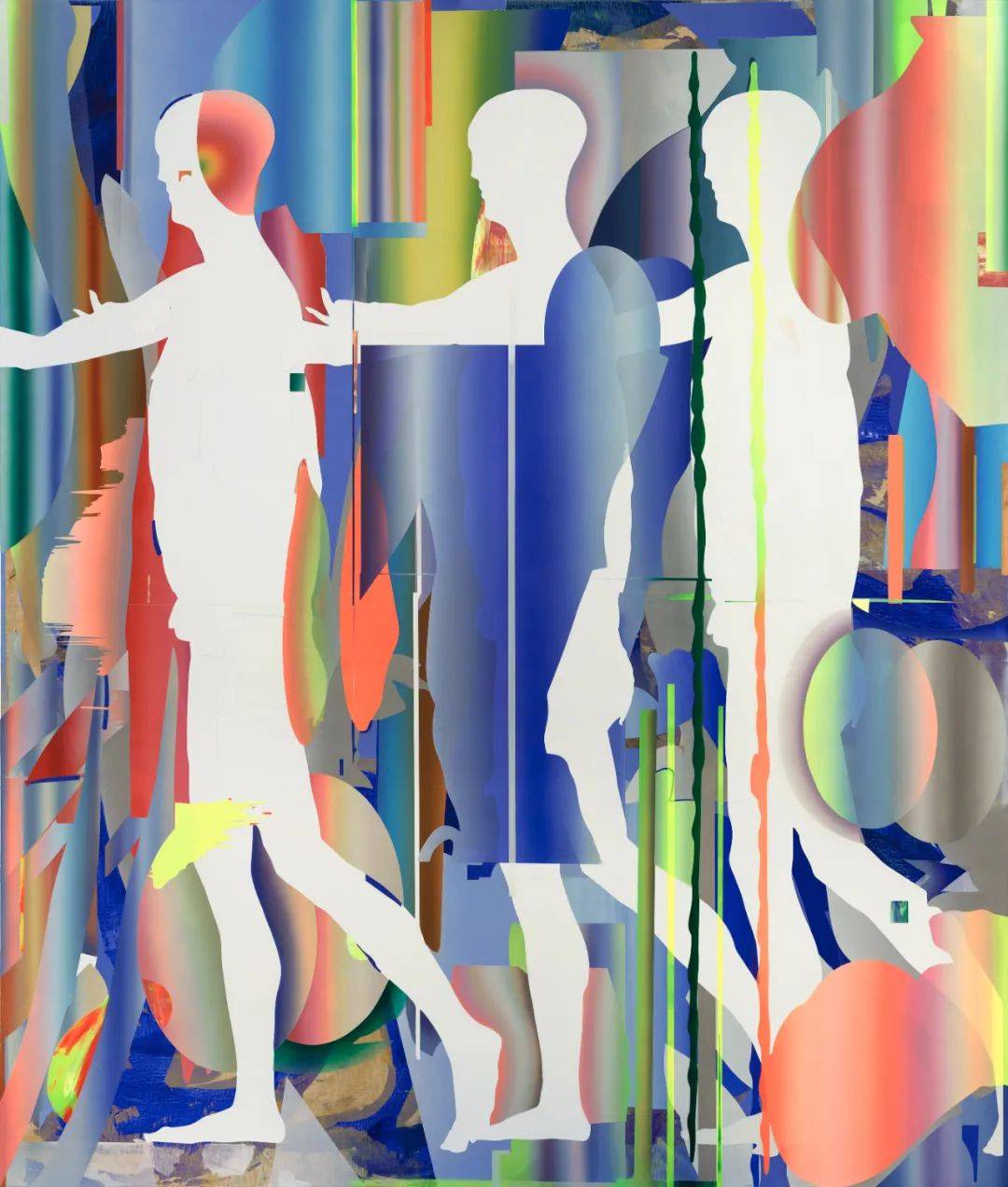
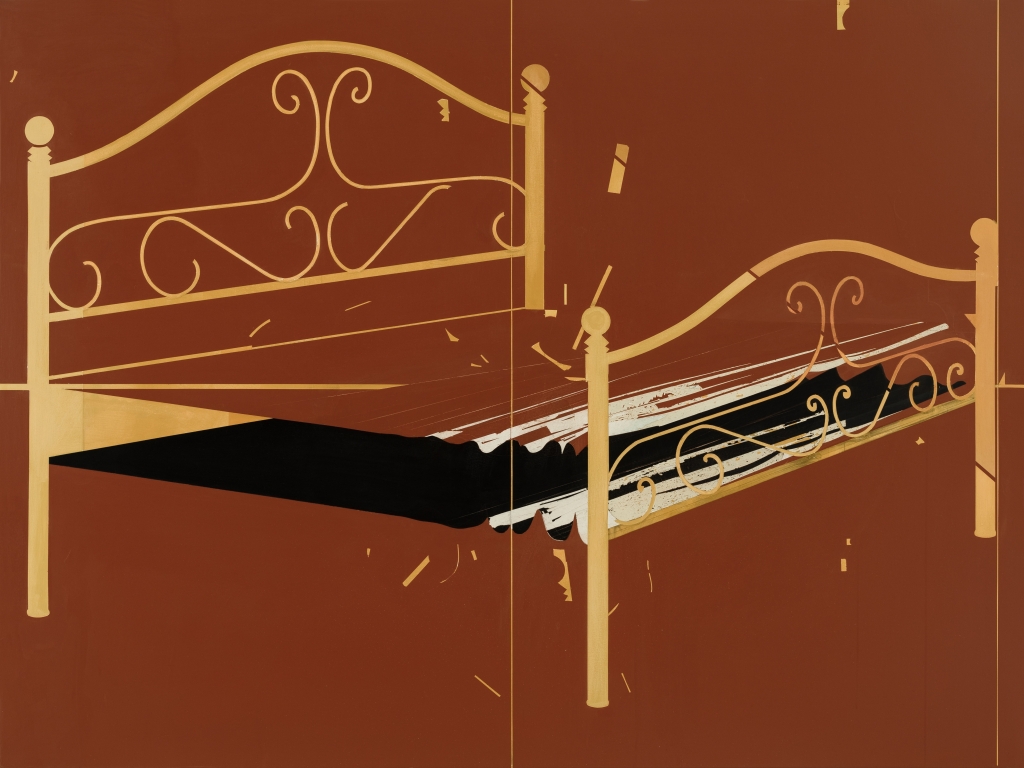
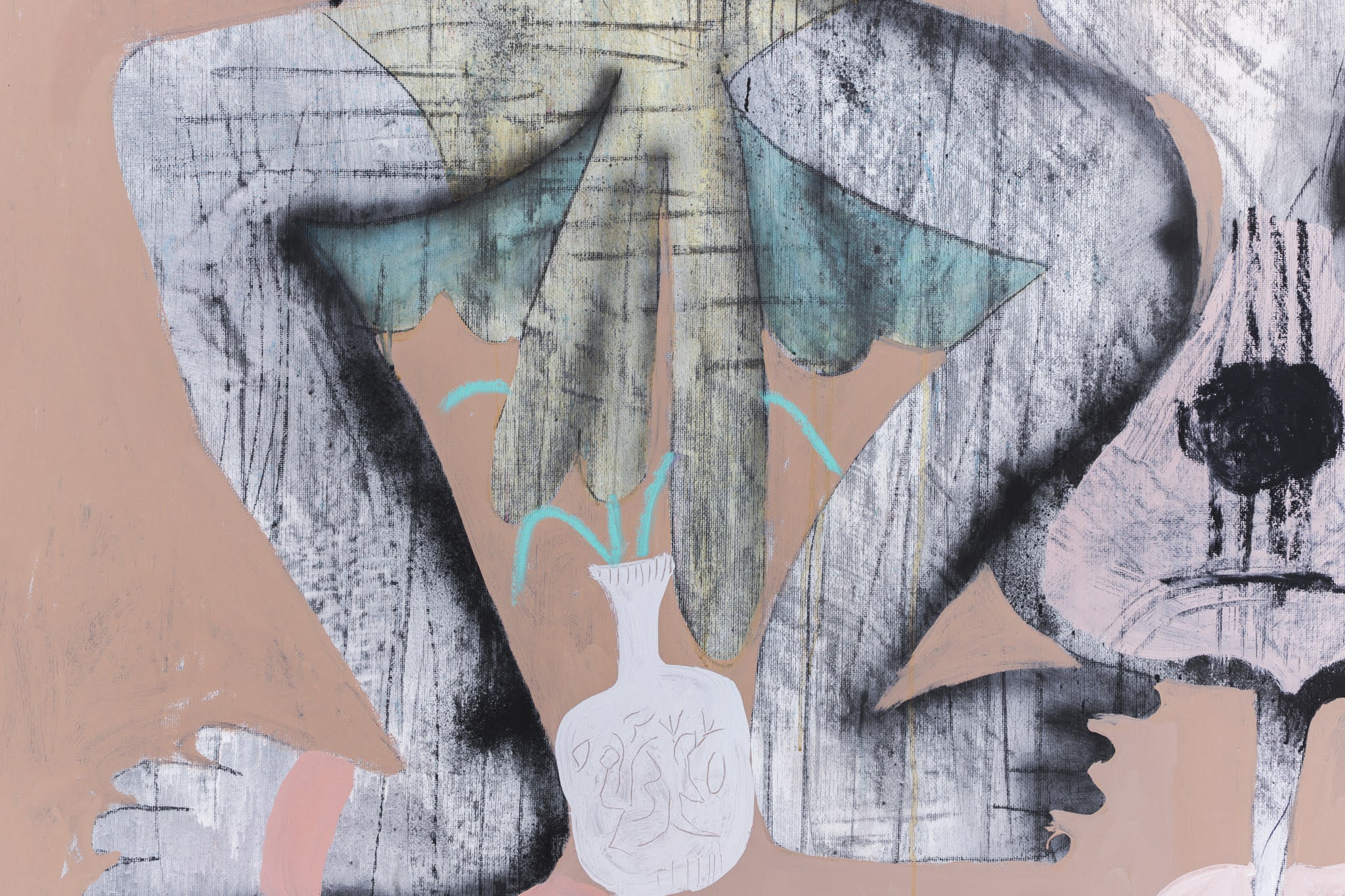
01
Integrated material art breaks through the limitations of a single medium and brings together different materials such as wood, metal, paper, fabric, resin, and glass to create works of art. Through techniques such as collage, connection, stacking, cutting, pouring, and assembling, materials not only become tools for production but also become important means for expressing themes, emotions, space, and ideas.
02
When different materials, textures, structures, and spatial relationships are combined into a work, comprehensive material art gradually forms its own unique artistic form. It can be considered between painting, relief, sculpture, and installation, and through real thickness, touch, transparency, weight, and spatial changes, it establishes a visual language and viewing method different from traditional two-dimensional painting.
03
AI is changing the way integrated material art is created. Artists can use AI to simulate composition, combine materials, change structures, and compare multiple options, then convert the digital results into real materials. AI expands the scope of form exploration, but the real texture of materials, spatial experience, and the artist’s judgment remain at the core of creating a unique language in the work.
AI artist and works case database
Case studies of contemporary integrated material artists and their representative worksArtistic concepts, material selection, production techniques, visual language, work structure, and material significanceThe systemized organization and analysis of the data is carried out in terms of perspective. The database is not only used to understand the artists“ creative methods, but also helps learners to compare the material usage of different artists in a logical manner, establishing connections between ”artist—work—material—technique—language—concept,” providing sustainable reference for art research, teaching analysis, and personal creation.
AI texture material image library
Select textures from the uploaded material images. Support categories, search, zoom in, copy the address, and select a reference image.
Loading texture images...
Bringing together 1,936 images of textures from various materials, covering a wide range of media such as metal, wood, fabric, paper, and stone. By categorizing the materials, browsing the images, and comparing the textures, the artist helps them understand the visual characteristics, surface textures, and artistic potential of the materials, providing abundant visual references and research resources for the selection, form exploration, and innovative combinations in comprehensive material art creation.

Studying the materials chosen by artists and the methods of production enables them to form their own creative direction. The databases exist solely as research materials; they do not serve as evidence of the original materials used by the artists.
Loading artist profile...
Use of artist materials
Directly select 1–3 artists; after selecting, material associations, reference textures, and recorded works are immediately displayed. No additional buttons are required.
Creative derivative research
The artist proposes a theme or question; AI provides draft designs incorporating different concepts, forms, and materials, with the final choice, development, and creation being decided by the artist.
The AI-generated creative program will read the Arttao AI unified API key and require users to log in; the AI-generated content may incur fees. The generated content is for research purposes only and does not replace the artist’s judgment or physical verification.
Based on the study of contemporary integrated material artists and their representative works, this project analyzes the artistic expression, composition methods, and production techniques of different materials. Through AI technology, the artist case studies are combined with the individual creative needs, resulting in six different creative proposals that provide inspiration in aspects such as artistic concepts, expressive forms, material selection, and process experimentation, helping artists expand their creative thinking and explore independent artistic language.